.webp&w=384&q=75)

Loading, please wait...
Loading, please wait...
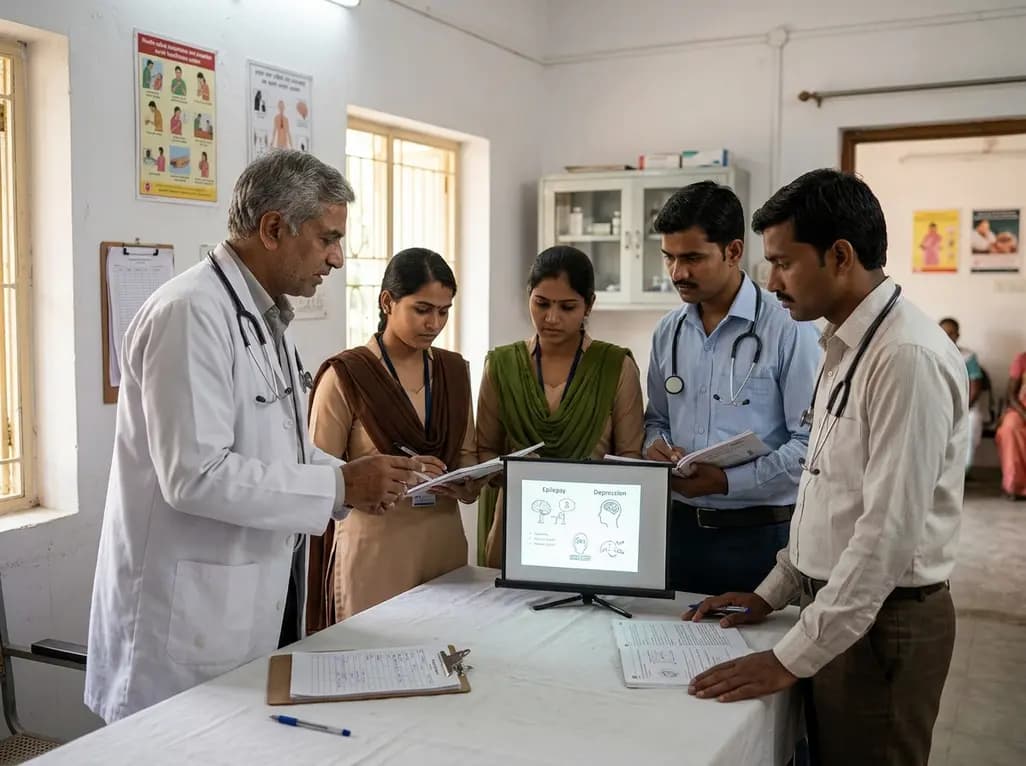
Scaling up evidence-based mental health interventions remains a pressing challenge in global healthcare delivery. Implementing mhGAP in primary care represents a vital clinical strategy to bridge diagnostic and treatment gaps across underserved communities. Globally, mental, neurological, and substance misuse conditions account for substantial morbidity, yet the vast majority of affected individuals in low-resource settings never receive timely clinical attention. To evaluate whether non-specialist primary healthcare providers can effectively bridge this divide, the EPINA study evaluated comprehensive task-sharing protocols across rural public facilities. Consequently, the trial investigated whether structured clinical training paired with routine supportive supervision could reliably expand diagnostic detection and therapeutic initiation. By utilizing standard operational pathways, primary care centers can successfully transition into accessible hubs for comprehensive neuropsychiatric evaluation. Furthermore, addressing systemic workforce shortages through evidence-based task-sharing empowers frontline medical officers, clinical officers, and nursing personnel to recognize complex conditions early. This proactive strategy prevents long-term functional impairment, lowers emergency presentations, and reduces secondary disability. Ultimately, embedding structured mental healthcare directly within routine general outpatient workflows transforms delivery systems, ensuring equitable access for vulnerable populations who otherwise face immense logistical and financial barriers to specialized hospital care.
To assess the real-world utility of the program, investigators conducted a stepped-wedge cluster randomized controlled trial across 127 public primary care facilities in rural Kilifi County, Kenya. Researchers allocated the facilities into 16 distinct clusters, sequentially transitioning them from baseline standard practice to the active clinical intervention over 16 months. The core intervention delivered a comprehensive 10-day training curriculum covering all adult modules of the World Health Organization Mental Health Gap Action Programme Intervention Guide. Following initial training, clinicians received regular quarterly supportive supervision to reinforce diagnostic algorithms, psychopharmacological management, and structured psychosocial counseling. Over the study window, healthcare providers recorded more than 5.3 million adult outpatient consultations, offering unprecedented statistical power to measure health system transformation. Investigators monitored primary monthly consultation rates per 100,000 adult visits alongside secondary patient-reported outcomes, symptom severity, functional disability, and provider-level attitudes. Moreover, the robust cluster design enabled rigorous adjustment for underlying secular trends and temporal seasonality. By evaluating real-world public clinics under routine operational constraints, the trial generated pragmatic evidence regarding feasibility, frontline provider uptake, and long-term diagnostic durability across low-resource primary settings.
The trial demonstrated striking quantitative increases across diagnostic metrics following the task-sharing intervention. Most notably, the monthly rate of primary epilepsy diagnoses rose sharply from 191.35 to 395.49 per 100,000 outpatient consultations, reflecting a significant adjusted intervention effect. Similarly, primary care clinicians identified major depressive disorder far more frequently, increasing from a baseline of 1.41 to 15.24 per 100,000 consultations. In addition, detection rates for dementia and related neurocognitive impairments multiplied substantially, rising from 0.25 to 5.58 per 100,000 visits. These diagnostic gains confirm that non-specialist healthcare workers can master validated screening algorithms and correctly identify previously overlooked neurological and psychiatric pathology. Furthermore, enhanced detection did not lead to inappropriate therapeutic misclassification or clinical harm. Instead, clinicians initiated appropriate first-line pharmacotherapy, including essential antiepileptic drugs and antidepressant regimens, while offering evidence-based psychoeducation. Consequently, patients who accessed early diagnosis showed meaningful improvements in functional performance, symptomatic control, and overall health-related quality of life. Therefore, expanding diagnostic capacity at the primary tier directly alleviates long-standing community treatment deficits.
Frontline clinicians frequently experience significant apprehension when evaluating neuropsychiatric pathology due to insufficient training and pervasive social stigma. However, the structured training curriculum and regular supportive supervision meaningfully shifted provider attitudes and therapeutic confidence. Healthcare workers demonstrated significant reductions in stigmatizing perceptions regarding mental and neurological illness over the study period. Because supervisors conducted quarterly observational visits, frontline workers received real-time constructive feedback on differential diagnosis, suicide risk assessment, and side-effect management. As a result, clinicians felt empowered to engage patients empathetically rather than dismissing complex neuropsychiatric complaints as unmanageable somatic issues. Moreover, providers reported greater comfort discussing substance misuse, mood disturbances, and cognitive decline during routine clinical visits. This cultural change within primary clinics fostered trust, encouraging community members to seek formal medical care rather than relying solely on informal pathways. Consequently, regular supervisory engagement proved essential for sustaining clinical competency and preventing therapeutic drift. By systematically dismantling clinical hesitation and institutional bias, primary healthcare facilities established welcoming environments for vulnerable patients requiring continuous, compassionate neuropsychiatric management.
Implementing task-sharing frameworks requires clear clinical pathways, consistent medication supplies, and robust bidirectional referral networks. When non-specialist clinicians assess patients, they must utilize standardized decision algorithms to differentiate primary psychiatric illness from acute organic etiologies, such as metabolic encephalopathy or infectious complications. Therefore, frontline facilities must maintain uninterrupted inventories of core psychotropic medications, including phenobarbital, carbamazepine, amitriptyline, and fluoxetine. In addition, clinicians must establish well-defined referral criteria for severe, refractory, or high-risk cases, such as treatment-resistant psychosis, acute delirium, or severe suicidality. Furthermore, primary care teams should integrate brief psychological interventions, such as problem-solving counseling, behavioral activation, and lifestyle education, into standard consultations. Collaborative stepped care ensures that specialists at regional referral centers supervise primary practitioners, conduct complex diagnostic clarifications, and receive escalated cases seamlessly. Consequently, task-sharing does not eliminate the need for specialized psychiatrists and neurologists; rather, it maximizes their impact by shifting routine identification and maintenance care to the primary care frontlines while reserving specialist time for refractory pathology.
The findings from the EPINA trial provide a practical roadmap for health systems striving to integrate mental health services into universal primary coverage. General practitioners, family physicians, and primary care medical officers can readily implement standardized screening protocols during routine visits for chronic conditions like hypertension and diabetes. Furthermore, clinicians should routinely screen high-risk groups, including postpartum women, elderly patients presenting with memory complaints, and individuals with poorly controlled chronic disease. By normalizing mental health inquiries during general outpatient consultations, practitioners demystify psychological distress and facilitate early clinical intervention. In addition, healthcare organizations must prioritize ongoing institutional support, dedicated consultation time, and streamlined documentation to prevent provider burnout. Ultimately, decentralized mental healthcare models reduce direct out-of-pocket costs and transportation burdens for impoverished rural households. Embracing structured task-sharing frameworks empowers primary clinicians to close diagnostic gaps, improve long-term functional trajectories, and deliver truly comprehensive, whole-person medical care across diverse, resource-limited populations.
The WHO mhGAP Intervention Guide is an evidence-based clinical manual designed to help non-specialist healthcare workers identify, manage, and monitor priority mental, neurological, and substance use disorders. It provides standardized clinical algorithms, pharmacological guidelines, and psychosocial intervention protocols tailored specifically for routine primary healthcare and low-resource medical settings.
Task-sharing trains non-specialist primary healthcare providers to conduct standardized screening, initiate first-line pharmacotherapy, and deliver basic psychological interventions. This approach decentralizes care from distant tertiary hospitals to community clinics, dramatically reducing diagnostic delays, expanding service access, minimizing patient transportation expenses, and improving long-term clinical outcomes for chronic neuropsychiatric disorders.
Primary care integration significantly benefits high-prevalence, high-burden conditions, notably epilepsy, major depressive disorder, anxiety disorders, and dementia. Frontline clinicians can effectively diagnose these disorders using clinical algorithms, manage them with affordable essential medications, provide structured lifestyle counseling, and reserve specialist referrals for severe, unstable, or treatment-resistant presentations.
Disclaimer: This content is for informational and educational purposes only and does not constitute medical advice. Refer to the latest local and national guidelines for clinical practice.
References

Read summarized clinical updates, watch expert medical content, and earn CME certifications right from your smartphone.
Open your smartphone camera to scan and install.





The EPINA stepped-wedge randomized trial demonstrates that training rural primary healthcare workers using the WHO mhGAP Intervention Guide substantially increases diagnostic rates and improves management for epilepsy, depression, and other priority neuropsychiatric disorders in low-resource primary settings.
last month

Chronic eosinophilic pneumonia can present with atypical bronchoalveolar lavage findings and an organizing pneumonia pattern, necessitating surgical lung biopsy.
Today

Discover the crucial distinctions between mesonephric and mesonephric-like proliferations of the female genital tract. Learn the key histomorphologic, immunohistochemical, and molecular differences essential for accurate diagnosis and clinical management.
Today
Kikuchi-Fujimoto disease rarely presents with refractory shock and sinus bradycardia in children. This case report highlights life-threatening hemodynamic instability requiring intensive care, preserved cardiac contractility, and the critical diagnostic role of early excisional lymph node biopsy.
Today

A narrative review investigates whether the articularis genus muscle functions as an independent anatomical entity or blends with the vastus intermedius. We evaluate its morphology, role in retracting the suprapatellar bursa, and direct clinical significance in anterior knee pain and arthroplasty.
Today

A Bayesian multilevel meta-analysis reveals that aerobic training combined with moderate carbohydrate restriction modestly lowers HbA1c in type 2 diabetes. However, sparse data and very low certainty leave incremental benefits over exercise or diet alone unproven, highlighting the need for individualized care.
Today
