.webp&w=384&q=75)

Loading, please wait...
Loading, please wait...
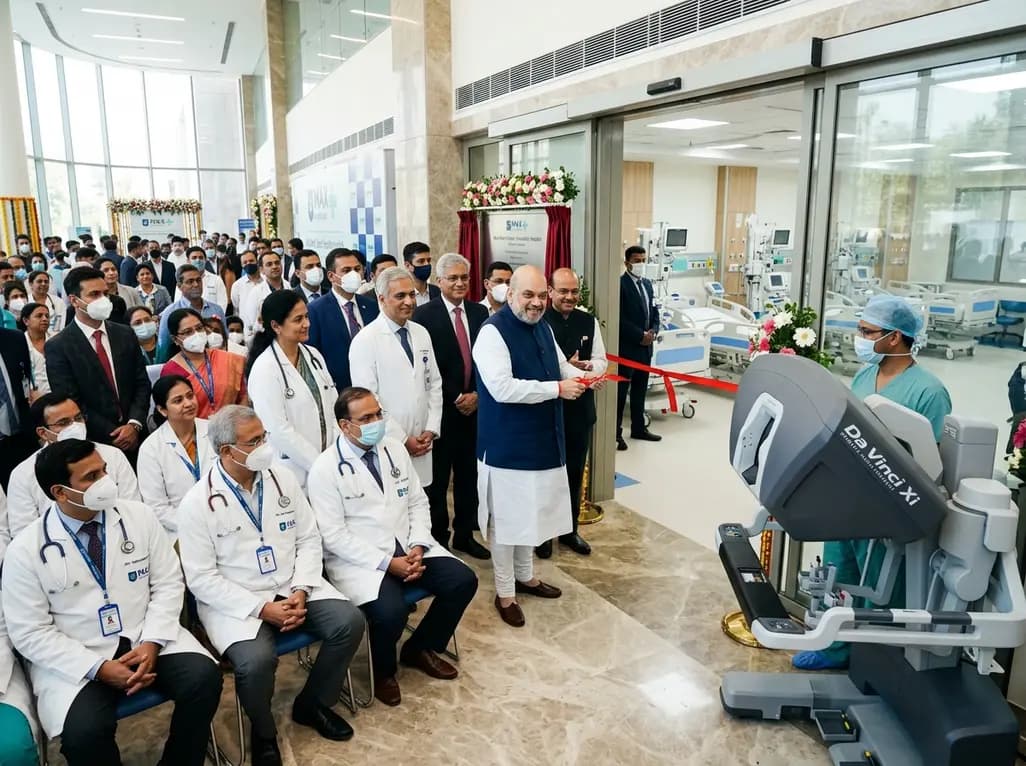
The healthcare landscape in Delhi-NCR witnessed a monumental transformation with the recent Max Saket expansion. Union Home Minister Amit Shah inaugurated a brand-new 400-bed tower at Max Smart Super Speciality Hospital in Saket. Delhi Chief Minister Rekha Gupta attended the ceremony as Guest of Honour alongside key dignitaries. Consequently, this development elevates the complex's total capacity to approximately 1,200 beds. This milestone establishes the Saket facility as the largest private hospital by bed capacity in Delhi.
Healthcare delivery systems in metropolitan regions face unprecedented demand for specialized tertiary and quaternary medical interventions. Therefore, adding 400 acute-care beds directly alleviates severe strain on regional intensive care units and specialty inpatient wards. The newly commissioned tower expands advanced diagnostic capabilities, operating theater accessibility, and post-surgical recovery infrastructure. Furthermore, the facility houses comprehensive medical departments across more than 22 distinct clinical disciplines. Multidisciplinary teams can manage intricate cardiac disorders, advanced malignancies, and complex multi-organ pathologies under unified clinical governance. Moreover, patients across Northern India routinely travel to Delhi seeking definitive medical management for advanced diseases. By expanding physical bed capacity, the hospital significantly curtails critical waiting intervals for elective and emergency procedures. In addition, the modern architectural layout optimizes clinical workflows between emergency triage, radiology suites, and surgical suites. Hospital administrators have prioritized rigorous infection prevention protocols through specialized ventilation circuits and dedicated negative-pressure isolation rooms. Consequently, this facility sets a strong benchmark for clinical hygiene and high-throughput tertiary care throughout Delhi-NCR. Ultimately, the new beds provide immediate relief to regional referral networks while reinforcing patient safety standards.
Several institutional, demographic, and socioeconomic factors catalyzed the ambitious Max Saket expansion project. First, rapid urban population growth and escalating chronic disease burdens continuously strain existing regional healthcare capacities. Patients increasingly seek centralized healthcare facilities capable of delivering comprehensive multidisciplinary interventions under a single roof. Hence, healthcare leadership strategically invested in brownfield infrastructure expansion to address these shifting patient needs. Additionally, CMD Abhay Soi emphasized that this expansion aligns with broader national aspirations for modernizing healthcare infrastructure. The institution treats more than 40 lakh patients annually across its extensive hospital network. Notably, these patients arrive from over 800 Indian cities and 180 international countries. Therefore, Delhi serves as an essential hub for international medical value travel due to recognized clinical expertise. In fact, medical travel represents approximately nine percent of the organization’s overall healthcare portfolio. However, high foreign patient inflows must not displace access for regional domestic residents. Accordingly, this substantial bed expansion ensures adequate operational bandwidth for both domestic admissions and international referrals. Consequently, the expanded Saket complex effectively balances global medical tourism with essential community healthcare delivery.
Contemporary surgical outcomes depend heavily on high-precision instrumentation and advanced computer-assisted engineering. Thus, the new hospital tower integrates cutting-edge robotic systems to enhance procedural precision and patient safety. In particular, surgical teams now deploy the Da Vinci Xi Surgical Robot for minimally invasive oncological, urological, and gynecological procedures. This multi-arm robotic console provides high-definition three-dimensional visualization and micro-wristed instruments that surpass manual dexterity. Consequently, surgeons dissect delicate anatomical structures with minimal blood loss and reduced surrounding tissue trauma. Meanwhile, orthopedic surgical teams utilize the Mako Total Knee Replacement Robot for computer-guided arthroplasty procedures. This robotic-arm platform facilitates precise pre-operative computed tomography mapping and real-time haptic boundaries during bone resection. As a result, joint surgeons achieve optimal prosthetic alignment and preserve vital soft-tissue envelopes with extreme accuracy. Patients routinely experience reduced post-operative pain, shorter hospital stays, and faster functional rehabilitation. Furthermore, these robotic suites integrate digital telemetry systems that permit seamless tele-mentoring and procedure recording. Surgical specialists can collaborate across subspecialties to execute complex reconstructive procedures with uniform predictability. Ultimately, these technological innovations elevate clinical precision while establishing superior recovery outcomes for surgical patients.
Expanding private tertiary infrastructure must harmonize with equitable community care and inclusive social responsibility. Notably, Max Healthcare provided free medical treatment worth 244 crore rupees to over 3.60 lakh underprivileged patients last year. This ongoing welfare commitment ensures that economically disadvantaged citizens gain equal access to modern clinical amenities. Therefore, the additional 400 beds substantially expand the hospital's capacity to fulfill statutory and philanthropic healthcare mandates. Furthermore, state leaders emphasized that private healthcare investments must reinforce universal health coverage goals. Home Minister Amit Shah highlighted that advanced clinical facilities must support equitable social development toward a developed nation. In response, the Saket facility designates specialized beds and diagnostic services for patients supported by public health schemes. Additionally, administrative coordinators work alongside municipal welfare departments to identify eligible beneficiaries requiring urgent tertiary interventions. Medical social workers assist underprivileged families throughout clinical evaluations, surgical scheduling, and medication disbursement without economic distress. Meanwhile, institutional audits ensure that clinicians uphold identical standards of medical quality for all patient demographics. Through these structured welfare initiatives, the expansion balances commercial operational viability with meaningful social impact.
Substantial hospital expansion naturally requires a highly competent, well-trained clinical and allied health workforce. Presently, the organization employs more than 42,000 healthcare professionals across its clinical network. In addition, the Max Institute of Medical Sciences plays a pivotal role in post-graduate medical education and clinical research. To date, this academic institution has supported over 1.62 lakh medical students and residents through accredited training programs. Therefore, the newly added 400-bed tower provides an exceptional practical training environment for junior doctors and nursing professionals. Trainees gain hands-on clinical exposure to complex pathologies, surgical robotics, and advanced life-support technologies. Furthermore, structured clinical rotations through intensive care units strengthen acute critical care competencies among resident doctors. Meanwhile, the healthcare group is pursuing broader geographical growth by targeting 10,000 total beds within four years. For instance, planned facilities in Gujarat, Pune, and Bhubaneswar will significantly increase specialized beds nationwide. Thus, physical expansion at Saket directly complements larger network enhancements across Tier 1 and Tier 2 cities. Ultimately, these integrated investments bolster clinical capacity, medical education, and high-quality healthcare delivery across India.
Q1: What is the total bed capacity of Max Smart Super Speciality Hospital Saket after the expansion?
Following the inauguration of the new 400-bed tower, total bed capacity at Max Saket reaches approximately 1,200 beds. Consequently, this facility becomes the largest private hospital in Delhi by bed capacity. Furthermore, this substantial expansion enables the hospital to deliver comprehensive tertiary and quaternary medical care across more than 22 clinical specialties, providing vital treatment capacity for domestic patients and international visitors alike.
Q2: What specialized surgical technologies are integrated into the new 400-bed tower?
The newly inaugurated tower incorporates state-of-the-art robotic systems, including the Da Vinci Xi Surgical Robot and the Mako Total Knee Replacement Robot. These sophisticated platforms support precision-driven, minimally invasive interventions across oncology, urology, gynecology, and joint replacement. Consequently, surgical patients benefit from reduced operative blood loss, minimal tissue trauma, diminished post-operative pain, fewer complications, and significantly faster functional recovery times compared to conventional surgical techniques.
Q3: How does the Saket hospital expansion support medical education and community welfare?
The facility integrates academic training and subsidized community care alongside private healthcare delivery. Last year, the hospital network provided free treatment worth 244 crore rupees to 3.60 lakh underprivileged patients. Additionally, through the Max Institute of Medical Sciences, the organization has trained over 1.62 lakh students and residents. Thus, the new facility actively trains future medical specialists while maintaining equitable healthcare access.
Disclaimer: This content is for informational and educational purposes only. It does not constitute medical advice or replace professional judgment. Refer to the latest local and national guidelines for clinical practice.
References

Read summarized clinical updates, watch expert medical content, and earn CME certifications right from your smartphone.
Open your smartphone camera to scan and install.





Union Home Minister Amit Shah inaugurated a new 400-bed tower at Max Smart Super Speciality Hospital in Saket. Bringing total capacity to 1,200 beds across 22 disciplines, the expansion introduces state-of-the-art robotic platforms like Da Vinci Xi and Mako to bolster tertiary and quaternary healthcare across Delhi-NCR.
4 weeks back

Chronic eosinophilic pneumonia can present with atypical bronchoalveolar lavage findings and an organizing pneumonia pattern, necessitating surgical lung biopsy.
Today

Discover the crucial distinctions between mesonephric and mesonephric-like proliferations of the female genital tract. Learn the key histomorphologic, immunohistochemical, and molecular differences essential for accurate diagnosis and clinical management.
Today
Kikuchi-Fujimoto disease rarely presents with refractory shock and sinus bradycardia in children. This case report highlights life-threatening hemodynamic instability requiring intensive care, preserved cardiac contractility, and the critical diagnostic role of early excisional lymph node biopsy.
Today
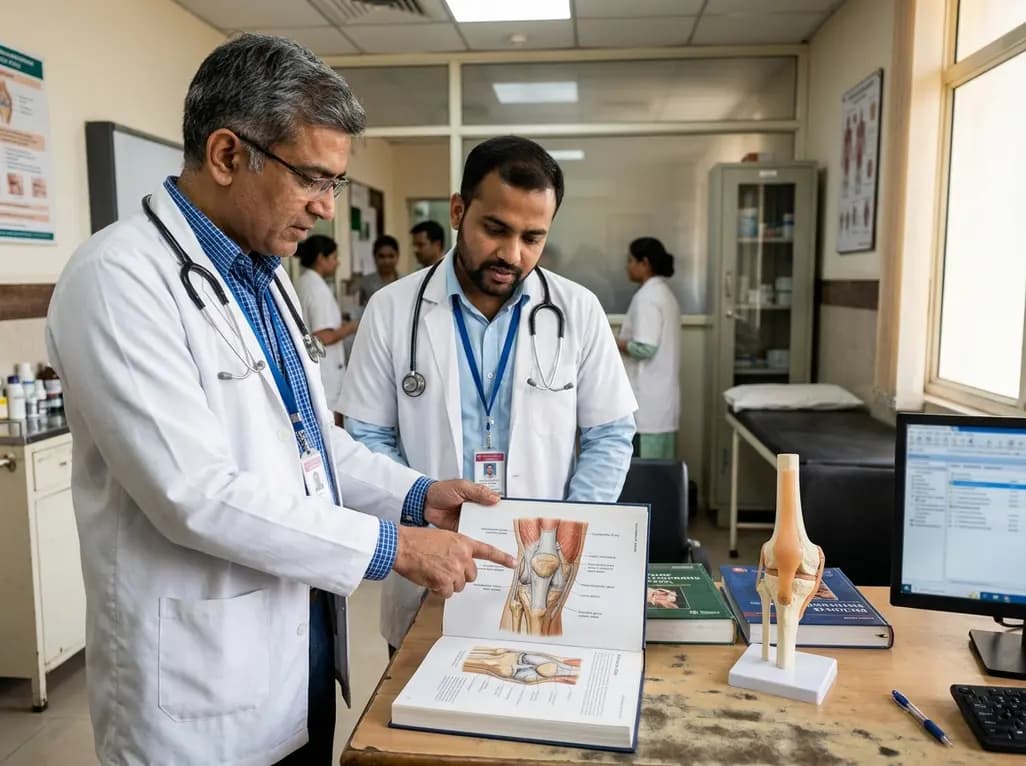
A narrative review investigates whether the articularis genus muscle functions as an independent anatomical entity or blends with the vastus intermedius. We evaluate its morphology, role in retracting the suprapatellar bursa, and direct clinical significance in anterior knee pain and arthroplasty.
Today

A Bayesian multilevel meta-analysis reveals that aerobic training combined with moderate carbohydrate restriction modestly lowers HbA1c in type 2 diabetes. However, sparse data and very low certainty leave incremental benefits over exercise or diet alone unproven, highlighting the need for individualized care.
Today
