.webp&w=384&q=75)

Loading, please wait...
Loading, please wait...
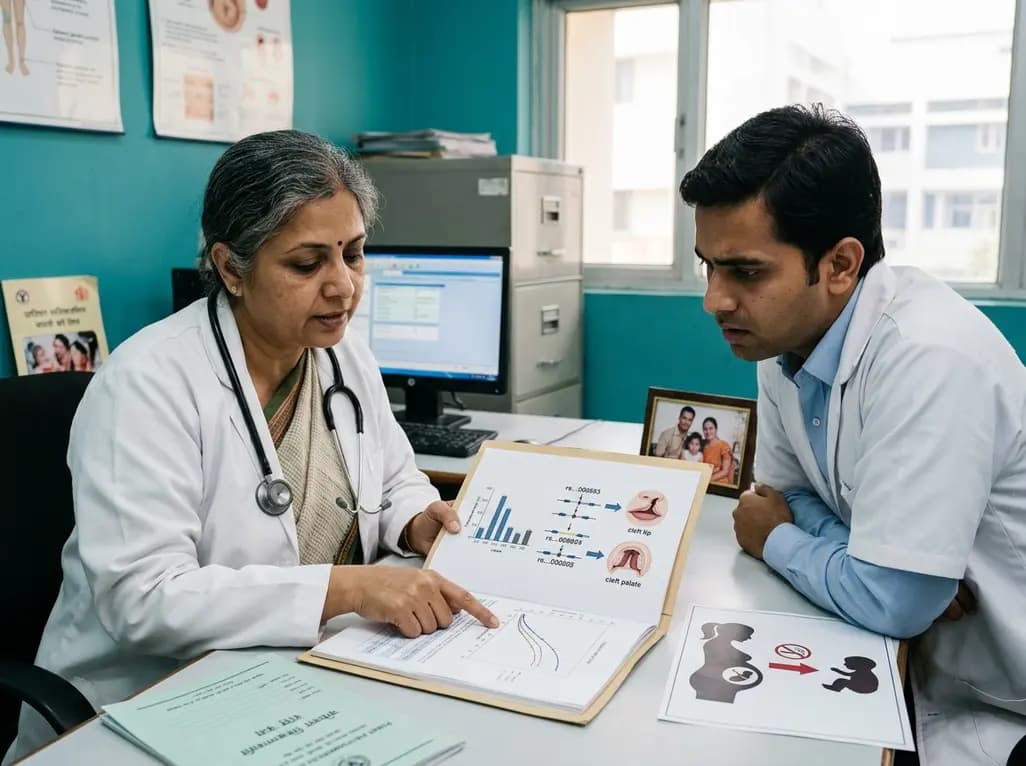
Congenital craniofacial malformations present substantial functional, psychosocial, and reconstructive challenges worldwide. Among these conditions, cleft lip and palate (CLP) represent the most prevalent anomalies affecting neonates. For decades, observational research has pointed toward tobacco exposure during gestation as a primary environmental contributor. However, traditional observational studies frequently suffer from confounding variables and reverse causation, making definitive conclusions difficult. The investigation into maternal smoking and CLP has now reached genetic clarity through advanced analytical methods. A landmark two-sample Mendelian randomization study provides robust evidence confirming that active maternal tobacco consumption directly increases the incidence of nonsyndromic orofacial clefts in offspring. Consequently, this breakthrough eliminates previous epidemiological uncertainties by utilizing inherited genetic instruments to mimic randomized trials. Clinicians can now counsel prospective mothers with unassailable causal evidence regarding the teratogenic perils of gestational tobacco use.
Mendelian randomization employs functional single nucleotide polymorphisms as instrumental variables to evaluate exposure-outcome relationships without typical confounding factors. Because parental alleles segregate randomly during gametogenesis, this method effectively neutralizes socioeconomic, lifestyle, and behavioral confounders that frequently bias conventional observational cohorts. In this comprehensive study, researchers utilized vast summary statistics obtained from the UK Biobank for maternal smoking phenotypes and the FinnGen consortium for offspring CLP cases. Furthermore, investigators applied the inverse-variance weighted method as their primary analytical approach, yielding a statistically significant positive association. To guarantee robustness, sensitivity analyses including MR-Egger regression and weighted median models corroborated the primary findings. Importantly, these secondary models demonstrated minimal horizontal pleiotropy, confirming that the genetic variants influenced cleft development exclusively through tobacco exposure pathways rather than alternative biological mechanisms.
The embryonic development of the primary and secondary palate requires intricate cellular migration, proliferation, and tissue fusion between the fourth and twelfth weeks of gestation. Cigarette smoke contains thousands of toxic chemicals, including nicotine, carbon monoxide, cadmium, and polycyclic aromatic hydrocarbons, which cross the placental barrier efficiently. Consequently, maternal carbon monoxide exposure induces severe fetal hypoxia by elevating carboxyhemoglobin concentrations and restricting microvascular perfusion to developing craniofacial tissue. In addition, nicotine binds to embryonic nicotinic acetylcholine receptors, directly disrupting neural crest cell migration and prompting premature cellular apoptosis within the branchial arches. Furthermore, toxic metabolites generate extensive reactive oxygen species, which impair critical detoxification pathways and inhibit physiological midline epithelial seam breakdown. Therefore, these combined vascular and cellular insults prevent the bilateral palatal shelves from elevating and fusing properly, resulting in permanent cleft anomalies.
These definitive causal insights require proactive adaptations in everyday clinical practice across obstetric, pediatric, and dental specialties. Healthcare providers must recognize that primary palatal formation occurs extremely early in pregnancy, often before a woman confirms her conception. Therefore, clinicians must deliver structured preconception counseling to women of reproductive age rather than waiting for initial prenatal visits. Obstetricians should systematically screen all patients for active cigarette consumption, environmental tobacco smoke exposure, and alternative nicotine delivery systems. Furthermore, medical practitioners must clearly communicate this direct causal risk during routine health checkups to motivate lasting behavioral changes. When physicians identify tobacco use, they should immediately implement evidence-based behavioral therapies, psychosocial counseling, and approved cessation strategies. In addition, pediatric teams must prepare multidisciplinary management pathways whenever prenatal sonography identifies orofacial malformations.
In India and similar developing nations, tobacco consumption manifests in diverse smoked and smokeless varieties, including bidis, gutka, and khaini. Although active female cigarette smoking remains lower in rural regions, passive second-hand smoke exposure and smokeless tobacco usage remain alarmingly widespread among expectant mothers. Consequently, healthcare authorities must expand public health campaigns to highlight the specific teratogenic dangers of both active and involuntary tobacco inhalation. Community health workers, including ASHAs and Anganwadi staff, should integrate orofacial malformation risks into village-level antenatal education modules. Moreover, national maternal welfare programs must prioritize tobacco-free home environments to protect embryonic organogenesis from toxic environmental insults. By strengthening enforcement of smoke-free public spaces and offering accessible cessation support in primary health centers, public health initiatives can substantially reduce the nationwide burden of preventable congenital anomalies.
Managing congenital cleft lip and palate demands an integrated, long-term multidisciplinary approach extending from birth through adulthood. Immediately after delivery, specialized nursing and pediatric teams must assist parents with customized feeding bottles to prevent aspiration and ensure adequate infant nutrition. Subsequently, pediatric plastic surgeons perform primary lip repair around three to six months of age, followed by palatoplasty between nine and eighteen months to facilitate normal speech development. Furthermore, pediatric dentists and orthodontists must monitor maxillary arch growth, align dental arches, and prepare alveolar bone grafting during early school years. Concurrently, otolaryngologists manage recurrent middle ear effusions, while speech-language pathologists correct compensatory articulation errors. Finally, child psychologists provide crucial psychosocial counseling to help children build self-esteem and overcome social stigmatization throughout their formative years.
Mendelian randomization uses naturally inherited genetic variants as proxies for maternal smoking behaviors. Because parents randomly pass down these alleles at conception, this technique inherently prevents confounding from socioeconomic, nutritional, and lifestyle factors. As a result, the analysis functions similarly to a randomized controlled clinical trial, providing definitive evidence that maternal tobacco use directly causes orofacial clefts rather than merely correlating with them.
The most vulnerable embryonic window occurs between the fourth and twelfth weeks of gestation. During this rapid developmental phase, facial prominences merge and bilateral palatal shelves elevate to form the intact primary and secondary palate. Exposure to tobacco toxins during this critical period severely disrupts neural crest cell migration, impairs vascular supply, and prevents midline tissue fusion, leading to structural clefts.
Yes, significant exposure to environmental second-hand smoke carries severe risks for embryonic craniofacial development. Sidestream smoke contains elevated concentrations of nicotine, carbon monoxide, and toxic carcinogens that readily enter maternal circulation and reach the placenta. Therefore, non-smoking pregnant women exposed to persistent domestic or workplace second-hand smoke face a substantially higher likelihood of delivering infants with orofacial cleft malformations.
Disclaimer: This content is for informational and educational purposes only. It is not intended to be a substitute for professional medical advice, diagnosis, or treatment. Always seek the advice of your physician or other qualified health provider with any questions you may have regarding a medical condition. Refer to the latest local and national guidelines for clinical practice.
References

Read summarized clinical updates, watch expert medical content, and earn CME certifications right from your smartphone.
Open your smartphone camera to scan and install.





A landmark Mendelian randomization study confirms a direct causal link between maternal smoking and offspring cleft lip and palate (CLP). This finding underscores the vital importance of early preconception tobacco cessation and comprehensive antenatal interventions to prevent major congenital craniofacial malformations.
last month

A nationwide English cohort study shows that interstitial lung diseases are no longer rare, with incidence jumping 30% and 200,000 active cases. This analysis highlights clinical implications for diagnosis, multi-disciplinary management, and global health priorities across respiratory and internal medicine.
Today

A nationwide South Korean study shows underreporting of smoking among women dropped from 57.4% to 36.4% between 2008 and 2021. However, over one-third of female smokers still conceal their habit, highlighting the critical role of cotinine verification in clinical risk assessment.
Today

PepsiCo and Monster Beverage have challenged the FSSAI ban on the energy drink label in Indian courts. While companies highlight supply disruptions, regulatory actions spotlight severe cardiovascular and metabolic risks associated with excessive caffeine, sugar, and taurine consumption, especially in adolescents.
Today

A new study evaluates the rheological stability of decellularized peripheral nerve matrix hydrogels under varied storage conditions. Findings show -80°C storage and freeze-drying preserve gelation kinetics and mechanical stiffness, offering key insights for shipping and translational clinical applications.
Today

A qualitative meta-synthesis highlights the complex interplay between gender dysphoria, minority stress, and eating disorders in transgender and gender-diverse individuals. Clinicians must recognize these distinct drivers to offer supportive, gender-affirming, and interdisciplinary eating disorder care.
Today
