.webp&w=384&q=75)

Loading, please wait...
Loading, please wait...
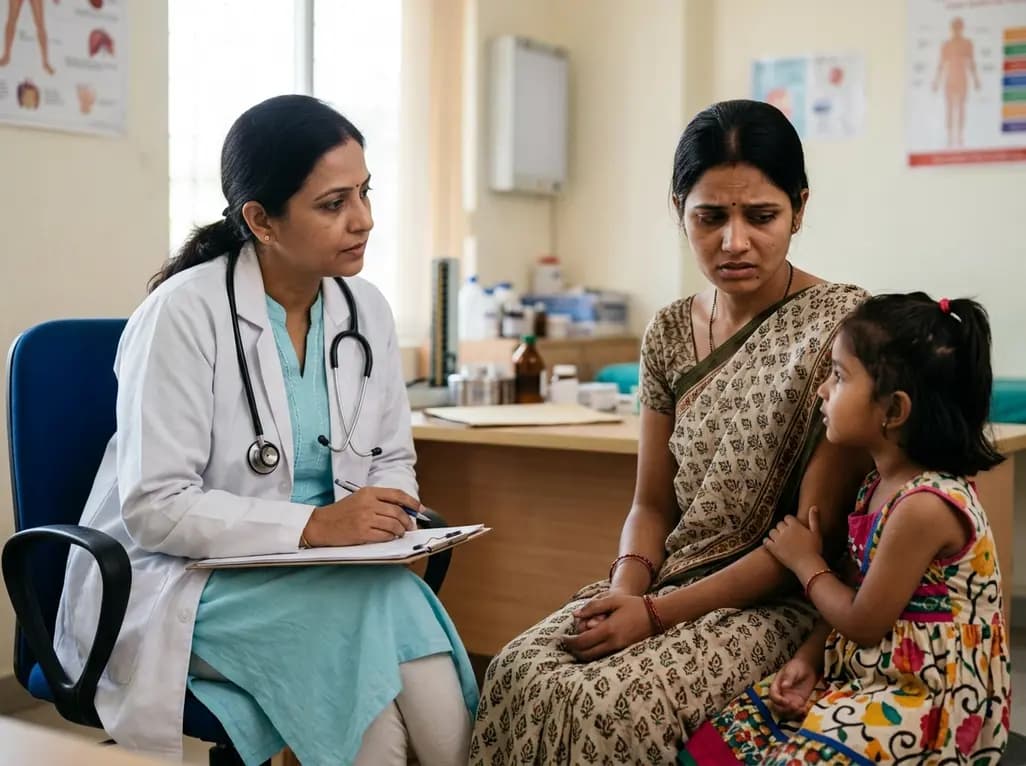
Clinicians working with high-risk families frequently observe disrupted parental behaviors that may impair child development. Notably, a recent study examined how maternal history and current mental health influence these interactions. Researchers found that while childhood maltreatment did not directly cause behavioral disruptions, it exerted an indirect influence through maternal psychological distress. Consequently, addressing a mother's current emotional state is vital for improving parent-child dynamics.
In addition to psychological factors, child gender appears to play a significant role in caregiving. Specifically, the study revealed that mothers exhibited more disrupted parental behaviors with daughters than with sons. This suggests that child gender might evoke different maternal responses to a child’s needs. Furthermore, the clinical utility of the AMBIANCE-Brief tool was confirmed. Therefore, practitioners can use this observational tool to identify at-risk families more efficiently. Moreover, incorporating gender-sensitive approaches into trauma-informed care may enhance intervention outcomes.
Psychological distress often impairs a mother's ability to respond sensitively to her child. Consequently, this can lead to disrupted communication and behavioral patterns that affect attachment security.
Yes, research indicates that mothers in high-risk settings may show higher levels of disrupted behaviors with daughters. This finding highlights the importance of considering child-specific factors during family assessments.
Disclaimer: This content is for informational and educational purposes only. It does not constitute medical advice, diagnosis, or treatment. Always seek the advice of your physician or other qualified health provider with any questions you may have regarding a medical condition. Refer to the latest local and national guidelines for clinical practice.
References
Cognard-Bessette S et al. Disrupted parental behaviors in maltreating and high-risk families: The roles of maternal childhood maltreatment, psychological distress, and child gender. Child Abuse Negl. 2026 Jun 15. doi: undefined. PMID: 42296589.
Madigan S, Eirich R, Racine N, Lyons-Ruth K. Feasibility of training service providers on the AMBIANCE-Brief measure for use in community settings. Infant Ment Health J. 2020;41(6):808-821.
Barry TD, Dunlap ST, Cotton JN, Lochman JE, Wells KC. The influence of maternal stress and distress on disruptive behavior problems in boys. J Am Acad Child Adolesc Psychiatry. 2005;44(3):265-273.

Read summarized clinical updates, watch expert medical content, and earn CME certifications right from your smartphone.
Open your smartphone camera to scan and install.





A study on 88 mothers reveals that maternal psychological distress and child gender significantly influence disrupted parental behaviors. While childhood trauma has no direct effect, it acts indirectly through distress. This highlights the need for trauma-sensitive interventions and tools like AMBIANCE-Brief.
2 months ago

Groundbreaking multiomics research reveals that adipose-derived miR-30e-5p travels via exosomes to vascular endothelial cells, silencing SLC7A11 and accelerating atherosclerosis. This discovery highlights novel therapeutic avenues within cardiovascular-kidney-metabolic syndrome.
Today

A multicentre RCT in China shows that the PAICS AI system significantly boosts sonographer sensitivity in detecting fetal intracranial malformations by 8.7% without compromising specificity, offering promising diagnostic support for prenatal neurosonography.
Today

Real-world data from the Egnite registry reveals that concomitant mitral regurgitation significantly worsens 2-year mortality in severe aortic stenosis. Fortunately, standalone TAVR improves mitral regurgitation in 77.5% of patients, underscoring the vital importance of prompt interventional evaluation.
Today

A retrospective cohort study demonstrates that patients with anorexia nervosa and bulimia nervosa face significantly higher risks of lower extremity soft tissue injuries, including ACL tears and ligament sprains, along with heightened rates of orthopedic revision surgery, highlighting the need for systemic screening.
Today
A recent study highlights the differential impact of type 1 diabetes on pediatric skeletal architecture, revealing significant cortical deficits over trabecular loss and underscoring the protective role of lean muscle mass in bone accrual.
Today
