.webp&w=384&q=75)

Loading, please wait...
Loading, please wait...

Manipal Health Enterprises recently filed for an initial public offering (IPO) to raise 80 billion rupees. This strategic move highlights the company's commitment to meeting the rising demand for specialized medical care in India. Consequently, the Manipal Health IPO represents a significant milestone for the Bengaluru-based healthcare provider. The filing indicates a strong focus on expanding clinical infrastructure to support a growing patient base.
Manipal Health plans to use the proceeds primarily for debt repayment. Additionally, the funds will support the strategic acquisition of Sahyadri Hospitals. This acquisition strengthens its position as an aggressive healthcare consolidator in the region. Furthermore, the Indian healthcare market continues to attract substantial private investment from global firms. Therefore, this capital infusion will likely accelerate the modernization of facilities across their multispecialty network. Such growth ensures that patients receive higher standards of specialized treatment.
The healthcare sector in India is booming despite global economic fluctuations. Private equity firms and foreign investors are increasingly targeting Indian hospital chains. However, Manipal's IPO arrives during a period of notable market volatility. Investors are currently monitoring global risk-off sentiments and foreign capital outflows. Nevertheless, industry experts remain optimistic about the long-term growth of specialized healthcare services. This optimism stems from the increasing domestic demand for advanced therapeutic options and better patient outcomes.
Q1: What is the total size of the Manipal Health IPO?
The company aims to raise 80 billion rupees, which is approximately $852.24 million, through a fresh issue of shares.
Q2: How will Manipal Health use the IPO proceeds?
The firm intends to use the capital for the repayment of outstanding borrowings and to fund the acquisition of Sahyadri Hospitals.
Q3: Who are the major investors backing Manipal Health?
Manipal Health is backed by Temasek, and the sector is seeing interest from other major players like Blackstone and KKR.
Disclaimer: This content is for informational and educational purposes only. It does not constitute medical advice or replace professional judgment. Refer to the latest local and national guidelines for clinical practice.
References

Read summarized clinical updates, watch expert medical content, and earn CME certifications right from your smartphone.
Open your smartphone camera to scan and install.





Manipal Health files for a ₹80 billion IPO to repay debt and fund the Sahyadri Hospitals acquisition, reflecting high demand for specialized care in India....
6 months ago

Explore why official drug package inserts fail to reflect modern evidence for clozapine prescribing. Learn how legal standards of care, case law, slow titration, and vital adverse event monitoring empower clinicians to prioritize evidence-based medical practice over outdated manufacturer labeling.
Today
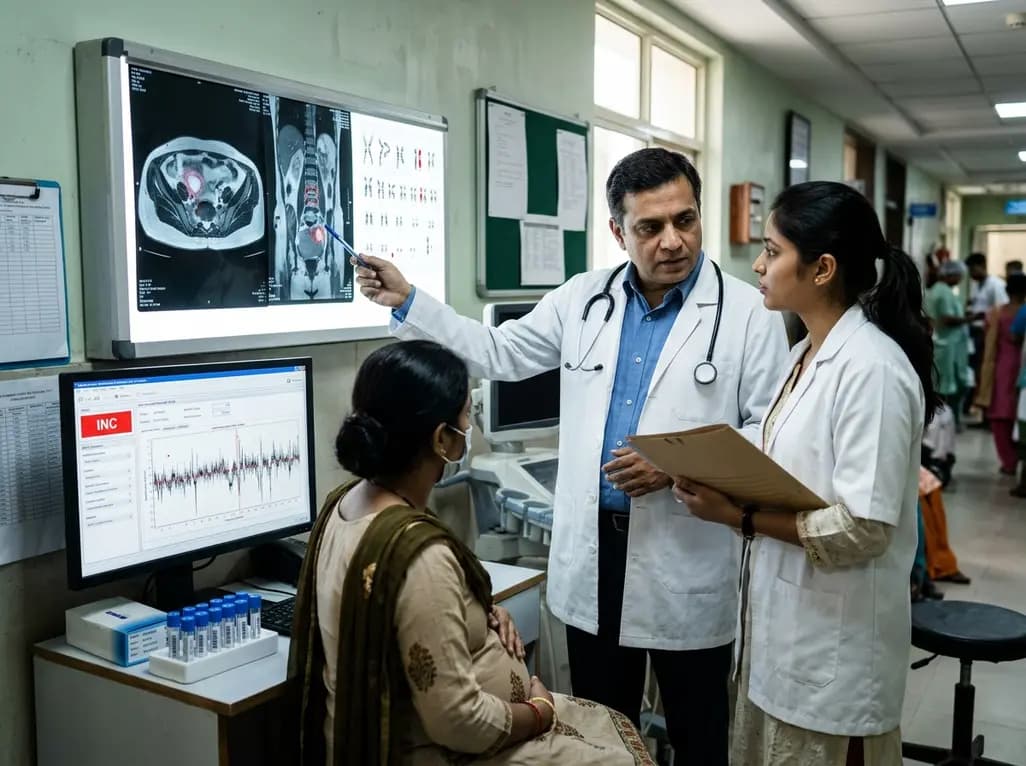
Occult maternal malignancy accounts for 3.82% of persistent unreportable NIPT results with genomic noise. Multiple chromosomal aberrations, notably on chromosome 18, warrant thorough oncological evaluation and whole-body MRI to ensure timely maternal diagnosis while preserving fetal care.
Today
This article reviews the forensic and clinical complexities of acute myocarditis arising on left ventricular hypertrophy in children, highlighting early diagnostic red flags and multidisciplinary postmortem autopsy protocols.
Today
A randomized controlled trial demonstrates that an eight-week dual-task training intervention significantly improves static and dynamic postural control over standard balance exercises in individuals with chronic ankle instability, addressing critical neurocognitive deficits during athletic and daily activities.
Today

A retrospective cohort study of 7,716 ICU patients from the MIMIC-IV database demonstrates that Gradient Boosting Decision Trees significantly outperform traditional SOFA scores in predicting in-hospital mortality among patients with sepsis and diabetes, with SHAP analysis providing clinical interpretability.
Today
