

Loading, please wait...
Loading, please wait...
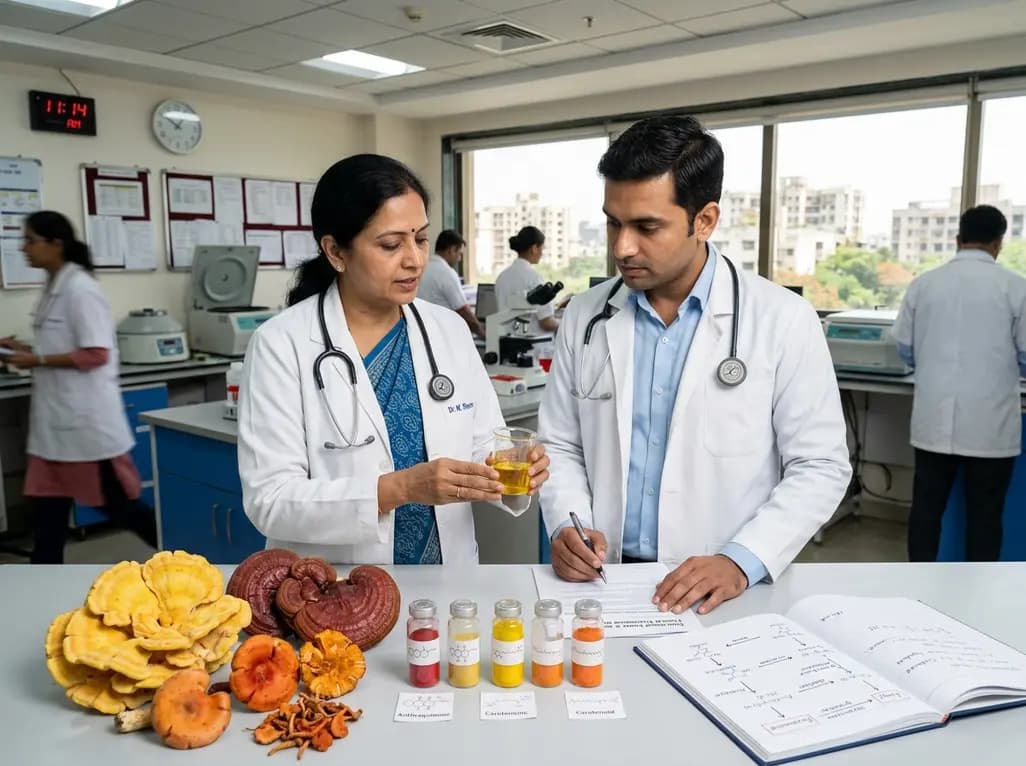
Synthetic food colorants increasingly face strict regulatory scrutiny and clinical concern due to potential neurobehavioral issues, hypersensitivity, and persistent environmental accumulation. Consequently, food manufacturers and nutraceutical developers are searching for safe, renewable alternatives derived from biological systems. In this evolving landscape, macrofungal pigments offer an exceptional opportunity to replace petroleum-derived colorants with bio-based chromophores. Edible and medicinal macrofungi feature extraordinary species diversity and complex secondary metabolism, enabling them to produce rich spectral hues. Furthermore, cultivating higher fungi through controlled fermentation reduces human reliance on unpredictable agricultural cycles and seasonal harvests. Unlike botanical sources that require extensive arable land, fungal fermentation supports consistent, standardized output. These natural pigments also demonstrate remarkable multifunctionality, pairing visual appeal with proven biological activities. Therefore, understanding macrofungal chemistry, biosafety, and therapeutic applications provides vital insights for modern dietetics, medicine, and pharmaceutical innovation. Specifically, incorporating these fungal compounds into clinical nutrition strategies may provide dual benefits by improving food aesthetics while conferring systemic cellular protection.
Macrofungal pigments encompass diverse chemical classes that impart striking colors while conferring distinct physiological properties. Carotenoids, including lycopene and beta-carotene analogues, produce brilliant yellow-to-orange hues and provide vital cellular defense against oxidative stressors. Meanwhile, fungal quinones, such as anthraquinones and benzoquinones, yield deep red, purple, and brown shades with documented antimicrobial capabilities. Furthermore, macromolecular fungal melanins create dark brown and black pigmentation, functioning as powerful scavengers of reactive nitrogen and oxygen species. In addition to these major classes, unique polyphenolic pigments and betalain-like complexes contribute substantial radical-trapping activity. Because these chromophores possess conjugated double-bond systems, they display considerable thermodynamic diversity and selective solubility across organic and aqueous media. Nevertheless, this complex structural diversity presents notable analytical challenges during laboratory isolation and structural elucidation. Researchers must therefore apply advanced tandem mass spectrometry and nuclear magnetic resonance spectroscopy to confirm molecular identities. Consequently, comprehensive chemical characterization remains an indispensable prerequisite for translating crude fungal extracts into standardized nutraceutical ingredients.
Unlike plant-derived colorants that depend on geographic conditions and unpredictable weather, macrofungal colorants allow controlled biosynthesis within industrial bioreactors. Higher fungi synthesize secondary metabolic pigments primarily through polyketide synthase routes, shikimate pathways, and mevalonate cascades. Therefore, commercial producers can harness submerged mycelial fermentation in closed vessels to achieve high, reliable biomass accumulation. Furthermore, this bioreactor approach bypasses the lengthy life cycle of mushroom fruiting bodies, condensing production timelines from months to mere days. Process engineers can carefully adjust nitrogen sources, trace minerals, dissolved oxygen, and ambient temperature to upregulate specific chromophore production. In addition, utilizing agro-industrial waste streams as sustainable growth media promotes circular economic principles. However, complex genetic regulation within macrofungi often keeps silent gene clusters inactive during routine laboratory fermentation. Consequently, bioengineers are actively testing epigenetic modifiers, chemical elicitors, and metabolic engineering strategies to activate these dormant biosynthetic pathways. Ultimately, optimizing submerged bioreactor fermentation provides an efficient, environmentally sound framework for manufacturing high-purity functional colorants.
Beyond simple aesthetic coloring, macrofungal secondary metabolites exhibit substantial biological functionalities that support preventive medicine and clinical nutrition. For instance, fungal quinones and polyphenols exert notable anti-inflammatory effects by suppressing nuclear factor-kappa B signaling and reducing systemic inflammatory cytokines. Additionally, fungal melanins possess remarkable antioxidant and radioprotective capacities, effectively shielding human cellular membranes from lipid peroxidation and ionizing radiation. Preclinical oncological models indicate that specific fungal anthraquinones induce targeted apoptosis in malignant cells while preventing unwanted cell cycle progression. Moreover, several pigmented fungal extracts display potent antimicrobial activity against multi-drug resistant pathogens, serving as viable natural food preservatives. From a cardiometabolic perspective, these pigments mitigate microvascular oxidative stress, thereby improving endothelial function and glycemic regulation. However, clinicians must remember that most therapeutic evidence currently stems from cellular and animal models. Therefore, rigorous randomized controlled human trials remain necessary to confirm optimal clinical dosages, physiological safety, and systemic bioavailability in patient populations.
Translating macrofungal extracts into stable commercial nutraceuticals involves resolving critical formulation and regulatory bottlenecks. Natural pigments frequently suffer from rapid photodegradation, thermal degradation, and pH-induced precipitation during standard food processing. Consequently, food technologists utilize advanced microencapsulation within biopolymer matrices, such as maltodextrin and fungal beta-glucans, to preserve chemical stability. Furthermore, lipophilic pigments require specialized emulsification systems to ensure adequate intestinal micellization and systemic bioaccessibility. Beyond technical processing, manufacturers must establish comprehensive safety dossiers to satisfy national regulatory agencies. In India, the Food Safety and Standards Authority of India (FSSAI) mandates stringent toxicological evaluations, including acute oral toxicity, mutagenicity assays, and heavy metal screening. Because wild mushrooms hyperaccumulate environmental toxins, pure bioreactor cultivation is imperative for meeting regulatory standards. Additionally, the Indian market exhibits growing consumer demand for clean-label, plant-based, and AYUSH-aligned functional foods. Therefore, overcoming extraction hurdles and meeting rigorous statutory requirements will allow macrofungal ingredients to thrive across Indian nutraceutical markets.
Macrofungal pigments generally show favorable safety profiles when derived from edible higher fungi. However, manufacturers must conduct rigorous toxicological profiling, including genotoxicity, cytotoxicity, and subchronic feeding assays, before approving widespread intake. Because wild mushrooms may accumulate heavy metals or produce mycotoxins, standardized bioreactor cultivation is essential. Consequently, regulatory bodies require robust contaminant screening to confirm these natural colorants remain entirely nontoxic for patients and diverse consumer groups.
Macrofungal pigments offer distinct ecological and industrial benefits compared to traditional botanical colorants. Specifically, fungal mycelia can grow inside controlled submerged fermentation vessels independent of seasonal, climatic, or agricultural variables. Furthermore, higher fungi yield unique chromophore families, such as specialized quinones and polyketides, exhibiting potent antioxidant profiles. Therefore, these fungi provide uniform batch yields and reduced land utilization, resolving prominent supply bottleneck issues that frequently restrict large-scale plant pigment extraction.
Nutraceutical developers must establish comprehensive chemical characterization, purity metrics, and shelf-life stability before securing regulatory clearance. In India, the Food Safety and Standards Authority requires thorough dossiers demonstrating lack of allergenic potential, absence of residual solvents, and batch reproducibility. Additionally, clinical teams must substantiate functional claims regarding antioxidant or anti-inflammatory efficacy through human trials. Overcoming these procedural hurdles ensures macrofungal extracts successfully transition from experimental laboratory formulations into certified therapeutic formulations.
Disclaimer: This content is for informational and educational purposes only and does not constitute medical advice, diagnosis, or treatment. It is intended for healthcare professionals and researchers to provide clinical updates and educational insights. While every effort has been made to ensure accuracy, clinical judgment should always take precedence. Refer to the latest local and national guidelines for clinical practice.
References

Read summarized clinical updates, watch expert medical content, and earn CME certifications right from your smartphone.
Open your smartphone camera to scan and install.





Macrofungal pigments offer safe, sustainable alternatives to synthetic dyes in food and nutraceuticals. This review highlights their chemical diversity, biosynthetic stability, matrix compatibility, and therapeutic mechanisms to guide clinical and nutritional translation.
Today

A nationwide review reveals that gastrointestinal and urological tract injuries occur in 233 per 100,000 cesarean deliveries, causing elevated ICU admission and maternal mortality. Prior cesarean delivery triples urological risk, underscoring the critical consulting role of general surgeons.
Today

A nationwide Swedish registry study evaluating insulin degludec versus glargine reveals equivalent MACE in trial-eligible patients, yet shows significantly lower all-cause mortality across both trial-eligible and routine practice populations, along with reduced cardiovascular events in real-world cohorts.
Today

A systematic review and meta-analysis of 8 RCTs evaluated bipolar versus monopolar electrocautery in primary total hip and knee arthroplasty. Pooled data revealed no significant differences in haemoglobin drop, blood loss, or length of stay, concluding that routine bipolar electrocautery is not supported.
Today

A critical review evaluates whether starch-polyphenol complexes meet structural and metabolic criteria to qualify as type 5 resistant starch. The proposed tiered evidence framework distinguishes true inclusion complexes from simple mixtures, clarifying mechanisms for glycemic modulation and gut fermentation.
Today
