.webp&w=384&q=75)

Loading, please wait...
Loading, please wait...
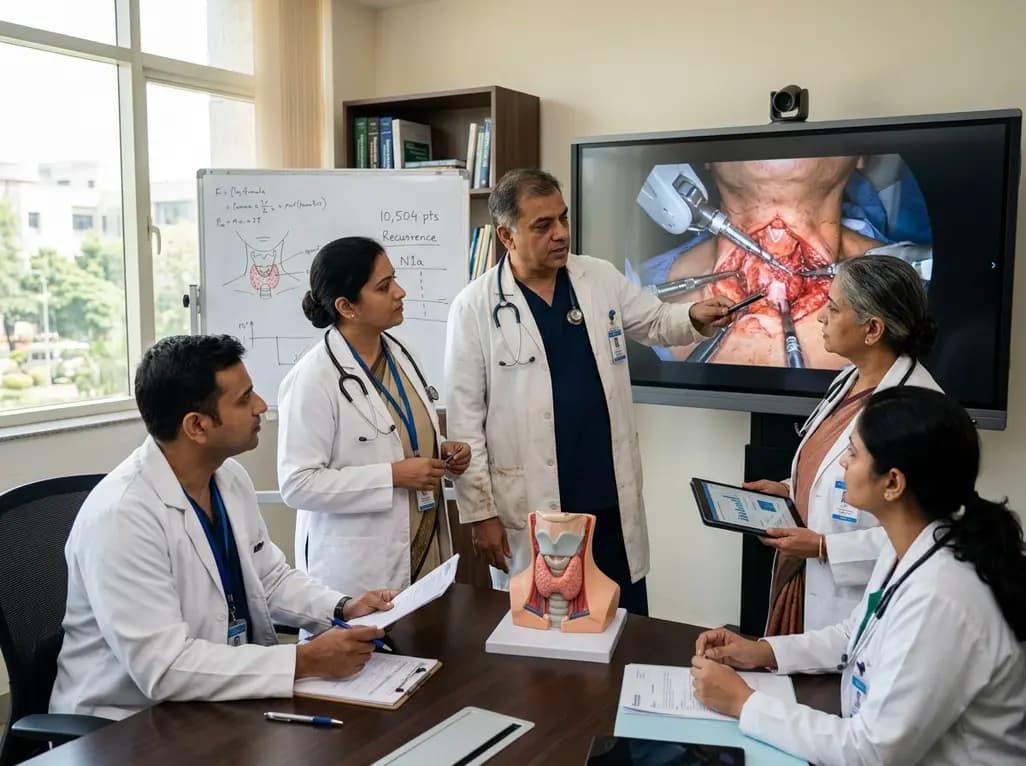
Surgical management of differentiated thyroid cancer has evolved significantly over the past two decades. Endocrine and head and neck surgeons frequently utilize minimally invasive and remote-access approaches to avoid visible cervical scars. Among these techniques, transaxillary robotic thyroidectomy has gained widespread global adoption. Surgeons value the approach for its excellent cosmetic outcomes, magnified three-dimensional visualization, and precise instrumentation. However, clinicians often debate whether remote-access robotic surgery achieves the same rigorous oncological clearance as traditional open surgery. Until recently, large-scale cohorts with prolonged follow-up were sparse. A groundbreaking retrospective study analyzing 10,504 patients now provides comprehensive insights into long-term locoregional recurrence patterns following transaxillary robotic procedures.
The landmark investigation evaluated 10,504 patients with differentiated thyroid cancer who underwent gasless transaxillary robotic surgery between 2007 and 2024 at a high-volume surgical center. Over the extended observation window, locoregional recurrence occurred in only 97 patients, representing an exceptionally low overall recurrence rate of 0.9%. Consequently, these findings confirm that remote-access robotic surgery provides durable long-term oncological control when skilled teams perform the operation. Furthermore, the extensive sample size offers high statistical power to evaluate anatomic recurrence pathways. Most patients in the cohort presented with papillary thyroid carcinoma, reflecting standard global epidemiology. In addition, the vast majority of recurrent cases exhibited isolated disease rather than diffuse regional spread. Specifically, single-site recurrence occurred in 89.7% of affected individuals, while multi-site recurrence developed in only 10.3%. Therefore, systematic compartment-based tracking demonstrates that tumor relapse remains rare and anatomically predictable after robotic intervention.
To accurately understand disease relapse, researchers applied a precise compartment-based anatomic mapping system. The study categorized recurrence into five distinct anatomical regions: the ipsilateral lateral neck, the contralateral thyroid lobe, the central compartment, the contralateral lateral neck, and extracompartmental areas. Among the 97 patients with recurrent disease, the ipsilateral lateral neck emerged as the most frequent site of tumor relapse, accounting for 48 cases. In contrast, recurrence in the contralateral thyroid remnant occurred in 38 patients, primarily among individuals who initially underwent robotic thyroid lobectomy rather than total thyroidectomy. Central compartment recurrence developed in only 12 patients, comprising seven ipsilateral and five contralateral events. Consequently, these findings indicate that the primary risk area lies within the lateral nodal basins rather than the central operative bed. Surgeons successfully achieve thorough central compartment clearance via the transaxillary route, minimizing residual tissue in critical peritracheal spaces.
Multivariable logistic regression identified critical clinicopathologic factors that independently correlate with regional recurrence. Pathologically confirmed central lymph node metastasis at initial surgery served as the strongest independent predictor of subsequent ipsilateral lateral neck recurrence. Patients with initial N1a nodal disease faced a nearly tenfold higher risk of lateral recurrence compared to node-negative counterparts. Furthermore, larger primary tumor size, gross extrathyroidal extension, and aggressive histologic subtypes correlated with increased relapse likelihood. Conversely, patient age and baseline comorbidities did not independently drive recurrence risk. These predictive associations mirror the biological patterns commonly observed in conventional open thyroidectomy series. Therefore, tumor biology and initial nodal burden govern disease recurrence far more significantly than the surgical approach itself. Clinicians must recognize these high-risk features early to tailor adjuvant treatments, such as radioactive iodine therapy and targeted nodal surveillance.
Given the specific recurrence distribution, postoperative surveillance after transaxillary robotic thyroidectomy requires systematic cervical ultrasound and biochemical tracking. Clinicians should thoroughly examine the ipsilateral lateral neck compartments, including levels II, III, and IV, during routine follow-up examinations. Because the lateral neck represents the predominant relapse site, high-resolution sonography remains the primary modality for early detection. Additionally, serum thyroglobulin and antithyroglobulin antibody measurements provide vital biochemical surveillance. For patients who undergo hemithyroidectomy, serial ultrasound of the contralateral thyroid lobe remains essential to detect metachronous nodules or disease progression. When physicians identify suspicious lateral lymphadenopathy, ultrasound-guided fine-needle aspiration biopsy with thyroglobulin needle washout confirms the diagnosis. Fortunately, because most recurrences remain localized to single nodal basins, salvage compartmental lymphadenectomy or radioiodine therapy achieves excellent secondary disease clearance and preserves favorable survival outcomes.
The remarkable oncological outcomes from this 10,504-patient cohort offer vital clinical guidance for multidisciplinary thyroid cancer teams. Transaxillary robotic surgery demonstrates safety and efficacy in appropriately selected patients, particularly those with low-to-intermediate-risk differentiated thyroid cancer desiring scarless cervical results. However, rigorous patient selection remains paramount. Patients presenting with extensive lateral neck metastasis or locally invasive tumors penetrating adjacent structures remain better suited for standard open cervical approaches. Furthermore, surgical teams must undergo structured robotic training to master safe tissue dissection, recurrent laryngeal nerve preservation, and parathyroid gland identification. As robotic platforms continue to evolve with flexible instrumentation and single-port technology, technical accessibility will broaden globally. In conclusion, long-term evidence validates transaxillary robotic surgery as a robust oncological modality that yields low locoregional recurrence rates comparable to open surgery.
The overall locoregional recurrence rate is exceptionally low at approximately 0.9% over long-term follow-up in large patient cohorts. Most recurrences present as isolated, single-site disease rather than widespread regional dissemination. Consequently, transaxillary robotic surgery offers oncological safety and tumor control comparable to conventional open thyroidectomy when experienced surgical teams perform the procedure.
The ipsilateral lateral neck represents the most frequent site of regional recurrence, followed by the contralateral thyroid lobe in patients undergoing lobectomy. Central compartment recurrence occurs relatively infrequently. Therefore, routine postoperative surveillance must prioritize comprehensive high-resolution ultrasound evaluation of lateral cervical lymph node basins, specifically levels II through IV.
Patients with pathologically confirmed central lymph node metastasis at initial diagnosis face the highest risk of subsequent lateral neck recurrence. Additionally, larger primary tumor dimensions, significant extrathyroidal extension, and high-risk histologic features independently elevate recurrence odds. Clinicians should monitor these high-risk individuals closely using serial thyroglobulin testing and targeted neck imaging.
Disclaimer: This content is for informational and educational purposes only and should not be taken as professional medical advice. Always consult a qualified healthcare provider for diagnosis and treatment decisions. Refer to the latest local and national guidelines for clinical practice.
References

Read summarized clinical updates, watch expert medical content, and earn CME certifications right from your smartphone.
Open your smartphone camera to scan and install.





A landmark study of 10,504 patients evaluates long-term locoregional recurrence after transaxillary robotic thyroidectomy for differentiated thyroid cancer, highlighting low recurrence rates, common anatomic sites, and key risk factors like N1a disease.
last month
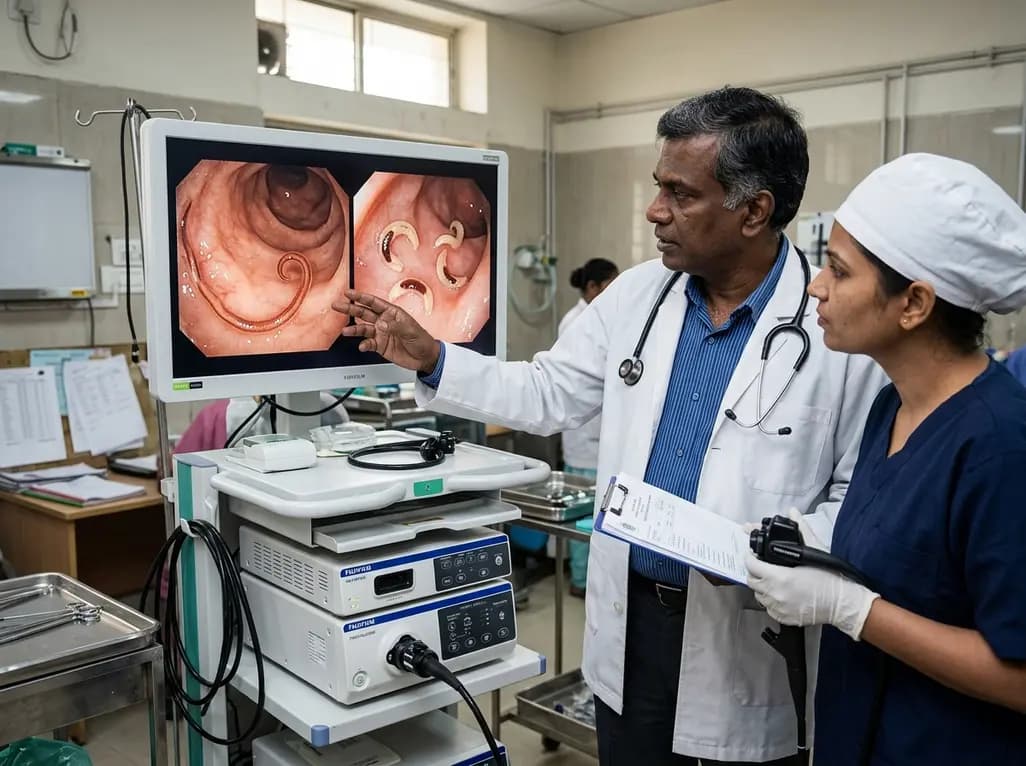
A review of incidental intestinal parasitic infections detected during colonoscopy, highlighting diagnostic morphology, the absence of peripheral eosinophilia, and tailored antihelminthic treatment.
Today

A nationwide South Korean study shows underreporting of smoking among women dropped from 57.4% to 36.4% between 2008 and 2021. However, over one-third of female smokers still conceal their habit, highlighting the critical role of cotinine verification in clinical risk assessment.
Today

PepsiCo and Monster Beverage have challenged the FSSAI ban on the energy drink label in Indian courts. While companies highlight supply disruptions, regulatory actions spotlight severe cardiovascular and metabolic risks associated with excessive caffeine, sugar, and taurine consumption, especially in adolescents.
Today

A new study evaluates the rheological stability of decellularized peripheral nerve matrix hydrogels under varied storage conditions. Findings show -80°C storage and freeze-drying preserve gelation kinetics and mechanical stiffness, offering key insights for shipping and translational clinical applications.
Today

A Bayesian multilevel meta-analysis reveals that aerobic training combined with moderate carbohydrate restriction modestly lowers HbA1c in type 2 diabetes. However, sparse data and very low certainty leave incremental benefits over exercise or diet alone unproven, highlighting the need for individualized care.
Yesterday
