

Loading, please wait...
Loading, please wait...
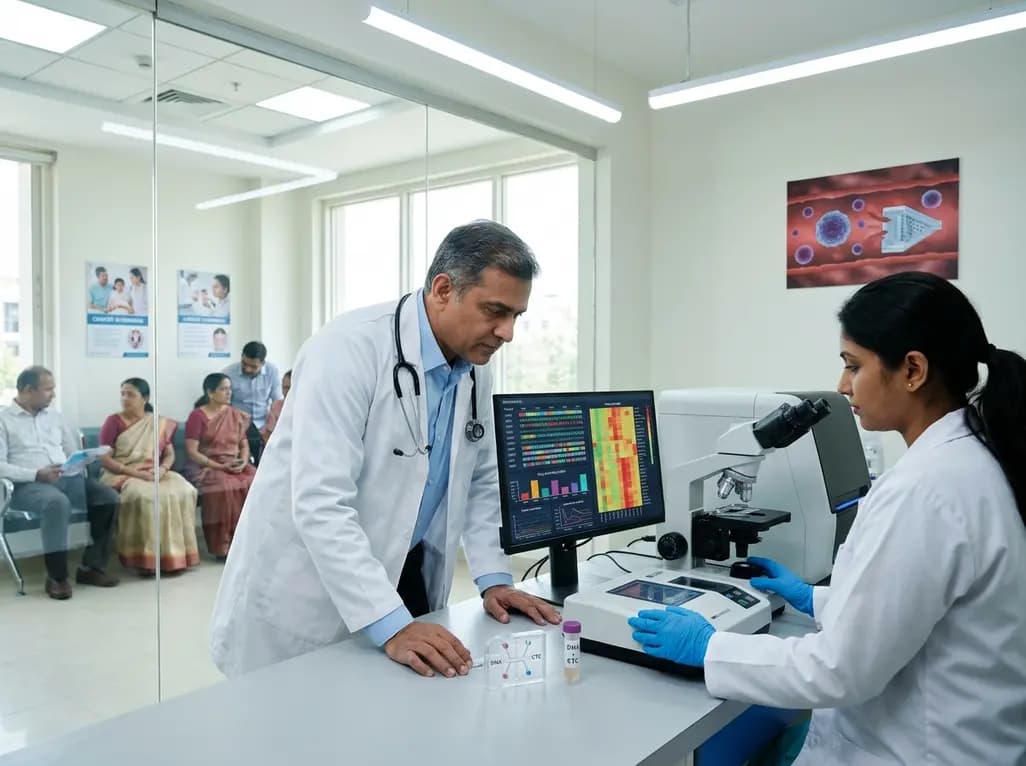
The emergence of liquid biopsy in cancer represents a major paradigm shift in diagnostic oncology. Historically, clinicians relied almost exclusively on tissue excision or invasive needle sampling to characterise malignant lesions. However, primary tumours shed biological material into peripheral circulation long before anatomical metastases become visible. Liquid biopsies systematically capture circulating tumour cells, circulating cell-free tumour DNA, and extracellular vesicles from a standard peripheral blood draw. Consequently, this non-invasive technique permits real-time assessment of dynamic tumour genetics without exposing patients to repeat surgical risks.
Moreover, medical scientists Catherine Alix-Panabières and Klaus Pantel coined the term in 2010. They envisioned a diagnostic modality capable of tracking cancer evolution continuously throughout therapy. In fact, conventional biopsies provide only a single static snapshot of a heterogeneous and mutating tumour mass. In contrast, liquid biopsies reflect genomic diversity across multiple metastatic sites simultaneously. As a result, oncologists gain immediate biological insights into treatment response, minimal residual disease, and emerging therapy resistance. Furthermore, recent technological innovations now allow laboratory teams to isolate extremely rare cells with remarkable analytical accuracy. Ultimately, this approach transforms standard clinical monitoring into proactive, molecularly guided oncology care.
Solid tissue biopsy remains an established gold standard, but it presents undeniable procedural challenges. Invasive needle biopsies carry complications like post-procedure pain, haemorrhage, pneumothorax, or infection. Furthermore, clinicians often cannot access deep thoracic or retroperitoneal lesions safely. Therefore, repeat tissue sampling during systemic progression becomes practically impossible for many frail patients. Liquid biopsy eliminates these procedural morbidities through simple venous sampling. Thus, oncologists can repeat testing frequently without risking patient safety.
Additionally, tumours release multifaceted biological cargoes that provide comprehensive functional details. Circulating tumour cells represent viable seeds of metastatic dissemination. When laboratories analyse these intact cells, they uncover whole-cell genomics, transcriptomics, and protein expression patterns. Similarly, circulating tumour DNA carries critical actionable driver mutations like EGFR, KRAS, or BRAF alterations. Tumour-derived extracellular vesicles also transport non-coding RNAs and immune modulators that reflect host-tumour interplay. Therefore, evaluating circulating biomarkers helps clinicians monitor therapeutic response and track drug resistance mechanisms in real time. Hence, combining cell-free nucleic acid assays with circulating tumour cell isolation provides unprecedented biological depth for personalized therapy.
Financial toxicity remains a devastating consequence of modern oncological care across the world. Targeted therapies and modern immunotherapies impose substantial financial burdens on families and healthcare systems. However, clinicians often prescribe these high-cost drugs empirically without definitive confirmation of biological efficacy. In many instances, non-responsive patients receive months of futile therapy before radiological scans confirm disease progression. Consequently, families deplete life savings on ineffective treatments while patients endure unnecessary toxic adverse effects.
According to Professor Klaus Pantel, liquid biopsies can disrupt this unsustainable economic cycle. He explains that an initial blood test costing approximately one thousand dollars can prevent misdirected therapies that cost upwards of ten thousand dollars. For example, timely molecular profiling identifies non-responders within weeks rather than months. Thus, physicians can discontinue unhelpful medications immediately and switch patients to truly effective alternatives. Furthermore, early detection enables definitive curative intent, which allows patients to return to the active workforce. Ultimately, liquid diagnostics deliver substantial cost-effectiveness by matching expensive drugs only to patients who will genuinely benefit.
India faces a rapidly rising cancer burden characterized by delayed diagnosis and high out-of-pocket expenses. Most Indian cancer patients present at locally advanced or metastatic stages where curative therapy becomes challenging. Furthermore, imported molecular diagnostic platforms remain prohibitively expensive for common families in tier-two and tier-three cities. Therefore, developing accessible, domestic diagnostic solutions remains essential to close this widening equity gap. The recent unveiling of an indigenously developed liquid biopsy platform by Actorius Innovations in Mumbai exemplifies this necessary domestic progress.
Moreover, domestic manufacturing significantly lowers the logistical hurdles and unit costs associated with specialized oncology testing. Local diagnostic platforms reduce turnaround times from weeks to just a few days. Consequently, oncologists can make prompt clinical decisions before aggressive disease spreads further. Additionally, local validation ensures that test parameters account for unique Indian epidemiological profiles and genetic variations. In the long run, expanding affordable blood-based diagnostics will empower regional tertiary hospitals across India. Thus, decentralized molecular testing will bring cutting-edge precision oncology directly to underserved communities.
Despite compelling scientific evidence, liquid biopsy adoption faces noticeable resistance within traditional healthcare hierarchies. Interdisciplinary competition often slows down the uptake of disruptive diagnostic technologies. For instance, established departments in diagnostic radiology and conventional surgical pathology frequently express reservations. Many practitioners view novel blood-based assays as potential competitors rather than complementary clinical tools. Consequently, institutional inertia and protective specialty boundaries delay the routine integration of circulating biomarker assays into standard hospital workflows.
However, clinical leaders stress that liquid biopsy does not replace tissue pathology or radiological imaging. Instead, each diagnostic modality provides unique and synergistic clinical data. Radiologists assess gross anatomical tumour burdens, while surgical pathologists evaluate cellular tissue architecture and immunohistochemistry. Meanwhile, liquid biopsies provide real-time genomic tracking of subclonal therapeutic resistance. Therefore, professional organizations like the European Liquid Biopsy Society advocate for interdisciplinary collaboration across medical disciplines. Indeed, multidisciplinary tumour boards thrive when specialists synthesize complementary insights from every available diagnostic platform. Ultimately, fostering cross-specialty cooperation ensures that clinicians combine imaging, tissue pathology, and blood tests to achieve optimal patient outcomes.
Transitioning liquid biopsy from academic exploration into daily clinical guidelines requires rigorous clinical validation. Dr Catherine Alix-Panabières emphasizes that observational studies alone cannot justify widespread guideline endorsement. Currently, dozens of exploratory trials demonstrate that circulating tumour cells correlate with clinical prognosis. However, oncologists require interventional clinical trials demonstrating whether altering management based on liquid biopsy results genuinely improves overall survival. Therefore, prospective randomized trials must compare liquid biopsy-guided strategies directly against conventional standard-of-care protocols.
Additionally, global standardization of pre-analytical protocols remains critical for reproducibility. Laboratories must harmonize blood collection tubes, storage temperatures, isolation techniques, and sequencing depth. Without strict quality standards, biological variability and false-positive findings could mislead treating oncologists. Furthermore, international academic consortia are actively drafting unified consensus guidelines to address these technical disparities. Consequently, ongoing clinical trials will establish clear decision-making algorithms for minimal residual disease detection and treatment de-escalation. Ultimately, robust clinical evidence will solidify liquid biopsy as a foundational pillar of precision cancer medicine.
Q1: What are the main clinical advantages of liquid biopsy over traditional tissue biopsy?
Liquid biopsy offers a non-invasive, low-risk alternative to surgical or core needle biopsies through routine peripheral blood collection. This blood-based approach allows clinicians to monitor tumour dynamics repeatedly without procedural complications like bleeding or infection. Furthermore, liquid biopsy captures systemic tumour heterogeneity from multiple metastatic sites, whereas single-site tissue biopsies often miss resistant subclones. Consequently, liquid diagnostics provide continuous, real-time molecular profiling to guide adaptive cancer therapies effectively.
Q2: How does liquid biopsy testing reduce the overall financial burden for cancer patients?
Liquid biopsy testing significantly reduces overall healthcare costs by preventing misdirected and ineffective therapies. High-cost targeted therapies and immunotherapies impose immense financial strain if administered without biological response. By evaluating circulating tumour biomarkers within weeks of initiating treatment, oncologists rapidly identify non-responding patients. Therefore, clinicians can discontinue futile treatments promptly and avoid tens of thousands of dollars in wasted expenditures, sparing families devastating financial toxicity.
Q3: Why are interventional clinical trials necessary before liquid biopsies become routine standard of care?
Interventional clinical trials are essential because observational studies only establish correlative prognostic value rather than direct therapeutic benefit. Regulatory authorities and clinical guideline committees require concrete proof that treatment decisions based on liquid biopsy results improve patient survival and quality of life. Furthermore, prospective interventional trials validate standardized laboratory workflows and clinical cut-offs. Consequently, these rigorous studies ensure clinicians can safely de-escalate therapy or select targeted alternatives based on blood tests.
Disclaimer: This content is for informational and educational purposes only. It does not constitute medical advice or replace professional judgment. Refer to the latest local and national guidelines for clinical practice.
References

Read summarized clinical updates, watch expert medical content, and earn CME certifications right from your smartphone.
Open your smartphone camera to scan and install.





Explore how liquid biopsy is reshaping oncology practice by detecting circulating tumour cells and genomic markers. Pioneers Catherine Alix-Panabières and Klaus Pantel explain how blood-based profiling curbs misdirected therapies, reduces patient financial toxicity, and enhances personalized clinical care.
Today

The AustrAIHANZ consensus guidelines offer evidence-informed recommendations on the investigation, first- and second-line treatments, transfusion strategies, and supportive care for autoimmune haemolytic anaemia.
Today

Assam reduced maternal sepsis deaths from 21% to 8% through rigorous infection prevention protocols and digital monitoring. Explore the clinical strategies, sterilization quality checks, early recognition pathways, and antimicrobial stewardship lessons essential for obstetric teams across India.
Today

A real-world cohort study of 6,537 patients from the FOUNTAIN platform demonstrates that initiating finerenone significantly reduces albuminuria by 40.7% with minimal eGFR decline and manageable hyperkalemia risk, confirming its practical effectiveness and safety in diabetic kidney disease.
Today

Adding a 12-week tele-supervised resistance band exercise program to intra-articular hyaluronic acid injections significantly improves physical function, chair stands, and mobility in knee osteoarthritis, despite showing no additive reduction in baseline pain scores.
Today
A secondary analysis of the OMDOT-1 trial highlights how tirzepatide and semaglutide uniquely reshape gut microbial diversity and metabolic pathways in type 2 diabetes, providing new insights into incretin-mediated metabolic regulation.
Today
