

Loading, please wait...
Loading, please wait...

Arthroscopic superior capsule reconstruction provides an established joint-preserving alternative for patients with massive, irreparable rotator cuff tears. In such challenging cases, superior humeral migration compromises normal shoulder biomechanics and causes severe pain. Surgeons frequently utilize autologous tissue to stabilize the glenohumeral joint without requiring costly synthetic patches. Specifically, the long head of the biceps tendon serves as an accessible, vascularized autograft. However, structural graft retear remains a persistent clinical concern. Identifying reliable preoperative prognostic markers allows orthopedic teams to optimize candidate selection and refine postoperative expectations.
Orthopedic surgeons frequently encounter massive rotator cuff tears that preclude primary tendon-to-bone repair. In such challenging circumstances, arthroscopic superior capsule reconstruction offers an effective joint-preserving approach. Teruhisa Mihata originally developed this technique using fascia lata autografts to recreate superior capsular restraint. Consequently, the reconstructed capsule centers the humeral head and restores the glenohumeral fulcrum. Furthermore, maintaining concentric alignment reduces subacromial contact pressures and optimizes deltoid mechanical advantage during active elevation. While fascia lata autografts and dermal matrices provide viable solutions, they often increase donor morbidity, operative duration, and overall costs. Therefore, shoulder arthroscopists increasingly utilize the ipsilateral long head of the biceps tendon autograft. This native tendon lies directly within the operative field, avoiding extra incisions. In addition, preserving the glenoid origin maintains vascular supply and cell viability. As a result, this construct provides strong mechanical integrity and favorable biological healing. Nevertheless, graft failure still represents an important clinical challenge.
A multicenter pilot case-control study evaluated forty patients undergoing long head of the biceps tendon reconstruction. Surgical investigators followed participants over a median of twenty-four months to analyze clinical and radiographic predictors. Postoperative magnetic resonance imaging defined structural failures through Sugaya type IV and type V classifications. Fourteen patients experienced graft retear, while twenty-six retained intact reconstructions. Interestingly, tear morphology and radiological tear dimensions showed no significant differences between groups. Instead, baseline functional scores differed substantially before surgery. Patients who ultimately suffered graft retear displayed lower preoperative Constant-Murley, American Shoulder and Elbow Surgeons, and UCLA scores. For instance, the median baseline ASES score was 25.8 in the retear group compared with 35.0 among intact controls. Similarly, baseline forward elevation was significantly lower in patients who later developed failure. These findings demonstrate that baseline functional impairment represents the primary indicator of failure. Therefore, clinicians should prioritize functional scores over anatomical tear dimensions.
To improve clinical decision-making, researchers formulated a multivariable logistic regression model incorporating three distinct parameters. Specifically, this predictive model evaluated baseline ASES score, Goutallier fatty infiltration grade, and active forward elevation range. The model achieved an impressive area under the curve of 0.811, which remained dependable at 0.754 after bootstrap optimism correction. Furthermore, investigators identified clinical thresholds using the Youden index to guide risk assessment. These statistical cutoffs highlight individuals whose musculotendinous units suffer severe chronicity. Although traditional rotator cuff research emphasizes tear diameter and retraction, this investigation indicates that muscular degeneration dictates graft survival. When rotator cuff musculature undergoes extensive fatty degeneration, the shoulder loses dynamic restraint. Consequently, the reconstructed biceps capsule absorbs excessive mechanical shear stress, accelerating structural failure. In addition, severe preoperative pseudo-paralysis reflects marked neuromuscular impairment. Orthopedic surgeons in busy sports practices should therefore evaluate functional scores and fatty infiltration to stratify failure risk before surgery.
A notable finding from the study is the dissociation between structural continuity and postoperative functional improvement. Even though fourteen patients developed confirmed graft retear on imaging, they experienced dramatic symptomatic relief. In fact, both the retear group and the intact graft cohort achieved equivalent functional gains during follow-up. Every participant exceeded the established minimal clinically important difference thresholds across all evaluated outcome measures. Patients reported substantial pain relief, increased range of motion, and enhanced daily function. Several biomechanical mechanisms explain this favorable clinical pattern. First, surgical release and tenodesis of the diseased biceps tendon eliminates an important pain generator. Second, fibrous tissue scarring can stabilize the superior glenohumeral fulcrum adequately to maintain active arm elevation. Moreover, structured postoperative physical therapy strengthens the periscapular stabilizers and anterior deltoid musculature. Consequently, even when imaging confirms graft discontinuity, patients often preserve noticeable functional improvements. Clinicians must thus interpret imaging findings alongside clinical symptoms before considering revision surgery.
These clinical findings provide practical guidance for orthopedic surgeons managing massive rotator cuff disease. First, comprehensive preoperative workups should include standardized functional questionnaires like the ASES or Constant-Murley scores. When patients exhibit severe functional deficits and advanced fatty infiltration, clinicians should discuss realistic anatomical expectations. Although superior capsule reconstruction reliably provides pain relief, patients with poor baseline function face a higher likelihood of structural failure. In such high-risk individuals, surgeons might consider alternative procedures, such as balloon spacer arthroplasty, tendon transfers, or reverse total shoulder arthroplasty. Conversely, patients who preserve modest active elevation and reasonable muscle quality represent optimal candidates for biceps autograft reconstruction. Furthermore, postoperative rehabilitation programs should incorporate protected motion phases to minimize stress across the healing graft. Surgeons in sports medicine practices must remember that structural healing does not uniquely dictate patient satisfaction. By combining rigorous candidate selection and tailored physical therapy, surgical teams can maximize functional recovery.
The long head of the biceps tendon serves as a local autograft to bridge the superior glenohumeral defect. By anchoring the tendon proximally at the superior glenoid and distally at the greater tuberosity footprint, the graft prevents superior humeral head migration. Furthermore, maintaining the native glenoid attachment preserves local vascularity and cell viability. This cost-effective reconstructive technique restores the joint fulcrum, relieves pain, and improves active shoulder elevation without creating donor-site morbidity.
Postoperative improvement following structural failure occurs because biceps tenodesis eliminates a major mechanical pain generator within the joint. Additionally, dynamic compensation by the deltoid and periscapular musculature helps re-establish active motion. Fibrous scar tissue often forms across the superior capsule, which provides sufficient passive constraint against humeral migration. Consequently, patients frequently achieve substantial pain relief, enhanced motion, and clinically important functional score gains even when magnetic resonance imaging confirms structural retear.
Multivariable analysis indicates that severe baseline functional limitation, manifested by reduced ASES and Constant-Murley scores, serves as the strongest predictor of graft failure. Furthermore, reduced preoperative active forward elevation and advanced Goutallier fatty infiltration within the rotator cuff muscles independently elevate retear risk. Interestingly, anatomical tear dimensions and radiological tear shapes do not predict structural compromise. Clinicians should therefore prioritize functional performance metrics and muscle quality during preoperative risk stratification.
Disclaimer: This content is for informational and educational purposes only and does not substitute for professional medical advice, diagnosis, or treatment. Refer to the latest local and national guidelines for clinical practice.
References

Read summarized clinical updates, watch expert medical content, and earn CME certifications right from your smartphone.
Open your smartphone camera to scan and install.





A pilot case-control study reveals that severe preoperative functional impairment, rather than tear size, predicts graft retear following arthroscopic superior capsule reconstruction using a biceps autograft. Despite structural failures, patients achieved equivalent functional gains exceeding clinical thresholds.
Today
A post hoc analysis of the VANISH trial reveals that baseline Proenkephalin A (PENK) alters response to hydrocortisone in septic shock. Patients with high PENK experienced fewer kidney failure-free days and increased mortality when given hydrocortisone, suggesting the need for biomarker-guided precision therapy.
Today

A landmark study evaluates artificial intelligence models and prompting strategies in qualitative lupus pregnancy research, revealing that few-shot prompting in advanced LLMs reliably captures maternal experiences, clinical anxieties, and perinatal outcomes across diverse languages.
Today

A comprehensive computational and clinical analysis evaluates incretin anti-obesity therapies, comparing oral orforglipron with injectable semaglutide and tirzepatide. Findings from head-to-head trials and multi-criteria decision analysis guide personalized clinical management.
Today
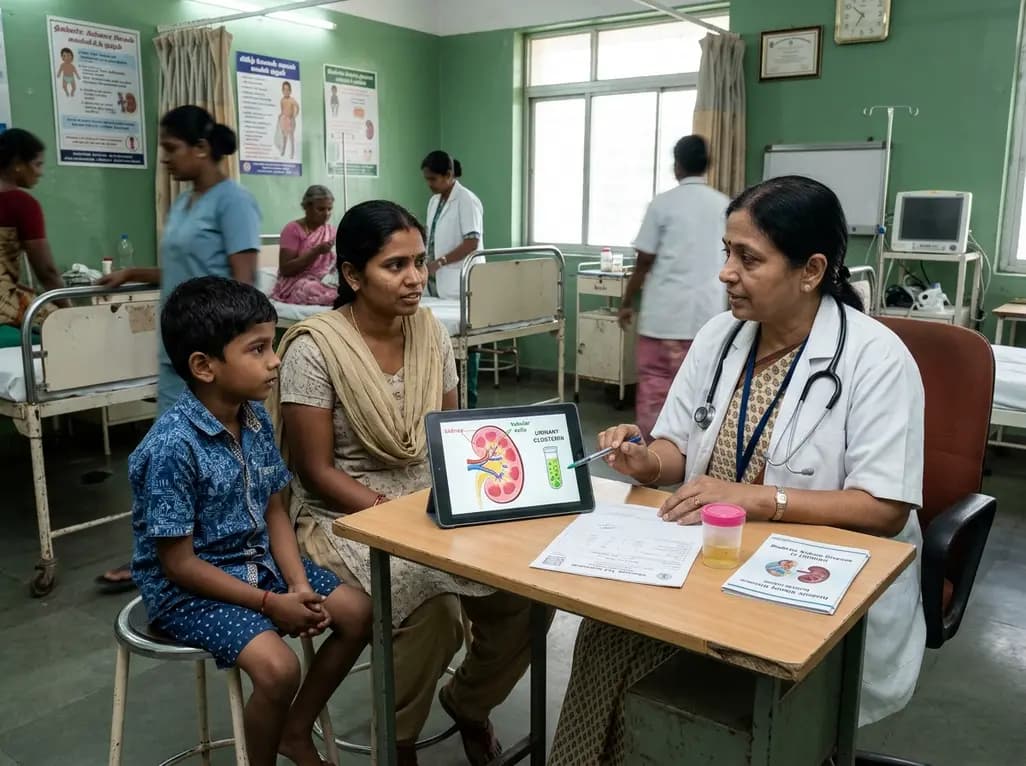
A recent case-control study reveals that urinary clusterin provides superior diagnostic performance for early diabetic kidney disease detection in pediatric type 1 diabetes mellitus, identifying tubular damage before conventional microalbuminuria occurs.
Today
