.webp&w=384&q=75)

Loading, please wait...
Loading, please wait...
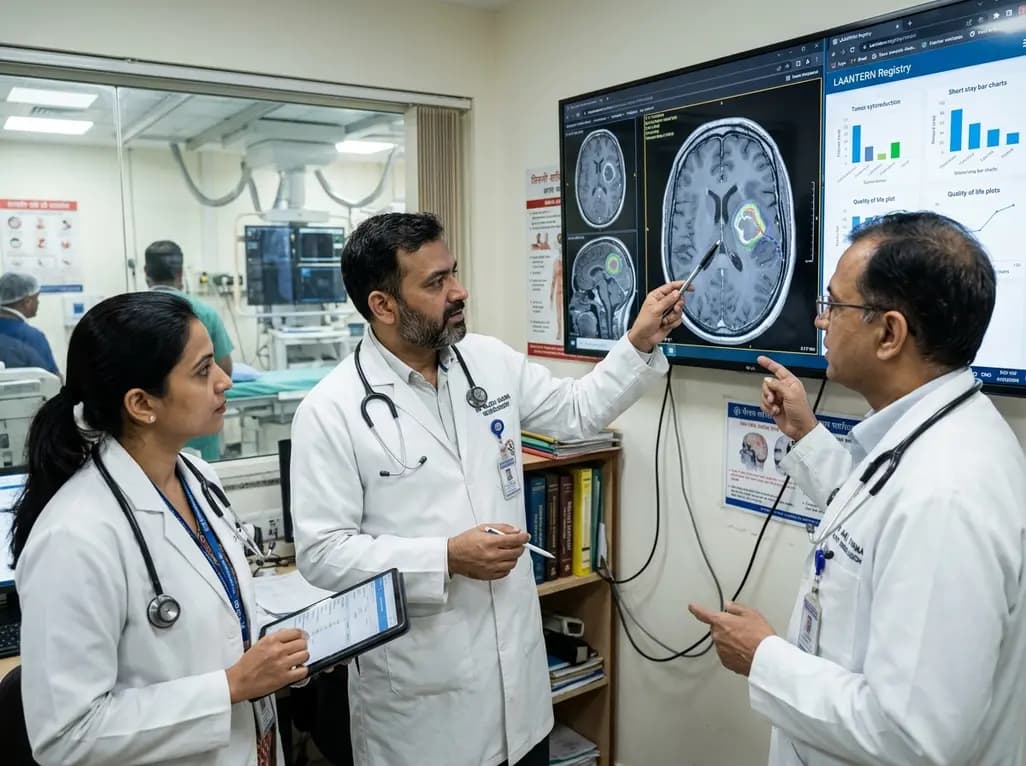
Managing primary and metastatic intracranial malignancies continues to pose significant therapeutic challenges for neurosurgeons and oncologists worldwide. Conventional open craniotomy often carries substantial surgical morbidity, particularly for deeply situated, eloquent, or surgically recalcitrant lesions. In recent years, laser interstitial thermal therapy has emerged as a transformative, minimally invasive cytoreductive modality. Guided stereotactically under real-time magnetic resonance imaging thermometry, this technique utilizes targeted hyperthermia to induce coagulative necrosis within intracranial pathologies while sparing adjacent critical neural circuitry. Clinicians increasingly deploy thermal ablation for difficult clinical scenarios, including recurrent glioblastoma, progressive brain metastases, and radiation necrosis. By inserting a thin laser catheter through a tiny burr hole, surgeons can treat challenging lesions that were once deemed inoperable. Furthermore, thermal ablation disrupts the peritumoral blood-brain barrier, potentially augmenting the delivery of adjuvant systemic therapies and targeted pharmacotherapy. As clinical applications rapidly expand, robust prospective evidence has become essential to define patient selection criteria, evaluate complication profiles, and assess durability of long-term oncologic control.
The LAANTERN multicenter study represents a pivotal milestone in evaluating real-world outcomes for stereotactic laser ablation across 25 leading neurosurgical institutions. Encompassing 787 patients with primary and metastatic intracranial neoplasms, this prospective registry provides unprecedented data regarding procedural efficacy and clinical utility. Among the cohort, 445 patients presented with primary brain tumors, while 342 individuals underwent treatment for intracranial metastases. Pediatric patients were also represented, with a median age of 15 years within this specialized subset, highlighting broad procedural versatility. Notably, the study captured real-time intraprocedural dynamics, adverse event trajectories, and long-term functional indices across heterogeneous patient populations. Multivariable analyses within the trial underscored that laser ablation reliably achieves controlled thermal coagulation across diverse histologies. By assessing real-world technical execution, the LAANTERN investigators established a crucial baseline for treatment efficacy, demonstrating that minimally invasive ablation delivers consistent cytoreduction without the substantial anatomical disruption characteristic of traditional resective craniotomies. Consequently, these findings firmly establish thermal ablation as a viable alternative for complex intracranial disease.
A compelling advantage of minimally invasive laser ablation lies in its favorable safety profile and marked reduction in postoperative healthcare resource utilization. In the LAANTERN cohort, the median length of hospital stay was merely 32.4 hours, enabling swift functional recovery. Impressively, 62.6% of patients avoided intensive care unit admission entirely, underscoring the minimally disruptive nature of stereotactic ablation. The overall adverse event rate was documented at 12.8%, with 65.5% of these events classified as transient neurological symptoms that resolved with observation or medical support. Furthermore, procedural mortality remained remarkably low at 0.25%, demonstrating exceptional perioperative safety even among medically fragile cancer patients. Because the intervention requires only a stereotactic burr hole rather than large cranial flap elevation, postoperative pain, wound complications, and systemic physiological stress are markedly curtailed. Consequently, patients experience accelerated mobilization, reduced hospitalization costs, and rapid readiness for subsequent oncologic therapies. These robust safety metrics strongly advocate for integrating thermal ablation into current intracranial treatment paradigms.
Oncologic outcomes following thermal cytoreduction are profoundly influenced by precise volumetric parameters and target geometry. Data from the LAANTERN registry demonstrated that achieving a greater extent of ablation correlates directly with significant improvements in overall survival and progression-free intervals. This association proved especially prominent among patients battling aggressive high-grade gliomas and recurrent cerebral metastases. Furthermore, smaller baseline lesion volume emerged as an independent predictor of extended survival, reinforcing the therapeutic benefit of early intervention before excessive tumor burden develops. When thermal delivery encompasses nearly the entire contrast-enhancing volume, local disease control improves substantially. The real-time magnetic resonance thermal imaging feedback allows surgeons to monitor cytotoxic thermal dose boundaries continuously, thereby optimizing tumor coverage while protecting adjacent functional pathways. For clinicians managing challenging recurrences, these findings emphasize that meticulous pre-procedural trajectory planning and maximal safe ablation coverage are paramount determinants of therapeutic success, offering tangible survival gains in traditionally poor-prognosis cohorts.
Beyond oncologic cytoreduction, thermal ablation provides profound symptomatic relief and preserves patient functional independence over extended follow-up intervals. In the prospective LAANTERN analysis, patient-reported quality of life remained stable for up to three years post-procedure, demonstrating sustained functional preservation. Equally important, the intervention facilitated significant reductions in chronic pharmacotherapy dependence. Approximately 80% of treated patients successfully discontinued corticosteroid therapy, thereby avoiding severe long-term steroid-induced toxicities such as myopathy, opportunistic infection, metabolic disruption, and systemic immunosuppression. Additionally, 30% to 40% of patients were able to discontinue anticonvulsant medications following effective ablation of epileptogenic peritumoral tissue. Alleviating neurological symptom burden without causing secondary deficits is vital for individuals facing terminal intracranial malignancies. By eliminating mass effect and decreasing surrounding vasogenic edema, thermal ablation optimizes neurological function. These quality-of-life benefits empower patients to participate fully in daily living while maintaining physiological eligibility for systemic immunotherapies and targeted agents.
Integrating laser ablation into comprehensive neuro-oncology treatment algorithms requires coordinated multidisciplinary collaboration among neurosurgeons, medical oncologists, and radiation oncologists. The findings from the LAANTERN study position thermal cytoreduction as an indispensable tool for lesions deemed surgically inaccessible, deep-seated recurrent gliomas, and radio-recurrent metastases failing prior radiosurgery. Moreover, because thermal ablation rapidly disrupts tumor architecture without demanding prolonged physical recovery, patients can initiate or resume adjuvant systemic therapies with minimal delay. In patients experiencing radiation necrosis, thermal ablation definitively removes necrotic tissue and arrests progressive neurological decline. Multidisciplinary tumor boards should actively evaluate tumor volume, functional anatomy, and prior radiation exposure to identify optimal candidates for this minimally invasive intervention. Looking forward, combining thermal cytoreduction with novel immunotherapies, checkpoint inhibitors, and targeted agents holds enormous promise for synergistic intracranial disease control. As neurosurgical technology continues to advance, thermal ablation will undoubtedly occupy a central role in personalized, minimally invasive neuro-oncology care.
Laser interstitial thermal therapy is primarily indicated for deeply situated, surgically inoperable, or recurrent intracranial neoplasms, including high-grade gliomas and brain metastases. Furthermore, clinicians frequently utilize thermal ablation to treat radiation necrosis resulting from prior stereotactic radiosurgery, as well as refractory epileptic foci. Its minimally invasive nature makes it particularly suitable for medically frail patients who cannot tolerate extensive open craniotomy procedures safely.
Because laser interstitial thermal therapy requires only a single stereotactic burr hole, patients experience minimal physical trauma and rapid recovery. Prospective multicenter data demonstrate a median hospital length of stay of approximately 32.4 hours, with over 60% of patients entirely avoiding intensive care unit admission. Consequently, patients mobilize quickly, experience fewer wound complications, and can initiate subsequent systemic oncologic therapies much sooner than following open surgical resection.
Clinical outcomes after laser thermal ablation depend heavily on the extent of ablation and initial tumor volume. Prospective evidence confirms that achieving maximal ablation of the contrast-enhancing tumor margin significantly prolongs overall survival in high-grade gliomas and recurrent metastases. Additionally, smaller baseline lesion volumes correlate with superior disease control, underscoring the clinical importance of early procedural intervention and precise stereotactic trajectory planning.
Disclaimer: This content is for informational and educational purposes only. It is not intended to be a substitute for professional medical advice, diagnosis, or treatment. Always seek the advice of your physician or other qualified health provider with any questions you may have regarding a medical condition. Refer to the latest local and national guidelines for clinical practice.
References
Leuthardt EC et al. Laser Interstitial Thermal Therapy for Brain Tumors: A Prospective Multicenter Analysis of Patients From the LAANTERN Study. J Clin Oncol. 2026 Aug 17. doi: 10.1200/JCO-25-02604. PMID: 42607280.
Kim AH et al. Laser Ablation of Abnormal Neurological Tissue Using Robotic NeuroBlate System (LAANTERN): 12-Month Outcomes and Quality of Life After Brain Tumor Ablation. Neurosurgery. 2020 Sep 1;87(3):E338-E346.
Barnett G et al. American Association of Neurological Surgeons and Congress of Neurological Surgeons (AANS-CNS) Position Statement on MR-guided Laser Interstitial Thermal Therapy (LITT) for Brain Tumors and Radiation Necrosis. AANS/CNS. 2021.

Read summarized clinical updates, watch expert medical content, and earn CME certifications right from your smartphone.
Open your smartphone camera to scan and install.





A prospective multicenter analysis of 787 patients from the LAANTERN registry demonstrates that laser interstitial thermal therapy (LITT) provides effective cytoreduction for brain tumors with short hospital stays, low complication rates, and preserved quality of life.
last month

Chronic eosinophilic pneumonia can present with atypical bronchoalveolar lavage findings and an organizing pneumonia pattern, necessitating surgical lung biopsy.
Today

Discover the crucial distinctions between mesonephric and mesonephric-like proliferations of the female genital tract. Learn the key histomorphologic, immunohistochemical, and molecular differences essential for accurate diagnosis and clinical management.
Today
Kikuchi-Fujimoto disease rarely presents with refractory shock and sinus bradycardia in children. This case report highlights life-threatening hemodynamic instability requiring intensive care, preserved cardiac contractility, and the critical diagnostic role of early excisional lymph node biopsy.
Today

A narrative review investigates whether the articularis genus muscle functions as an independent anatomical entity or blends with the vastus intermedius. We evaluate its morphology, role in retracting the suprapatellar bursa, and direct clinical significance in anterior knee pain and arthroplasty.
Today

A Bayesian multilevel meta-analysis reveals that aerobic training combined with moderate carbohydrate restriction modestly lowers HbA1c in type 2 diabetes. However, sparse data and very low certainty leave incremental benefits over exercise or diet alone unproven, highlighting the need for individualized care.
Today
