.webp&w=384&q=75)

Loading, please wait...
Loading, please wait...
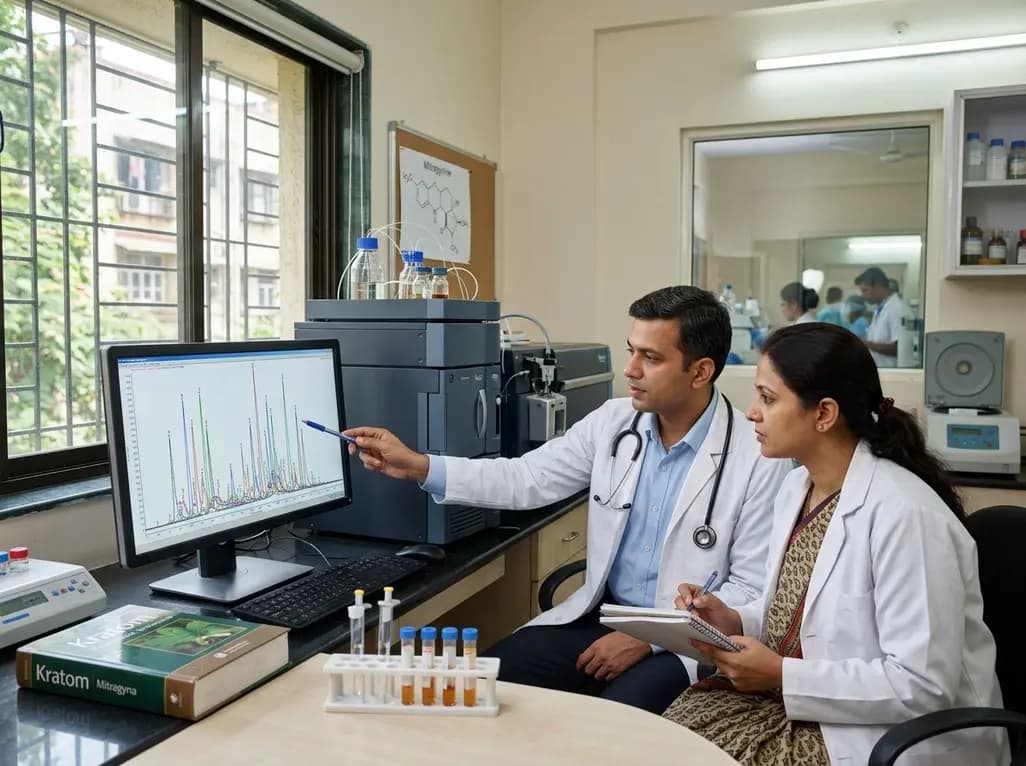
Modern clinical toxicology and pharmacology increasingly focus on unregulated botanical therapeutics, particularly Mitragyna speciosa, commonly recognized as kratom. Healthcare providers across diverse specialties encounter patients who consume kratom products for self-treating chronic pain, managing opioid withdrawal, or seeking stimulant and sedative effects. However, substantial variations in alkaloid composition and a historical scarcity of comprehensive human clinical trials have complicated clinical risk assessments. Previous investigations typically evaluated only mitragynine or isolated major constituents, leaving the full spectrum of secondary alkaloids and metabolites unexamined. Recent breakthroughs in bioanalytical chemistry have significantly transformed our understanding of kratom alkaloid pharmacokinetics by enabling the simultaneous quantification of seventeen distinct alkaloids and metabolites in human plasma. This comprehensive analytical framework empowers clinicians to understand systemic exposure, interpret toxicological findings, and optimize patient management strategies.
Traditional bioanalytical techniques frequently lacked the chromatographic selectivity required to differentiate structurally similar diastereomers and isobaric metabolites present in kratom. To overcome these significant limitations, researchers developed and rigorously validated an ultra-performance liquid chromatography-tandem mass spectrometry (UPLC-MS/MS) assay in accordance with United States FDA bioanalytical method guidelines. Furthermore, the bioanalytical method demonstrated remarkable linearity over a concentration range of 1 to 250 ng/mL in human plasma, accommodating both therapeutic and supratherapeutic systemic exposures. The extraction workflow employs an efficient protein precipitation technique that rapidly isolates analytes while minimizing matrix interference. Additionally, the investigators successfully resolved the significant chemical instability associated with crucial oxidative metabolites, specifically 7-hydroxymitragynine and 9-hydroxycorynantheidine. By implementing tailored stabilization protocols during plasma collection and processing, the assay prevents analyte degradation and preserves specimen integrity. Consequently, this highly sensitive platform establishes a reproducible, accurate standard for clinical pharmacokinetic evaluations, therapeutic drug monitoring, and forensic toxicology investigations.
The botanical matrix of kratom represents a sophisticated phytochemical mixture containing numerous indole and oxindole alkaloids with distinct pharmacological profiles. The validated UPLC-MS/MS assay simultaneously measures twelve primary alkaloids: mitragynine, speciogynine, speciociliatine, mitraciliatine, paynantheine, isopaynantheine, corynantheidine, corynoxine-A, corynoxine-B, mitraphylline, speciofoline, and ajmalicine. Following oral administration in regular kratom consumers, clinical sample analysis identified mitragynine, speciociliatine, mitraciliatine, isopaynantheine, and paynantheine as the major circulating alkaloids in systemic circulation. Importantly, these secondary alkaloids do not serve merely as inert constituents; several demonstrate meaningful binding affinities at mu, delta, and kappa opioid receptors, as well as central adrenergic, serotonergic, and dopamine receptors. For instance, speciociliatine exhibits unique receptor occupancy that may modify central nervous system responses. Therefore, measuring minor alkaloids alongside mitragynine enables toxicologists to assess potential pharmacodynamic synergy, competitive receptor antagonism, or unexpected psychoactive sequelae. Clinicians must view kratom as a complex multi-agent exposure rather than an isolated chemical entity, underscoring the clinical value of multi-analyte quantification.
Characterizing the metabolic fate of kratom alkaloids is essential for predicting patient outcomes, drug interactions, and toxicological risks. In addition to profiling parent alkaloids, the analytical method measures five vital mitragynine metabolites: 7-hydroxymitragynine, 9-hydroxycorynantheidine, mitragynine 16-carboxylic acid, mitragynine pseudoindoxyl, and 3-dehydromitragynine. Clinical pharmacokinetic analysis revealed that mitragynine 16-carboxylic acid and 9-hydroxycorynantheidine serve as the predominant circulating metabolites in human plasma following oral intake. Hepatic biotransformation involves cytochrome P450 enzymes, particularly CYP3A4, which oxidizes mitragynine into 7-hydroxymitragynine. Although 7-hydroxymitragynine circulates at substantially lower plasma concentrations than parent mitragynine, it possesses potent mu-opioid receptor agonist activity with significantly higher affinity than mitragynine itself. Meanwhile, extensive ester hydrolysis produces polar carboxylic acid derivatives that facilitate systemic elimination. Consequently, delineating these specific metabolic pathways allows physicians to anticipate complex drug-drug interactions, especially in patients concomitantly prescribed central nervous system depressants, antiretrovirals, or cardiovascular medications cleared through shared cytochrome P450 enzymatic pathways.
The application of this comprehensive bioanalytical assay in a human clinical trial involving regular kratom users yielded vital insights into gastrointestinal absorption and systemic disposition. Following oral administration of traditional kratom preparations, investigators observed rapid gastrointestinal absorption across nearly all monitored alkaloid classes. Most alkaloids and their major circulating metabolites attained peak plasma concentrations within 1 to 2 hours post-dose. This rapid absorption profile correlates directly with the swift onset of subjective stimulant and analgesic effects reported by consumers. Moreover, the steep rise in plasma concentrations highlights why rapid ingestion of potent commercial extracts carries an elevated risk of acute adverse events. The pharmacokinetics demonstrated predictable disposition profiles across standard analytical ranges, supporting consistent concentration-effect modeling. Therefore, having accurate absorption parameters helps emergency physicians, clinical toxicologists, and pharmacologists correlate systemic exposure with observed physiological variables, such as altered mental status, autonomic instability, or respiratory parameters during acute clinical presentations.
The capacity to quantify seventeen kratom-related chemical entities carries profound clinical implications for emergency departments, addiction medicine clinics, and intensive care units. Patients presenting with acute kratom toxicity frequently exhibit complex clinical pictures, which may include tachycardia, hypertension, agitation, nausea, and, in severe cases, respiratory depression or seizures. Because standard institutional hospital immunoassay drug screens do not detect kratom alkaloids, clinicians have historically faced diagnostic uncertainty. Targeted UPLC-MS/MS screening eliminates this ambiguity by providing definitive, quantitative identification of parent alkaloids and active metabolites. Furthermore, high-resolution quantification helps distinguish pure botanical kratom exposure from dangerous products adulterated with synthetic opioids, concentrated 7-hydroxymitragynine, or psychoactive adulterants. In addition, longitudinal alkaloid quantification aids addiction medicine specialists in designing evidence-based tapering strategies and managing withdrawal syndromes. Ultimately, widespread adoption of validated multi-analyte assays bridges the gap between botanical pharmacology and acute medical practice, ensuring enhanced diagnostic precision and safer patient care.
Bioanalytical testing quantifies twelve major parent alkaloids, including mitragynine, speciogynine, speciociliatine, mitraciliatine, paynantheine, isopaynantheine, corynantheidine, corynoxine-A, corynoxine-B, mitraphylline, speciofoline, and ajmalicine, alongside five key metabolites. Mitragynine represents the most abundant parent alkaloid in leaf material. However, recent human pharmacokinetic data show that speciociliatine, mitraciliatine, isopaynantheine, and paynantheine also reach substantial systemic levels, contributing significantly to the overall clinical and pharmacological profile.
Although 7-hydroxymitragynine circulates at relatively low concentrations in plasma, it exhibits potent mu-opioid receptor agonist activity that is substantially stronger than parent mitragynine. Hepatic CYP3A4 enzymes metabolize mitragynine into 7-hydroxymitragynine, which drives much of the opioid-like analgesic and respiratory effects observed after consumption. Consequently, monitoring this potent metabolite helps clinicians accurately evaluate opioid receptor activation, physiological dependence risks, and toxicological severity in exposed individuals.
Following oral administration of traditional kratom teas or encapsulated powders, gastrointestinal absorption occurs rapidly in human subjects. Most parent alkaloids and their primary oxidative metabolites achieve peak plasma concentrations (Tmax) within 1 to 2 hours post-dose. This rapid absorption explains the swift clinical onset of stimulant or sedative effects and highlights the acute toxicity risk when individuals consume high doses or concentrated botanical extracts.
Disclaimer: This content is for informational and educational purposes only and does not constitute medical advice. Refer to the latest local and national guidelines for clinical practice.
References

Read summarized clinical updates, watch expert medical content, and earn CME certifications right from your smartphone.
Open your smartphone camera to scan and install.





A breakthrough bioanalytical study validates a sensitive UPLC-MS/MS method quantifying 12 kratom alkaloids and 5 metabolites in human plasma. The findings offer vital clinical insights into absorption dynamics, active metabolites, and toxicological risks associated with Mitragyna speciosa consumption.
last month

Chronic eosinophilic pneumonia can present with atypical bronchoalveolar lavage findings and an organizing pneumonia pattern, necessitating surgical lung biopsy.
Today

Discover the crucial distinctions between mesonephric and mesonephric-like proliferations of the female genital tract. Learn the key histomorphologic, immunohistochemical, and molecular differences essential for accurate diagnosis and clinical management.
Today
Kikuchi-Fujimoto disease rarely presents with refractory shock and sinus bradycardia in children. This case report highlights life-threatening hemodynamic instability requiring intensive care, preserved cardiac contractility, and the critical diagnostic role of early excisional lymph node biopsy.
Today

A narrative review investigates whether the articularis genus muscle functions as an independent anatomical entity or blends with the vastus intermedius. We evaluate its morphology, role in retracting the suprapatellar bursa, and direct clinical significance in anterior knee pain and arthroplasty.
Today

A Bayesian multilevel meta-analysis reveals that aerobic training combined with moderate carbohydrate restriction modestly lowers HbA1c in type 2 diabetes. However, sparse data and very low certainty leave incremental benefits over exercise or diet alone unproven, highlighting the need for individualized care.
Today
