.webp&w=384&q=75)

Loading, please wait...
Loading, please wait...
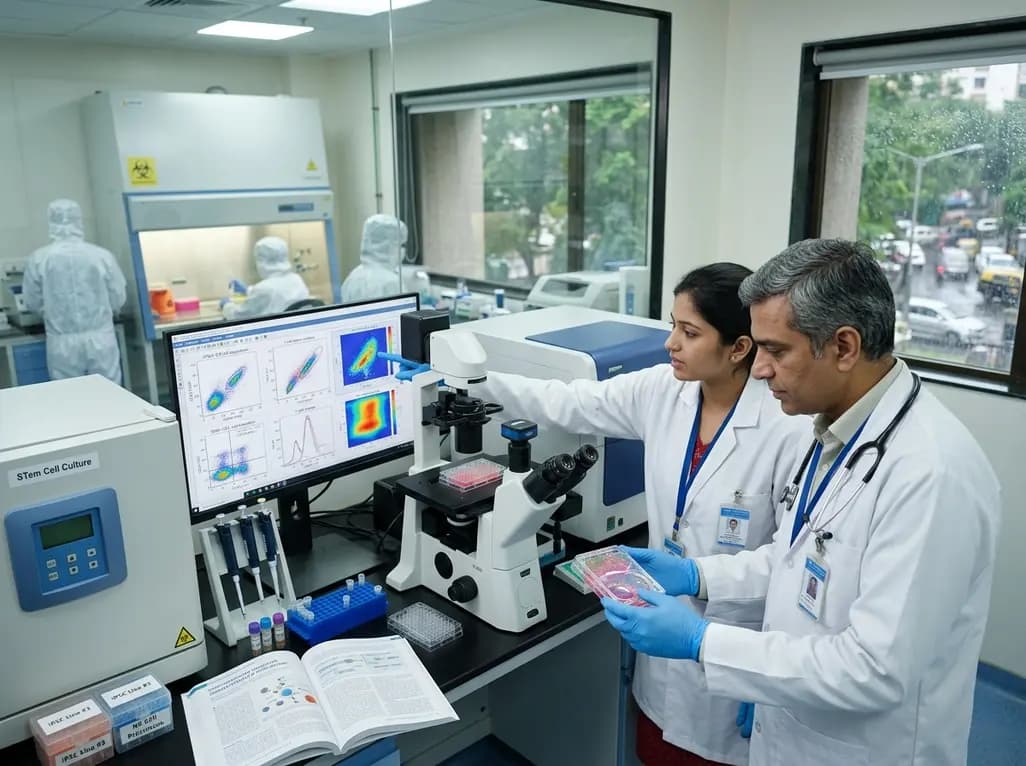
The landmark derivation of human induced pluripotent stem cells (iPSCs) revolutionized regenerative medicine, offering an inexhaustible platform for cellular manufacturing. Among the diverse developmental pathways studied, the generation of iPSC-derived immune cells represents one of the most clinically impactful achievements in modern translational medicine. While engineering fully functional and engraftable hematopoietic stem cells (HSCs) remains technically complex, the direct derivation of mature effector lymphocytes and myeloid lineages has advanced at an unprecedented pace. Consequently, clinicians and researchers can now access defined, scalable, and clonally uniform cellular populations to combat aggressive hematologic malignancies, refractory solid tumors, and severe autoimmune conditions.
Human pluripotent platforms provide an unprecedented window into human hematopoiesis and lineage commitment. During embryogenesis, blood specification progresses through sequential stages, initiating from mesodermal precursors, advancing to hemogenic endothelium, and ultimately differentiating into hematopoietic progenitors. Researchers have successfully recapitulated these developmental signaling cascades in vitro using stepwise cytokine cocktails and defined 3D culture environments. Consequently, scientists can now generate functional mature lineages, including macrophages, dendritic cells, conventional T cells, and natural killer (NK) cells.
Importantly, generating effector immune lineages from iPSCs avoids the batch-to-batch inconsistency seen with primary donor-derived products. Autologous cell therapies often suffer from cellular senescence, exhaustion, and variable starting quality due to prior rounds of intensive chemotherapy. In contrast, pluripotent master cell banks offer a stable, standardized foundation that renews indefinitely. Therefore, the production of these therapeutic cells enables rigorous quality control and batch consistency, which streamlines commercial manufacturing pipelines and clinical scalability.
Natural killer cells have rapidly emerged as the primary translational vehicle among pluripotent stem cell products. In fact, clinical trials have enrolled and treated more patients with pluripotent-derived NK cells than with any other stem cell–derived immune product. Primary natural killer cells eliminate malignant targets through innate activating receptors, antibody-dependent cellular cytotoxicity, and death-receptor signaling without requiring strict HLA matching. Because allogeneic NK cells inherently pose minimal risk of graft-versus-host disease (GvHD), they provide an ideal chassis for true allogeneic therapies.
Furthermore, pluripotent platforms provide exceptional biological homogeneity. When researchers differentiate clonal master lines into functional NK cells, the resulting cytotoxic effectors demonstrate consistent surface receptor density, potent degranulation capacity, and robust interferon-gamma secretion. These biological properties allow clinicians to administer repeated therapeutic infusions safely across diverse patient populations. As a result, pluripotent-derived natural killer cells have overcome the quantitative and qualitative barriers that historically hindered primary peripheral blood or cord blood NK isolations.
The true power of pluripotent stem cell engineering lies in the feasibility of multiplexed genomic editing at the single-cell stage. Performing genetic modifications on primary mature lymphocytes often produces variable knock-in rates and heterogeneous transgene expression. Conversely, introducing edits into undifferentiated pluripotent cells allows clinicians to isolate, validate, and bank a single edited clone with 100% phenotypic fidelity across all subsequent progeny.
Using CRISPR-Cas9 or base-editing techniques, bioengineers introduce sophisticated synthetic modifications to bolster anti-tumor potency. For instance, master lines can be engineered with chimeric antigen receptors (CARs) targeting tumor antigens such as CD19 or BCMA, high-affinity non-cleavable CD16 receptors to maximize antibody-directed killing, and membrane-bound cytokines like IL-15 to promote in vivo persistence. Concurrently, knocking out inhibitory checkpoints and HLA molecules protects these cells against host immune rejection. Consequently, multiplex editing produces fully customized, highly resilient effector cells ready for immediate clinical delivery.
Translational trials investigating pluripotent cellular products have demonstrated notable safety, feasibility, and therapeutic activity. In clinical trials treating refractory non-Hodgkin lymphoma, acute myeloid leukemia, and multiple myeloma, engineered NK cell infusions have produced substantial objective responses without provoking life-threatening cytokine release syndrome or neurotoxicity. Patients who previously exhausted multiple standard therapeutic lines have achieved durable remissions through these scalable off-the-shelf therapies.
Moreover, the clinical utility of pluripotent-derived cells now extends well beyond oncology. Autoimmune disorders characterized by pathogenic B-cell clones, such as systemic lupus erythematosus and refractory inflammatory myopathies, represent compelling targets for targeted immune ablation. By targeting auto-reactive immune subsets using engineered allogeneic effectors, clinicians can achieve deep immune system reset without exposing patients to aggressive lymphodepleting chemotherapy or long manufacturing delays. Thus, modern cell therapy is rapidly transforming multisystem care across medical specialties.
Despite remarkable clinical momentum, several translational challenges demand continued multidisciplinary attention. Ensuring the absolute absence of residual undifferentiated pluripotent stem cells in the final product is paramount to prevent teratoma formation. Modern manufacturing protocols employ stringent purification steps, suicide gene switches, and rigorous release testing to guarantee product safety. Additionally, the immunosuppressive tumor microenvironment remains a formidable hurdle, especially within dense solid malignancies that secrete inhibitory TGF-beta and recruit myeloid suppressor cells.
To overcome solid tumor resistance, ongoing research focuses on engineering chemokine receptors that enhance homing directly into hypovascular tumor cores. Scientists also engineer protective gene circuits that resist hypoxia-induced exhaustion and metabolic starvation. Meanwhile, international regulatory bodies and clinical societies are establishing standardized quality frameworks to govern allogeneic cell banking, genomic fidelity screening, and global distribution logistics. As these manufacturing innovations mature, pluripotent-derived therapeutics will become a cornerstone of standard hospital care worldwide.
Pluripotent-derived immune cells eliminate the extended manufacturing delays, high costs, and functional exhaustion associated with autologous patient-derived cells. Because they originate from well-characterized, renewable master cell banks, these therapies provide consistent quality, clonal uniformity, and true off-the-shelf availability. Furthermore, clinicians can perform multiplexed gene edits at the stem cell stage to improve tumor targeting, persistence, and allogeneic compatibility safely.
Natural killer cells do not require strict human leukocyte antigen matching to mediate cytotoxic killing, substantially reducing the risk of graft-versus-host disease in allogeneic recipients. Consequently, they serve as an inherently safe chassis for off-the-shelf allogeneic cell therapy. Moreover, standardized differentiation protocols reliably generate highly cytotoxic, mature NK cells at clinical scale, enabling widespread adoption across multiple oncology and autoimmune clinical trials.
Bioengineers utilize precise gene-editing technologies to eliminate major histocompatibility complex class I and class II molecules from the master pluripotent stem cells. Additionally, researchers introduce protective immune-evasive ligands, such as CD47 or HLA-E, to prevent host natural killer and macrophage clearance. These multiplex genetic modifications ensure that the resulting immune cells persist sufficiently long in the patient to exert robust, durable therapeutic activity.
Disclaimer: This content is for informational and educational purposes only. It should not be used as a substitute for professional medical advice, diagnosis, or treatment. Refer to the latest local and national guidelines for clinical practice.
References

Read summarized clinical updates, watch expert medical content, and earn CME certifications right from your smartphone.
Open your smartphone camera to scan and install.





Discover how induced pluripotent stem cells are revolutionizing immunotherapy. Learn about multiplex gene editing, clinical breakthroughs in iPSC-derived natural killer cells, and scalable off-the-shelf therapies for refractory malignancies and autoimmune disorders.
last month

A review of incidental intestinal parasitic infections detected during colonoscopy, highlighting diagnostic morphology, the absence of peripheral eosinophilia, and tailored antihelminthic treatment.
Today

A nationwide South Korean study shows underreporting of smoking among women dropped from 57.4% to 36.4% between 2008 and 2021. However, over one-third of female smokers still conceal their habit, highlighting the critical role of cotinine verification in clinical risk assessment.
Today

PepsiCo and Monster Beverage have challenged the FSSAI ban on the energy drink label in Indian courts. While companies highlight supply disruptions, regulatory actions spotlight severe cardiovascular and metabolic risks associated with excessive caffeine, sugar, and taurine consumption, especially in adolescents.
Today

A new study evaluates the rheological stability of decellularized peripheral nerve matrix hydrogels under varied storage conditions. Findings show -80°C storage and freeze-drying preserve gelation kinetics and mechanical stiffness, offering key insights for shipping and translational clinical applications.
Today

A Bayesian multilevel meta-analysis reveals that aerobic training combined with moderate carbohydrate restriction modestly lowers HbA1c in type 2 diabetes. However, sparse data and very low certainty leave incremental benefits over exercise or diet alone unproven, highlighting the need for individualized care.
Yesterday
