.webp&w=384&q=75)

Loading, please wait...
Loading, please wait...
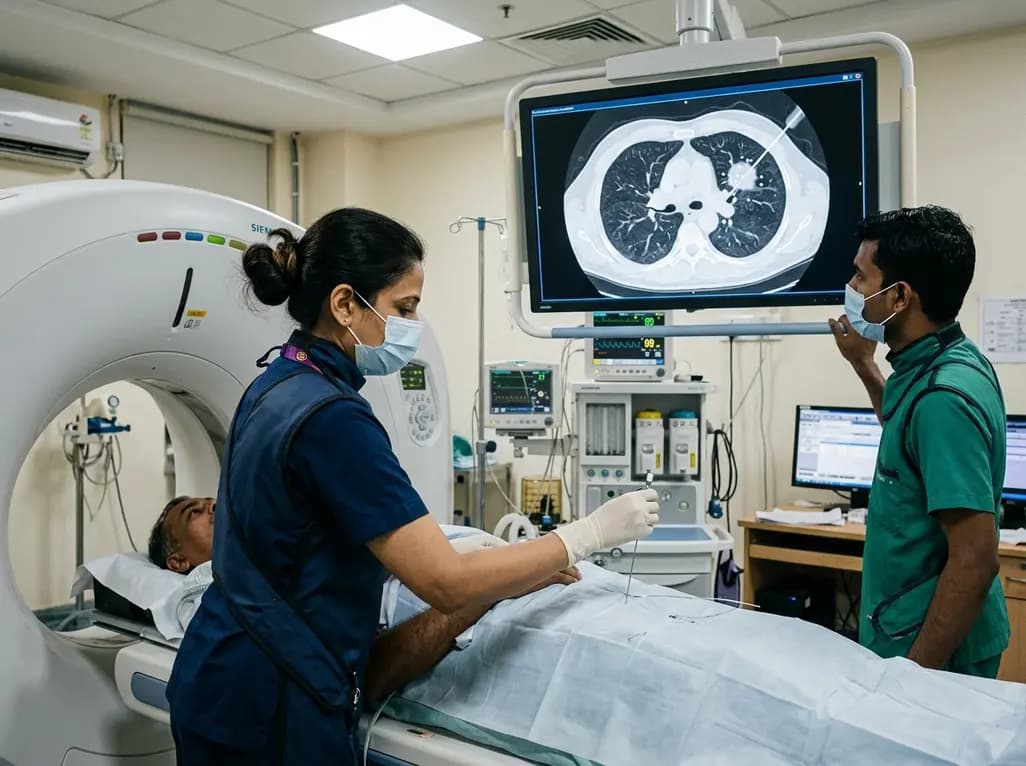
Managing non-small cell lung cancer presents substantial clinical challenges when patients suffer from severe baseline respiratory impairment. Traditional therapeutic modalities, such as surgical resection and external beam radiation therapy, often carry prohibitive cardiopulmonary risks for this vulnerable population. Consequently, interventional oncologists and pulmonologists actively seek lung-sparing local ablative techniques. In this context, iodine-125 seed implantation under computed tomography guidance has emerged as a targeted brachytherapy option that delivers high-dose radiation directly into the tumor core while sparing adjacent normal parenchyma.
Patients presenting with concurrent non-small cell lung cancer and severe chronic obstructive pulmonary disease or interstitial fibrosis frequently cannot tolerate standard anatomical resections. Furthermore, conventional stereotactic ablative radiotherapy may induce life-threatening radiation pneumonitis in individuals with baseline low diffusion capacity. Therefore, clinicians must carefully weigh oncological control against catastrophic functional decline. Because standard systemic treatments alone might not provide adequate local disease control, targeted interstitial brachytherapy offers an essential alternative. Interventional radiologists can place radioactive seeds percutaneously with submillimeter accuracy, thereby preventing collateral damage to healthy alveolar tissues.
The procedural workflow of iodine-125 seed implantation relies on meticulous pre-procedural computerized treatment planning and high-resolution computed tomography navigation. Clinicians insert interstitial needles directly into the neoplastic lesion to deposit radioactive seeds according to defined dosimetry goals. Because iodine-125 emits low-energy gamma rays with a short tissue penetration depth, the therapeutic radiation falls off rapidly beyond the tumor margins. Consequently, the procedure maximizes tumoricidal activity while minimizing peripheral tissue exposure. Recent clinical data demonstrate a robust one-year objective response rate of 60.7% and a disease control rate of 67.9% in medically inoperable cohorts.
Evaluating long-term survival in respiratory-compromised patients remains vital for validating minimally invasive oncology interventions. Clinical investigations show a median overall survival of 18.0 months and a median progression-free survival of 13.0 months following seed placement. Moreover, these survival metrics compare favorably with historical controls receiving best supportive care or modified radiation regimens. When clinicians combine effective local brachytherapy with tailored systemic agents, patient outcomes improve significantly. Therefore, achieving sustained local tumor cytoreduction translates into meaningful delays in symptom progression and cancer-related mortality.
A primary objective when treating patients with borderline respiratory reserve is preserving remaining pulmonary capacity. Importantly, serial spirometry and gas exchange assessments demonstrate no significant deterioration in pulmonary function tests across twelve months of postoperative follow-up. Furthermore, patient functional status, measured by Karnofsky Performance Status scores, remains stable throughout the observation window. The procedural safety profile is equally encouraging, as clinicians report zero cases of grade three or higher radiation pneumonitis. Although pneumothorax requiring temporary tube drainage occurs in approximately 25% of cases, interventional teams manage this complication conservatively without long-term sequelae.
Multivariate Cox regression analyses identify three pivotal independent prognostic factors governing both overall survival and progression-free survival. Specifically, smaller baseline tumor maximum diameter, achieving a radiation dose coverage of D90 greater than or equal to 120 Gy, and the administration of postoperative systemic therapy correlate with superior survival. Consequently, optimizing physical seed distribution to reach adequate target doses remains paramount for interventional teams. In addition, integrating systemic immunotherapy or targeted molecular agents after successful brachytherapy prevents distant dissemination, thereby enhancing long-term therapeutic synergy.
As interventional oncology continues to evolve, incorporating artificial intelligence and three-dimensional navigational templates will further refine radioactive seed placement. Moreover, prospective randomized trials will help establish standardized patient selection criteria and optimal radiation dosing schedules for compromised cohorts. Clinicians in multidisciplinary tumor boards should actively consider brachytherapy for high-risk patients unsuitable for conventional radical therapies. Ultimately, this approach bridges a critical gap in thoracic oncology by providing effective tumor ablation while safeguarding vital pulmonary reserves.
The primary benefit is localized, continuous tumor irradiation with minimal exposure to healthy surrounding lung parenchyma. Because the low-energy gamma radiation drops off sharply within millimeters, this approach preserves critical pulmonary function in medically fragile individuals who cannot tolerate radical surgery or external beam radiotherapy.
Clinicians actively monitor patients with post-procedure imaging to detect pneumothorax immediately. When significant pleural air accumulation occurs, interventional teams place small-bore chest drainage tubes to evacuate air and re-expand the lung. Most cases resolve promptly within several days without causing persistent respiratory compromise or long-term complications.
Clinical studies demonstrate that smaller baseline tumor size, achieving a D90 radiation coverage of at least 120 Gy, and administering sequential postoperative systemic therapy serve as independent positive prognostic factors. Consequently, thorough pre-procedural planning and multidisciplinary systemic management optimize overall survival and progression-free survival outcomes.
Disclaimer: This content is for informational and educational purposes only. It is not intended to be a substitute for professional medical advice, diagnosis, or treatment. Always seek the advice of your physician or other qualified health provider with any questions you may have regarding a medical condition. Refer to the latest local and national guidelines for clinical practice.
References
1. Tang Z et al. Retrospective study on CT-guided iodine-125 radioactive seed implantation for non-small cell lung cancer patients with severe pulmonary dysfunction: Analysis of efficacy and safety. Brachytherapy. 2026 Aug 18. doi: undefined. PMID: 42613271.
2. Huo X, Huo B, Wang H, et al. Implantation of computed tomography-guided Iodine-125 seeds in combination with chemotherapy for the treatment of stage III non-small cell lung cancer. J Contemp Brachytherapy. 2020;12(5):460-468.
3. Fernando HC, Landreneau RJ, Mandrekar SJ, et al. Impact of brachytherapy on local recurrence rates after sublobar resection: results from ACOSOG Z4032 (Alliance), a Phase III randomized trial for high-risk operable non-small-cell lung cancer. J Clin Oncol. 2014;32(23):2456-2462.

Read summarized clinical updates, watch expert medical content, and earn CME certifications right from your smartphone.
Open your smartphone camera to scan and install.





A retrospective study highlights CT-guided iodine-125 seed implantation as an effective, lung-preserving local therapy for NSCLC patients with severe pulmonary impairment.
last month

Abdominal aortic aneurysm rupture remains a catastrophic vascular emergency. Groundbreaking research reveals that USP53 accelerates aneurysm progression by reprogramming smooth muscle cell metabolism toward aerobic glycolysis, highlighting a promising target beyond conventional diameter-based surveillance.
Today

A pharmacometric and machine learning study reveals that specific vaginal bacteria alter cervical antiretroviral exposure, highlighting the need for precision HIV PrEP strategies.
Today
A nationwide Swedish cohort study shows oral glucocorticoid exposure over 1-2 years strongly predicts overall organ damage in SLE, while cardiovascular risk reflects cumulative doses across 3 years. These findings reinforce early steroid minimization and cautious long-term maintenance.
Today
A scoping review highlights neural mobilization as a promising adjunct in managing cervicogenic headache. Integrating neurodynamics into multimodal physical therapy improves pain, range of motion, and posture, though standardized protocols and larger clinical trials are still needed.
Today
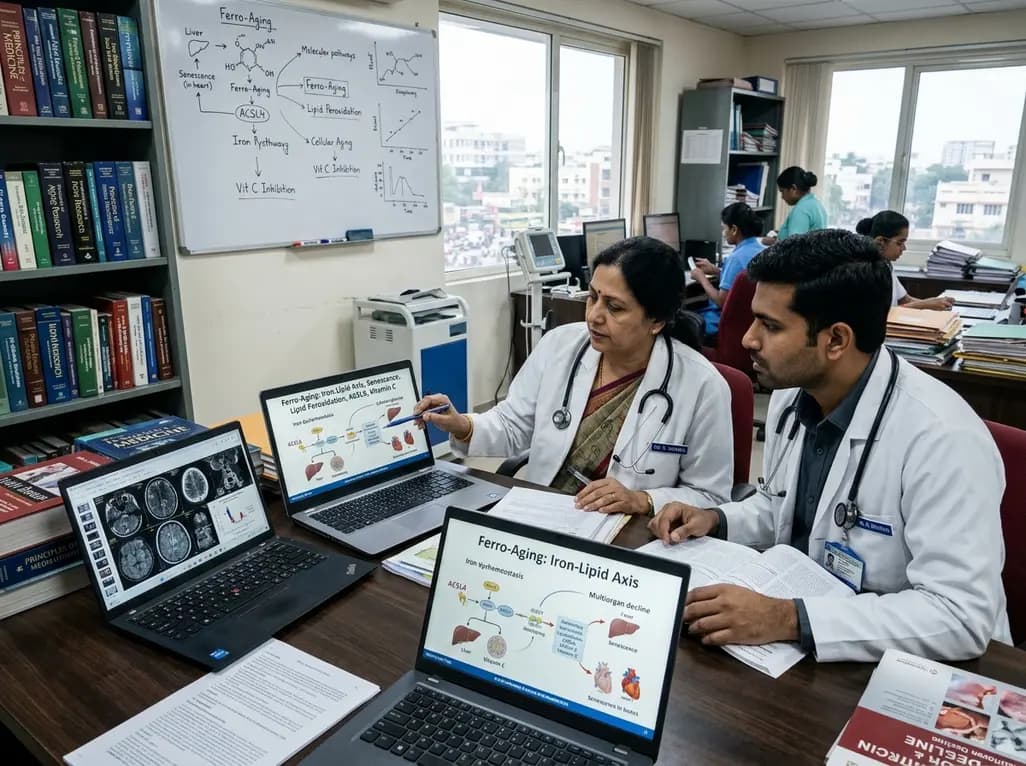
Recent research defines ferro-aging as a conserved iron-lipid axis driving organ decline across primates. Age-related iron dyshomeostasis stimulates ACSL4-mediated lipid peroxidation, promoting cellular senescence. Notably, vitamin C directly inhibits ACSL4, suppressing phospholipid oxidation and multi-organ decay.
Today
