.webp&w=384&q=75)

Loading, please wait...
Loading, please wait...

Prolonged social withdrawal, clinically recognized as hikikomori, represents a pressing mental health challenge across modern societies. Individuals with this condition retreat into their homes for six months or longer, severing interpersonal ties and disengaging from academic or occupational obligations. Although clinicians first documented the phenomenon in Japan, contemporary epidemiological data demonstrate its worldwide emergence among adolescents and young adults. Consequently, healthcare providers require efficient, evidence-based instruments to identify vulnerable youths before severe functional decline occurs. Traditional diagnostic evaluations often demand extensive time and clinical resources that routine outpatient practices lack. To bridge this critical diagnostic gap, modern psychometric research integrates digital assessment frameworks. In particular, automated hikikomori screening offers an accessible pathway to evaluate risk across broad populations. Early detection remains paramount because prolonged withdrawal severely impairs developmental milestones and elevates suicide risk. Furthermore, timely identification enables multidisciplinary teams to implement targeted behavioral, familial, and psychiatric interventions. By modernizing self-report measures through computational techniques, clinicians can reliably distinguish normative adolescent solitude from severe, pathologically avoidant behavior.
Establishing valid diagnostic thresholds is essential for converting psychometric scores into actionable clinical decisions. In a large national cohort of 8,755 Italian adolescents, researchers evaluated the 15-item Hikikomori Risk Inventory (HRI-15) using receiver operating characteristic (ROC) curves. The statistical analysis demonstrated robust discriminatory capacity, yielding an area under the curve of 0.846. Most importantly, the investigators identified an optimal cutoff score of 42 or greater to classify high-risk individuals.
This empirical threshold provides clinicians with a clear benchmark for triage. When patients score at or above 42, healthcare teams can promptly flag them for comprehensive clinical assessment. In addition, the cutoff minimizes false negatives, ensuring that practitioners do not overlook severely withdrawn adolescents. Clinicians can also track score fluctuations over time to evaluate therapeutic progress or disease progression. Therefore, standardized scoring removes subjective guesswork from the diagnostic process. Healthcare networks can readily embed this cross-validated score into digital questionnaires and electronic health records. Consequently, primary care physicians and school mental health professionals can coordinate timely specialist referrals with confidence and diagnostic precision.
Hikikomori is not a monolithic condition, but rather a heterogeneous presentation with varied psychological drivers. To examine this clinical diversity, researchers conducted latent profile analysis across five core psychopathological dimensions: anthropophobia, agoraphobia, paranoia, lethargy, and depressive mood. The analysis successfully identified four distinct patient phenotypes, each presenting a unique risk profile and symptom severity pattern.
The first group represents the non-at-risk profile, characterized by uniformly low scores across all measured psychopathological domains. In contrast, the second group reflects a mood-driven phenotype, exhibiting prominent depressive symptoms and profound lethargy without severe persecutory fears. The third profile represents the fully manifested at-risk group, which displays elevated scores across all five clinical dimensions, alongside heightened impulsivity and maladaptive behaviors. Finally, the fourth group demonstrates a social anxiety and phobic phenotype, marked primarily by fear of interpersonal scrutiny and open environments.
Consequently, understanding these person-centered profiles allows clinicians to tailor treatment protocols. Rather than applying a single intervention model, clinicians can address the specific cognitive and emotional triggers driving each adolescent's isolation.
Standard psychological batteries often overburden young respondents with redundant questions, which frequently reduces test completion rates. To resolve this inefficiency, researchers leveraged machine learning by training a multivariate conditional inference tree. This interpretable algorithm constructs an intelligent decision pathway that dynamically adapts to individual responses.
At each step of the assessment, the algorithm evaluates responses and selects the most informative subsequent question. If an adolescent shows minimal early distress, the testing sequence terminates rapidly without administering redundant items. Conversely, when responses suggest psychological distress, the tree branches into granular questions that pinpoint specific psychopathological features. Because conditional inference trees rely on non-parametric hypothesis testing, they prevent statistical overfitting and maintain strict interpretability. Clinicians can clearly examine every decision node and branch within the model. Unlike opaque black-box algorithms, this transparent architecture preserves clinical explainability while optimizing computational efficiency. As a result, practitioners can easily understand why the tool assigned a particular risk classification, fostering clinical trust and facilitating collaborative treatment planning with families.
The computerized adaptive testing (CAT) framework demonstrated remarkable efficiency gains without sacrificing measurement accuracy. By tailoring item presentation, the adaptive algorithm reduced the required questionnaire length by 53%, administering an average of only 7.03 out of 15 items. This substantial reduction decreases cognitive burden on distressed youth and accelerates clinical intake workflows.
Despite using fewer questions, the adaptive test reproduced full-length instrument scores with outstanding fidelity, achieving correlation coefficients between 0.77 and 0.997. Furthermore, researchers confirmed the consistency of phenotype classification using latent transition analysis, which yielded an exceptional entropy score of 0.96. These statistical metrics prove that brevity does not compromise diagnostic rigor. Clinicians obtain identical risk categorizations and dimensional profiles in half the administration time.
In addition, developers integrated this adaptive engine into an automated web application. The software instantly generates intuitive visual reports, summary risk scores, and multidimensional radar charts upon test completion. Thus, busy clinicians receive immediate, actionable diagnostic data during outpatient consultations without calculating complex psychometric formulas manually.
Deploying validated computerized screening tools creates transformative opportunities for adolescent mental health programs. Because severe social withdrawal often remains hidden inside domestic environments, proactive digital outreach is crucial for timely detection. School health services, primary care clinics, and community mental health centers can embed the adaptive tool into routine annual health screenings.
Furthermore, the brief administration duration makes the platform ideal for high-volume school surveys and remote telepsychiatry intake. When the automated system flags an at-risk youth, school counselors and family physicians can intervene before secondary complications develop. These complications often include academic failure, chronic depressive disorders, substance misuse, and severe familial discord.
Moreover, the person-centered output allows multidisciplinary teams to design targeted psychoeducational programs for parents. Clinicians can align cognitive-behavioral therapy, social skills training, or pharmacotherapy with the patient's specific latent profile. Consequently, integrating machine-learning-driven adaptive tests into public health frameworks strengthens early triage, standardizes clinical documentation, and optimizes scarce psychiatric resources across diverse communities.
A validated score of 42 or higher on the HRI-15 identifies adolescents at significant risk for hikikomori. This cut-off demonstrated excellent diagnostic accuracy with an area under the curve of 0.846. Clinicians use this threshold to distinguish severe social withdrawal from typical adolescent introversion and initiate timely evaluations.
Computerized adaptive testing uses multivariate conditional inference trees to dynamically route questions based on prior answers. This algorithm skips non-informative items for each respondent, decreasing item burden by 53 percent. It accurately reproduces full-scale scores with correlations up to 0.997 and achieves high latent profile alignment.
Latent profile analysis revealed four distinct phenotypes: non-at-risk, mood-driven with severe lethargy, social anxiety and phobic, and comprehensive at-risk with generalized distress. These distinct profiles help clinicians differentiate between varying underlying psychopathological drivers and personalize psychotherapeutic, behavioral, and psychiatric treatment strategies for each adolescent.
Disclaimer: This content is for informational and educational purposes only. It is not intended to be a substitute for professional medical advice, diagnosis, or treatment. Always seek the advice of your physician or other qualified health provider with any questions you may have regarding a medical condition. Refer to the latest local and national guidelines for clinical practice.
References

Read summarized clinical updates, watch expert medical content, and earn CME certifications right from your smartphone.
Open your smartphone camera to scan and install.





A nationwide adolescent study validates an interpretable machine learning computerized adaptive test for hikikomori screening, reducing test length by 53% while preserving diagnostic precision and clinical phenotypes.
last month
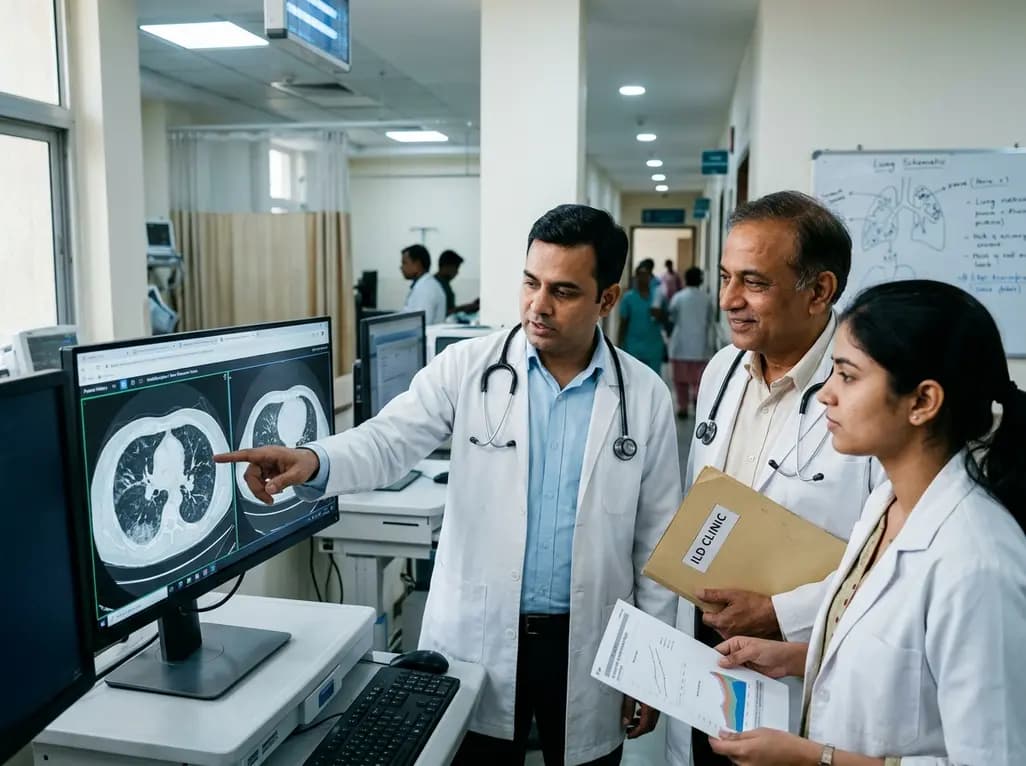
A nationwide English cohort study shows that interstitial lung diseases are no longer rare, with incidence jumping 30% and 200,000 active cases. This analysis highlights clinical implications for diagnosis, multi-disciplinary management, and global health priorities across respiratory and internal medicine.
Today

A nationwide South Korean study shows underreporting of smoking among women dropped from 57.4% to 36.4% between 2008 and 2021. However, over one-third of female smokers still conceal their habit, highlighting the critical role of cotinine verification in clinical risk assessment.
Today

PepsiCo and Monster Beverage have challenged the FSSAI ban on the energy drink label in Indian courts. While companies highlight supply disruptions, regulatory actions spotlight severe cardiovascular and metabolic risks associated with excessive caffeine, sugar, and taurine consumption, especially in adolescents.
Today

A new study evaluates the rheological stability of decellularized peripheral nerve matrix hydrogels under varied storage conditions. Findings show -80°C storage and freeze-drying preserve gelation kinetics and mechanical stiffness, offering key insights for shipping and translational clinical applications.
Today

A Bayesian multilevel meta-analysis reveals that aerobic training combined with moderate carbohydrate restriction modestly lowers HbA1c in type 2 diabetes. However, sparse data and very low certainty leave incremental benefits over exercise or diet alone unproven, highlighting the need for individualized care.
Yesterday
