

Loading, please wait...
Loading, please wait...
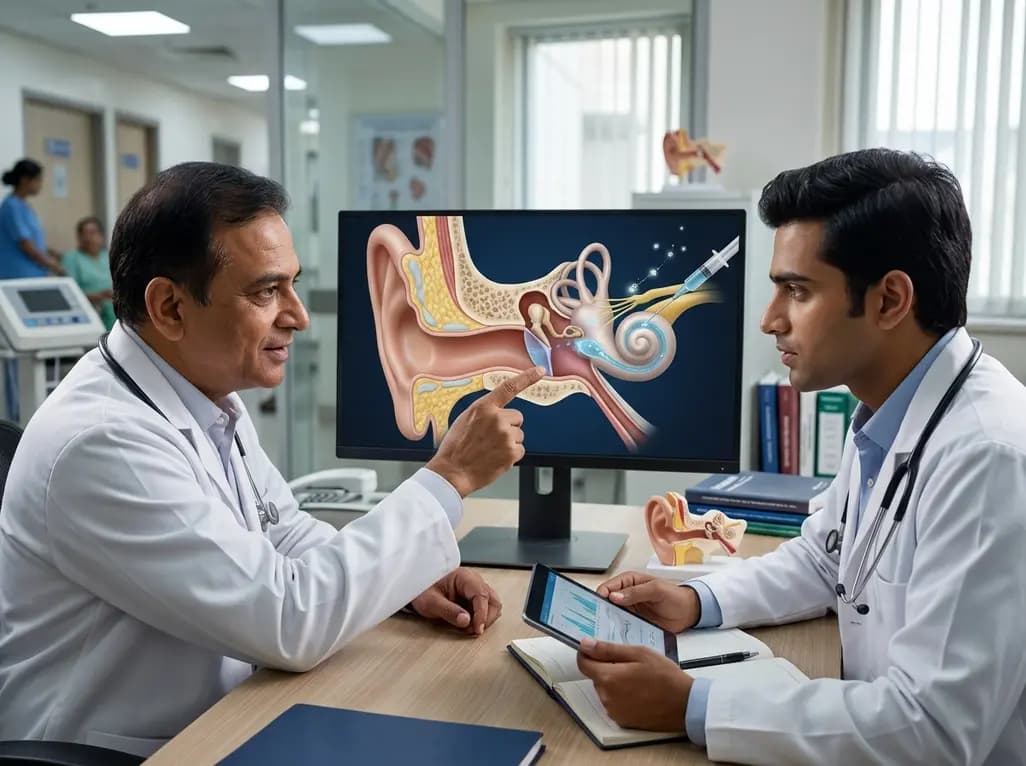
Sensorineural hearing loss represents a widespread global health challenge that compromises communication and daily life for hundreds of millions worldwide. Despite notable therapeutic advances, inner ear drug delivery remains exceptionally difficult because the cochlea sits deeply shielded inside the dense temporal bone. Consequently, standard systemic pharmacotherapies often fail to achieve sufficient therapeutic concentrations within cochlear fluids without provoking intolerable systemic adverse events. Modern otology increasingly demands advanced localized drug delivery systems that can reliably cross biological obstacles to protect delicate sensory hair cells and auditory nerve fibers.
The cochlea possesses formidable biological defenses that shield its sensitive neurosensory cells from external substances. Foremost among these physiological impediments is the blood-labyrinth barrier located within the stria vascularis. Similar to the blood-brain barrier, tight junctional complexes between endothelial cells restrict the entry of circulating hydrophilic drugs, peptides, and macromolecules into inner ear perilymph. Consequently, clinicians must prescribe heavy systemic doses to obtain minimal therapeutic intracochlear exposure, which significantly increases the risk of severe nephrotoxicity and ototoxicity.
Furthermore, local administration routes encounter anatomical barriers in the middle ear cavity. The round window membrane serves as the primary route into the scala tympani, but its three-layered architecture strictly restricts solute diffusion based on molecular size, charge, and lipophilicity. Additionally, the Eustachian tube continuously clears liquid drug solutions away from the tympanic cavity during normal swallowing. Therefore, overcoming these clearance pathways and cellular boundaries requires innovative delivery formulations that maintain prolonged contact with cochlear tissues.
Intratympanic injection serves as the primary localized route for treating acute inner ear conditions, including sudden sensorineural hearing loss and refractory Meniere's disease. By injecting drugs directly across the tympanic membrane, otolaryngologists bypass first-pass hepatic metabolism and prevent widespread systemic toxicities. Furthermore, this outpatient technique allows high local drug exposure near the round window membrane. However, standard aqueous formulations present significant pharmacokinetic drawbacks that limit their long-term therapeutic effectiveness in clinical settings.
Specifically, liquid medications drain rapidly through the Eustachian tube, leaving minimal active drug in contact with the round window niche. Consequently, perilymph drug concentrations fluctuate wildly, producing inconsistent clinical responses among patients. Moreover, passive diffusion generates a steep apical-to-basal gradient within the cochlea, which leaves apical turns responsible for low-frequency hearing poorly treated. Additionally, anatomical mucosal folds frequently obstruct the round window, preventing steady solute passage. Thus, clinicians urgently require advanced sustained-release platforms that enhance middle ear residence time and improve diffusion consistency.
Biomaterial engineering offers sophisticated solutions to address rapid middle ear drainage and poor membrane permeability. In situ gelling hydrogels have emerged as particularly versatile matrices for inner ear drug delivery. These thermosensitive biomaterials inject as easy-flowing liquids at room temperature before solidifying into a stable reservoir upon reaching body temperature in the round window niche. Consequently, they resist Eustachian clearance and provide sustained local drug diffusion across the round window membrane for days or weeks.
Simultaneously, nanotechnology enhances molecular stability and cellular internalization within cochlear tissues. Nanocarriers, including liposomes, polymeric nanoparticles, and solid lipid nanoparticles, protect delicate pharmacological agents from degradation while facilitating transcellular transport. Furthermore, surface functionalization with targeting peptides allows nanoparticles to bind specific receptors on outer hair cells or spiral ganglion neurons. Therefore, combining responsive hydrogels with multifunctional nanoparticles provides sustained local release alongside targeted cellular delivery, dramatically improving cochlear bioavailability without inducing middle ear damage.
Translating preclinical inner ear discoveries into verified clinical successes has proven challenging, yet recent milestones provide strong regulatory benchmarks. Systemic sodium thiosulfate currently offers the most robust clinical evidence for meaningful otoprotection. The US Food and Drug Administration approved this sulfur-containing antioxidant specifically to reduce cisplatin-induced permanent hearing loss in pediatric cancer patients. Although administered systemically, sodium thiosulfate confirms that targeted pharmacological intervention can preserve delicate auditory function successfully in clinical practice.
In contrast, localized cochlear gene therapy has demonstrated breathtaking results for genetic auditory impairment. Clinical investigators recently delivered adeno-associated virus vectors into the cochleae of children suffering from autosomal recessive deafness 9, restoring functional hearing through successful otoferlin gene replacement. This unprecedented accomplishment demonstrates that direct intracochlear molecular delivery can regenerate auditory perception safely. However, this surgical approach requires invasive cochleostomies that carry risks of mechanical damage. Consequently, developing less invasive delivery systems that achieve comparable intracellular transport remains an essential objective for translational researchers.
Substantial translational hurdles still separate experimental nanotechnology from routine otolaryngology practice. First, marked anatomical and volumetric disparities between small rodent cochleae and human temporal bones distort pharmacokinetic predictions. Rodent models exhibit faster fluid clearance and significantly thinner round window membranes than humans. Consequently, nanomedicines that achieve remarkable distribution in mice frequently fail to reach therapeutic depths within human cochleae, demanding rigorous validation in large animal models before human trials.
Second, manufacturing scalability under current Good Manufacturing Practice standards presents intricate technical challenges. Nanocarriers must demonstrate absolute batch reproducibility, long-term stability, and uncompromised sterility without altering their release kinetics. Furthermore, biomaterials must show complete biocompatibility, as even mild middle ear foreign-body reactions can produce fibrous tissue plugs or permanent conductive hearing deficits. Finally, regulatory hurdles persist because clinicians cannot safely sample human perilymph to verify drug concentrations. Therefore, establishing validated non-invasive auditory biomarkers represents a critical step for future regulatory approvals.
The evolution of cochlear therapeutics requires close synergy between otolaryngologists, formulation scientists, and bioengineers. Rather than creating overly complex nanostructures, researchers must prioritize clinically pragmatic platforms that ensure reproducible cochlear bioavailability. Emerging technologies, including microneedle arrays, miniaturized reciprocating microfluidic pumps, and drug-eluting cochlear implant electrode arrays, offer exciting opportunities to achieve precise, controlled drug dosing directly within specific cochlear compartments.
Additionally, precision otology will increasingly guide therapeutic choices for patients with sensorineural disorders. Advanced genetic testing, cellular profiling, and functional imaging will enable clinicians to match distinct molecular pathologies with customized localized drug platforms. Furthermore, non-invasive permeability enhancers may soon permit large biologics and genetic vectors to cross the intact round window membrane without surgical trauma. As clinical trial methodologies standardize and safety protocols solidify, advanced delivery systems will transform hearing preservation from palliative amplification toward restorative molecular therapy.
The round window membrane comprises three distinct histological layers that regulate solute passage strictly according to molecular weight, charge, and lipophilicity. Moreover, rapid Eustachian tube drainage continually removes instilled drug solutions from the middle ear cavity before diffusion can occur. Consequently, only a tiny fraction of standard drug formulations successfully penetrates into the scala tympani, which frequently leads to subtherapeutic intracochlear concentrations and inconsistent clinical outcomes.
Thermosensitive hydrogels exist as free-flowing liquid solutions at room temperature, allowing smooth injection across the tympanic membrane directly into the middle ear. Upon warming to body temperature, the polymer rapidly forms a cohesive gel matrix over the round window niche. Consequently, this reservoir resists Eustachian tube clearance and sustains direct membrane contact, ensuring continuous drug diffusion into cochlear perilymph over several days while eliminating the need for repeated middle ear injections.
Systemic sodium thiosulfate represents a major regulatory milestone as the first approved pharmacological agent for preventing cisplatin-induced hearing loss in pediatric patients. Cisplatin generates destructive free radicals that permanently damage cochlear outer hair cells. Sodium thiosulfate chemically inactivates circulating platinum complexes, thereby providing clinically validated otoprotection. Although administered intravenously, its regulatory approval proves that medical therapies can safeguard auditory structures successfully, inspiring localized inner ear strategies.
Disclaimer: This content is for informational and educational purposes only, and should not be taken as professional medical advice. Healthcare professionals should rely on their clinical judgment and verify information with appropriate medical literature and guidelines. Refer to the latest local and national guidelines for clinical practice.
References

Read summarized clinical updates, watch expert medical content, and earn CME certifications right from your smartphone.
Open your smartphone camera to scan and install.





Review recent advances and translational hurdles in inner ear drug delivery. Explore anatomical barriers, intratympanic hydrogels, nanocarriers, and clinical lessons from sodium thiosulfate and gene therapy.
Today

A comprehensive systematic review and meta-analysis evaluated skeletal muscle strength changes following semaglutide therapy in adults. Uncontrolled handgrip data showed no significant pooled change, underscoring the urgent need for robust trials and practical strategies to preserve functional muscle performance.
Today

A nationwide review reveals that gastrointestinal and urological tract injuries occur in 233 per 100,000 cesarean deliveries, causing elevated ICU admission and maternal mortality. Prior cesarean delivery triples urological risk, underscoring the critical consulting role of general surgeons.
Today

A nationwide Swedish registry study evaluating insulin degludec versus glargine reveals equivalent MACE in trial-eligible patients, yet shows significantly lower all-cause mortality across both trial-eligible and routine practice populations, along with reduced cardiovascular events in real-world cohorts.
Today
A systematic review and meta-analysis of 8 RCTs evaluated bipolar versus monopolar electrocautery in primary total hip and knee arthroplasty. Pooled data revealed no significant differences in haemoglobin drop, blood loss, or length of stay, concluding that routine bipolar electrocautery is not supported.
Today

A critical review evaluates whether starch-polyphenol complexes meet structural and metabolic criteria to qualify as type 5 resistant starch. The proposed tiered evidence framework distinguishes true inclusion complexes from simple mixtures, clarifying mechanisms for glycemic modulation and gut fermentation.
Today
