

Loading, please wait...
Loading, please wait...

Tuberculosis remains a formidable global health threat, claiming over one million lives annually. In high-burden countries, major diagnostic gaps delay timely clinical care and allow airborne transmission to continue unchecked. Often, patients delay seeking care at public clinics due to cost, stigma, and distance. To address this persistent hurdle, public health programs are engaging community stakeholders to accelerate TB case finding. Informal healthcare providers operate extensively within underserved communities and often serve as the first point of contact for symptomatic individuals. Because these practitioners possess deep community trust, engaging them bridges the gap between vulnerable households and formal diagnostic networks. Consequently, structured community partnerships can transform passive surveillance into an active case detection strategy.
Informal healthcare providers practice widely throughout rural villages and underserved urban settlements. This diverse cadre includes traditional herbalists, medicine vendors, birth attendants, and faith healers. Because they live among the populations they serve, community members consult them readily for persistent cough. However, informal practitioners generally lack formal training to recognize mycobacterial disease. Consequently, patients receive symptomatic remedies that delay proper diagnostic evaluation. To evaluate this workforce, an innovative multi-county program engaged informal practitioners across Kenya. Organizers conducted provider mapping, baseline knowledge assessments, tailored training, and referral linkages. Of 1,474 mapped informal practitioners, 383 providers agreed to participate in active screening. Subsequently, project coordinators trained 329 practitioners in standardized symptom screening. Furthermore, 135 trained practitioners referred presumptive clients to accredited public diagnostic centers. These operational findings show that informal providers readily participate when health authorities engage them respectfully.
The empirical results of the initiative demonstrate impressive diagnostic yield and remarkable patient compliance. Participating informal practitioners screened 1,134 individuals presenting with cough and other constitutional symptoms. Among those screened, practitioners flagged 763 individuals as presumptive tuberculosis cases using standardized checklists. Furthermore, providers issued formal referral slips to 512 individuals for sputum examination. Remarkably, 466 referred individuals completed their visits to designated diagnostic facilities, achieving an exceptional 91 percent linkage rate. This high completion rate reflects strong interpersonal trust between community practitioners and their patients. Ultimately, clinicians diagnosed active tuberculosis in 140 individuals. Therefore, the intervention yielded one confirmed case for every eight individuals screened. This yield significantly outperforms standard passive case detection rates in outpatient departments. In addition, the data prove that trained informal providers do not refer randomly. Instead, they apply standardized symptom criteria effectively, identifying individuals who require urgent diagnostic evaluation.
These international outcomes offer vital lessons for tuberculosis control efforts in India. India accounts for over a quarter of the global tuberculosis burden and pursues elimination under the National Strategic Plan. Across rural districts and peri-urban slums, informal providers manage over seventy percent of initial outpatient consultations. Consequently, patients often experience protracted diagnostic delays before reaching public clinics. Indian public health authorities recognize that closing diagnostic gaps requires engaging all healthcare stakeholders. Pilot initiatives in Bihar and West Bengal have shown that informal rural practitioners accelerate presumptive referrals effectively. When public systems provide informal practitioners with simplified referral slips and digital tracking, diagnostic linkages improve substantially. Moreover, formal clinicians must recognize that engaging informal providers does not validate unqualified medical practice. Instead, structured programs strictly restrict these providers to symptom screening and referral coordination. Thus, Indian tuberculosis initiatives can adapt these systematic frameworks to eliminate diagnostic blind spots across high-burden communities.
Sustaining community engagement requires public health programs to address several operational barriers. First, variable literacy levels among informal providers limit the usability of standard medical paperwork. Health programs must overcome this obstacle by developing pictorial screening checklists, intuitive digital tools, and local-language guides. Second, historical mistrust between formal clinicians and informal healers frequently impedes collaboration. Informal practitioners often fear legal prosecution from public regulatory bodies. To counter this apprehension, tuberculosis control officers must create supportive platforms that establish clear, non-punitive professional boundaries. Additionally, maintaining provider motivation represents a critical determinant of long-term success. While altruism drives initial participation, sustained engagement requires meaningful institutional recognition. Health programs can award certificates of appreciation or priority clinical care for provider families. Furthermore, modest performance-linked honorariums can compensate practitioners for time spent counseling presumptive patients. Most importantly, continuous supportive supervision reinforces screening protocols. Regular supervisory visits enable district mentors to address operational bottlenecks and sustain fruitful community partnerships.
Health departments must establish clear regulatory protocols to integrate informal providers safely into national frameworks. Most importantly, standard operating procedures must strictly prohibit informal providers from prescribing anti-tubercular therapy. Their role must remain focused on symptom screening, sputum collection linkage, and treatment adherence support. When informal providers detect presumptive symptoms, they must immediately route individuals to accredited diagnostic centers equipped with rapid molecular testing. Additionally, primary health centers and district chest clinics should designate focal staff to streamline incoming referrals. When clinics establish fast-track pathways for referred patients, they reduce waiting times and prevent diagnostic dropouts. Simultaneously, public health programs must integrate informal provider reporting into national digital platforms like Ni-kshay. Digital interfaces enable health teams to track referral volumes and verify diagnostic outcomes in real time. Finally, district tuberculosis units should organize periodic refresher workshops for participating informal cadres. By aligning community practitioners with national protocols, health systems construct an effective defense against tuberculosis.
Informal healthcare providers represent the primary contact point for millions of underserved patients in developing countries. Because these practitioners reside directly within rural hamlets and urban settlements, residents trust them implicitly for immediate relief. By training these community healers to spot chronic respiratory symptoms quickly, health systems can dramatically shorten diagnostic delays. Consequently, early community screening interrupts transmission cycles, protects household contacts, and connects vulnerable individuals to curative allopathic therapy before irreversible pulmonary damage occurs.
Health systems preserve clinical quality by establishing strict operational boundaries and direct linkage pathways to accredited diagnostic laboratories. Informal providers undergo focused training solely to identify presumptive symptoms, such as prolonged cough and fever, without making independent clinical diagnoses. Instead of allowing informal treatment, programs equip providers with pre-printed referral slips or mobile digital alerts. Designated public diagnostic facilities then perform rapid molecular testing, ensuring that certified medical specialists manage all microbiological evaluations and anti-tubercular regimens.
Implementing agencies must establish transparent frameworks that clearly separate presumptive screening from unauthorized medical practice. Health authorities must explicitly instruct informal providers never to prescribe antimicrobial agents, corticosteroids, or alternative cures for suspected tuberculosis. Furthermore, formal programs must safeguard patient autonomy and medical confidentiality through secure referral records. Regular supportive supervision by district health officials ensures continuous accountability, prevents financial exploitation of vulnerable patients, and maintains focus entirely on community health education, diagnostic linkage, and treatment adherence support.
Disclaimer: This content is for informational and educational purposes only and is intended solely for healthcare professionals. It does not constitute medical advice, diagnosis, or treatment recommendations. Refer to the latest local and national guidelines for clinical practice.
References

Read summarized clinical updates, watch expert medical content, and earn CME certifications right from your smartphone.
Open your smartphone camera to scan and install.





A retrospective study reveals that training informal healthcare providers significantly boosts community TB case finding. With one TB case identified for every eight individuals screened, structured partnerships offer a practical blueprint for closing detection gaps in India and other high-burden nations.
Today
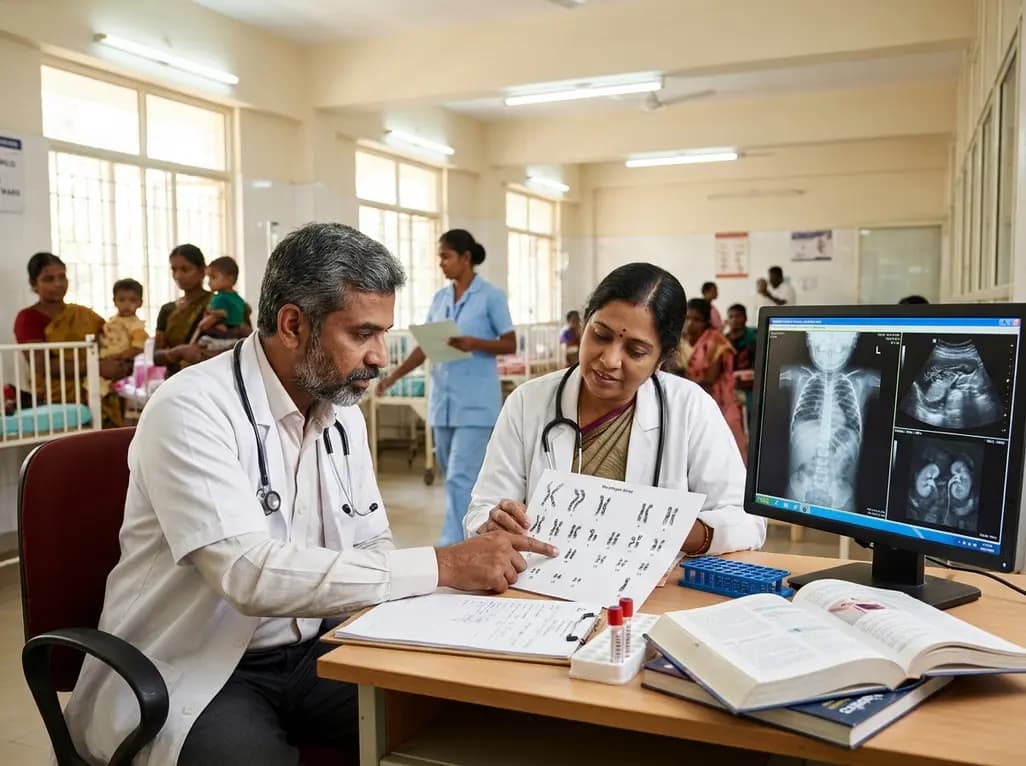
Mosaic trisomy 20 presents a unique diagnostic challenge. Although frequently viewed as a benign artifact in prenatal testing, true mosaicism causes distinct skeletal, gastrointestinal, and renal manifestations. Skin fibroblast karyotyping provides definitive confirmation and guides long-term multidisciplinary care.
Today
A nationwide Swedish register study of 46,479 VTE patients found no significant increase in major or fatal bleeding with concomitant DOAC and SSRI therapy compared to DOACs alone, though all-cause mortality was modestly elevated, offering reassuring safety data for clinicians managing both conditions.
Today
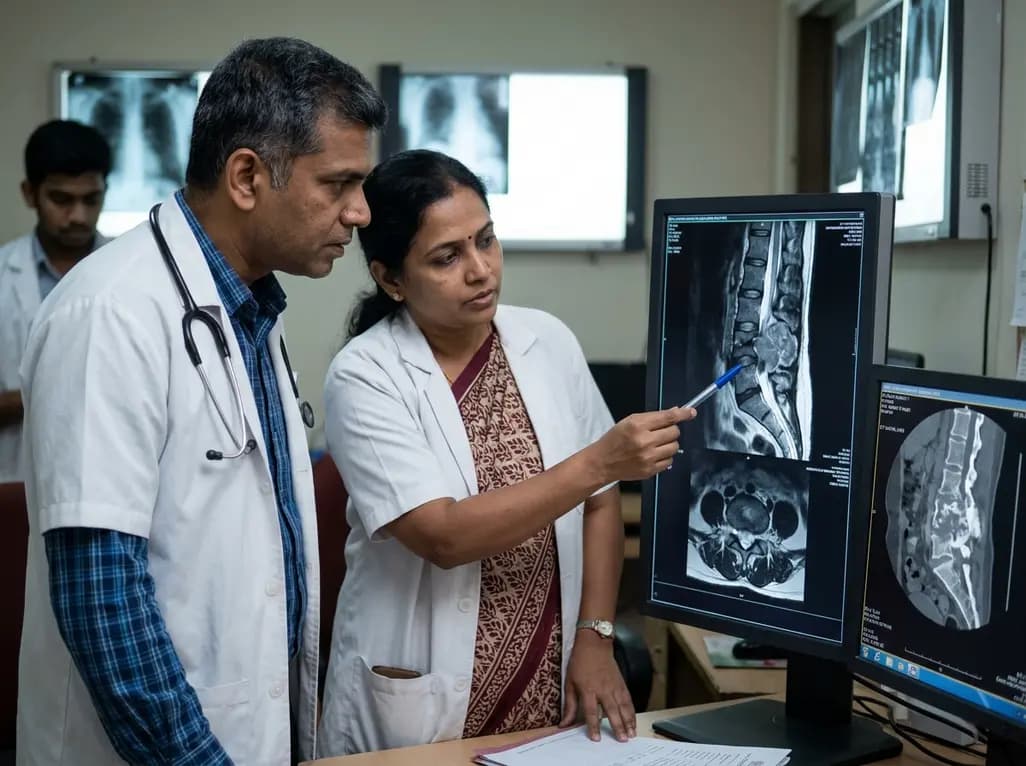
Primary spinal bone tumors can mimic benign nerve sheath tumors as foraminal dumbbell lesions. Learn to recognize crucial CT red flags and prevent delays.
Today
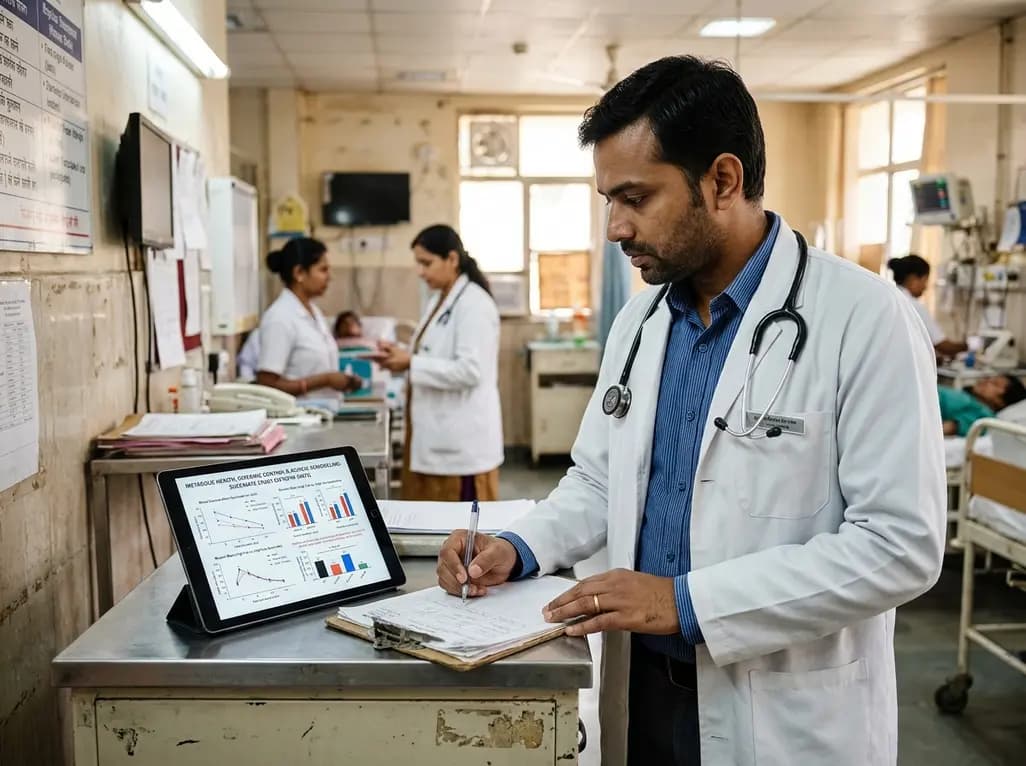
A recent investigation assesses the impact of succinate supplements on metabolic health, energy intake, and muscle remodeling in mice fed high-fat or ketogenic diets. Although succinate briefly blunts hyperphagia, it fails to improve long-term glycemic control or alter skeletal muscle hypertrophy.
Today
