.webp&w=384&q=75)

Loading, please wait...
Loading, please wait...

Recent vascular neurology research identifies iatrogenic cerebral amyloid angiopathy as a serious, progressive neurovascular condition. Clinicians previously viewed amyloid angiopathy almost exclusively as a sporadic disease affecting elderly patients. However, compelling clinical evidence demonstrates that specific historical surgical procedures can transmit amyloid-beta seeds between humans. Consequently, young and middle-aged adults develop severe cerebrovascular fragility decades after their initial surgeries. Neurologists must recognize this clinical entity because patients present unusually early in life with devastating neurological complications.
Furthermore, this condition mirrors acquired prion disorders in its fundamental transmissibility. Exogenous amyloid-beta seeds slowly prompt host peptides to misfold and deposit within leptomeningeal and cortical arteries. Over time, progressive amyloid accumulation weakens arterial walls, promotes microaneurysm formation, and induces spontaneous vessel rupture. Clinicians frequently mistake these presentations for vascular malformations or hypertensive hemorrhages. Therefore, establishing a thorough operative history remains essential for diagnostic accuracy. Early recognition enables clinical teams to implement tailored management strategies and avoid unnecessary invasive interventions. In addition, early diagnosis alerts teams to initiate specialized stroke surveillance before recurrent intracerebral hemorrhages occur.
The transmission mechanism of amyloid-beta involves distinct historical medical exposures. Decades ago, neurosurgeons routinely used cadaveric dura mater grafts, such as Lyodura, to repair dural defects. In addition, neurosurgical instruments with tenacious protein residue inadvertently transmitted microscopic amyloid seeds between patients. Although modern sterilization protocols destroy standard biological agents, amyloid aggregates withstand conventional chemical decontamination. Consequently, these robust proteopathic seeds remain biologically active and trigger template-directed conformational changes in native proteins.
Furthermore, this pathogenic cascade exhibits an exceptionally lengthy incubation period. Recent multicenter data demonstrate a median latency of 39 years between surgical exposure and initial clinical symptoms. Therefore, patients exposed during childhood or adolescence typically remain asymptomatic until their fifth decade of life. Throughout this silent window, vascular amyloid progressively expands across leptomeningeal arteries. In addition, researchers have documented similar transmission pathways following pediatric cardiac procedures and spinal surgeries involving cadaveric materials. Thus, clinicians must recognize that procedures outside the cranial cavity can occasionally seed vascular amyloidosis. Detailed documentation of remote surgeries provides the key link to confirming suspected cases. Accordingly, childhood hospital records often resolve puzzling stroke presentations.
To characterize the natural history of this condition, investigators assembled a multicenter cohort of 82 European patients. The researchers gathered patient data across specialized neurological referral centers in Austria, Italy, the Netherlands, and the United Kingdom. All participants met the validated modified Queen Square criteria for probable or possible disease. Notably, men represented 59.8% of the cohort, showing a modest male predominance. Furthermore, the median age at first clinical presentation was 50 years, distinguishing these patients from elderly individuals with sporadic disease.
In addition, initial clinical manifestations demonstrated substantial cerebrovascular fragility. Exactly 50% of the cohort presented initially with symptomatic intracerebral hemorrhage. Meanwhile, 32.9% experienced convexity subarachnoid hemorrhage or transient focal neurological episodes. Patients frequently described these transient episodes as migrating limb numbness, visual disturbances, or brief speech arrest. Consequently, physicians often misdiagnose these events as transient ischemic attacks or focal seizures. Magnetic resonance imaging revealed extensive lobar microbleeds and superficial cortical siderosis across multiple lobes. Therefore, early neuroimaging evaluation using blood-sensitive sequences proves vital when middle-aged adults present with unexplained focal deficits.
The cohort study documented extraordinarily high rates of recurrent cerebrovascular bleeding during clinical follow-up. Over a median observation period of 3.8 years and 385 patient-years, patients experienced 74 symptomatic intracerebral hemorrhages. Consequently, the overall incidence rate reached 19.2 events per 100 patient-years following first diagnosis. Furthermore, patients presenting initially with intracerebral hemorrhage suffered significantly higher recurrence risks compared to other initial presentations. This subgroup exhibited a recurrence rate of 24.6 per 100 patient-years, corresponding to a remarkable hazard ratio of 3.14.
In addition, the anatomical site of initial surgical exposure substantially influenced subsequent hemorrhage frequency. Specifically, patients exposed during spinal operations had a 66% lower rate of intracranial hemorrhage than those exposed through brain surgery or embolization. This substantial difference generated a hazard ratio of 0.34 for spinal interventions. However, all-cause mortality remained surprisingly low despite the high frequency of recurring lobar hemorrhages. Only six patients died during the study, representing an overall cohort mortality rate of 7.3%. Therefore, while severe hemorrhagic recurrence causes marked disability, acute survival remains relatively favorable with proper neurocritical care.
Cognitive impairment represents a major, disabling long-term outcome in affected individuals. At the final cognitive assessment, recorded at a median of 1.9 years after presentation, clinicians identified cognitive impairment in 51.2% of patients. Consequently, more than half of these relatively young individuals developed significant deficits in executive function, memory, and concentration. Furthermore, widespread amyloid deposition and cortical superficial siderosis progressively damage subcortical axonal networks. As a result, patients experience accelerating cognitive decline that compromises their vocational independence and quality of life.
In addition, managing this progressive vasculopathy requires strict therapeutic discipline and tailored neurovascular surveillance. Clinicians must avoid prescribing antiplatelet and anticoagulant medications whenever possible because high recurrence rates create unacceptable bleeding hazards. Strict blood pressure optimization provides the most effective medical defense against vessel rupture. Neurologists should aim for intensive blood pressure control to reduce mechanical stress on fragile arteriolar walls. Furthermore, structured serial magnetic resonance imaging tracks hemorrhagic lesion accumulation over time. Therefore, comprehensive multidisciplinary care, combining neurorehabilitation with aggressive vascular risk reduction, remains paramount for preserving patient function. Moreover, routine neuropsychological testing detects subtle declines before functional independence deteriorates.
Transmission occurs when cadaveric tissues, such as contaminated dura mater grafts, or surgical instruments introduce amyloid-beta seeds into host brain tissue. Over decades, these proteopathic seeds template and accelerate amyloid aggregation within leptomeningeal blood vessels, culminating in severe structural fragility and recurrent spontaneous lobar intracerebral hemorrhages.
Amyloid-beta seeding follows a slow, prion-like progression requiring decades to reach pathogenic thresholds. Misfolded protein aggregates gradually accumulate within cortical blood vessels without causing immediate symptoms. Clinicians typically detect vascular lesions only after widespread vascular weakening triggers acute intracerebral hemorrhages, approximately 39 years following the initial surgical exposure.
Clinicians must avoid antiplatelet agents and anticoagulants whenever possible because affected individuals face an annual recurrent hemorrhage risk exceeding 19%. Unless an absolute life-preserving indication exists, withdrawing these agents protects friable cortical vessels from catastrophic bleeding. Strict blood pressure optimization provides the safest long-term strategy for secondary stroke prevention.
Disclaimer: This content is for informational and educational purposes only and should not be construed as professional medical advice, diagnosis, or treatment. Healthcare professionals must use their clinical judgment and consult official drug labels, prescribing information, and institutional protocols before making treatment decisions. The authors and publishers do not assume liability for any injury, loss, or adverse events resulting from the application of the material discussed herein. Refer to the latest local and national guidelines for clinical practice.
References

Read summarized clinical updates, watch expert medical content, and earn CME certifications right from your smartphone.
Open your smartphone camera to scan and install.





A multicenter cohort study examines disease progression in iatrogenic cerebral amyloid angiopathy (iCAA). Patients face an annual intracerebral hemorrhage rate of 19.2 per 100 patient-years, with high cognitive impairment over time, emphasizing long-term vascular vigilance following neurosurgical exposures.
Today

A multicity study highlights that over 80% of acute respiratory infections remain outside hospitals. Patients frequently choose community pharmacies and digital platforms. Integrating digital health data and retail pharmacy sales can fill critical surveillance gaps and improve early outbreak detection.
Today

Scandinavian register evidence reveals that neonatal birth length strongly predicts adult health and mortality, whereas birth weight dictates cognitive capacity. Symmetric growth restriction causes far more severe long-term deficits than asymmetric restriction, underscoring the need for comprehensive anthropometry.
Today
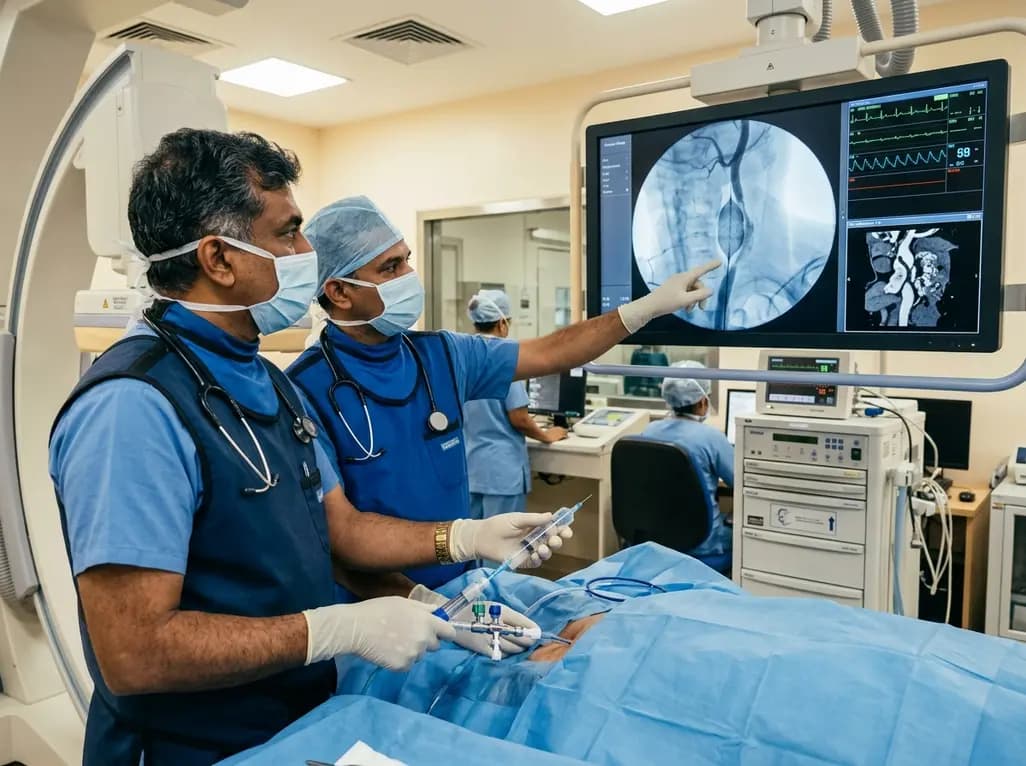
Discover how rescue cutting balloon angioplasty successfully modifies heavily calcified carotid stenosis, enabling stent delivery without baroreceptor instability and ensuring favorable long-term neurologic outcomes.
Today
A breakthrough study reveals that digoxin alleviates osteoarthritis by targeting LSP1 in synovial macrophages, preventing harmful extracellular trap formation and restoring SOD1 activity. This dual-action mechanism protects joint cartilage and offers a promising repurposing strategy for disease modification.
Today

Data from the 2026 Workforce Health Index reveals that 38.7% of urban employees and dependents exhibit abnormal glycemic control. Emerging at increasingly younger ages, this metabolic shift intersects with severe vitamin deficiencies, highlighting the urgent need for early workplace screenings and targeted clinical care.
Today
