.webp&w=384&q=75)

Loading, please wait...
Loading, please wait...

Postmastectomy radiation therapy remains an essential component of multimodal management for high-risk breast cancer. However, historical concerns regarding soft tissue toxicity frequently delayed the adoption of hypofractionated PMRT in patients planning breast reconstruction. The landmark Phase III RT CHARM trial directly addresses this long-standing clinical dilemma. By comparing shorter radiation schedules against conventional regimens, this multicentre study delivers practice-changing evidence. Consequently, oncologists and reconstructive surgeons now possess robust prospective data to guide individualized therapy.
Radiation oncologists have successfully embraced shortened fractionation courses for intact breast irradiation over the past decade. Nevertheless, clinicians hesitated to apply three-week regimens following mastectomy when patients pursued breast reconstruction. This reluctance stemmed from legitimate fears regarding radiation-induced fibrosis, microvascular compromise, and reconstructive failure. In addition, surgeons worried that larger daily fraction sizes might exacerbate tissue damage around prostheses or autologous flaps. Therefore, standard guidelines long favored five weeks of conventional treatment delivering 50 Gy in 25 fractions.
However, prolonged regimens place substantial physical, financial, and logistical burdens on patients and healthcare facilities. In countries like India, daily hospital travel over five continuous weeks often interrupts family commitments and employment. Furthermore, extended treatment slots strain radiation departments facing heavy patient volumes. Thus, verifying whether hypofractionated schedules compromise reconstructive integrity represents an urgent priority. The Alliance A221505 clinical trial specifically answered this critical question through prospective evaluation. Ultimately, the results validate a modern treatment pathway balancing tissue preservation with therapeutic efficiency.
The Phase III RT CHARM trial enrolled 898 adult women with unilateral invasive breast cancer between 2018 and 2021. Eligible participants had planned immediate or delayed reconstruction alongside indications for adjuvant chest wall and regional nodal irradiation. Investigators randomly assigned participants in a 1:1 ratio to receive either hypofractionated radiation or conventional fractionation. Specifically, the experimental cohort received 42.56 Gy in 16 fractions over three weeks. Conversely, the control cohort underwent standard irradiation of 50 Gy in 25 fractions across five weeks.
To maintain baseline balance, researchers stratified patient randomization according to reconstruction timing and surgical technique. Categories accounted for immediate versus delayed procedures as well as autologous tissue versus implant-only reconstructions. The study protocol specified a pre-defined noninferiority margin of 10%, assuming a complication frequency of 25% under standard fractionation. Overall, 825 patients met criteria for primary endpoint analysis after achieving a median follow-up of 3.9 years. This meticulous methodology generated dependable data across diverse surgical scenarios. Consequently, multidisciplinary teams can confidently apply these findings to broad clinical cohorts.
The primary study endpoint evaluated composite reconstruction complications within 24 months after completing radiation therapy. Clinicians monitored major clinical events including impaired wound healing, hospital readmission, capsular contracture, unplanned reoperation, and total reconstructive failure. At 24 months, complication rates reached 12.3% in the hypofractionated arm compared to 10.2% in the conventional arm. This outcome yielded an estimated difference of -2.1% with a 95% confidence interval spanning -6.5% to 2.2%. Because the upper bound remained below the predefined 10% noninferiority boundary, the shorter regimen confirmed noninferiority.
Furthermore, complication rates remained distinctly lower than original historical assumptions in both therapeutic cohorts. However, surgical methodology significantly influenced procedural durability across all patients regardless of radiation schedule. Specifically, implant-only reconstructions demonstrated a higher risk of complications compared to autologous flap procedures, showing an odds ratio of 1.65. Foreign prostheses exhibit heightened susceptibility to bacterial biofilm, capsular contracture, and ischemic skin breakdown. Conversely, autologous tissue vascularity provides superior resilience following localized irradiation. Surgeons must emphasize these distinct risk profiles when counseling patients on reconstruction options.
Beyond reconstructive safety, oncologists must confirm that condensed radiation delivery does not compromise disease eradication. Notably, the RT CHARM trial reported superb local and regional disease control across both treatment arms. At 36 months, the locoregional recurrence rate stood at 1.5% in the hypofractionated group and 2.2% in the conventional group. This slight divergence lacked statistical significance, proving equivalent oncological efficacy. Modern computed tomography simulation and precise volumetric conformal planning ensure comprehensive coverage across target tissues.
Similarly, investigators evaluated treatment-related adverse events during acute and extended follow-up windows. Both treatment arms demonstrated comparable incidences of acute radiodermatitis, moist desquamation, and localized discomfort. Moreover, late radiation toxicities, including soft tissue fibrosis, brachial plexopathy, and persistent secondary lymphedema, did not differ statistically between groups. Accelerated hypofractionation delivers higher dose per fraction without increasing normal tissue injury when teams strictly observe organ constraints. Therefore, clinicians can assure eligible patients that a three-week course maintains standard oncologic protection while sparing excess toxicity.
The confirmation of noninferiority brings substantial practice implications for Indian healthcare infrastructure. In resource-constrained environments, cancer centers frequently face overwhelming patient queues for linear accelerator delivery. Shortening curative postmastectomy regimens from 25 fractions to 16 fractions reduces machine time by nearly 36 percent. Consequently, radiation oncology facilities can treat significantly more individuals without purchasing additional hardware. This throughput expansion can directly decrease critical treatment waitlists across public institutions and private referral hospitals.
In addition, shortened radiation schedules meaningfully ease economic and logistical stress for patients and families. Cancer therapy often forces outstation families to arrange expensive lodging and local transportation near major urban medical centers. A three-week course reduces out-of-pocket travel expenses while allowing women to resume household and professional roles earlier. Furthermore, surgical teams can collaborate more predictably with radiation oncologists regarding the timing of reconstructive stages. To implement this approach safely, institutions must maintain rigorous dosimetric quality assurance. Ultimately, transitioning to 16-fraction PMRT delivers high-value, patient-centered cancer care across diverse clinical settings.
The RT CHARM trial demonstrated that hypofractionated PMRT does not increase reconstruction complications compared to conventional fractionation. At two years, complication rates were 12.3% with hypofractionated radiation and 10.2% with conventional therapy. This outcome confirmed statistical noninferiority within the predefined margin. Consequently, delivering 42.56 Gy over 16 fractions provides equivalent safety regarding wound healing, capsular contracture, and graft survival for reconstructed patients.
Implant-based procedures carry inherently higher complication rates because foreign silicone or saline devices lack intrinsic microvascular perfusion. In the trial, implants exhibited a significantly greater complication odds ratio of 1.65 compared to autologous flaps. Radiotherapy induces localized vascular compromise and capsule thickening around inert synthetic surfaces. Conversely, well-vascularized autologous tissue tolerates radiation changes more effectively, promoting resilient tissue healing and minimizing long-term structural failures.
No, the shorter 16-fraction schedule provides cancer control equivalent to the historical 25-fraction approach. Over a median follow-up of nearly four years, 36-month locoregional recurrence rates remained exceptionally low at 1.5% with hypofractionation and 2.2% with conventional radiation. Furthermore, both acute skin toxicities and late normal tissue side effects showed identical incidence rates, ensuring robust tumor control without added therapeutic hazards.
Disclaimer: This content is for informational and educational purposes only and should not be taken as professional medical advice. Always consult a qualified healthcare provider for diagnosis and treatment decisions. Refer to the latest local and national guidelines for clinical practice.
References

Read summarized clinical updates, watch expert medical content, and earn CME certifications right from your smartphone.
Open your smartphone camera to scan and install.





The Phase III RT CHARM trial demonstrates that a 16-fraction course of hypofractionated PMRT is safe and noninferior to conventional 25-fraction radiation in patients undergoing breast reconstruction, maintaining low complication rates and excellent locoregional tumor control.
Today
The Copenhagen Lung Cancer Risk Model (CPH-Lung) combines routine blood biomarkers with clinical data to predict 6-year lung cancer risk, demonstrating superior sensitivity over PLCOm2012, particularly in women and younger individuals.
Today
A multicenter cohort study shows that participation in early-phase gynecologic cancer clinical trials yields substantial disease control and significantly improves overall survival for heavily pretreated patients, establishing phase I trials as effective therapeutic strategies in advanced malignancies.
Today

A landmark Lancet Commission analysis reveals that obesity will cause over 23 billion avoidable DALYs by 2100. For healthcare providers, especially in India, combating this crisis demands moving beyond basic BMI metrics to prioritize visceral fat assessment, muscle preservation, and early metabolic intervention.
Today
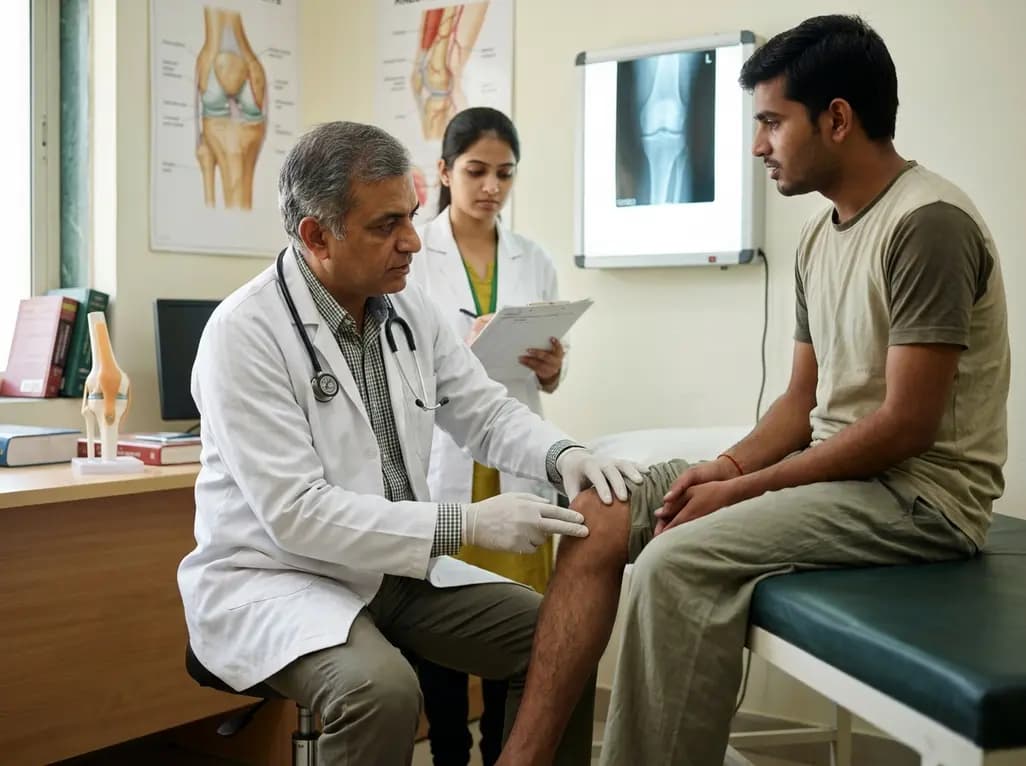
A novel metronidazole-functionalized Type I photosensitizer transforms intra-articular hypoxia into a therapeutic asset, effectively eliminating MRSA biofilms and resolving septic arthritis without promoting drug resistance.
Today

A longitudinal study reveals that an escalating cardiometabolic disease burden significantly accelerates health-related work cessation among middle-aged adults, highlighting an urgent need for proactive multimorbidity screening and tailored workplace health interventions.
Yesterday
