.webp&w=384&q=75)

Loading, please wait...
Loading, please wait...
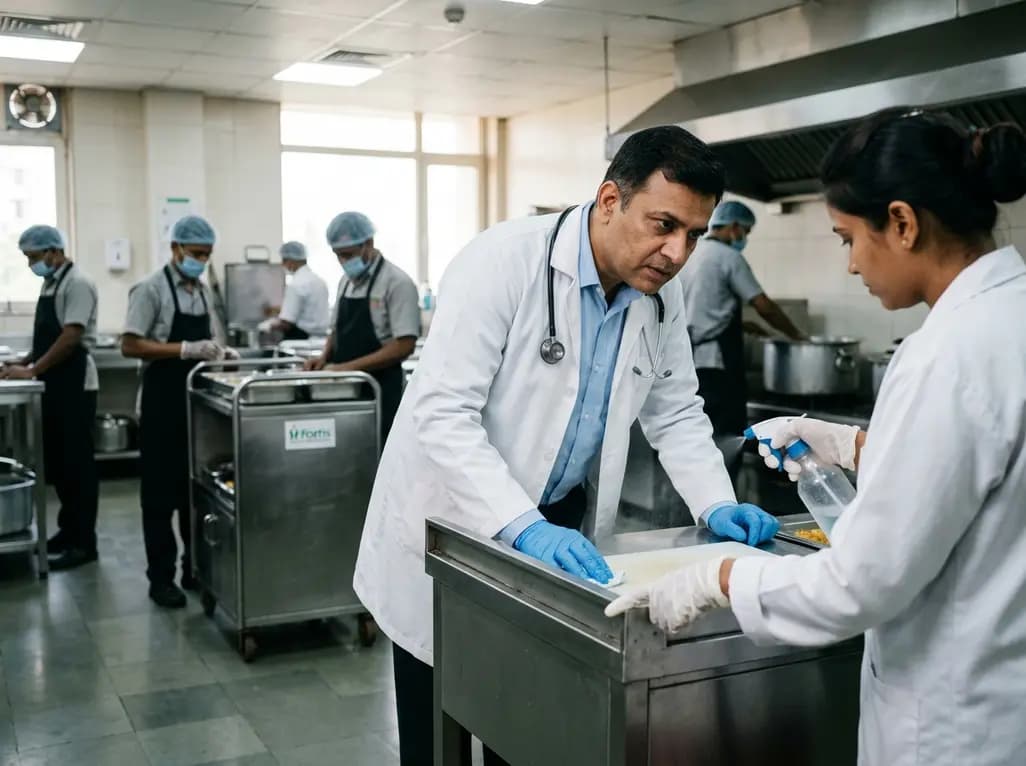
Maintaining optimal hospital food safety is a critical pillar of healthcare delivery and infection control. Recently, the Food and Drug Administration of Maharashtra suspended the catering license of a private third-party kitchen operating at Fortis Hospital, Mulund. Regulators detected alarming hygiene lapses during a routine inspection. These violations included pest infestations, clogged drains, fungal growth on transport crates, and degraded cutlery. Consequently, the event highlights serious vulnerabilities in institutional catering. For clinicians and healthcare administrators, clean dietary services remain essential to prevent dangerous hospital-acquired gastrointestinal infections.
During a comprehensive statewide enforcement drive across Maharashtra, food inspectors audited several commercial kitchens and healthcare establishments. Consequently, the regulatory team discovered significant sanitary non-compliance inside the kitchen managed by Sodexo India Services at Fortis Hospital. The inspectors documented live cockroaches in meal staging zones and food debris blocking drainage pipes. Furthermore, inspectors identified fungus-ridden insulated transport containers alongside rusted preparation knives. Therefore, the authorities immediately suspended the establishment's operational food business license under relevant sections of the Food Safety and Standards Act. In response, Fortis Hospital announced that it directed the vendor to execute mandatory corrective measures immediately. Moreover, the administration initiated interim meal supply arrangements to preserve uninterrupted dietary delivery for admitted patients and attendants. However, the enforcement action demonstrates that regulatory surveillance over healthcare facilities is tightening rapidly across India. State food inspectors are holding medical institutions accountable for their auxiliary infrastructure. Thus, hospitals cannot treat kitchen hygiene as a secondary administrative issue. Dietary service vendors must maintain pristine conditions at every stage of preparation. When third-party vendors cut corners, regulatory bodies will intervene decisively to safeguard public health.
Inpatients represent a remarkably vulnerable population due to underlying pathologies, invasive lines, and pharmacological immunosuppression. Therefore, any failure in food hygiene can precipitate severe nosocomial foodborne illnesses. Ingesting food contaminated with fungal spores or enteric bacteria creates devastating systemic consequences. Specifically, pathogens such as Salmonella enterica, Listeria monocytogenes, and Escherichia coli pose catastrophic threats to postoperative patients. In addition, exposure to environmental molds like Aspergillus or Rhizopus through unhygienic transport vessels can trigger fungal enteritis in oncology units. Cockroaches act as mobile biological vectors that transfer antimicrobial-resistant organisms between hospital floor drains and food preparation tables. Consequently, patient ingestion of colonized food can cause acute gastroenteritis, septic shock, or extended hospitalizations. Furthermore, differentiating dietary food poisoning from post-surgical ileus or medication side effects often delays appropriate clinical interventions. Thus, clinicians must recognize that kitchen hygiene directly influences clinical morbidity. Inpatient nutritional management requires clean, safe sustenance just as much as precise pharmacotherapy. Moreover, bacteremia originating from gut translocation in neutropenic patients carries high mortality rates. Because of this reality, therapeutic meals must adhere to absolute microbial cleanliness. Hospital clinicians should never have to worry whether dietary trays undermine clinical therapy.
Healthcare facilities in India must comply with rigorous statutory guidelines governing food handling and preparation. Specifically, the Food Safety and Standards Authority of India enforces Schedule 4 of the licensing regulations across all hospital canteens. These statutory mandates dictate stringent pest control schedules, stainless steel surfaces, potable water testing, and regular medical examinations for food handlers. Furthermore, the National Accreditation Board for Hospitals and Healthcare Providers integrates dietary operations directly into hospital infection control modules. Under the sixth edition of NABH standards, dietary services require systematic nutritional risk screening and sanitized therapeutic preparation. However, hospitals frequently struggle with vendor governance when they outsource their culinary operations. While external contractors hold their independent licensing, the parent hospital retains ethical and institutional liability for inpatient welfare. Therefore, administrative leaders must align outsourced contractor workflows with hospital quality benchmarks. Regular microbiological swabbing of kitchen surfaces, food transport trolleys, and utensils must become routine. Additionally, documentation of routine cold chain temperatures and drainage maintenance is legally required during inspections. When facilities neglect regular internal quality checks, they invite severe regulatory action and accreditation penalties. Robust regulatory oversight protects both the institution and the patient.
To eliminate hygiene failures, hospital management teams must implement comprehensive internal audit protocols. Foremost, internal quality control committees must audit kitchen facilities without prior notification to external vendors. These inspections must evaluate raw material procurement, dry storage moisture levels, and food segregation protocols. Furthermore, cross-contamination prevention requires the complete elimination of porous cutting boards and oxidised metal implements. Facilities should replace rusted cutlery with surgical-grade stainless steel tools immediately. Additionally, pest management strategies must feature chemical-safe barrier techniques that prevent insecticide residue from contacting patient meals. Drainage systems require daily sanitation with enzymatic cleaners and backflow preventers to avert structural infestations. Moreover, hospital infection preventionists should routinely culture samples from insulated transport containers to detect subclinical fungal colonization. Temperature validation remains equally essential, ensuring hot therapeutic foods remain above sixty degrees Celsius until bedside delivery. Consequently, systematic structural monitoring creates a resilient barrier against sanitation lapses. In fact, staff should log daily temperature charts for all refrigeration and dishwashing equipment. Regular environmental screening also identifies microbial biofilms before they contaminate prepared food. By maintaining rigorous standard operating procedures, healthcare centers can ensure unmatched dietary hygiene.
Outsourcing dietary management to commercial food caterers offers operational convenience, but it introduces significant operational vulnerabilities. Therefore, healthcare leadership must draft vendor contracts that include explicit quality metrics and strict penalty clauses for hygiene non-compliance. Clinical dietitians and infection control officers must retain veto power over vendor operations within hospital premises. Additionally, caterers must provide documented evidence of quarterly health clearances and immunizations for all food handlers. Hand hygiene audits, head coverings, and glove protocols must mirror the strict sanitation standards observed in surgical wards. Furthermore, dietitians should supervise not merely the caloric and macro-nutrient balance, but also the physical cleanliness of service trolleys. Hospital leadership should also establish an anonymous reporting channel where floor nurses and ward attendants can flag suspicious food quality. Consequently, collaborative oversight bridges the gap between commercial catering contractors and clinical patient care expectations. Ultimately, food service in a healthcare environment is an essential therapeutic intervention, not an ordinary hospitality amenity. Moreover, hospital administrators should conduct joint weekly walkthroughs with vendor managers to inspect grease traps and disposal units. Immediate corrective actions must follow any identified deficiency. Through continuous institutional vigilance, healthcare institutions can guarantee safe and reliable nutrition for every patient.
Q1: Why are hospital kitchen violations particularly dangerous compared to public restaurants?
Hospitalised patients suffer from impaired immunity, chronic organ illnesses, and medical devices that leave them exceptionally susceptible to opportunistic pathogens. When hospital kitchen hygiene lapses, patients face immediate risks of bloodstream infections, fungal enteritis, and severe dehydration from acute gastroenteritis. Unlike healthy restaurant diners, vulnerable inpatients cannot easily tolerate gastrointestinal insults without suffering significant clinical decline, septic complications, or substantially increased mortality.
Q2: What statutory requirements govern hospital food safety under Indian regulations?
Under Indian regulations, hospital food businesses must obtain valid FSSAI licenses and adhere to Schedule 4 standards. These regulations dictate mandatory food handler health checkups, water quality verification, stainless steel equipment, and structured pest eradication protocols. Furthermore, NABH accreditation standards require hospitals to incorporate food safety into their infection prevention policies, ensuring therapeutic diets remain clean, monitored, and microbiologically safe during hospitalisation.
Q3: How can hospital administrators ensure third-party catering vendors maintain sanitation standards?
Administrators must institute unannounced joint inspections involving infection control officers and chief clinical dietitians. Contracts should establish enforceable penalty clauses for hygiene deficiencies, mandatory microbiological surface swabbing, and verified staff training. Additionally, hospitals should maintain digital logs tracking food holding temperatures, pest control certificates, and transport container sterilization to ensure continuous compliance and patient safety.
Disclaimer: This content is for informational and educational purposes only. It does not constitute medical advice or replace professional judgment. Refer to the latest local and national guidelines for clinical practice.
References

Read summarized clinical updates, watch expert medical content, and earn CME certifications right from your smartphone.
Open your smartphone camera to scan and install.





The Maharashtra FDA's recent licence suspension at Fortis Hospital Mulund highlights the urgent clinical need for strict culinary hygiene in healthcare facilities. Preventing cross-contamination, fungal infestation, and pest activity is essential to protect vulnerable inpatients from life-threatening infections.
Today

A Belgian study highlights maternal desires and healthcare provider perspectives on breastfeeding in women living with HIV. While viral suppression reduces transmission risk below 1%, significant clinical training and policy gaps remain, highlighting the urgent need for multidisciplinary counseling protocols.
Today

The STADIA-HFpEF trial evaluated whether dapagliflozin improves left ventricular distensibility in phenotypically stratified HFpEF patients without significant myocardial fibrosis. While primary diastolic endpoints were neutral, exploratory improvements in left atrial conduit strain and biomarkers emerged.
Today
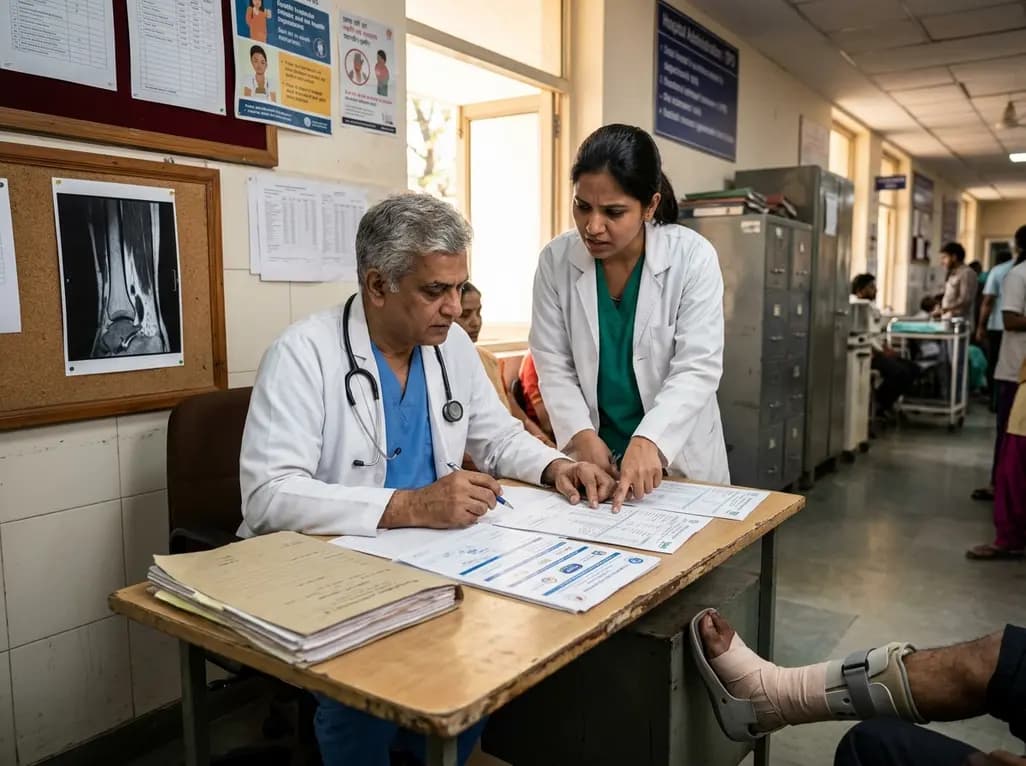
A 2-center cohort study demonstrates that insurance status significantly influences diagnostic and surgical timing in acute Achilles tendon rupture repair. Addressing administrative hurdles and expediting orthopedic referrals can optimize patient outcomes and reduce wound complications.
Today

A landmark multi-ethnic study of 40,132 participants demonstrates that risk-weighted apoB (RW-apoB) captures coronary risk beyond measured apoB. By integrating the atherogenic potency of triglyceride-rich lipoproteins and Lp(a), RW-apoB improves cardiovascular risk discrimination across diverse populations.
Today
