.webp&w=384&q=75)

Loading, please wait...
Loading, please wait...

Surgical management of nonfunctional pituitary adenomas poses substantial endocrine challenges for both clinicians and patients. Although these benign sellar tumors lack autonomous hormonal hypersecretion, their insidious expansion compresses the adjacent pituitary gland, pituitary stalk, and optic chiasm. Consequently, over half of presenting patients exhibit baseline hypopituitarism affecting at least one hormonal axis prior to intervention. Endoscopic endonasal transsphenoidal surgery serves as the standard first-line therapy to relieve mass effect and decompress neurovascular structures. However, surgical manipulation within the compact sellar space risks damaging fragile hypophyseal portal vasculature and residual adenohypophyseal tissue. As a result, tumor resection can precipitate new transient or permanent hypopituitarism.
Predicting which patients will experience permanent endocrine failure versus those who will achieve hormonal recovery remains clinically difficult. Clinicians frequently struggle to provide precise prognostic guidance during preoperative counseling. Furthermore, historical literature reports divergent endocrine outcomes, creating uncertainty regarding postoperative hormone replacement requirements. Therefore, contemporary surgical teams require robust, granular data from large institutional cohorts to refine prognostic estimates. Establishing reliable predictors enables clinicians to individualize perioperative monitoring, prepare appropriate hormone replacement protocols, and manage long-term metabolic health effectively. Moreover, structured risk stratification helps alleviate patient anxiety regarding post-surgical life and lifelong medication dependency.
To address these predictive uncertainties, investigators at Weill Cornell Medicine evaluated 372 consecutive patients who underwent endoscopic endonasal resection for nonfunctional pituitary adenomas between 2006 and 2023. The researchers analyzed comprehensive clinical records spanning 17 years, assessing demographic variables, preoperative hormonal profiles, tumor dimensions, and radiographic features. Furthermore, the team documented the extent of resection alongside transient and permanent postoperative hormone replacement needs. Multivariable logistic regression identified independent predictors of hormonal deterioration and postoperative recovery.
Overall, the surgical team achieved gross-total or near-total tumor resection in 79% of the cohort, underscoring high anatomical efficacy. Notably, 56% of patients presented with preexisting deficiency in at least one hormonal axis before surgery. Following intervention, 178 patients (48%) required permanent hormone replacement therapy for at least one axis. Among patients entering surgery with completely intact pituitary function, 30.8% developed a new permanent hormonal deficit. Consequently, these findings demonstrate that even complete endoscopic tumor removal carries a measurable risk of long-term glandular injury. This large-scale analysis offers benchmark data that bridge surgical execution and long-term endocrinological surveillance, providing practical guidance for surgical consent and postoperative care pathways.
Analysis of individual endocrine axes revealed distinct patterns of vulnerability following endoscopic resection. Specifically, the hypothalamic-pituitary-thyroid axis demonstrated the highest susceptibility, with 34% of the cohort requiring permanent levothyroxine replacement. In addition, secondary adrenal insufficiency developed or persisted in 23% of patients, requiring lifelong daily glucocorticoid substitution. Because unmanaged hypocortisolemia can precipitate life-threatening adrenal crises during physiologic stress, identifying corticotroph deficiency represents a paramount safety objective for clinical teams.
Gonadotropic axis deficiency persisted or emerged postoperatively in 15% of patients, necessitating sex steroid replacement to prevent osteoporosis and metabolic decline. Meanwhile, permanent arginine vasopressin deficiency, manifesting as central diabetes insipidus, occurred in 7% of individuals. Although transient postoperative water balance disturbances occur commonly, permanent posterior pituitary dysfunction remained comparatively uncommon in this cohort. Therefore, surgical teams must maintain heightened vigilance for anterior pituitary failure, especially thyroid and adrenal deficiencies. Establishing early post-discharge hormone surveillance protocols ensures timely identification of newly emerging deficits, preventing dangerous metabolic decompensation. Furthermore, systematic biochemical tracking enables clinicians to adjust hormone dosages promptly, thereby restoring baseline quality of life and energy levels.
Multivariable logistic regression demonstrated that tumor dimensions and pituitary apoplexy serve as powerful independent predictors of hormonal outcomes. Specifically, larger tumor size strongly correlated with postoperative endocrine decline. For tumors smaller than 2 cm, only 23.5% of patients required new permanent hormone replacement. Conversely, when tumors exceeded 3 cm, 54.5% of patients required new permanent replacement. In addition, pituitary apoplexy substantially worsened endocrine prognosis, as acute intratumoral hemorrhage and tissue necrosis inflict severe ischemic injury on surrounding pituitary cells before decompression occurs.
Encouragingly, surgical decompression also enabled significant functional recovery among preoperatively deficient patients. Overall, 39.5% of patients with baseline endocrinopathy experienced hormonal recovery and no longer required long-term replacement. Tumor diameter critically influenced this recovery potential. In tumors measuring less than 2 cm, 53.3% of preoperatively deficient patients achieved complete recovery following surgical decompression. In contrast, among tumors exceeding 3 cm, only 32.7% showed improvement. These findings suggest that massive adenomas cause irreversible compressive atrophy, whereas smaller lesions permit functional pituitary reperfusion and cellular reactivation after decompression. Thus, early intervention before adenomas reach substantial dimensions preserves pituitary recovery potential.
These prognostic insights mandate a structured multidisciplinary approach connecting neurosurgery and clinical endocrinology. First, clinicians should implement rigorous early biochemical surveillance following surgery. Because nearly one-quarter of patients require permanent hydrocortisone, teams should routinely measure morning serum cortisol on postoperative day two or three. Empiric steroid coverage should never replace objective testing, as premature tapering risks adrenal crisis while unnecessary supplementation suppresses axis recovery.
Second, surgical teams must educate patients regarding delayed sodium imbalance. Fluid shifts and delayed hyponatremia typically arise between postoperative days five and ten, requiring scheduled serum sodium checks. Furthermore, definitive assessment of anterior pituitary axes should occur at six to twelve weeks postoperatively. Because nearly 40% of preexisting hormone deficits can resolve, clinicians should re-evaluate hypopituitary patients periodically rather than assuming that replacement therapy is permanent. Ultimately, coordinated care between neurosurgeons and endocrinologists optimizes visual, anatomical, and metabolic outcomes for patients undergoing endoscopic tumor resection. Structured communication between hospital providers and community physicians ensures continuity of care, preventing avoidable emergency readmissions throughout the prolonged postoperative recovery phase.
Approximately 30.8% of patients with normal preoperative pituitary function develop a new permanent hormone deficiency following endoscopic resection. Overall, 48% of all surgical patients require long-term replacement for at least one hormonal axis, emphasizing the necessity of thorough postoperative endocrine testing for every surgical candidate.
The thyroid axis is the most frequently affected endocrine system following surgical resection. In this large cohort, 34% of patients required permanent levothyroxine therapy. Adrenal insufficiency was also common, affecting 23% of patients, whereas gonadotropin and antidiuretic hormone deficits occurred in 15% and 7% of cases, respectively.
Yes, endocrine function can recover substantially following mechanical tumor decompression. Approximately 39.5% of patients with preoperative hormone deficits normalized postoperatively and avoided long-term replacement. Recovery is particularly robust in tumors smaller than 2 cm, where 53.3% of patients regained normal endocrine function compared to only 32.7% for larger tumors.
Disclaimer: This content is for informational and educational purposes only. It does not constitute medical advice or replace independent clinical judgment. Refer to the latest local and national guidelines for clinical practice.
References

Read summarized clinical updates, watch expert medical content, and earn CME certifications right from your smartphone.
Open your smartphone camera to scan and install.





A 17-year study of 372 patients undergoing endoscopic endonasal resection for nonfunctional pituitary adenomas highlights key predictors of hormone dysfunction and recovery, showing 48% required long-term replacement.
Today
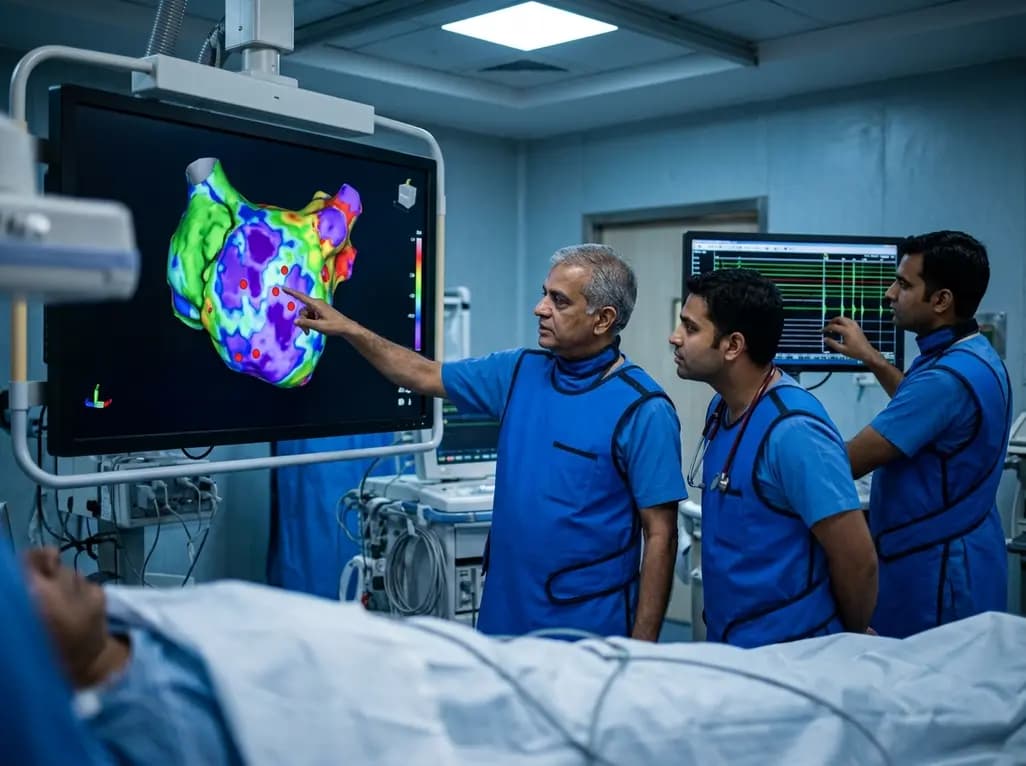
A study of 1,428 AF ablation patients reveals that over 60% of left atrial non-PV triggers arise within low-voltage areas, with anterior and roof triggers colocalizing entirely within fibrotic substrate. Identifying and ablating these sites is critical for long-term arrhythmia freedom.
Today

A comprehensive meta-analysis of over 278,000 women demonstrates that maternal atopic dermatitis significantly increases risks of premature rupture of membranes and low birth weight. Discover essential clinical insights on disease mechanisms, serial antenatal growth monitoring, and safe therapeutic interventions.
Today

A pioneering study highlights the first United States experience using the FARAPOINT focal pulsed-field ablation catheter for refractory ventricular tachycardia. The catheter achieved complete acute non-inducibility across tested patients without procedural complications, marking a milestone in ventricular ablation.
Today
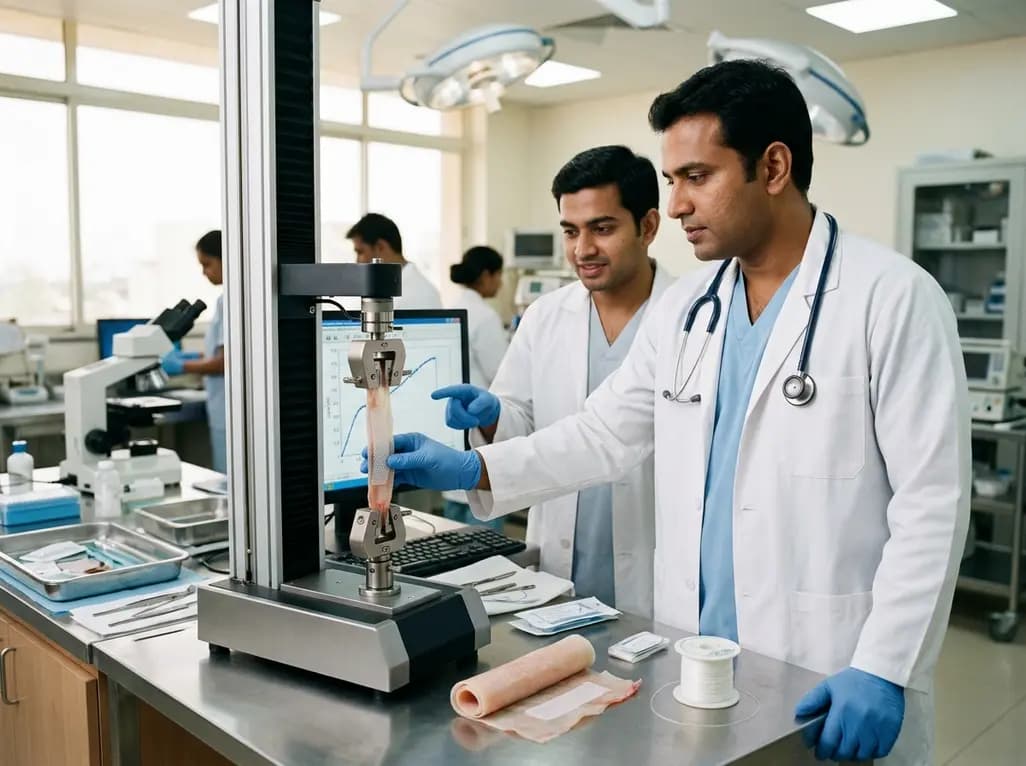
A biomechanical study shows that augmenting thin fascia lata grafts with a reinforced polyester patch doubles ultimate tensile strength and stiffness, matching the performance of thick grafts for superior capsule reconstruction while reducing donor-site morbidity.
Today

A cross-sectional study reveals that elevated METS-IR is independently associated with higher myopia odds in adolescents, showing biological synergy with obesity and highlighting the need for metabolic screening in pediatric eye care.
Today
