.webp&w=384&q=75)

Loading, please wait...
Loading, please wait...

A recent molecular epidemiological study has provided significant insights into the transmission of HIV CRF01_AE cluster 5 across China. Researchers analyzed over 4,000 partial pol sequences from newly diagnosed cases in Shenyang and Shenzhen between 2016 and 2019. Consequently, they identified distinct sub-subtypes and mapped their geographical distribution across the country. The findings suggest that middle-aged men who have sex with men (MSM) are the primary drivers of this traveling epidemic.
The study highlights that HIV CRF01_AE cluster 5 (01C5) is highly prevalent, accounting for nearly 47% of the analyzed cases. Moreover, this cluster exhibits a high degree of connectivity between Northeast China and South China. This viral dispersal likely occurs through intense human migration and long-distance travel. Furthermore, Bayesian inference models confirmed that large transmission clusters facilitate the rapid spread of the virus. These clusters often contain ten or more individuals, indicating a highly active transmission network.
Middle-aged MSM often belong to more stable and wider sexual networks than younger cohorts. Therefore, they play a critical role in the sustained transmission of 01C5 across different regions. Additionally, the presence of multiple sub-subtypes like 01C4 and 01C1 adds complexity to the national epidemic landscape. Understanding these molecular footprints allows public health authorities to optimize interventions. Specifically, health programs should focus on molecular surveillance and tailored outreach for high-risk populations in major urban hubs. By identifying these clusters early, clinicians can better manage the spread of diverse HIV-1 lineages.
This sub-subtype is one of the most dominant lineages in China. It is characterized by rapid transmission across geographically distant regions through specific high-risk social networks.
Molecular analysis shows that this demographic forms large, interconnected clusters. These networks act as bridges for viral dispersal between major economic hubs in Northeast and South China.
Disclaimer: This content is for informational and educational purposes only and does not constitute medical advice or a professional relationship. Always seek the advice of your physician or other qualified health provider with any questions you may have regarding a medical condition. Refer to the latest local and national guidelines for clinical practice.
References
Yang W et al. Molecular footprints of a traveling epidemic: CRF01_AE-cluster 5 (01_C5) might spread across Northeast and South China via middle-aged MSM. Emerg Microbes Infect. 2026 Dec undefined. doi: 10.1080/22221751.2026.2637290. PMID: 41807290.
Li X et al. Independent epidemic patterns of HIV-1 CRF01_AE lineages driven by mobile population in Shenzhen, an immigrant city of China. Virus Evol. 2021;7(1):veaa096. doi: 10.1093/ve/veaa096.
Chen M et al. A novel HIV-1 circulating recombinant form from CRF01_AE-C5 lineage among men who have sex with men in China. Front Microbiol. 2021;12:650050. doi: 10.3389/fmicb.2021.650050.

Read summarized clinical updates, watch expert medical content, and earn CME certifications right from your smartphone.
Open your smartphone camera to scan and install.





A molecular study reveals that HIV CRF01_AE cluster 5 is spreading between Northeast and South China, primarily driven by middle-aged MSM networks....
7 months ago

An observational study from the NIH All of Us Research Program reveals that adding a multi-ancestry polygenic risk score to machine learning models provides only modest improvements in predicting adult weight gain, underscoring the enduring significance of routine clinical and lifestyle factors.
Today

A study in JAMIA Open shows lightweight open-source reasoning LLMs achieve up to 95% sensitivity and accelerate evidence synthesis screening by nearly twentyfold, presenting a cost-effective, scalable AI solution for biomedical research and systematic reviews.
Today
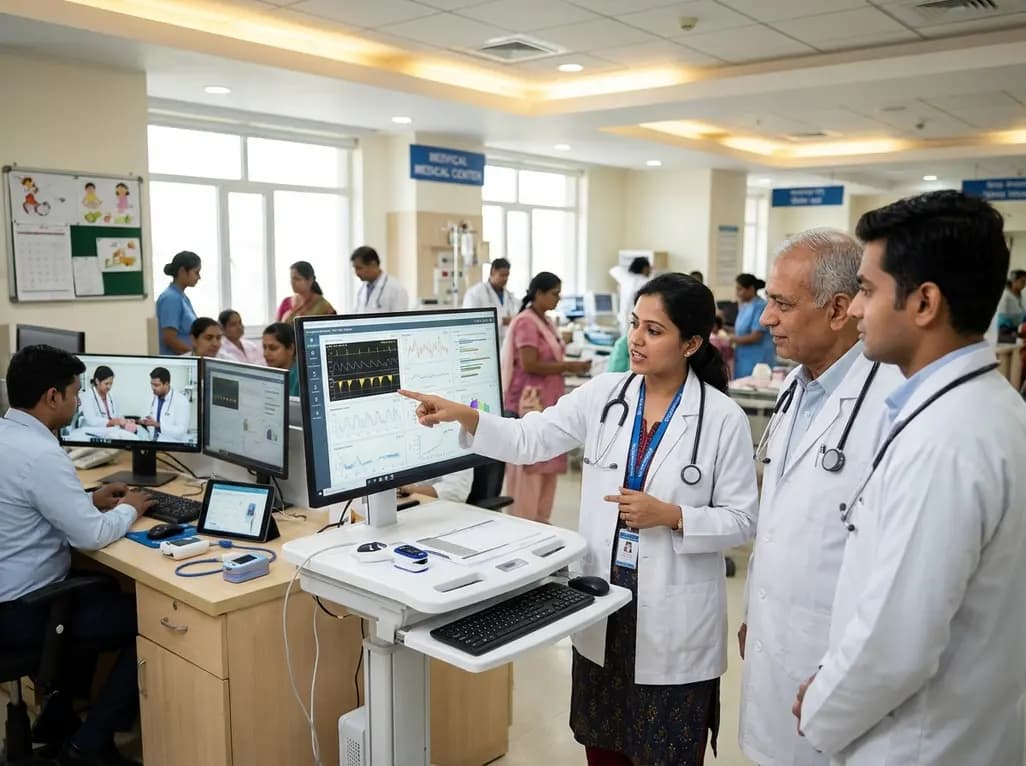
A landmark study details how an enterprise pediatric remote patient management model expanded from a single cardiology pilot to 16 diverse specialty programs by combining centralized digital operations with specialty clinical leadership.
Today
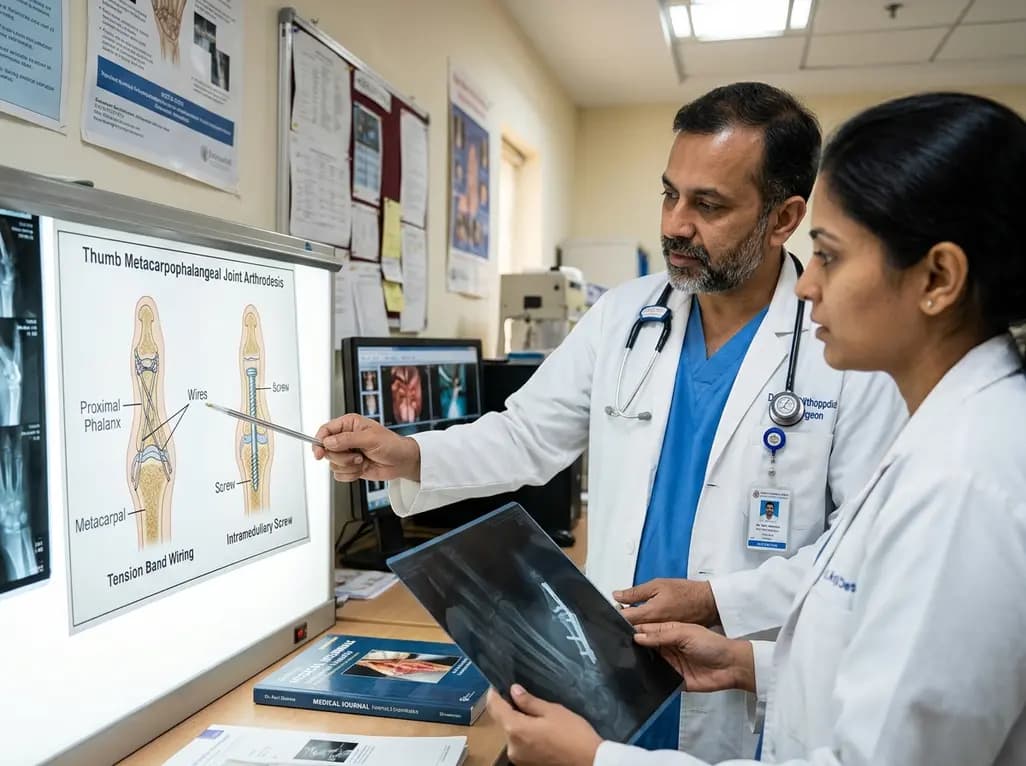
A comparative review of tension band wiring and intramedullary screw fixation in thumb metacarpophalangeal arthrodesis, evaluating union rates, hardware complications, and clinical outcomes.
Yesterday
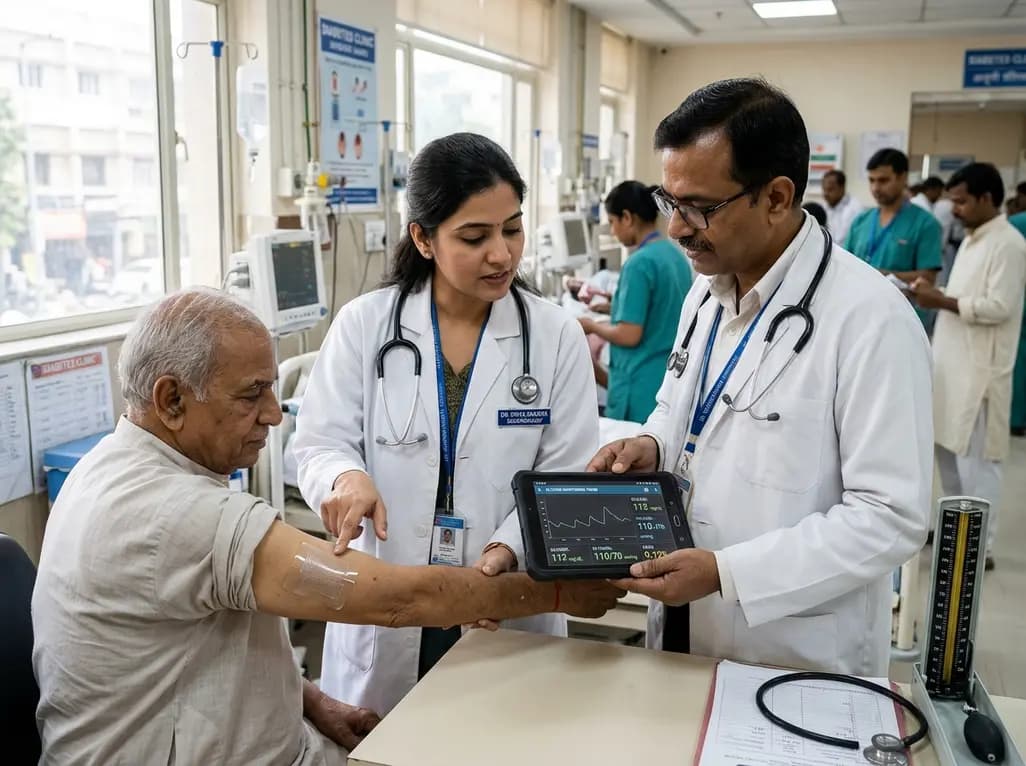
A breakthrough ultrathin multimodal sensor decouples physical hemodynamic monitoring from disposable electrochemical calibration, achieving long-term wearable glucose prediction with 81.36% accuracy and a 9.12% MARD. This offers a robust, drift-free solution for outpatient metabolic surveillance.
Yesterday
