

Loading, please wait...
Loading, please wait...

Major depressive disorder represents a major cause of disease burden globally among young individuals. In recent years, clinicians have noted a concerning link between severe social withdrawal and affective disorders. A landmark nationwide study in South Korea has clarified the strong association between hikikomori and depression across a substantial sample of young adults. Furthermore, the findings indicate that persistent isolation carries serious mental health consequences. Therefore, healthcare providers must understand these clinical nuances to implement timely, effective psychiatric interventions.
Originally identified in Japan during the late 1990s, hikikomori describes a condition where individuals isolate themselves at home for at least six months. While experts once viewed this behavior as a culture-bound phenomenon, clinicians now recognize it globally. Affected youths systematically avoid academic, occupational, and interpersonal obligations, which severely restricts their functional autonomy. Consequently, prolonged confinement disrupts essential human relationships and fosters chronic feelings of loneliness. Moreover, persistent detachment impairs emotional resilience and exacerbates underlying mood vulnerabilities. In many instances, severe social withdrawal precedes the clinical onset of affective illness. In addition, expanding digitalization and remote work options may inadvertently facilitate deeper physical seclusion. Therefore, medical practitioners must appreciate that hikikomori is not an eccentric lifestyle choice. Instead, it represents a clinical indicator of profound emotional distress. When family physicians detect persistent isolation, they must intervene promptly before severe psychiatric complications take root.
To evaluate this escalating public health concern, researchers examined data from the 2022 Korean Youth Survey. This cross-sectional investigation encompassed 14,966 participants aged 19 to 34 years. Specifically, the investigators categorized subjects by social withdrawal status and confinement duration. Furthermore, the researchers utilized the Patient Health Questionnaire-9 to evaluate depressive symptom severity. Multiple logistic regression models then calculated the precise odds ratios linking social withdrawal with clinical depression. In addition, the statistical analyses controlled for demographic variables, household income, and overall somatic health status. Young adults without social withdrawal served as the primary reference group for all evaluations. Consequently, this rigorous methodology isolated the independent risk associated with severe home confinement. Moreover, the study examined specific contributing factors behind isolation, including employment challenges and interpersonal conflicts. By assessing a representative nationwide population, the study generated robust empirical evidence regarding youth mental health trajectories.
The statistical findings revealed a powerful relationship between severe social withdrawal and major depressive disorder. Specifically, socially withdrawn young men demonstrated an odds ratio of 2.25 for depression compared to non-withdrawn controls. Similarly, socially withdrawn females exhibited an odds ratio of 2.34, confirming high vulnerability across sexes. However, the researchers discovered notable sex differences when analyzing suicide risk among isolated participants. For example, the impact of prolonged confinement on suicidal ideation diverged substantially between young men and women. In addition, extended duration of physical withdrawal correlated with greater depressive severity and feelings of hopelessness. Consequently, the investigation shows that isolation actively worsens psychological decompensation over time. Therefore, medical clinicians must conduct prompt suicide risk evaluations when managing socially withdrawn youths. Furthermore, clinicians should not assume that silent withdrawal equates to lower acute risk. Because depressive severity escalates with confinement, early psychiatric identification offers the greatest therapeutic protection.
Beyond individual psychological factors, the authors analyzed how domestic living environments influence mental health. Notably, household size significantly modified depressive risk among socially withdrawn young adults. For instance, individuals living alone faced unique emotional challenges compared to those living with family. While solo living removes direct interpersonal conflict, it also eliminates routine social contact that prevents complete isolation. Conversely, withdrawn individuals residing with family members frequently report intense parental pressure and interpersonal criticism. Consequently, domestic friction can paradoxically drive vulnerable youth further into bedroom seclusion. Moreover, economic instability and competitive employment landscapes place immense pressure on contemporary households. In addition, cultural stigmas surrounding unemployment often worsen feelings of inadequacy inside the family home. Therefore, clinicians must thoroughly assess the patient's domestic environment during initial clinical interviews. By identifying whether living arrangements offer comfort or generate tension, physicians can guide supportive family counseling.
These findings carry vital clinical relevance for general practitioners, family doctors, and psychiatrists. First, primary care physicians must screen isolated youths for depression using validated instruments like the PHQ-9. However, withdrawn individuals rarely seek medical care independently due to shame and severe social avoidance. Therefore, community outreach programs and home visit models are critical for establishing early therapeutic contact. Furthermore, digital mental health services and telemedicine provide an accessible, low-stress entry point for medical care. Once physicians engage the patient, they must deliver integrated treatments combining psychotherapy and appropriate pharmacotherapy. Specifically, cognitive behavioral therapy helps individuals challenge avoidance behaviors and rebuild interpersonal confidence. Meanwhile, selective serotonin reuptake inhibitors effectively address underlying depressive and anxiety symptoms. In addition, clinicians must educate family caregivers to foster supportive, low-stress home atmospheres. Ultimately, comprehensive psychiatric care helps restore functional independence and prevents long-term disability.
Although this extensive survey provides meaningful epidemiological data, essential clinical questions require ongoing investigation. Primarily, researchers must conduct longitudinal prospective studies to track withdrawn individuals over several years. Such studies will clarify whether social withdrawal triggers depression or emerges primarily as a secondary symptom. Furthermore, investigators should perform cross-cultural analyses to evaluate withdrawal behaviors across diverse international populations. Many rapidly developing nations experience similar academic competition, economic uncertainty, and youth isolation. Therefore, comparative international research can illuminate universal risk factors and guide culturally sensitive psychiatric practices. In addition, future investigations should evaluate physiological biomarkers, including neuroendocrine dysregulation and sleep disturbances caused by chronic confinement. By expanding our scientific understanding of these interrelated mechanisms, global healthcare systems can establish timely preventative strategies for isolated young adults.
Hikikomori describes a condition where an individual exhibits severe social withdrawal and home seclusion lasting at least six months. Affected individuals systematically avoid school, work, and interpersonal commitments, leading to significant functional impairment. While first documented in Japan, clinicians recognize it globally as a distressing phenomenon frequently co-occurring with mood disorders.
Prolonged social withdrawal deprives patients of essential social reinforcement, emotional validation, and healthy physical routines. Consequently, prolonged seclusion fosters rumination, negative cognitive biases, and intense feelings of worthlessness. Over time, persistent detachment undermines psychological resilience and alters neurobiological functioning, which substantially increases the likelihood of major depression and elevated suicide risk.
Effective management requires a comprehensive multimodal strategy. Initial outreach often leverages telepsychiatry to establish therapeutic engagement safely. Subsequently, structured cognitive behavioral therapy assists patients in overcoming social avoidance and rebuilding practical communication skills. Furthermore, selective serotonin reuptake inhibitors manage comorbid depressive symptoms, while family counseling helps reduce domestic tension and establish supportive routines.
Disclaimer: This content is for informational and educational purposes only and is not intended as medical advice, diagnosis, or treatment. It does not substitute for professional medical judgment. Consult a qualified healthcare professional regarding clinical conditions or medical decisions. Refer to the latest local and national guidelines for clinical practice.
References

Read summarized clinical updates, watch expert medical content, and earn CME certifications right from your smartphone.
Open your smartphone camera to scan and install.





A nationwide study of 14,966 participants reveals that hikikomori (severe social withdrawal) more than doubles depression risk in young adults. The findings highlight sex-specific differences in suicide risk and underscore the critical need for early clinical detection and tailored interventions.
Today

The FRENCHIE-Lp(a) study evaluates the temporal variability of lipoprotein(a) concentrations following acute myocardial infarction. Findings demonstrate practical cut-offs to identify high-risk patients needing targeted therapies during index admission without waiting for outpatient follow-up.
Today

Assam reduced maternal sepsis deaths from 21% to 8% through rigorous infection prevention protocols and digital monitoring. Explore the clinical strategies, sterilization quality checks, early recognition pathways, and antimicrobial stewardship lessons essential for obstetric teams across India.
Today

The IRONMET-HFpEF randomized trial demonstrates that a single infusion of intravenous ferric derisomaltose significantly improves peak oxygen uptake and 6-minute walk distance in patients with heart failure with preserved ejection fraction and iron deficiency, establishing a vital new therapeutic pathway.
Today
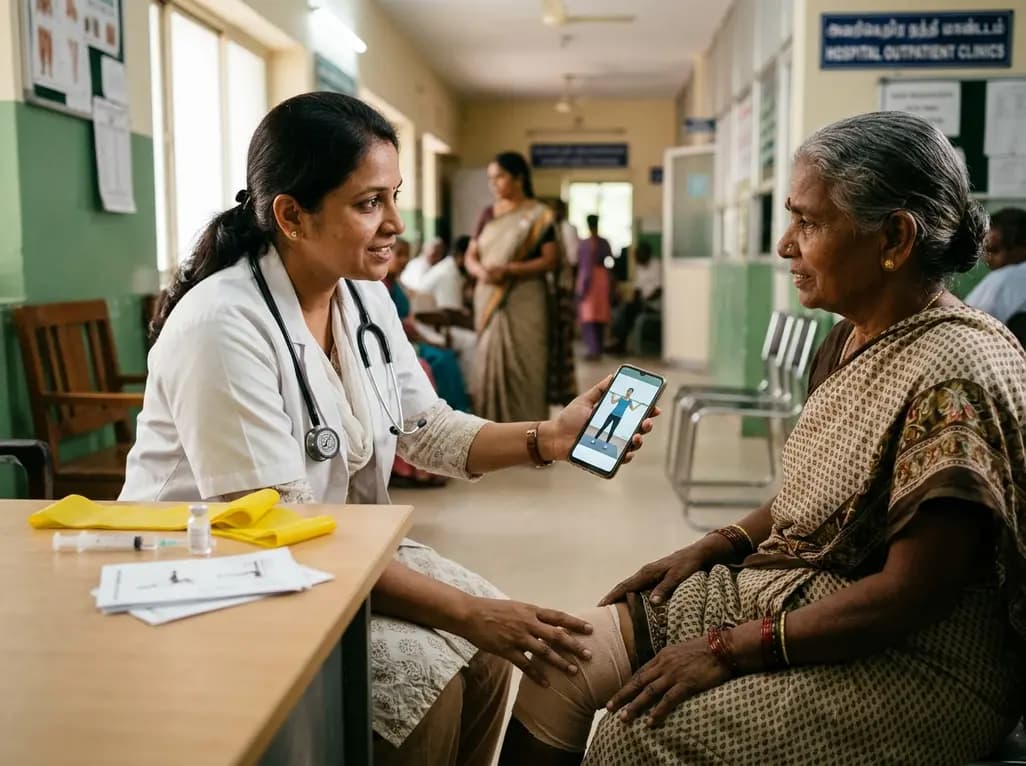
Adding a 12-week tele-supervised resistance band exercise program to intra-articular hyaluronic acid injections significantly improves physical function, chair stands, and mobility in knee osteoarthritis, despite showing no additive reduction in baseline pain scores.
Today

New evidence links altered sex steroids, cortisol elevation, and glycemic stress to natural killer cell dysfunction in type 2 diabetes. Understanding these endocrine-immune pathways provides valuable insights for Indian clinicians managing metabolic inflammation and infection susceptibility in diabetic patients.
Today
