

Loading, please wait...
Loading, please wait...
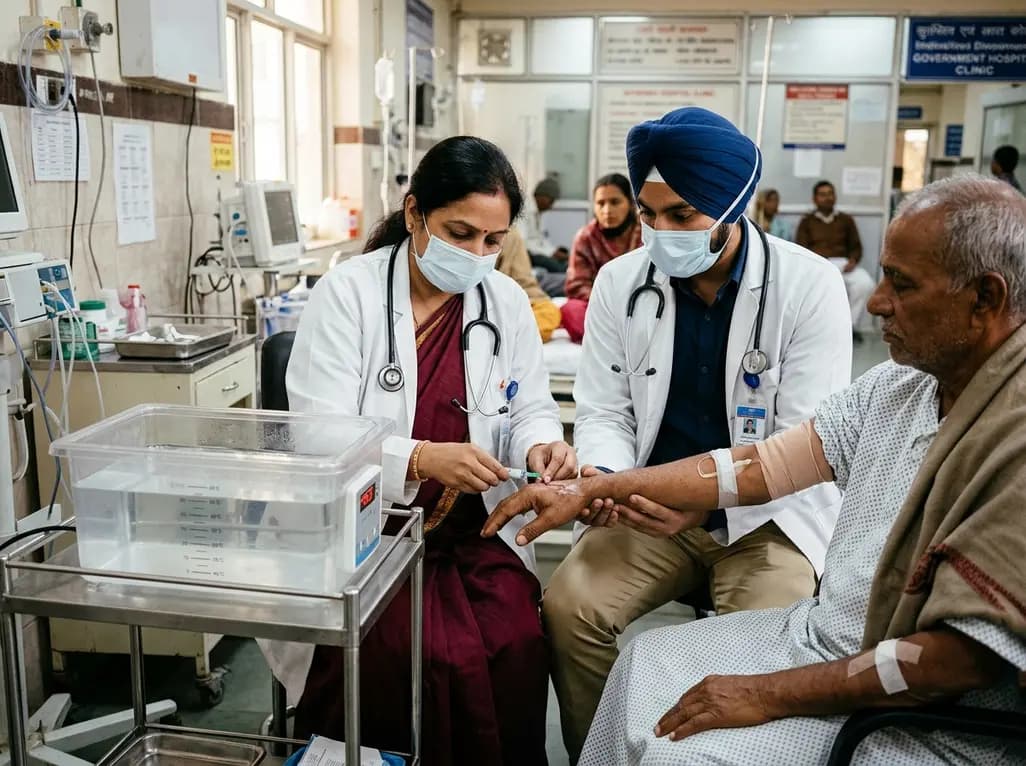
Direct arterial blood gas sampling remains the clinical reference standard for evaluating oxygenation, ventilation, and metabolic acid-base status. However, obtaining arterial blood through brachial or radial puncture presents distinct logistical challenges, patient discomfort, and potential vascular complications. In field research, remote clinical posts, and low-resource settings, repeated arterial punctures become especially demanding. To resolve these hurdles, researchers have evaluated heated-hand venous arterialization as a non-invasive surrogate to direct arterial catheterization. This technique utilizes local cutaneous thermal stimulation to open arteriovenous anastomoses, thereby allowing arterial-like blood to enter superficial dorsal veins. A landmark trial by Kenney and colleagues has rigorously evaluated this methodology across distinct barometric environments. Specifically, the investigators compared warm water hand immersion against direct brachial arterial sampling in healthy young adults at both sea level and high terrestrial altitude. Their findings deliver critical physiological insights into when arterialized venous blood reliably matches true arterial parameters. Consequently, this non-invasive approach provides clinicians and researchers with an actionable, safe alternative to arterial puncture during hypobaric and extreme clinical evaluations.
The physiological basis of cutaneous blood gas arterialization relies on the vascular anatomy of the human hand. The hand contains an extensive network of specialized arteriovenous anastomoses that bypass nutritive capillary beds. Under baseline conditions, local tissue oxygen extraction creates a pronounced difference between arterial and venous partial pressures of oxygen. However, sustained local thermal stress stimulates local nitric oxide release and activates cutaneous sensory reflexes. In the study protocol, subjects immersed their hand in warm water at 45°C for 25 minutes. This sustained thermal stimulus induces maximal local vasodilation and dramatically accelerates cutaneous blood velocity. Consequently, oxygen extraction per unit volume drops substantially as warm blood rushes directly into dorsal hand veins. As a result, the partial pressure of oxygen in superficial venous blood rises sharply toward true arterial values. Furthermore, rapid blood transit stabilizes local carbon dioxide tension and maintains baseline physiological pH. Therefore, by transforming peripheral venous blood into an arterialized sample, clinicians obtain blood gas values that closely mirror central systemic arterial parameters.
The landmark validation trial demonstrated stark differences in diagnostic agreement between normobaric sea level and hypobaric high altitude. At sea level (334 meters), unheated venous sampling showed a substantial mean arterial-venous difference for oxygen tension of -20.85 mmHg. Applying heated-hand venous arterialization reduced this bias to -7.99 mmHg. However, the 95% limits of agreement remained broad, ranging from -26.68 to 10.71 mmHg. Statistical equivalence testing with a predefined margin of ±5 mmHg failed to confirm interchangeability at sea level. Conversely, at high altitude (3800 meters), baseline hypobaric hypoxia markedly diminished baseline physiological gradients. Unheated venous blood exhibited an arterial-venous oxygen difference of -5.99 mmHg. Hand heating significantly tightened this relationship, slashing the mean bias to -0.98 mmHg with tight limits of agreement between -3.60 and 1.63 mmHg. Crucially, equivalence testing confirmed that heated venous oxygen tension is statistically and clinically equivalent to arterial values at high altitude. Thus, localized heating provides an exceptionally accurate surrogate for arterial oxygen tension specifically under hypoxic conditions.
Beyond arterial oxygen tension, comprehensive patient assessment requires precise monitoring of ventilation, acid-base balance, and cellular metabolism. Fortunately, secondary analyses from the trial revealed remarkable diagnostic stability across several non-oxygen parameters. Agreement for partial pressure of carbon dioxide remained robust regardless of whether researchers heated the hand or conducted testing at altitude. Similarly, arterialized venous measurements for systemic pH and bicarbonate concentration demonstrated exceptional concordance with paired arterial samples. Hand warming produced negligible shifts in these parameters because resting venous-arterial gradients for carbon dioxide and bicarbonate are inherently narrow. Furthermore, metabolic markers including glucose and lactate showed excellent agreement across all experimental conditions. In contrast, venous oxygen saturation benefited markedly from local thermal exposure. Hand immersion reduced saturation discrepancies and enhanced clinical alignment at both low and high altitudes. Therefore, practitioners can confidently evaluate ventilatory efficiency, metabolic acidosis, and cellular glycolysis using arterialized venous blood, even when direct arterial access is unobtainable.
These physiological findings carry profound practical implications for healthcare providers across India. Northern and northeastern regions, including Ladakh, Himachal Pradesh, Uttarakhand, and Sikkim, feature extensive high-altitude settlements, active military deployments, and popular pilgrimage circuits. In these rugged terrains, high-altitude pulmonary edema, acute mountain sickness, and severe hypoxemia frequently require immediate diagnostic appraisal. However, peripheral health posts and forward medical units often lack the specialized infrastructure or ultrasound guidance necessary for safe radial puncture. Arterial punctures also present risks of hematoma, arterial spasm, and thrombosis in freezing alpine temperatures. By adopting heated-hand venous arterialization, emergency physicians, military medical officers, and intensive care teams can reliably assess arterial blood gases using peripheral venipuncture. Moreover, urban intensive care units and pulmonology wards can implement this technique for routine acid-base monitoring. This substitution spares fragile patients from repeated painful arterial punctures while preserving diagnostic precision. Consequently, integrating this accessible technique into clinical practice strengthens diagnostic capability across diverse hospital and field environments.
While heated-hand venous arterialization offers compelling clinical advantages, clinicians must understand its operational nuances and safety parameters. First, healthcare staff must strictly maintain water bath temperatures at 45°C. Excessive heat creates serious burn risks, whereas inadequate temperatures fail to trigger maximal cutaneous arteriovenous dilation. Additionally, clinical personnel must avoid placing tourniquets or applying excessive pressure during blood withdrawal. Stasis rapidly alters local venous lactate and carbon dioxide concentrations, corrupting the arterialized sample. Clinicians must also remember that while oxygen equivalence is exceptional at high altitude, sea-level oxygen tensions exhibit greater variability. Therefore, in low-elevation emergency rooms, doctors should interpret venous oxygen tension with caution during acute respiratory failure. Nevertheless, for tracking ventilatory status, bicarbonate levels, and dynamic lactate clearance, arterialized venous blood remains extraordinarily dependable. By standardizing thermal protocols and training bedside staff, medical facilities can harness this non-invasive sampling strategy safely, efficiently, and effectively.
At sea level, heated-hand venous arterialization reduces the discrepancy between arterial and venous oxygen tension, but it does not achieve statistical equivalence within a ±5 mmHg margin. The wide limits of agreement mean clinicians cannot treat heated venous oxygen tension as a direct replacement for arterial oxygen tension in normobaric settings. However, it still provides acceptable diagnostic accuracy for tracking systemic pH, carbon dioxide tension, and serum lactate.
At high altitude, ambient hypobaric hypoxia lowers baseline arterial oxygen tension, narrowing the absolute gradient between arterial and venous blood before heating begins. When local heating dilates arteriovenous anastomoses, the remaining gradient becomes negligible. Consequently, heated venous blood reaches statistical equivalence with direct arterial samples at high elevation. This physiological response makes the technique exceptionally reliable for evaluating hypoxic individuals in mountainous environments.
The validated clinical protocol requires immersing the subject's hand and wrist in a warm water bath maintained precisely at 45°C for 25 minutes. Clinicians must carefully verify water temperature to prevent skin burns while ensuring maximal cutaneous vasodilation. Following immersion, phlebotomists should draw blood from a superficial dorsal hand vein smoothly without applying prolonged tourniquet pressure, preventing localized stasis and metabolic alteration.
Disclaimer: This content is for informational and educational purposes only, and should not be taken as professional medical advice. It is not intended to replace consultation with a qualified healthcare professional. Refer to the latest local and national guidelines for clinical practice.
References
Kenney JN et al. WM-S25: Validation of heated-hand venous arterialization at sea level and high altitude. Exp Physiol. 2026 Nov 27. doi: 10.1113/EP093946. PMID: 43102958.
Grocott MP, Martin DS, Levett DZ, McMorrow R, Windsor J, Montgomery HE. Arterial blood gases and oxygen content in climbers on Mount Everest. N Engl J Med. 2009 Jan 8;360(2):140-9.
Low DA, Gao Z, Zheng H, Proctor DN. Local cutaneous vasodilation during heated-hand blood gas sampling. Microvasc Res. 2020;130:103998.
Byrne AL, Bennett M, Chatterji R, Symons R, Pace NL, Thomas PS. Peripheral venous and arterial blood gas analysis in adults: are they comparable? A systematic review and meta-analysis. Respirology. 2014 Feb;19(2):168-75.

Read summarized clinical updates, watch expert medical content, and earn CME certifications right from your smartphone.
Open your smartphone camera to scan and install.





A landmark study validates heated-hand venous arterialization as a reliable surrogate for arterial blood gas analysis at high altitude. By warming the hand to 45°C, clinicians can obtain accurate oxygenation and acid-base metrics without the complications and technical difficulties of direct arterial puncture.
Today

A new study reveals that internalized HIV stigma directly impairs self-rated health by diminishing healthcare empowerment among people living with HIV. Clinicians must actively cultivate patient agency and self-advocacy to interrupt this negative psychosocial pathway and optimize long-term clinical outcomes.
Today

A qualitative study highlights the unaddressed emotional hurdles and role uncertainty faced by men during the transition to fatherhood, calling for father-inclusive perinatal care and tailored digital health support.
Today

A patient-based simulation study reveals that conventional 10% bias in mean normal prothrombin time causes up to 19.2% clinical reclassification in warfarin therapy. Restricting bias to ±2.5% eliminates major INR discrepancies, urging diagnostic laboratories to tighten analytical verification thresholds.
Today
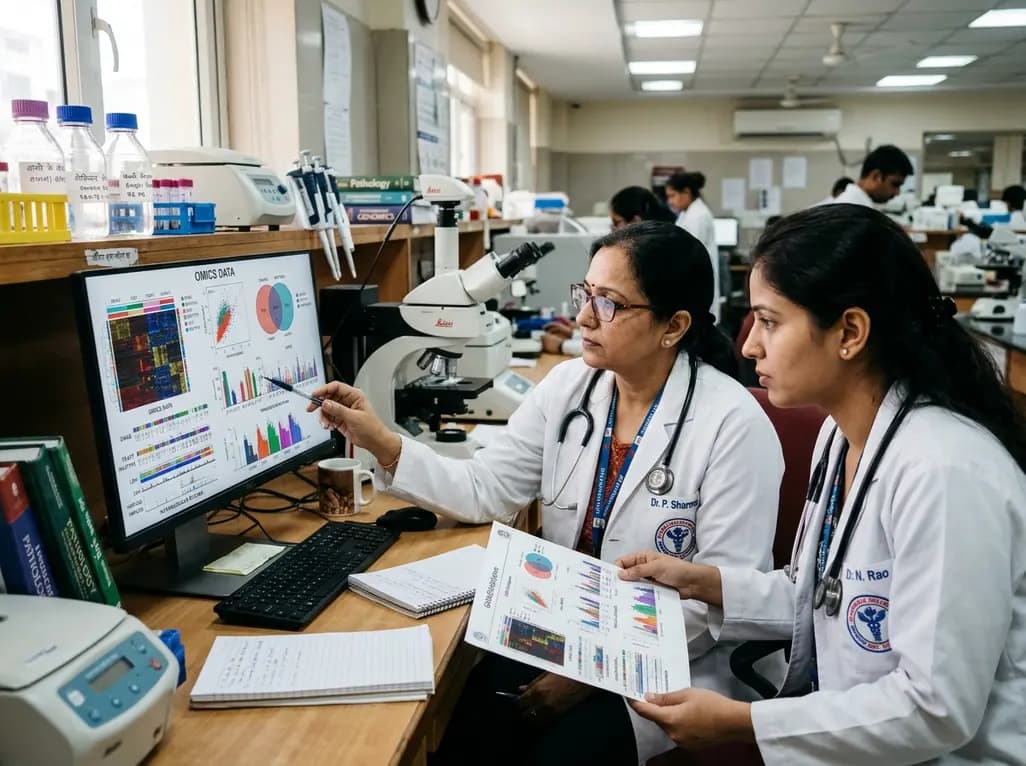
A multi-omic analysis reveals sporadic intramuscular myxoma comprises two molecularly distinct subtypes. GNAS-mutated lesions frequently carry TRAF7 mutations, whereas GNAS-wildtype tumors demonstrate striking genomic instability, loss of heterozygosity, and near-haploid features resembling DNHFN.
Today

Recent physiological findings demonstrate that myoglobin acts beyond oxygen transport, significantly regulating skeletal muscle glucose metabolism and mitochondrial bioenergetics. Understanding these intracellular metabolic shifts offers fresh insights into metabolic health and exercise physiology.
Today
