.webp&w=384&q=75)

Loading, please wait...
Loading, please wait...

The ongoing expansion of medical infrastructure underscores the critical demand for comprehensive healthcare regulation in India. While modern facilities and medical innovations continue to emerge across the country, patients still face significant information asymmetry regarding treatment quality and institutional performance. Consequently, medical leaders and administrative experts are advocating for an independent oversight authority. This specialized framework aims to evaluate clinical outcomes, ensure fair pricing, and systematically safeguard patient welfare across both private and public medical institutions.
India currently lacks a centralized oversight mechanism dedicated purely to protecting patients as healthcare consumers. While vital sectors such as civil aviation, energy, and telecommunications operate under dedicated statutory bodies, the healthcare industry remains fragmented across generalized consumer forums and state clinical establishment registries. Unfortunately, standard consumer protection acts often struggle to address the intricate technicalities of medical disputes. For this reason, healthcare disputes often stall in generic consumer forums that lack nuanced clinical expertise.
Furthermore, medical disputes require distinct adjudication mechanisms that differentiate between known surgical complications and genuine clinical negligence. A dedicated health regulatory council would offer informed evaluation of complex grievances. Therefore, establishing a specialized tribunal or authority represents an essential structural reform. Such a system would streamline dispute resolution for aggrieved families while protecting medical practitioners against frivolous lawsuits. In addition, an overarching regulatory body could introduce uniform operational standards across state jurisdictions. This standardization would ultimately ensure that hospitals nationwide uphold equitable care benchmarks.
Private equity and venture capital have undeniably transformed modern healthcare infrastructure across major urban centres. These external investments provide essential capital to modernize diagnostic facilities, expand intensive care units, and build super-speciality centres. Consequently, private capital should not be dismissed as inherently harmful. Rather, external financial investors frequently introduce sophisticated management practices and advanced digital governance systems into traditional clinical settings.
However, the fiduciary duty of private equity firms focuses fundamentally on delivering commercial returns within pre-established timeframes. Because commercial funds lack an innate mandate to safeguard patients, policy frameworks must provide necessary counterbalances. Independent regulatory oversight prevents commercial priorities from compromising bedside clinical decision-making. Moreover, a dedicated regulator ensures that capital expansion directly benefits regional healthcare access rather than inflating elective interventions. By establishing standardized tariff benchmarks and robust grievance channels, policymakers can create an environment where legitimate enterprises thrive while patient rights remain completely uncompromised.
At present, corporate hospital board meetings frequently concentrate their discussions on quarterly financial performance, occupancy metrics, and brand liability. Clinical quality and patient outcomes are often relegated entirely to facility managers or operational subcommittees. Nevertheless, administrative experts insist that governing boards must assume direct fiduciary ownership of patient safety and clinical care metrics.
To achieve meaningful accountability, hospital leadership must routinely review core quality parameters during executive governance meetings. For instance, boards must regularly monitor hospital-acquired infection rates, surgical site complications, medication administration errors, and unplanned readmissions. Furthermore, monitoring time-sensitive clinical indicators, such as emergency door-to-needle times during acute myocardial infarctions, offers profound insights into true operational efficacy. When hospital directors treat patient safety metrics with the same urgency as balance sheets, institutional cultures shift toward clinical excellence. As a result, continuous quality improvement becomes an embedded organizational habit rather than an episodic administrative exercise.
Healthcare transparency remains incomplete without standardized, publicly accessible metrics that allow patients to compare different treatment centres. Although hospital accreditation systems encourage internal procedural compliance, they do not obligate medical centres to disclose comparative performance data. Consequently, consumers frequently select facilities based on promotional advertisements rather than verified clinical capabilities.
In contrast, mature global health systems mandate the systematic disclosure of outcome metrics to inform public choice and guide clinical research. Therefore, India should institute a common reporting framework for secondary and tertiary care institutions. This system should track standardized parameters, including risk-adjusted mortality rates, emergency department waiting durations, and patient-reported experience scores. When large healthcare providers report clinical findings consistently, healthcare professionals can benchmark their outcomes against national standards. In addition, transparent data reporting provides objective clarity during contentious public debates over medical billing, allowing clinical evidence to replace subjective allegations.
Public trust between patients and the healthcare fraternity has experienced substantial strain in recent years. Skepticism surrounding treatment necessity, surprise billing, and institutional motives frequently leads to friction between families and medical teams. However, pervasive information opacity directly fuels this mutual distrust. When hospitals proactively demystify treatment costs and outcome statistics, clinical credibility naturally improves.
Open reporting allows healthcare establishments to demonstrate their therapeutic successes objectively and acknowledge operational challenges honestly. For example, transparently publishing surgical complication rates contextualized by patient comorbidities humanizes the inherent risks of advanced medicine. In addition, widespread disclosure eliminates perverse commercial incentives, reassuring patients that prescribed interventions reflect sound medical judgment. Ultimately, progressive regulation should not aim to restrict clinical autonomy. Instead, an enlightened regulatory architecture empowers principled clinicians, aligns provider incentives with patient safety, and creates a durable foundation of enduring public trust.
Q1: Why are existing consumer protection forums insufficient for addressing medical negligence cases in India?
General consumer forums lack the specialized clinical expertise needed to evaluate complex medical decisions and distinguish bad outcomes from genuine negligence. Consequently, cases experience protracted procedural delays. A dedicated healthcare regulatory tribunal provides knowledgeable medical adjudicators who can evaluate standard-of-care guidelines fairly, ensuring swift, expert-led redressal for patients while shielding healthcare providers from baseless litigation.
Q2: How does public disclosure of clinical outcomes benefit both patients and healthcare providers?
Public disclosure allows patients to make informed healthcare decisions based on objective data rather than hospital marketing claims. Simultaneously, healthcare providers can benchmark their clinical performance against peer institutions, identify areas for quality improvement, and systematically enhance clinical governance. This transparent communication dispels public suspicion and fosters greater confidence between doctors and the communities they serve.
Q3: What clinical indicators should modern hospital boards prioritize during governance reviews?
Hospital governing boards should monitor hospital-acquired infection rates, catheter-related bloodstream infections, surgical site infections, and 30-day unplanned readmission rates. Additionally, boards must evaluate time-sensitive emergency metrics, such as door-to-balloon intervals for acute coronary syndromes, medication distribution errors, and patient experience surveys. Reviewing these clinical metrics regularly ensures that bedside patient safety receives equal priority alongside commercial financial objectives.
Disclaimer: This content is for informational and educational purposes only. It does not constitute medical advice or replace professional judgment. Refer to the latest local and national guidelines for clinical practice.
References

Read summarized clinical updates, watch expert medical content, and earn CME certifications right from your smartphone.
Open your smartphone camera to scan and install.





Former Delhi Chief Secretary Shailaja Chandra highlights the pressing need for an independent regulatory body in India's healthcare sector. By shifting board focus toward clinical outcomes and standardizing data disclosure, hospitals can balance private investment with uncompromising patient safety.
last month

An observational study from the NIH All of Us Research Program reveals that adding a multi-ancestry polygenic risk score to machine learning models provides only modest improvements in predicting adult weight gain, underscoring the enduring significance of routine clinical and lifestyle factors.
Today

A study in JAMIA Open shows lightweight open-source reasoning LLMs achieve up to 95% sensitivity and accelerate evidence synthesis screening by nearly twentyfold, presenting a cost-effective, scalable AI solution for biomedical research and systematic reviews.
Yesterday
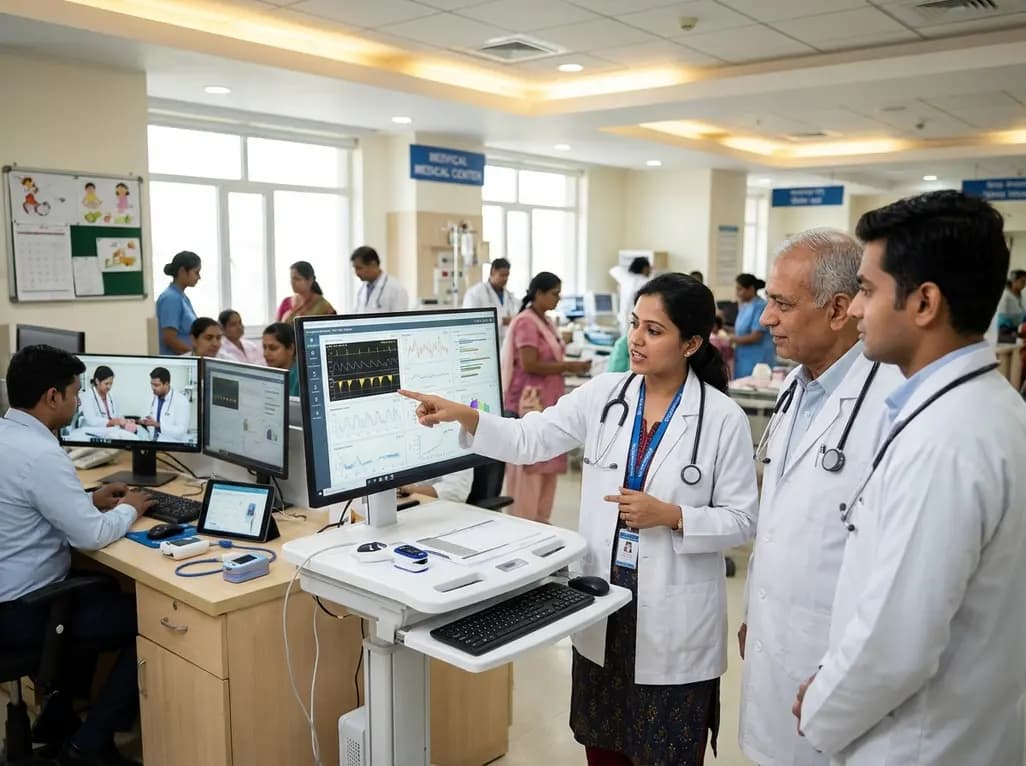
A landmark study details how an enterprise pediatric remote patient management model expanded from a single cardiology pilot to 16 diverse specialty programs by combining centralized digital operations with specialty clinical leadership.
Yesterday

A comparative review of tension band wiring and intramedullary screw fixation in thumb metacarpophalangeal arthrodesis, evaluating union rates, hardware complications, and clinical outcomes.
Yesterday
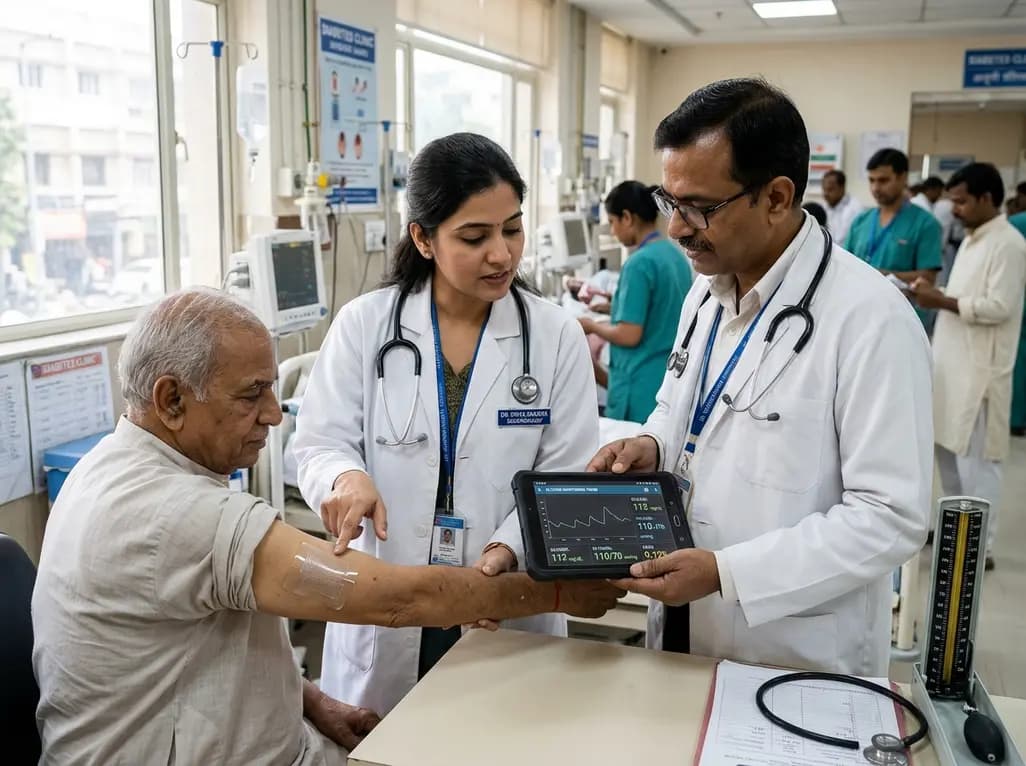
A breakthrough ultrathin multimodal sensor decouples physical hemodynamic monitoring from disposable electrochemical calibration, achieving long-term wearable glucose prediction with 81.36% accuracy and a 9.12% MARD. This offers a robust, drift-free solution for outpatient metabolic surveillance.
Yesterday
