.webp&w=384&q=75)

Loading, please wait...
Loading, please wait...

The Government of Maharashtra recently announced robust measures to combat anomalies in public health schemes. Consequently, the state is deploying flying squads and advanced artificial intelligence tools to enforce integrity. Health Minister Prakash Abitkar highlighted these steps during a legislative assembly session. He emphasized a zero-tolerance policy against fraudulent hospital claims. Specifically, the state aims to secure the Mahatma Jyotiba Phule Jan Arogya Yojana (MJPJAY). This cashless scheme provides critical medical cover to millions of citizens. Therefore, implementing strict healthcare fraud detection systems has become a top administrative priority. The transition from older digital portals to modern platforms marks a major shift in governance. Ultimately, these measures will safeguard public funds and ensure that genuine patients receive timely medical care. The administration is also setting up real-time monitoring systems. These tools will track hospital admissions and claim requests instantaneously. As a result, authorities can identify suspicious patterns before disbursing payments. Erring medical institutions will face immediate de-empanelment and legal actions. This comprehensive approach reflects a determined effort to clean up public healthcare delivery.
Historically, the state managed health claims through the legacy Jeevandayee portal. However, that older system lacked sophisticated analytical capabilities. Consequently, several irregularities went unnoticed for years. To address this vulnerability, Maharashtra has migrated to the AI-enabled KMS 2.0 platform. This modern infrastructure utilizes machine learning to examine medical claims. Specifically, the AI system automatically flags suspicious treatment patterns and redundant surgical claims. For example, it detects anomalies where a single patient apparently undergoes surgeries at multiple locations simultaneously. Additionally, the software reviews clinical documentation to verify alignment with standard medical protocols. The health department has already initiated suo motu action based on these automated findings. Furthermore, this technological shift reduces manual intervention in the auditing process. As a result, the government can process legitimate claims much faster. Honest healthcare providers will benefit from accelerated reimbursement cycles. On the other hand, fraudulent operators will find it impossible to bypass the automated screening protocols. Ultimately, the KMS 2.0 platform represents a massive leap forward in administrative efficiency and accountability.
While digital monitoring provides a strong defense, physical verification remains indispensable. Therefore, the government is establishing specialized flying squads under the MJPJAY and Ayushman Bharat schemes. These squads will conduct surprise inspections of empanelled hospitals across Maharashtra. Specifically, they will verify whether hospitals actually possess the infrastructure they claim. Furthermore, the teams will ensure that patients do not face illegal demands for money. Under the rules of the cashless scheme, hospitals cannot charge beneficiaries for covered procedures. However, some facilities have allegedly demanded out-of-pocket payments. The flying squads will investigate such complaints immediately on the ground. Additionally, the health minister assured that any official complicit in these practices would face severe consequences. Prolonged postings of district coordinators will also be reviewed to prevent unhealthy institutional collusions. Consequently, regular transfers of field officers will be executed to maintain high ethical standards. These physical audits, combined with digital tracking, create a dual-layered security network. Thus, the state ensures absolute compliance with healthcare delivery guidelines.
Recent legislative discussions exposed the massive scale of potential malpractices in public health schemes. For example, legislators highlighted that nearly 9,000 claims from 95 hospitals were linked to a single mobile number. Such alarming statistics have prompted calls for deeper investigations, including potential probes by the Economic Offences Wing. Additionally, some district coordinators allegedly sought illicit favors for hospital empanelment. In response, the health ministry has promised a comprehensive review of all historic claims. Consequently, several hospitals are already facing strict regulatory scrutiny. These include Shiv Multispeciality Hospital, Rishikesh Hospital, Magnum Multispeciality Hospital, and Sant Krupa Multispeciality Hospital. The government is also introducing a real-time monitoring dashboard to enhance operational transparency. This dashboard will allow public administrators to oversee the daily implementation of the cashless health plan. Therefore, decision-makers can detect billing spikes and geographical anomalies in real time. Through these aggressive reforms, the state hopes to restore public trust in welfare programs. Honest medical professionals welcome these steps as they protect the reputation of the healthcare community.
The primary objective of the MJPJAY scheme is to provide seamless, cashless medical care to vulnerable populations. However, fraudulent activities directly undermine this goal by diverting essential resources. Therefore, the state government is establishing robust grievance redressal mechanisms for patients. Specifically, beneficiaries who are denied treatment or asked to pay can file complaints easily. These complaints can be submitted online, to district coordinators, or directly to the state health department. Every single complaint will undergo thorough, independent investigation. Additionally, the state is raising public awareness about patient rights under cashless schemes. Hospitals must provide comprehensive treatment, including necessary follow-up care, without demanding illegal fees. By empowering patients to report malpractices, the administration creates an active network of whistleblowers. Consequently, public vigilance will complement AI-driven monitoring. Ultimately, these integrated efforts aim to deliver high-quality, free healthcare to those who need it most. As the system becomes more transparent, patient outcomes and satisfaction are bound to improve across the state.
Q1: What is the primary focus of the new AI-based system in Maharashtra's health scheme?
The new AI-powered KMS 2.0 platform primarily focuses on identifying suspicious claims and treatment patterns. Specifically, it analyzes electronic medical records to detect anomalies, such as a single patient undergoing multiple surgeries at different hospitals simultaneously. Consequently, the technology prevents fraudulent payouts and ensures that state funds are used solely for genuine patient care.
Q2: How do the proposed flying squads operate under the MJPJAY?
The flying squads will perform unannounced inspections at empanelled hospitals under the MJPJAY and Ayushman Bharat schemes. These teams physically verify hospital infrastructure and interview patients to ensure cashless treatment is provided. Additionally, they investigate immediate complaints regarding illegal demands for money. Therefore, they act as an active on-ground deterrent against administrative malpractices.
Q3: Where can patients report irregularities if they are denied cashless treatment?
Patients who encounter issues can file formal complaints online, with designated district coordinators, or directly with the state health department. Every grievance will undergo a thorough, independent investigation by regulatory authorities. Furthermore, the government has warned of strict actions, including de-empanelment and legal prosecution, against any hospital or official found guilty of defrauding the healthcare scheme.
Disclaimer: This content is for informational and educational purposes only. It does not constitute medical advice or replace professional judgment. Refer to the latest local and national guidelines for clinical practice.
References

Read summarized clinical updates, watch expert medical content, and earn CME certifications right from your smartphone.
Open your smartphone camera to scan and install.





Maharashtra deploys flying squads and AI-powered KMS 2.0 platform to detect and prevent healthcare fraud in the state-run Mahatma Jyotiba Phule Jan Arogya Yojana.
3 months ago

Explore why official drug package inserts fail to reflect modern evidence for clozapine prescribing. Learn how legal standards of care, case law, slow titration, and vital adverse event monitoring empower clinicians to prioritize evidence-based medical practice over outdated manufacturer labeling.
Today
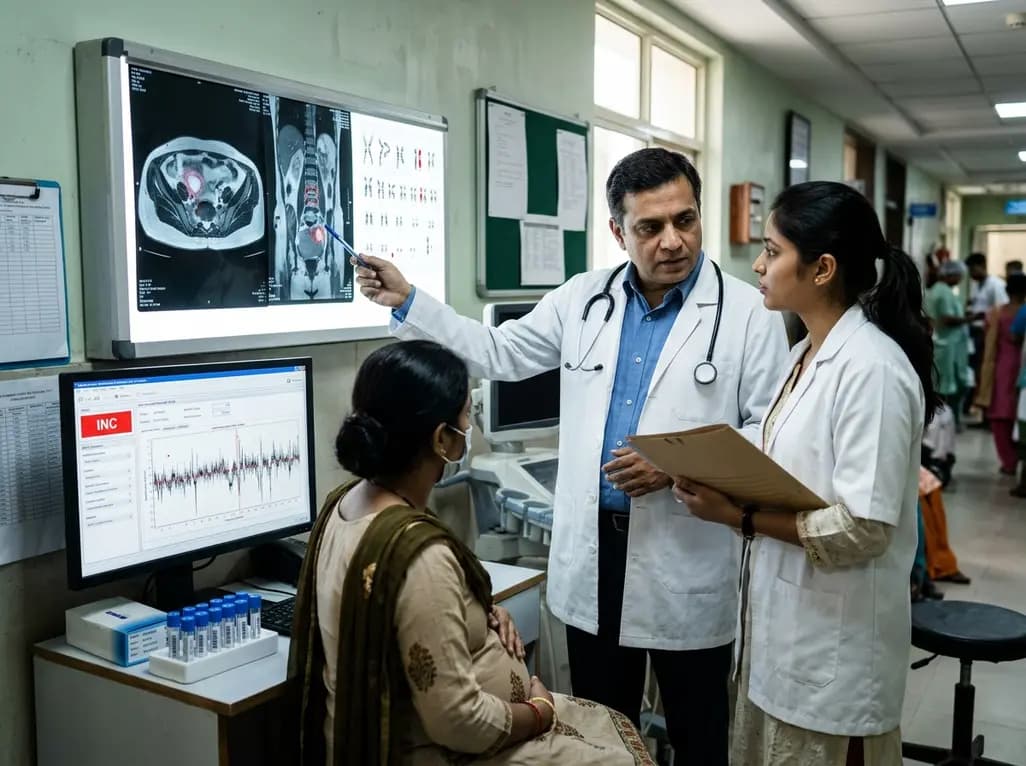
Occult maternal malignancy accounts for 3.82% of persistent unreportable NIPT results with genomic noise. Multiple chromosomal aberrations, notably on chromosome 18, warrant thorough oncological evaluation and whole-body MRI to ensure timely maternal diagnosis while preserving fetal care.
Today
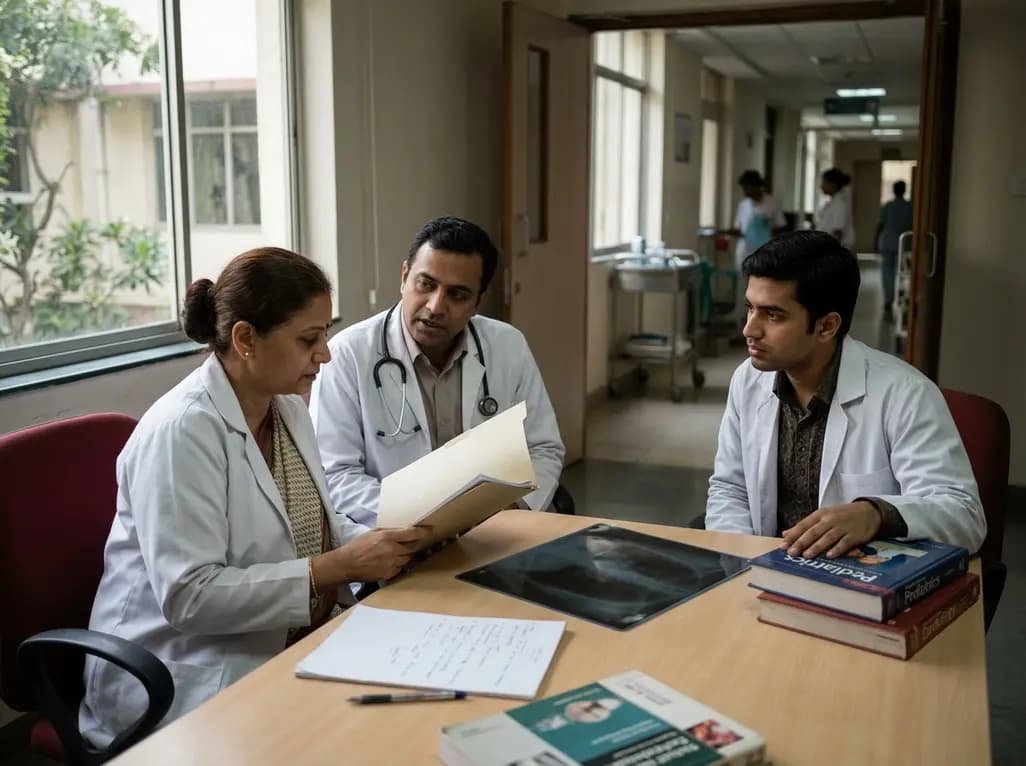
This article reviews the forensic and clinical complexities of acute myocarditis arising on left ventricular hypertrophy in children, highlighting early diagnostic red flags and multidisciplinary postmortem autopsy protocols.
Today
A randomized controlled trial demonstrates that an eight-week dual-task training intervention significantly improves static and dynamic postural control over standard balance exercises in individuals with chronic ankle instability, addressing critical neurocognitive deficits during athletic and daily activities.
Today

A retrospective cohort study of 7,716 ICU patients from the MIMIC-IV database demonstrates that Gradient Boosting Decision Trees significantly outperform traditional SOFA scores in predicting in-hospital mortality among patients with sepsis and diabetes, with SHAP analysis providing clinical interpretability.
Today
