.webp&w=384&q=75)

Loading, please wait...
Loading, please wait...

Haemophilia care in India requires a transformative approach to improve patient outcomes and streamline management across various states. Experts highlight that nearly 80 percent of cases remain undetected because of low awareness and screening gaps. Consequently, the adoption of national standard treatment guidelines (STGs) is now a top priority for health advocates. These guidelines aim to provide a uniform framework for diagnosis and long-term management while accounting for local resource constraints.
Early diagnosis remains a significant hurdle because haemophilia is frequently misdiagnosed as arthritis in children. This error leads to avoidable joint damage and the eventual need for complex replacement surgeries. However, standard treatment guidelines could help clinicians identify the disorder much sooner. Furthermore, many mild cases only surface during surgical procedures or routine dental extractions. Therefore, doctors must emphasize family history and report prolonged bleeding promptly to avoid complications. Additionally, India-specific guidelines would ensure equitable access to care across diverse geographic and social contexts. Moreover, a uniform framework would reduce the current reliance on reactive treatment strategies that only address emergencies.
Treatment in India has traditionally been reactive, where patients seek help only after a painful bleeding episode occurs. In contrast, high-income countries utilize prophylaxis for 80-90 percent of their patients to prevent joint damage. Only about 4 percent of Indian patients currently receive such preventive care. Newer non-factor therapies, which are administered subcutaneously, offer a promising solution for the local population. These therapies significantly reduce bleeding frequency and are much easier to administer than traditional methods. Some state governments have already started providing these advanced treatments to those in need. Consequently, the transition to prophylaxis as the standard of care is essential to prevent long-term disability. Uniform guidelines will support this shift by providing clear protocols for clinicians nationwide.
Q1: Why is haemophilia often underdiagnosed in India?
Haemophilia is often underdiagnosed because of a lack of public awareness and symptoms that mimic other conditions like juvenile arthritis. Many mild cases remain undetected until an individual undergoes surgery or experiences a significant injury.
Q2: What is the benefit of prophylaxis over on-demand treatment?
Prophylaxis involves regular treatment to prevent bleeding before it starts. This approach significantly reduces long-term joint damage and improves the overall quality of life compared to treating episodes after they occur.
Q3: How do non-factor therapies help in haemophilia management?
Non-factor therapies are easier to administer than traditional clotting factors because they are given subcutaneously. They provide more stable protection and significantly lower the frequency of spontaneous bleeding episodes.
Disclaimer: This content is for informational and educational purposes only. It does not constitute medical advice or replace professional judgment. Refer to the latest local and national guidelines for clinical practice.
References

Read summarized clinical updates, watch expert medical content, and earn CME certifications right from your smartphone.
Open your smartphone camera to scan and install.





Experts advocate for national guidelines to standardize haemophilia care in India, promoting early diagnosis and prophylactic treatment for better outcomes....
6 months ago

Explore why official drug package inserts fail to reflect modern evidence for clozapine prescribing. Learn how legal standards of care, case law, slow titration, and vital adverse event monitoring empower clinicians to prioritize evidence-based medical practice over outdated manufacturer labeling.
Today
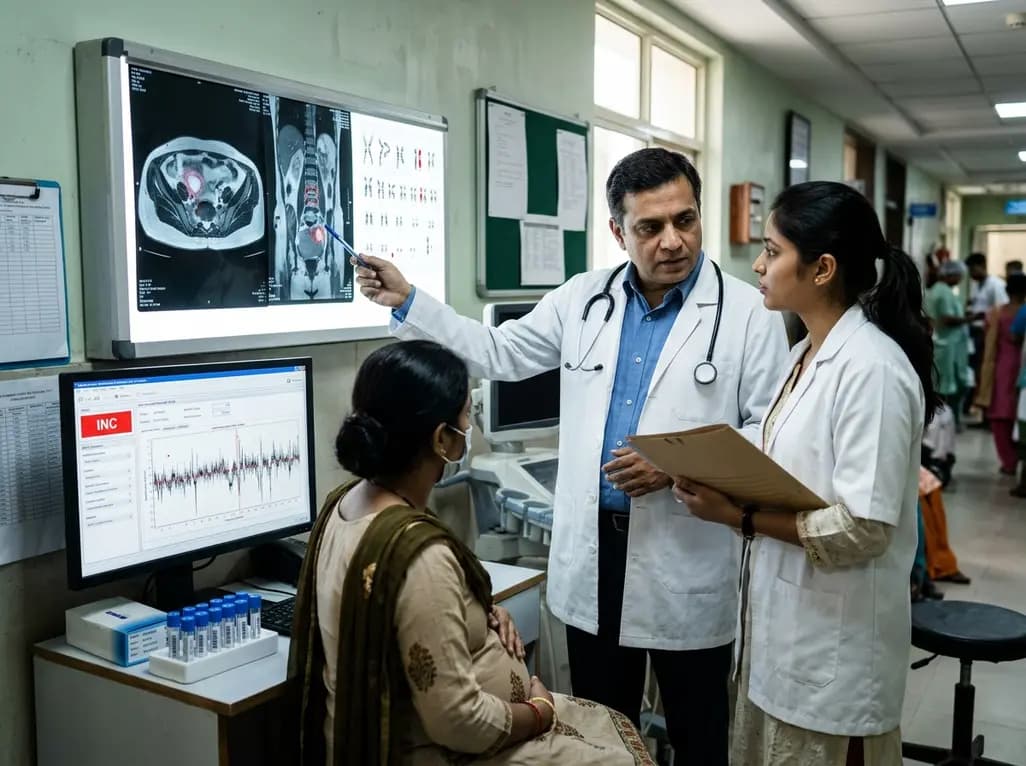
Occult maternal malignancy accounts for 3.82% of persistent unreportable NIPT results with genomic noise. Multiple chromosomal aberrations, notably on chromosome 18, warrant thorough oncological evaluation and whole-body MRI to ensure timely maternal diagnosis while preserving fetal care.
Today
This article reviews the forensic and clinical complexities of acute myocarditis arising on left ventricular hypertrophy in children, highlighting early diagnostic red flags and multidisciplinary postmortem autopsy protocols.
Today
A randomized controlled trial demonstrates that an eight-week dual-task training intervention significantly improves static and dynamic postural control over standard balance exercises in individuals with chronic ankle instability, addressing critical neurocognitive deficits during athletic and daily activities.
Today

A retrospective cohort study of 7,716 ICU patients from the MIMIC-IV database demonstrates that Gradient Boosting Decision Trees significantly outperform traditional SOFA scores in predicting in-hospital mortality among patients with sepsis and diabetes, with SHAP analysis providing clinical interpretability.
Today
