.webp&w=384&q=75)

Loading, please wait...
Loading, please wait...
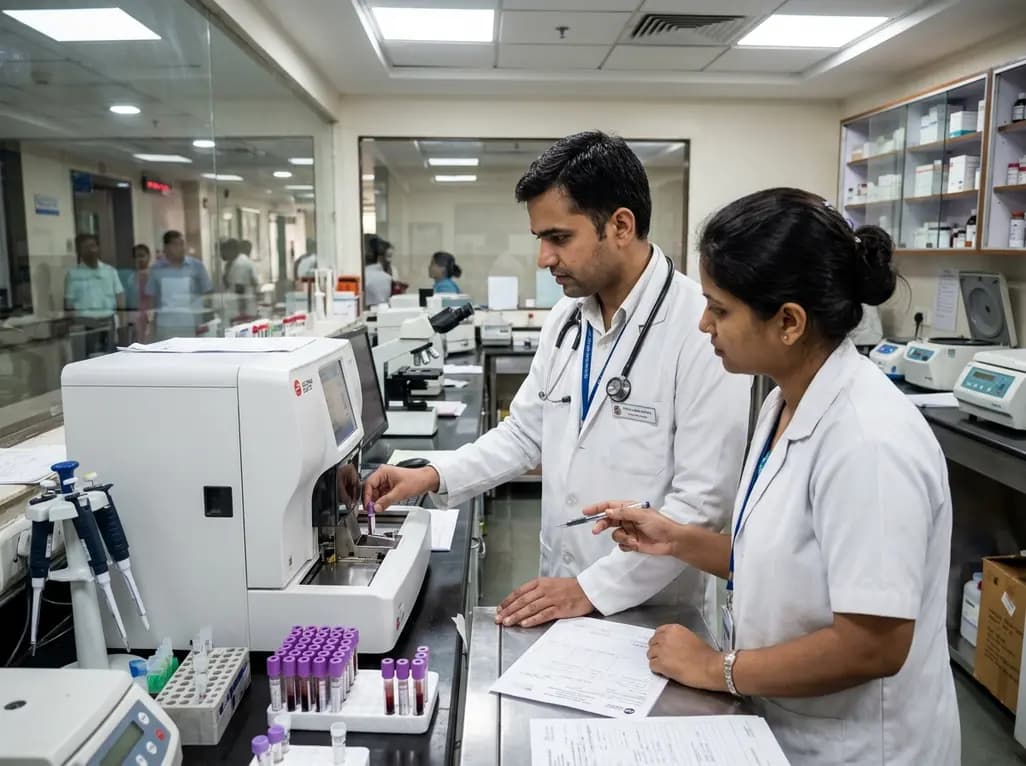
Accurate haematocrit measurement serves as a cornerstone of modern blood banking and transfusion medicine. Quality control laboratories rely heavily on red cell concentrate haematocrit values to calculate percent haemolysis, which determines whether blood products meet strict regulatory safety thresholds before clinical administration. However, emerging comparative evidence demonstrates that the choice of additive solution and testing methodology can significantly skew these analytical results. Consequently, understanding how preservation media interact with analytical instruments is crucial for laboratory professionals and transfusion specialists.
Haematocrit values directly establish the packed cell volume relative to total product suspension volume. Blood establishments routinely utilize these measurements to calculate total free haemoglobin percentages and evaluate product integrity across shelf life. When analytical instruments deliver discordant results, laboratory teams risk miscalculating product haemolysis rates. Consequently, blood bags that meet physiological requirements might face erroneous discard, or compromised units might pass release testing undetected.
Furthermore, quality control programs demand rigorous precision to preserve patient safety. In clinical settings, transfusing damaged erythrocytes leads to rapid clearance, reduced microvascular perfusion, and dangerous release of free iron. Therefore, establishing dependable measurement standards directly supports clinical outcomes in critical care, trauma management, and haematology wards. Standardized analytical workflows ensure that clinicians administer safe, viable, and highly functional blood products to vulnerable patient populations.
For decades, blood collection centers have predominantly utilized saline-adenine-glucose-mannitol (SAGM) as the primary red cell additive solution. SAGM provides essential substrates to support erythrocyte glycolysis and osmotic stability. However, SAGM creates a moderately hypertonic environment that promotes cellular dehydration and progressive morphological changes over extended storage. In contrast, phosphate-adenine-glucose-guanosine-saline-mannitol (PAGGSM) presents an isotonic formulation specifically engineered to maintain intracellular purine pools and stable cellular tonicity.
Moreover, recent comparative investigations demonstrate that PAGGSM provides superior preservation of erythrocyte structural integrity compared to conventional hypertonic solutions. The presence of guanosine and inorganic phosphate sustains high-energy nucleotide synthesis, which stabilizes the erythrocyte membrane cytoskeleton. As a result, stored erythrocytes exhibit better resistance to storage-induced morphological decay during the standard hypothermic preservation window. These biochemical variations highlight the critical influence of preservative chemistry on red cell longevity.
Laboratories frequently choose between traditional microcapillary centrifugation and automated haematology analysers when performing routine testing. Automated counters calculate haematocrit indirectly by multiplying total red cell counts by the mean corpuscular volume. However, automated instruments dilute blood samples into proprietary isotonic diluents, rapidly altering erythrocyte volume before optical or impedance detection. In contrast, manual microcapillary centrifugation directly compresses packed erythrocytes within their native preservation fluid without prior dilution.
Consequently, significant measurement discrepancies emerge between these two analytical platforms. In isotonic PAGGSM units, initial microcapillary haematocrit values exceed automated analyser readings by up to ten percent. Conversely, hypertonic SAGM concentrates demonstrate far greater consistency between measurement techniques due to different baseline cell hydration. Therefore, laboratory scientists must recognize that automated analysers may underestimate packed cell volumes in novel preservation media. Standardizing on direct centrifugation eliminates these diluent-induced volume shifts and provides true physical measurements.
Discrepancies in haematocrit values directly alter the mathematical calculations used to determine fractional supernatant haemolysis. Because haematocrit appears in the standard mathematical denominator, minor variations substantially alter the final computed haemolysis percentage. Consequently, selecting an automated analyser over direct microcapillary testing can artificially elevate or depress quality metrics. This mathematical dependency underscores why regulatory authorities emphasize standardized physical methodology over indirect mathematical derivations.
Additionally, advanced imaging flow cytometry reveals crucial differences in cellular breakdown pathways. Prolonged cold storage triggers membrane vesiculation, leading to the accumulation of storage-induced micro-erythrocytes. These sub-cellular fragments reflect severe cytoskeletal degradation and accelerated loss of projected surface area. Research confirms that PAGGSM significantly curtails the formation of storage-induced micro-erythrocytes compared to SAGM by day 21 of hypothermic storage. Thus, PAGGSM better preserves red cell surface architecture, membrane resilience, and total functional surface area throughout extended preservation.
These technical findings offer immediate practical value for transfusion services and hospital pathology departments. First, laboratory managers must align testing equipment with the specific additive solutions stored in their inventories. Adopting microcapillary centrifugation for release testing eliminates mathematical artifacts and prevents accidental rejection of conforming inventory. Furthermore, updating laboratory standard operating procedures ensures consistent quality audits across multi-center transfusion networks.
Second, transitioning toward isotonic solutions like PAGGSM offers distinct biological advantages for transfusion recipients. Minimizing micro-erythrocyte accumulation reduces post-transfusion clearance by splenic macrophages and protects host endothelial function. Furthermore, preserved erythrocyte deformability improves capillary transit and tissue oxygen delivery in critically ill patients. By integrating superior preservation chemistries with validated quality control protocols, blood banks can enhance product longevity, minimize operational waste, and maximize therapeutic efficacy for recipients requiring life-saving transfusions.
Future advancements in transfusion medicine require unified global standards for additive solution formulation and laboratory validation. Blood safety authorities increasingly evaluate novel storage additives that maintain cellular adenine nucleotides, prevent oxidative injury, and preserve membrane lipid asymmetry. However, introducing new additive formulations requires simultaneous validation of existing diagnostic instruments to prevent measurement bias.
Moreover, developing rapid point-of-care assays and automated imaging technologies will enhance routine component surveillance. Integrating automated flow cytometry into blood bank release protocols allows real-time assessment of micro-erythrocyte accumulation and membrane microvesiculation. Ultimately, combining advanced additive formulations with precision measurement techniques will ensure optimal quality control. Transfusion specialists must continue leading these technical innovations to improve blood safety, optimize supply chain efficiency, and advance patient care worldwide.
Haematocrit directly enters the mathematical formula used to compute supernatant haemolysis percentages in red cell concentrates. Automated analysers dilute cells with proprietary buffers, altering cellular volume and shifting haematocrit values. In contrast, manual microcapillary centrifugation measures true packed volume without dilution. When haematocrit values deviate between methods, the resulting haemolysis percentage changes significantly, potentially causing inaccurate quality control assessments and unwarranted component rejection.
PAGGSM provides an isotonic environment that prevents excessive cellular dehydration and osmotic stress during hypothermic storage. Furthermore, its chemical formulation contains guanosine and inorganic phosphate, which actively support intracellular nucleotide synthesis and maintain critical metabolic pathways. Consequently, red blood cells stored in PAGGSM demonstrate better morphological stability, preserve membrane projected surface area, and generate significantly fewer storage-induced micro-erythrocytes throughout the preservation cycle.
Storage-induced micro-erythrocytes represent severely degraded red blood cell fragments that shed membrane during prolonged hypothermic storage. These damaged cells exhibit reduced deformability, surface area loss, and increased membrane stiffness. Transfusing units with elevated micro-erythrocytes promotes rapid splenic clearance, reduces oxygen delivery capacity, and triggers microvascular inflammation. Minimizing micro-erythrocyte accumulation through optimized additive solutions ensures superior post-transfusion cell survival and better clinical outcomes for recipients.
Disclaimer: This content is for informational and educational purposes only and does not constitute medical advice, diagnosis, or treatment. Healthcare professionals should rely on their clinical judgment and reference relevant institutional protocols when interpreting laboratory data. Refer to the latest local and national guidelines for clinical practice.
References

Read summarized clinical updates, watch expert medical content, and earn CME certifications right from your smartphone.
Open your smartphone camera to scan and install.





A comparative evaluation of SAGM and PAGGSM reveals that additive solutions and haematocrit measurement methods significantly alter red blood cell integrity and haemolysis quality metrics.
last month

A nationwide English cohort study shows that interstitial lung diseases are no longer rare, with incidence jumping 30% and 200,000 active cases. This analysis highlights clinical implications for diagnosis, multi-disciplinary management, and global health priorities across respiratory and internal medicine.
Today

A nationwide South Korean study shows underreporting of smoking among women dropped from 57.4% to 36.4% between 2008 and 2021. However, over one-third of female smokers still conceal their habit, highlighting the critical role of cotinine verification in clinical risk assessment.
Today

PepsiCo and Monster Beverage have challenged the FSSAI ban on the energy drink label in Indian courts. While companies highlight supply disruptions, regulatory actions spotlight severe cardiovascular and metabolic risks associated with excessive caffeine, sugar, and taurine consumption, especially in adolescents.
Today

A new study evaluates the rheological stability of decellularized peripheral nerve matrix hydrogels under varied storage conditions. Findings show -80°C storage and freeze-drying preserve gelation kinetics and mechanical stiffness, offering key insights for shipping and translational clinical applications.
Today

A Bayesian multilevel meta-analysis reveals that aerobic training combined with moderate carbohydrate restriction modestly lowers HbA1c in type 2 diabetes. However, sparse data and very low certainty leave incremental benefits over exercise or diet alone unproven, highlighting the need for individualized care.
Yesterday
