.webp&w=384&q=75)

Loading, please wait...
Loading, please wait...
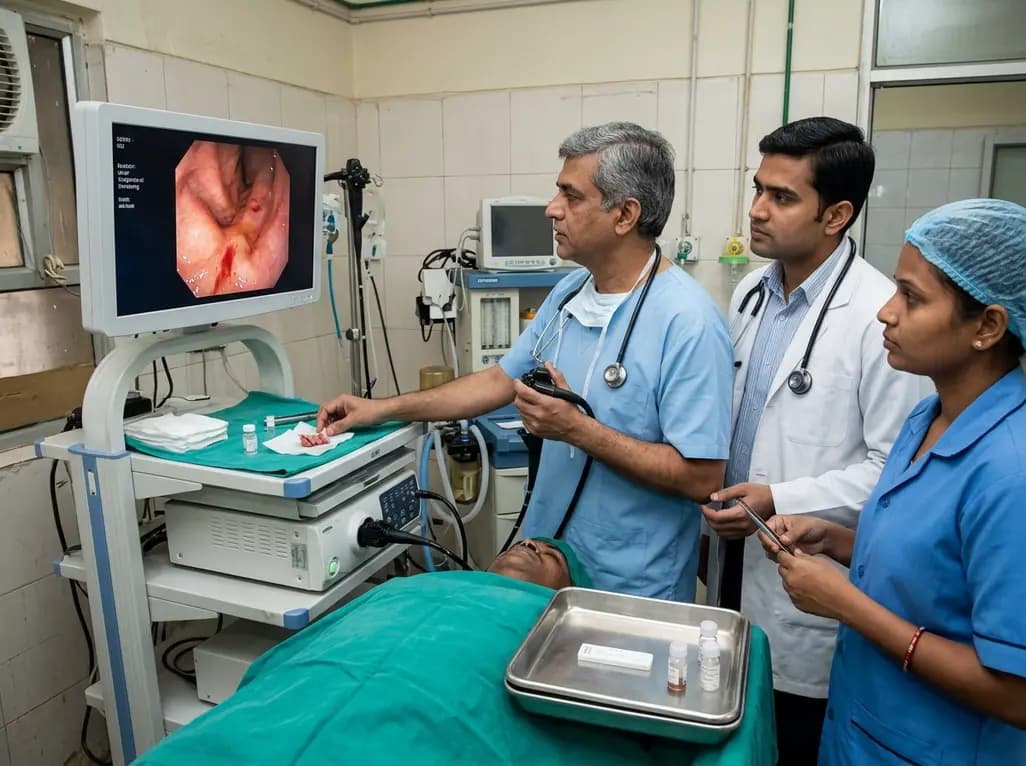
Peptic ulcer bleeding remains a severe clinical emergency encountered across intensive care and gastroenterology units. Effective long-term management depends on eradicating underlying Helicobacter pylori infection. However, establishing an accurate H. pylori diagnosis during acute hemorrhage presents substantial clinical hurdles. Intraluminal blood, altered mucosal pH, and early intravenous proton pump inhibitors significantly decrease bacterial density and urease activity. Consequently, standard rapid urease testing frequently produces false-negative results during acute bleeding episodes.
Missing an active infection during hospitalization carries serious clinical consequences for patients. When clinicians mistakenly diagnose idiopathic ulcer disease, patients miss out on curative antimicrobial eradication therapy. Therefore, the risk of recurrent hemorrhage and readmission increases substantially. Clinicians historically relied on rapid urease tests due to speed and convenience. However, single-test protocols fall short during emergencies, making comprehensive diagnostic pathways essential for clinical practice.
A prospective head-to-head study by Geeratragool and colleagues evaluated six diagnostic modalities in 135 patients presenting with peptic ulcer bleeding. Biopsies were obtained immediately following endoscopic hemostasis for rapid urease testing, histology, and real-time PCR. In addition, researchers evaluated current infection markers and anti-urease antibodies, performing urea breath testing in select patients.
Using a composite reference standard requiring at least two positive modalities, 36 patients had confirmed infection. Real-time tissue PCR demonstrated superior single-test performance, achieving 97.2% sensitivity and 92.9% specificity. In contrast, the rapid urease test demonstrated 69.4% sensitivity and 97.0% specificity. Histopathology showed only 55.6% sensitivity and 96.0% specificity. Blood markers showed intermediate performance, with current infection markers achieving 77.8% sensitivity and anti-urease antibodies achieving 83.3% sensitivity. Furthermore, combining endoscopic and molecular tests significantly outperformed any individual modality.
Tissue polymerase chain reaction proved to be the most reliable single test in this acute cohort. The high sensitivity of molecular amplification stems from its ability to detect minimal quantities of bacterial DNA. Unlike enzyme-dependent methods, PCR does not require active urease expression or viable multiplying organisms. In acute bleeding, intraluminal blood and albumin inhibit urease enzymes, whereas blood components do not degrade mucosal bacterial DNA.
Furthermore, acute proton pump inhibitor therapy suppresses bacterial density and alters cellular morphology. Histopathology frequently fails because mucosal edema and low bacterial loads impair microscopic identification. In contrast, PCR amplifies conserved genomic targets with high analytical fidelity. Consequently, molecular testing detected cases missed by histology and urease tests. Crucially, tissue PCR reduced idiopathic ulcers from 31.9% to 26.7%, confirming that undetected bacterial colonization frequently underlies bleeding ulcers.
Although rapid urease testing is widely used, its sensitivity dropped below 70% during acute bleeding. Multivariate logistic regression analysis in this study failed to identify specific clinical predictors of false-negative results. Neither blood pooling, ulcer location, nor acute medication use predicted test failure. Therefore, clinicians cannot reliably identify which bleeding patients will experience false-negative urease results at bedside.
Similarly, the 13C-urea breath test faces practical barriers during acute hospital admissions despite excellent theoretical accuracy. In this cohort, only 43 of 98 eligible patients with negative initial biopsies completed breath testing. Clinical constraints such as patient fatigue, altered gastric emptying, inability to ingest test meals, and early discharge prevented testing. Consequently, relying on acute inpatient breath tests creates major diagnostic gaps, underscoring the need for structured follow-up strategies.
Given the sensitivity limitations of single tests, combining diagnostic modalities represents the safest clinical strategy in acute hemorrhage. Geeratragool and colleagues demonstrated that combining rapid urease testing, histology, and either tissue PCR or urea breath testing increased diagnostic sensitivity to 100%. This multi-modal approach significantly outperformed rapid urease testing alone across all patient subgroups.
Adopting combined testing prevents premature diagnostic closure during hospital stays. When endoscopists collect biopsies for urease testing, histology, and PCR during index endoscopy, they establish a reliable safety net. If bedside urease testing is negative, laboratories can immediately process specimens for molecular or histological analysis. Alternatively, clinicians can schedule outpatient breath testing after full recovery and appropriate medication washout. This structured dual-testing approach ensures that every infected patient receives curative eradication therapy.
These findings provide clear guidance for gastroenterologists, emergency physicians, and intensivists managing peptic ulcer bleeding. First, clinicians must never treat a negative rapid urease test in acute bleeding as definitive exclusion of infection. When initial tests are negative, teams should maintain high suspicion and pursue confirmatory evaluation. Tertiary centers should consider incorporating tissue PCR into routine biopsy protocols for rapid, accurate diagnosis.
Second, where molecular testing is unavailable, hospital protocols should mandate structured outpatient re-testing. Patients with bleeding ulcers and negative acute biopsies should undergo breath or stool antigen testing four to six weeks post-discharge. Prior to testing, patients must stop proton pump inhibitors for two weeks and antibiotics for four weeks. Establishing robust combined testing workflows will optimize eradication rates and prevent recurrent life-threatening hemorrhage.
Acute gastrointestinal bleeding introduces albumin, whole blood, and serum into the gastric lumen, which directly inhibits urease enzyme activity. Furthermore, pre-endoscopic intravenous proton pump inhibitors rapidly suppress bacterial metabolism and reduce gastric mucosal bacterial density. In addition, blood acts as a chemical buffer that blunts colorimetric pH changes in rapid urease test wells. Consequently, tests show negative results despite persistent mucosal colonization, causing false-negative rates exceeding thirty percent during acute bleeding episodes.
Tissue polymerase chain reaction directly amplifies bacterial genomic DNA rather than relying on enzymatic reactions or visible bacterial morphology. Because molecular amplification does not require viable replicating organisms or active urease expression, intraluminal blood, bile, and gastric acid suppression do not diminish test sensitivity. As a result, tissue PCR achieved an exceptional sensitivity of 97.2% in prospective bleeding studies, successfully detecting low-density bacterial colonization that both histology and rapid urease testing missed completely.
When advanced molecular testing is unavailable and rapid urease testing yields a negative result in bleeding ulcers, clinicians must not assume absence of infection. Instead, teams should record a presumptive diagnosis and arrange outpatient confirmation four to six weeks later. To ensure test accuracy, patients must discontinue proton pump inhibitors for two weeks and antibiotics for four weeks prior to testing. Following this protocolized re-evaluation ensures timely eradication and prevents recurrent life-threatening hemorrhage.
Disclaimer: This content is for informational and educational purposes only and is intended solely for healthcare professionals. It should not be used as a substitute for professional clinical judgment, diagnosis, or treatment. Refer to the latest local and national guidelines for clinical practice.
References

Read summarized clinical updates, watch expert medical content, and earn CME certifications right from your smartphone.
Open your smartphone camera to scan and install.





A prospective head-to-head comparison reveals that rapid urease testing alone has a 69.4% sensitivity in acute peptic ulcer bleeding. Tissue PCR demonstrated 97.2% sensitivity, and combining modalities achieved 100% sensitivity, highlighting the need for dual testing to avoid missed H. pylori diagnoses.
last month

A nationwide English cohort study shows that interstitial lung diseases are no longer rare, with incidence jumping 30% and 200,000 active cases. This analysis highlights clinical implications for diagnosis, multi-disciplinary management, and global health priorities across respiratory and internal medicine.
Today

A nationwide South Korean study shows underreporting of smoking among women dropped from 57.4% to 36.4% between 2008 and 2021. However, over one-third of female smokers still conceal their habit, highlighting the critical role of cotinine verification in clinical risk assessment.
Today

PepsiCo and Monster Beverage have challenged the FSSAI ban on the energy drink label in Indian courts. While companies highlight supply disruptions, regulatory actions spotlight severe cardiovascular and metabolic risks associated with excessive caffeine, sugar, and taurine consumption, especially in adolescents.
Today
A new study evaluates the rheological stability of decellularized peripheral nerve matrix hydrogels under varied storage conditions. Findings show -80°C storage and freeze-drying preserve gelation kinetics and mechanical stiffness, offering key insights for shipping and translational clinical applications.
Today

A qualitative meta-synthesis highlights the complex interplay between gender dysphoria, minority stress, and eating disorders in transgender and gender-diverse individuals. Clinicians must recognize these distinct drivers to offer supportive, gender-affirming, and interdisciplinary eating disorder care.
Today
