.webp&w=384&q=75)

Loading, please wait...
Loading, please wait...

Recent clinical research is fundamentally transforming our approach to complex immunological conditions and reproductive health. Groundbreaking studies published in premier journals highlight significant breakthroughs in microbiome modulation and targeted cellular therapies. Specifically, researchers have shown that targeting the intestinal microbiome through oral fecal microbiota transplantation can modify immune responses in patients with severe food hypersensitivities. Investigating the link between gut bacteria peanut allergy management offers a promising therapeutic strategy for individuals prone to life-threatening anaphylactic reactions. Furthermore, novel data regarding chimeric antigen receptor T-cell therapy demonstrates that women undergoing treatment for severe autoimmune disorders can achieve safe, drug-free remissions and go on to experience uncomplicated pregnancies. Consequently, these findings collectively underscore a pivotal shift toward disease-modifying therapies in modern medicine.
Food allergies, particularly severe peanut allergies, represent a major public health concern across the globe. Traditional treatments primarily focus on strict avoidance and emergency administration of epinephrine following accidental exposure. However, recent scientific endeavors have focused on the crucial role played by the gut microbiome in shaping systemic immune tolerance. The human gastrointestinal tract houses trillions of microorganisms that constantly interact with mucosal immune cells. Consequently, disruptions in gut microbial composition can impair immune regulation and pre-dispose individuals to severe allergic sensitization.
In a landmark pilot study conducted at Boston Children's Hospital, researchers investigated whether restoring a healthy microbial ecosystem could mitigate severe allergic responses. Young adult participants with severe peanut allergies swallowed frozen capsules containing healthy donor feces. Surprisingly, three months after treatment, several participants demonstrated a markedly increased tolerance to peanut protein. This trial provides the first clinical evidence in humans that deliberately altering intestinal bacterial communities can directly modify food allergy severity, moving beyond simple symptom management toward true immunological tolerance.
Understanding the exact biochemical mechanisms behind microbiome-induced tolerance is essential for developing targeted therapies. Blood tests and metabolic profiling from the pilot study revealed that successfully treated participants experienced significant increases in specific gut metabolites known as bile salts. Beneficial donor bacteria possessed superior capabilities in processing these bile acids compared to the original microbial populations of allergic individuals. Consequently, this enhanced metabolic activity directly influenced systemic immune function in favorable ways.
Furthermore, additional experimental models demonstrated that enhanced bile acid metabolism actively promotes the expansion of specialized regulatory T cells. These regulatory T cells play a critical role in suppressing harmful allergic cascades and preventing mast cell activation. By producing protective metabolites, helpful gut bacteria signal the host immune system to stop treating harmless food proteins as dangerous invaders. Therefore, this trial establishes a clear mechanistic link connecting microbial metabolism, bile acid transformation, and T-cell regulation in human food allergy modulation.
A major challenge in microbiota-based therapies is ensuring that donor bacteria successfully colonize the host intestine. In host organisms, resident microbes actively compete with newly introduced strains for nutrients and attachment sites. To address this obstacle, researchers incorporated a short course of broad-spectrum antibiotics prior to the fecal transplant in a subset of study participants. By temporarily clearing resident gut microbes, the antibiotic pretreatment created an open ecological niche for incoming donor strains.
The results of this protocol modification were highly encouraging. A significantly higher proportion of participants who received antibiotic pretreatment achieved clinical improvement, with several individuals tolerating substantial amounts of peanut protein without adverse reactions. This outcome confirms that reducing competitive pressure from native microbiota enhances engraftment efficiency. As a result, future clinical trials will focus on optimizing pretreatment regimens and identifying specific bacterial consortia that can be formulated into standardized, targeted probiotic therapies.
Alongside microbiome advances, cellular immunotherapy has reached significant milestones in autoimmune disease management. Chimeric antigen receptor T-cell therapy, originally developed to treat refractory hematologic malignancies, is now being utilized to achieve long-term, drug-free remission in severe autoimmune conditions such as systemic lupus erythematosus, systemic sclerosis, and myositis. Because these autoimmune diseases disproportionately affect young women of childbearing age, evaluating the safety of subsequent pregnancies has become a vital clinical priority.
A landmark multicenter study reported in The New England Journal of Medicine examined fourteen pregnancies across thirteen women who had previously received CAR T-cell therapy for severe autoimmune conditions. Reassuringly, all births resulted in healthy full-term infants displaying normal growth and physiological immune markers. Furthermore, no disease flares occurred during pregnancy, and mothers remained free from immunosuppressive medications. These favorable outcomes provide immense reassurance to young women seeking effective disease control without compromising their future reproductive potential.
The convergence of advanced microbiome therapies and cellular immunotherapies represents a new paradigm in managing chronic immunological diseases. Both approaches aim to reset dysregulated immune systems rather than continuously suppressing them with lifelong medications. For patients with food allergies, transition from whole-stool fecal transplants to defined microbial consortia will improve safety, scalability, and patient acceptance. Consequently, standardized bacterial formulations will likely replace frozen fecal capsules in upcoming phase two and phase three clinical trials.
Similarly, expanding the application of CAR T-cell therapy beyond oncology into autoimmune diseases offers transformative potential. Demonstrating that patients can safely conceive and deliver healthy infants after cellular reprogramming removes a major obstacle in reproductive-age clinical care. Moving forward, larger prospective studies will continue to refine patient selection, optimize pre-conditioning protocols, and validate long-term safety profiles. Ultimately, these innovative strategies promise to deliver durable remissions, lower healthcare burdens, and dramatically improve patient quality of life across multiple clinical disciplines.
Q1: How does modifying gut bacteria help reduce severe peanut allergy symptoms?
Modifying gut bacteria introduces beneficial microbial strains that efficiently process bile salts into active metabolites. These metabolites stimulate the expansion of protective regulatory T cells, which actively suppress allergic inflammation and mast cell activation. Consequently, restoring a healthy intestinal ecosystem helps reprogram the immune system, allowing allergic individuals to tolerate higher amounts of peanut protein without triggering severe anaphylactic reactions.
Q2: Why was antibiotic pretreatment used before the fecal microbiota transplant?
Antibiotic pretreatment was used to temporarily reduce the resident gut bacteria population in allergic participants. Native gut microbes often compete aggressively with introduced donor strains for space and nutrients, hindering successful colonization. By clearing this competitive environment, donor bacteria engraft more effectively, leading to higher treatment success rates and improved tolerance during oral peanut challenges.
Q3: Is pregnancy safe for women who have undergone CAR T-cell therapy for autoimmune diseases?
Yes, recent clinical studies indicate that pregnancy is safe for women after receiving CAR T-cell therapy for autoimmune diseases. Tracked pregnancies resulted in healthy, full-term infants without developmental or immunological abnormalities. Moreover, mothers experienced no disease relapses during pregnancy and did not require ongoing immunosuppressive medications, demonstrating favorable maternal and neonatal safety outcomes.
Disclaimer: This content is for informational and educational purposes only. It does not constitute medical advice or replace professional judgment. Refer to the latest local and national guidelines for clinical practice.
References

Read summarized clinical updates, watch expert medical content, and earn CME certifications right from your smartphone.
Open your smartphone camera to scan and install.





Discover how fecal transplants adjusting gut bacteria offer new hope for severe peanut allergies, alongside breakthrough study findings confirming safe pregnancies following CAR T-cell therapy in autoimmune disease patients.
last month

A comprehensive validation study using PPMI cohort data establishes the psychometric reliability, factor structure, and minimal detectable change of the SCOPA-AUT scale across prodromal and established Parkinson's disease, highlighting its longitudinal association with non-motor daily living experiences.
Today

The ClinGen Prenatal Gene Curation Expert Panel evaluated 63 disease relationships across 61 genes, establishing clinical validity for severe fetal phenotypes like hydrops and stillbirth to enhance prenatal genomic interpretation and clinical care.
Today

A cohort study demonstrates that the weight-adjusted waist index predicts all-cause and cardiovascular mortality more accurately than BMI and conventional adiposity metrics, offering clinicians a practical anthropometric tool for superior cardiometabolic risk stratification.
Today

New research reveals that HOXD13 regulates primary cilia signalling and genomic stability in distal synovial fibroblasts, uncovering why conditions like rheumatoid arthritis target specific joints.
Today
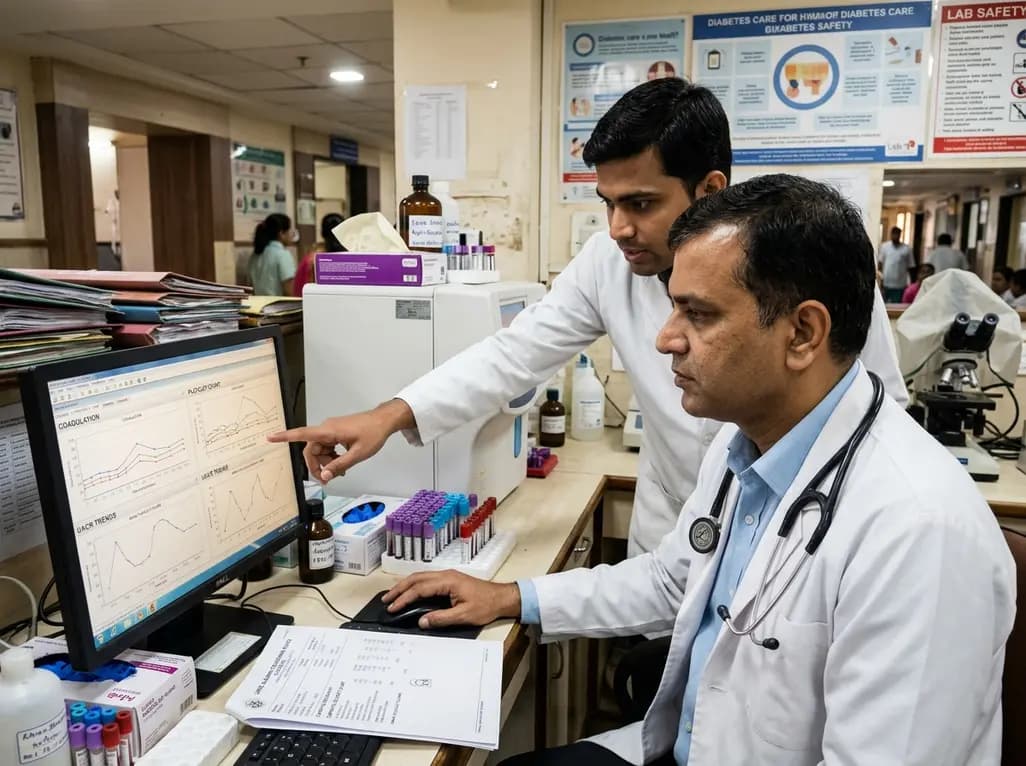
A western India study demonstrates that shortened coagulation times (PT, APTT), elevated mean platelet volume, and increased UACR strongly correlate with type 2 diabetes microvascular complications, highlighting the clinical value of combined hemostatic and renal profiling for early risk stratification.
Today
