.webp&w=384&q=75)

Loading, please wait...
Loading, please wait...
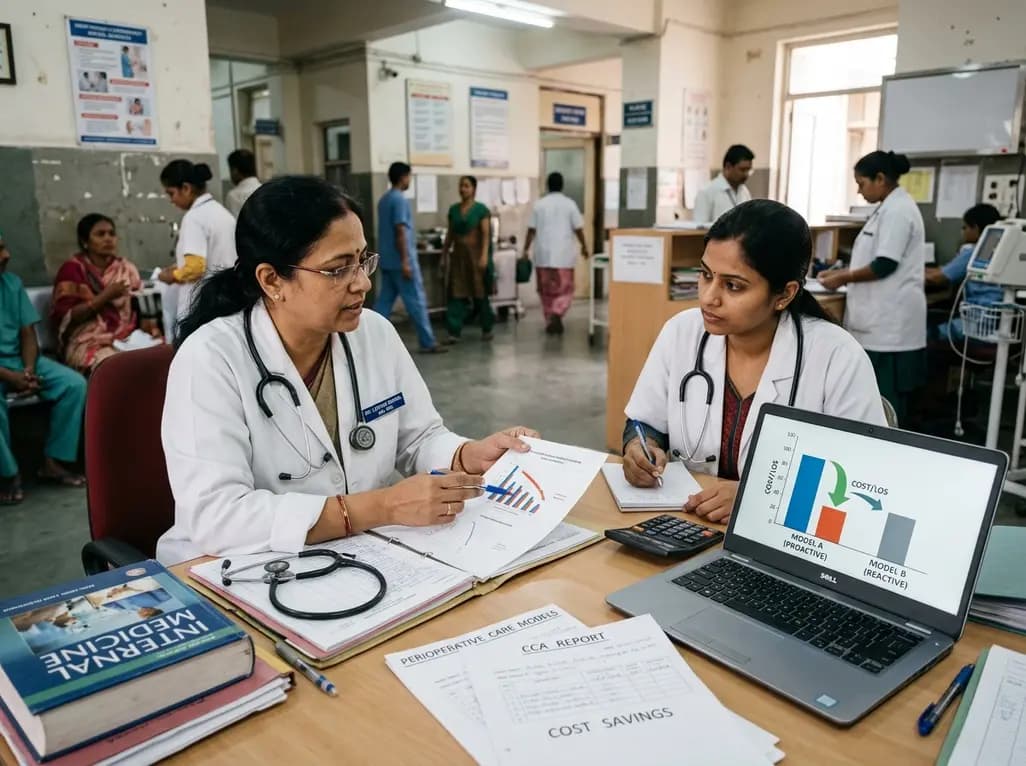
Modern surgical cohorts increasingly present with advanced age, frailty, and multifaceted chronic comorbidities. Consequently, delivering effective general medicine perioperative care has become a vital priority for acute health networks worldwide. When surgical teams operate in isolation, comorbid conditions such as diabetes, heart failure, and renal insufficiency often deteriorate postoperatively. Traditionally, hospitals relied on reactive consultation models, calling internists only after overt clinical deterioration occurred. However, emerging health economic evidence indicates that proactive co-management pathways dramatically improve outcomes while curtailing avoidable hospital expenditures. A recent milestone investigation evaluated the cost-consequences of these differing care delivery frameworks across major healthcare centres. The findings demonstrate that structured proactive involvement of general physicians generates immense economic savings alongside substantial clinical benefits. Therefore, understanding the direct impact of these models is indispensable for healthcare leaders and practising clinicians alike.
Traditionally, perioperative medical support functioned almost exclusively on a reactive consultation basis. In this conventional structure, surgical teams manage postoperative recovery independently and request general medicine input only when severe complications arise. Consequently, physicians intervene during acute medical crises, such as sudden decompensated heart failure, severe sepsis, or acute kidney injury. In contrast, proactive models introduce internists at the earliest possible stage of surgical admission. Under proactive pathways, general physicians systematically evaluate high-risk patients before surgery or immediately upon hospital admission. Moreover, they conduct joint daily ward rounds, optimize chronic pharmacotherapy, and continuously monitor vulnerable organ systems. This anticipatory approach prevents subclinical physiologic deviations from evolving into life-threatening emergencies. Furthermore, proactive collaborative care fosters seamless communication between surgeons, anesthesiologists, and general physicians. As a result, clinical teams identify emerging physiological risks long before they compromise patient safety. Ultimately, this structured collaboration transforms perioperative medicine from a reactive rescue system into an integrated, preventive discipline.
Evaluating healthcare interventions requires robust economic modeling alongside traditional clinical endpoints. In a rigorous cost-consequence analysis, investigators quantified the financial differences between structured proactive care and reactive consultation. Specifically, the study applied nationally standardised cost weights to examine key hospital cost drivers, including overall length of stay, medical emergency team escalations, and clinician labour expenses. The results demonstrated that proactive models of general medicine perioperative care likely save approximately $7,500 per patient compared with reactive care. Although proactive staffing models require higher initial physician labour investments, the downstream cost offsets are substantial. Specifically, proactive internist involvement reduces expensive emergency interventions, intensive care unit transfers, and prolonged recuperative ward admissions. Furthermore, the economic advantage persists across various surgical specialties, confirming broad generalizability. In resource-constrained healthcare environments, adopting proactive perioperative co-management represents a high-value strategy. Therefore, hospital administrators and department heads must recognize proactive medical co-management as an essential cost-containment tool rather than an administrative expense.
The remarkable financial savings achieved through proactive perioperative care stem directly from critical clinical improvements. Among these drivers, reduction in total hospital length of stay plays the most prominent economic role. Unplanned postoperative delays frequently occur because of unoptimized glycemic fluctuations, fluid overload, medication errors, or secondary hospital-acquired infections. Proactive general physicians systematically anticipate these pitfalls, ensuring timely medication adjustments, safe fluid titration, and prompt mobilization protocols. Consequently, patients recover physiologic stability much faster, facilitating earlier discharge and reducing inpatient bed-day costs. In addition, proactive medical oversight significantly decreases the frequency of medical emergency team activations. When medical teams detect subtle clinical decline early, they implement corrective actions before full hemodynamic or respiratory collapse ensues. Thus, preventing catastrophic physiological deterioration reduces costly emergency resuscitations and unplanned critical care unit transfers. Furthermore, smooth inpatient recovery reduces 30-day post-discharge readmission rates. By targeting both inpatient efficiency and patient safety, proactive perioperative care optimizes the entire surgical continuum.
Implementing a proactive perioperative general medicine service requires systematic workflow redesign and clear institutional protocols. First, hospitals must establish objective, standardized screening criteria to identify high-risk surgical patients at the point of admission. For instance, risk scoring tools incorporating age, American Society of Anesthesiologists physical status, and comorbidity indices ensure appropriate patient triage. Second, general medicine physicians and surgical teams must execute shared clinical responsibility with well-defined scopes of practice. In this model, surgical teams focus on operative technique and wound management, while general physicians oversee cardiopulmonary optimization, glycemic management, and anticoagulation bridging. Moreover, daily joint multidisciplinary ward rounds enhance interprofessional collaboration between doctors, nursing staff, clinical pharmacists, and physiotherapists. Structured medication reconciliation protocols conducted at admission and discharge prevent common adverse drug interactions. Additionally, implementing electronic health record decision-support alerts can streamline proactive consult triggers for high-risk surgical admissions. Consequently, health networks create a resilient safety culture that minimizes human error and maximizes surgical efficiency.
For clinicians managing complex surgical patients, several practical lessons emerge from health economic and clinical analyses. First, physicians must prioritize early preoperative medical optimization rather than relying on postoperative crisis mitigation. Proactive risk stratification allows clinicians to stabilize chronic cardiovascular, pulmonary, and endocrine diseases well before induction of anesthesia. Second, clinicians should maintain standardized postoperative monitoring protocols for high-risk surgical patients, especially regarding acute kidney injury and delirium prevention. In addition, rigorous inpatient medication reconciliation remains essential, particularly when restarting antiplatelet agents, direct oral anticoagulants, and antihypertensive regimens. Clinicians should also establish transparent, cross-specialty communication channels to eliminate clinical ambiguities during acute handovers. Furthermore, healthcare institutions in developing and transitioning health systems, such as India, can adapt proactive co-management models to optimize resource utilization. By curbing avoidable length of stay and intensive care transfers, proactive care preserves valuable inpatient resources. Ultimately, embracing structured perioperative collaboration delivers superior clinical outcomes while securing hospital financial sustainability.
Proactive perioperative care involves early, structured collaboration where general physicians assess and co-manage high-risk surgical patients from admission through discharge. In contrast, reactive consultation occurs only after an acute medical complication, such as respiratory distress or severe sepsis, has developed. Consequently, proactive care focuses on anticipating and preventing physiological decompensation, whereas reactive care focuses on crisis management and acute rescue interventions.
Proactive general medicine care achieves substantial savings primarily by reducing hospital length of stay and preventing costly acute escalations. By optimizing comorbid chronic conditions and managing medications systematically, internists prevent severe complications that require medical emergency team calls or intensive care admissions. Although physician labour costs increase slightly, the reduction in overall bed days and critical interventions results in net savings of approximately $7,500 per patient.
High-risk surgical patients derive the greatest clinical and financial benefits from proactive perioperative co-management. This group includes elderly patients, individuals with severe multi-organ chronic diseases, patients with frailty or baseline cognitive impairment, and those undergoing complex emergency or major orthopedic procedures. Proactive risk assessment identifies these individuals early, allowing physicians to implement targeted interventions that minimize postoperative morbidity, delirium, and hospital-acquired complications.
Disclaimer: This content is for informational and educational purposes only. It is not intended to be a substitute for professional medical advice, diagnosis, or treatment. Always seek the advice of your physician or other qualified health provider with any questions you may have regarding a medical condition. Refer to the latest local and national guidelines for clinical practice.
References

Read summarized clinical updates, watch expert medical content, and earn CME certifications right from your smartphone.
Open your smartphone camera to scan and install.





Cost-consequence analysis reveals proactive general medicine perioperative care saves approximately $7,500 per patient over reactive models by reducing hospital length of stay and emergency team calls.
last month

Chronic eosinophilic pneumonia can present with atypical bronchoalveolar lavage findings and an organizing pneumonia pattern, necessitating surgical lung biopsy.
Today

Discover the crucial distinctions between mesonephric and mesonephric-like proliferations of the female genital tract. Learn the key histomorphologic, immunohistochemical, and molecular differences essential for accurate diagnosis and clinical management.
Today
Kikuchi-Fujimoto disease rarely presents with refractory shock and sinus bradycardia in children. This case report highlights life-threatening hemodynamic instability requiring intensive care, preserved cardiac contractility, and the critical diagnostic role of early excisional lymph node biopsy.
Today
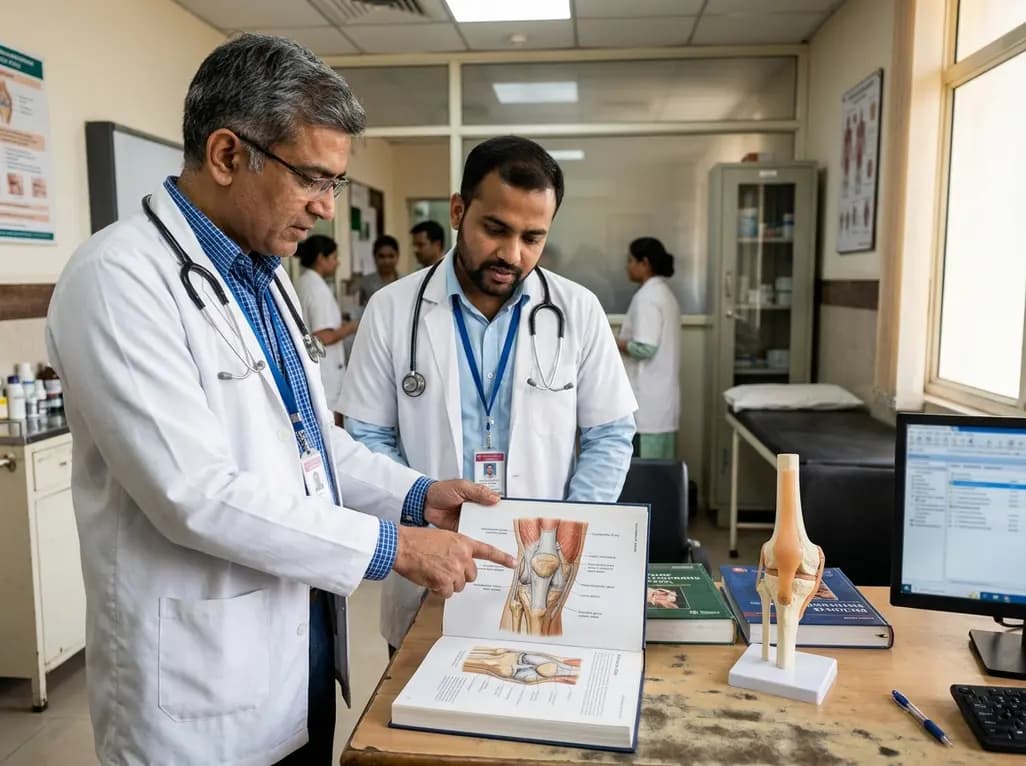
A narrative review investigates whether the articularis genus muscle functions as an independent anatomical entity or blends with the vastus intermedius. We evaluate its morphology, role in retracting the suprapatellar bursa, and direct clinical significance in anterior knee pain and arthroplasty.
Today

A Bayesian multilevel meta-analysis reveals that aerobic training combined with moderate carbohydrate restriction modestly lowers HbA1c in type 2 diabetes. However, sparse data and very low certainty leave incremental benefits over exercise or diet alone unproven, highlighting the need for individualized care.
Today
