

Loading, please wait...
Loading, please wait...

The Food Safety and Standards Authority of India (FSSAI) has issued a critical advisory targeting non-compliant dietary products nationwide. Specifically, the regulator expressed grave concern over violations of statutory nutraceutical labelling norms. Multiple operators fail to display mandatory cautionary statements, particularly on products containing potent botanical extracts and plant-derived substances.
The statutory directive reinforces compliance under the Food Safety and Standards Regulations of 2016. These comprehensive rules govern health supplements, nutraceuticals, and novel food products. Furthermore, the framework applies directly to formulations prepared for special dietary or medical purposes. However, recent regulatory market surveillances revealed that multiple food manufacturers routinely ignore these mandatory directives. Consequently, authorities warned operators of severe legal penalties, including immediate licence cancellation. The regulator emphasized that labels must provide complete transparency regarding botanical formulations. In addition, operators must declare the exact plant parts and derivatives utilized in their products. For instance, manufacturers must establish full batch traceability to uphold consumer safety. Therefore, compliance officers will conduct unannounced market audits to identify violative packaging. Ultimately, the crackdown aims to eliminate misleading and misbranded formulations from retail shelves. By enforcing strict legal accountability, the authority seeks to safeguard public health and restore consumer confidence.
Botanical extracts constitute a major segment of India's expanding wellness market. Schedule IV of the 2016 regulations specifies permitted botanical ingredients and their exact permissible thresholds. Moreover, the schedule mandates distinct cautionary statements for plants known to exert physiological effects. Certain botanical compounds may cause unexpected side effects or distinct physiological contraindications. Consequently, product packages must display prominent, legible warnings to prevent inappropriate consumer self-administration. Furthermore, clear advisory notices must state that health supplements cannot replace a balanced daily diet. The packaging must also feature bold warnings instructing consumers to keep products out of children's reach. Additionally, formulations must display strict advisories warning pregnant and lactating women to seek prior medical consultation. Manufacturers cannot hide these vital warnings inside tiny fonts or inconspicuous packaging corners. Instead, regulatory guidelines require bold typography on the principal display panel. Therefore, food business operators must prioritize consumer clarity over aggressive promotional design.
A central pillar of the regulatory warning addresses misleading advertising claims made by supplement companies. The Food Safety and Standards Act strictly classifies nutraceuticals as non-conventional foods rather than pharmaceuticals. Therefore, statutory regulations expressly prohibit any medicinal claims or promises of disease cure on product packaging. Nevertheless, several operators improperly market botanical extracts as guaranteed treatments for chronic metabolic disorders. For example, brands frequently claim to reverse diabetes mellitus, hypertension, arthritis, or cardiovascular disease. Such deceptive assertions mislead anxious patients into abandoning proven, evidence-based pharmacotherapy. In response, FSSAI reiterated that labels must prominently feature the statutory statement: 'NOT FOR MEDICINAL USE.' Furthermore, products must never imply that daily consumption replaces conventional medical therapies. Additionally, manufacturers must calculate active nutrient concentrations and display them as explicit percentages of recommended dietary allowances. Through these decisive steps, the regulatory authority establishes an unambiguous boundary between dietary nutrition and prescription pharmaceuticals.
From a clinical perspective, undisclosed botanical ingredients and missing cautionary warnings present severe health hazards. Medical practitioners routinely encounter patients who consume over-the-counter wellness supplements without disclosing them during consultations. However, bioactive herbal constituents frequently interact with conventional cardiovascular, antidiabetic, and immunosuppressive medications. For instance, common botanical extracts can alter cytochrome P450 enzyme pathways in the liver. Consequently, these interactions either dangerously elevate plasma drug concentrations or precipitate complete therapeutic failure. Furthermore, excessive or unmonitored intake of botanical extracts has caused acute hepatotoxicity and sudden renal impairment in susceptible individuals. Vulnerable demographics, including elderly patients and pediatric cohorts, face heightened susceptibility to toxic organ damage. Additionally, deceptive labelling leads consumers into believing that botanical supplements carry zero intrinsic risks. When labels omit critical warnings, clinicians face diagnostic delays when evaluating unexplained symptoms. Transparent labels therefore remain essential for ensuring timely clinical triage and protecting patient safety.
Healthcare professionals must take a proactive stance regarding unregulated dietary supplement usage among outpatients. During routine clinical examinations, physicians should systematically ask patients about their consumption of over-the-counter herbal supplements. Moreover, clinicians should educate patients regarding the critical distinction between verified pharmaceutical drugs and commercial nutraceuticals. Patients often assume that retail availability implies absolute clinical efficacy and proven therapeutic safety. Consequently, doctors must explain that food supplements cannot diagnose, cure, or arrest progressive chronic illnesses. Furthermore, practitioners should train patients to inspect supplement labels for the mandatory 'NOT FOR MEDICINAL USE' declaration. Physicians should also advise high-risk individuals, particularly pregnant women and renal patients, against unguided botanical self-medication. Additionally, clinical teams must emphasize that exceeding recommended daily allowances causes cumulative systemic toxicity. If a patient experiences unexplained clinical deterioration, doctors should promptly assess all concurrent supplement ingestion. Through vigilant communication, physicians can effectively protect patients from the hidden clinical perils of deceptively marketed botanical remedies.
Q1: Why did FSSAI issue an advisory on botanical nutraceutical labelling?
FSSAI issued this urgent advisory because several food business operators violated mandatory statutory labelling norms. Specifically, companies omitted vital cautionary statements and warnings required for potent botanical ingredients listed under Schedule IV. Furthermore, some brands made misleading therapeutic claims regarding disease treatment. Consequently, the regulator stepped in to enforce strict labelling compliance, mandate legible disclaimers, and protect vulnerable consumers from the acute hazards of unregulated supplement consumption across India.
Q2: Can nutraceutical products claim to cure chronic medical conditions?
No, statutory food regulations explicitly prohibit nutraceuticals and dietary supplements from claiming to cure, treat, or prevent any medical condition. Legally, these formulations represent specialized food categories rather than licensed pharmaceuticals. Therefore, every label must prominently display the mandatory declaration stating that the product is not for medicinal use. Operators making deceptive therapeutic claims face severe regulatory sanctions, including heavy financial penalties, product recalls, and immediate business licence cancellation.
Q3: How does non-compliant supplement labelling impact clinical practice?
Non-compliant labelling poses severe diagnostic and therapeutic challenges for practicing physicians. Specifically, missing ingredient declarations and omitted contraindications obscure potential herb-drug interactions, leading to unexpected treatment failure or toxic reactions. For instance, bioactive botanicals can cause severe acute liver injury or renal damage. When patients assume misbranded products are harmless natural therapies, they may discontinue necessary medications, which ultimately causes avoidable clinical complications and progressive disease worsening.
Disclaimer: This content is for informational and educational purposes only. It does not constitute medical advice or replace professional judgment. Refer to the latest local and national guidelines for clinical practice.
References

Read summarized clinical updates, watch expert medical content, and earn CME certifications right from your smartphone.
Open your smartphone camera to scan and install.





The Food Safety and Standards Authority of India has issued an urgent advisory against food business operators violating mandatory labelling standards for nutraceuticals and botanicals. Regulators prohibited therapeutic claims while mandating clear advisory warnings to prevent patient toxicity and medical misuse.
Today

A landmark study reveals that 20 minutes of moderate aerobic exercise shields episodic memory encoding as effectively as a 90-minute nap after 30 hours of sustained wakefulness, offering clinicians and shift workers a viable neuroprotective strategy against acute sleep loss.
Today

Biotechnology researchers in India are developing an automated liquid biopsy platform to detect cervical malignancy from blood samples. Supported by the MAHA MedTech Mission, this initiative applies nanopore sequencing and piRNA biomarker detection to eliminate invasive speculum exams and expand rural screening.
Today
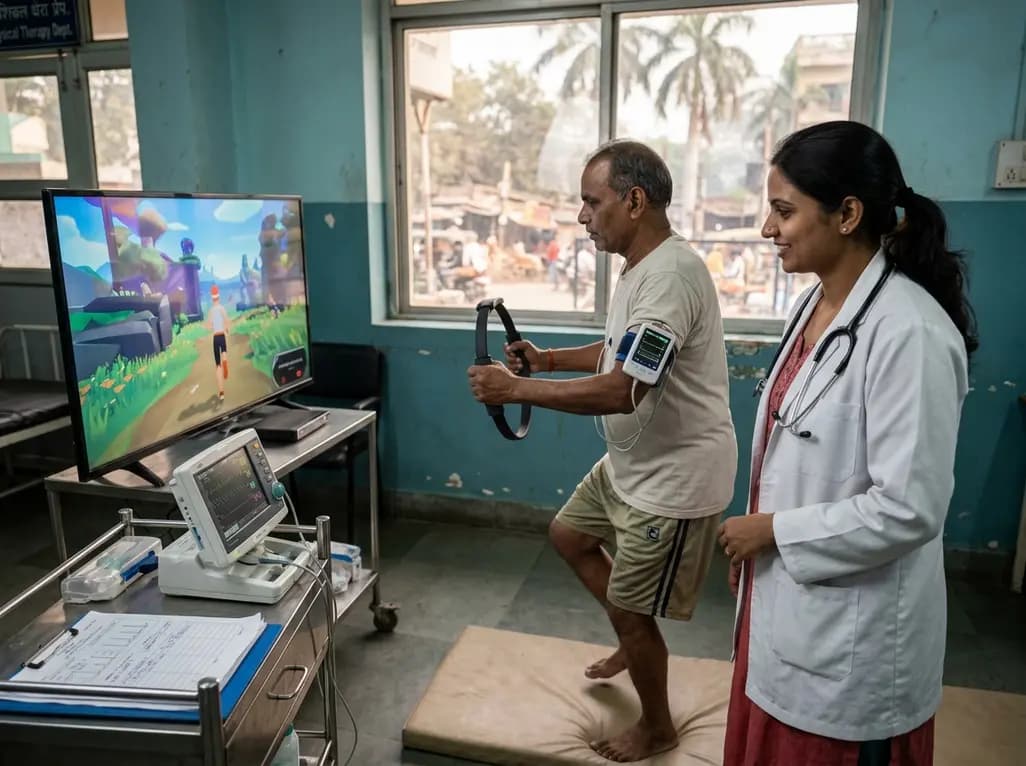
A clinical study evaluated Ring Fit Adventure in adults with chronic conditions, revealing that exergaming achieves moderate-to-vigorous exercise intensity while maintaining hemodynamic stability, high enjoyment, and zero adverse events.
Today

A retrospective cohort study reveals that selecting the touched vertebra as the lowest instrumented vertebra in thoracic adolescent idiopathic scoliosis yields a 20.8% distal add-on rate, driven by remnant motion segments and axial rotational discrepancies.
Today

A study evaluates a cardiometabolic HFpEF model combining metabolic stress with chronic mineralocorticoid excess. The findings reveal profound diastolic stiffness, endothelial dysfunction, and pulmonary hypertension, illuminating key pathophysiological mechanisms for targeted cardiopulmonary therapies.
Today
