.webp&w=384&q=75)

Loading, please wait...
Loading, please wait...

Older surgical candidates face substantial risks of severe perioperative events, making precise postoperative complication prediction a vital clinical priority. Among the most devastating complications encountered in elderly cohorts are postoperative delirium (POD) and acute kidney injury (AKI). Both conditions substantially prolong hospital admissions, increase critical care utilization, and elevate short- and long-term mortality. However, clinicians often struggle to deploy robust predictive algorithms because existing artificial intelligence tools rely predominantly on single-institution datasets. Such models frequently suffer from institutional bias, limited sample sizes, and poor external generalizability. While pooling large-scale multicenter datasets could theoretically resolve these challenges, strict data privacy regulations, hospital governance frameworks, and proprietary concerns strictly prohibit centralized sharing of raw patient records. Consequently, perioperative teams need privacy-preserving computational architectures that leverage distributed multicenter intelligence without compromising institutional data sovereignty.
The physiological vulnerability of older surgical patients stems from diminished organ reserve, microvascular changes, and multisystem frailty. Postoperative delirium and acute kidney injury frequently co-occur in older individuals undergoing major non-cardiac surgeries. This bidirectional relationship reflects shared pathophysiological pathways, including systemic inflammation, oxidative stress, altered hemodynamics, and neurohumoral dysregulation. When perioperative insults trigger microvascular hypoperfusion or systemic cytokine release, both the vulnerable cerebral cortex and the sensitive renal tubular epithelium experience rapid functional decompensation. Unfortunately, standard bedside risk stratification scores often fail to capture subtle non-linear interactions among baseline comorbidities, intraoperative hemodynamic fluctuations, and anesthetic exposures. Machine learning algorithms hold immense potential to untangle these complex interactions. Yet, training high-capacity deep learning models requires large, diverse patient cohorts that single institutions simply cannot provide alone. Therefore, developing predictive systems that accurately flag high-risk candidates across diverse hospital environments remains an urgent necessity in modern geriatric surgical oncology and general surgery.
Federated learning provides a revolutionary computational paradigm that directly resolves the tension between data governance and multicenter artificial intelligence development. Instead of transferring sensitive electronic health records to a centralized server, federated learning keeps all raw patient data safely localized within each participating hospital's secure infrastructure. Each center trains a local model on its internal dataset and subsequently shares only model parameters, such as mathematical weights and gradients, with a central coordination server. The central server systematically aggregates these decentralized parameters into a unified global model before distributing the updated intelligence back to all participating institutions. This iterative process allows predictive algorithms to learn from heterogeneous, geographically diverse populations without exposing identifiable protected health information. Furthermore, this decentralized architecture eliminates massive cross-border data transfer costs and circumvents regulatory hurdles associated with international and inter-hospital data-sharing statutes. By democratizing collaborative machine learning, federated frameworks enable surgical networks to construct robust artificial intelligence tools while maintaining rigorous compliance with medical data protection standards.
A landmark multicenter study investigated this decentralized paradigm by evaluating 7,216 non-cardiac, non-neurosurgical patients aged 65 years or older across five distinct hospital centers. Four centers provided training data, while an independent fifth center served as an external validation site to rigorously assess real-world generalizability. Researchers implemented three distinct federated learning algorithms using a multilayer perceptron architecture, systematically benchmarking their performance against isolated local learning models and traditional centralized learning models. For postoperative delirium, federated models achieved internal area under the receiver operating characteristic curve (AUC) values of 0.725 to 0.726 and external validation AUCs of 0.700 to 0.701. For acute kidney injury, the federated models attained internal AUCs of 0.780 and robust external AUCs between 0.740 and 0.741. Crucially, statistical analyses confirmed that federated learning models achieved discrimination performance fully comparable to centralized models (p > 0.05). These empirical results demonstrate that institutions can achieve top-tier predictive accuracy without pooling raw clinical records.
Achieving reliable postoperative complication prediction across varied clinical environments represents a major milestone for perioperative precision medicine. Hospital systems frequently differ in patient demographics, surgical case complexity, baseline disease severity, and local perioperative protocols. When predictive models are trained solely on single-center records, their diagnostic reliability often deteriorates markedly when deployed at outside hospitals due to dataset shift. The multicenter federated framework decisively mitigates this overfitting problem by exposing the training architecture to diverse institutional distributions during parameter aggregation. Consequently, the resulting global model retains high discriminatory capability even when evaluated on completely unseen patient cohorts from distinct geographic regions. Moreover, the superior performance observed for both neurological and renal outcomes underscores the broad applicability of multilayer neural networks in geriatric surgical assessment. Clinicians can confidently utilize these decentralized predictive frameworks knowing that the underlying algorithms represent a truly generalized synthesis of multicenter clinical data rather than localized statistical artifacts.
Integrating decentralized predictive tools into routine hospital workflows offers profound benefits for proactive clinical decision-making and patient safety. When clinicians identify patients at heightened risk for postoperative delirium and renal failure prior to surgery, multidisciplinary teams can implement targeted preventive pathways immediately. For example, anesthesiologists can optimize depth of anesthesia using processed electroencephalography, avoid nephrotoxic medications, and maintain strict intraoperative mean arterial pressure targets. Simultaneously, surgical teams and geriatricians can initiate non-pharmacological delirium bundles, including early cognitive reorientation, scheduled sleep hygiene, prompt mobilization, and rigorous pain control protocols. Furthermore, postoperative critical care teams can utilize automated risk scores to guide intensified renal biomarker tracking and structured fluid management. As healthcare networks expand collaborative infrastructure, privacy-preserving federated architectures will allow seamless continuous model updating. Ultimately, this scalable paradigm empowers hospitals of all sizes to deliver individualized, proactive care and significantly reduce devastating postoperative morbidity in vulnerable older adults.
Federated learning protects confidentiality by keeping all raw patient records and identifiers safely within each hospital's local firewall. Instead of pooling private electronic health records onto an external server, each hospital trains the algorithm locally. The system only transmits mathematical model weights and gradient updates to a central aggregation server. This distributed approach completely eliminates direct data sharing, ensuring full compliance with stringent data protection regulations while fostering multicenter collaboration.
Older surgical patients exhibit diminished baseline physiological reserves and age-related microvascular changes across multiple organ systems. During major surgical procedures, systemic inflammation, hemodynamic fluctuations, oxidative stress, and exposure to anesthetic agents can trigger simultaneous dysfunction in the brain and kidneys. Because renal injury promotes neuroinflammation and metabolic disturbance, these conditions frequently interact bidirectionally. Consequently, geriatric patients with baseline frailty or cardiovascular comorbidities face a significantly elevated risk for both complications.
Yes, decentralized federated learning models achieve exceptional generalizability across independent surgical centers. By aggregating mathematical updates from multiple institutions, the central model captures diverse patient demographics, surgical techniques, and practice patterns without overfitting to a single hospital's dataset. Multicenter validation studies confirm that federated models achieve discrimination metrics that are statistically comparable to centralized models, proving their robust reliability when deployed in completely unseen healthcare settings.
Disclaimer: This content is for informational and educational purposes only and does not constitute formal medical advice, diagnosis, or treatment recommendations. Healthcare professionals must exercise their independent clinical judgment when assessing perioperative risks and selecting clinical interventions. Refer to the latest local and national guidelines for clinical practice.
References

Read summarized clinical updates, watch expert medical content, and earn CME certifications right from your smartphone.
Open your smartphone camera to scan and install.





A multicenter study demonstrates that privacy-preserving federated learning models predict postoperative delirium and acute kidney injury in older surgical patients with accuracy comparable to centralized models, overcoming critical hospital data-sharing barriers.
last month
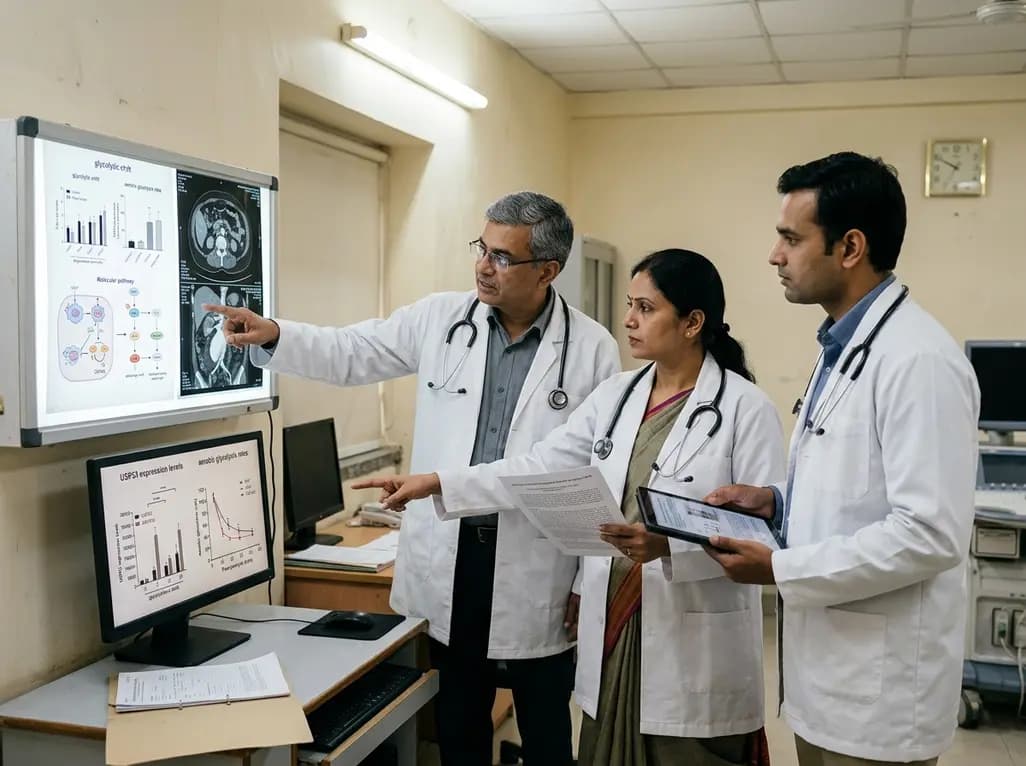
Abdominal aortic aneurysm rupture remains a catastrophic vascular emergency. Groundbreaking research reveals that USP53 accelerates aneurysm progression by reprogramming smooth muscle cell metabolism toward aerobic glycolysis, highlighting a promising target beyond conventional diameter-based surveillance.
Today

A pharmacometric and machine learning study reveals that specific vaginal bacteria alter cervical antiretroviral exposure, highlighting the need for precision HIV PrEP strategies.
Today

A nationwide Swedish cohort study shows oral glucocorticoid exposure over 1-2 years strongly predicts overall organ damage in SLE, while cardiovascular risk reflects cumulative doses across 3 years. These findings reinforce early steroid minimization and cautious long-term maintenance.
Today

A scoping review highlights neural mobilization as a promising adjunct in managing cervicogenic headache. Integrating neurodynamics into multimodal physical therapy improves pain, range of motion, and posture, though standardized protocols and larger clinical trials are still needed.
Today
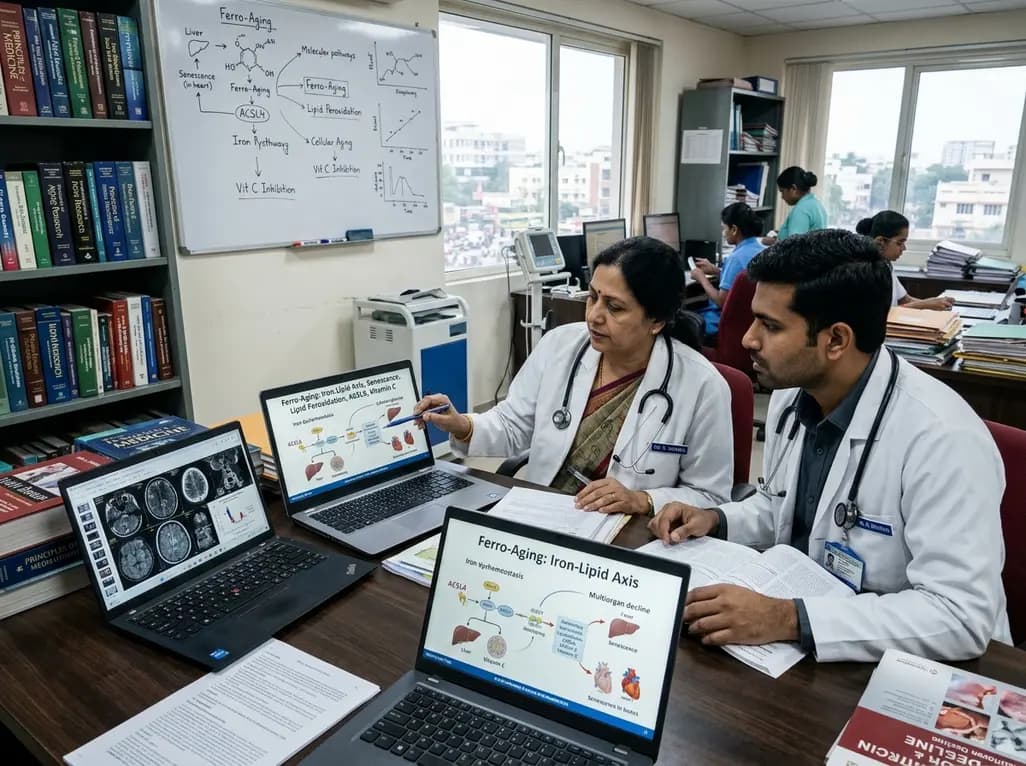
Recent research defines ferro-aging as a conserved iron-lipid axis driving organ decline across primates. Age-related iron dyshomeostasis stimulates ACSL4-mediated lipid peroxidation, promoting cellular senescence. Notably, vitamin C directly inhibits ACSL4, suppressing phospholipid oxidation and multi-organ decay.
Today
