.webp&w=384&q=75)

Loading, please wait...
Loading, please wait...
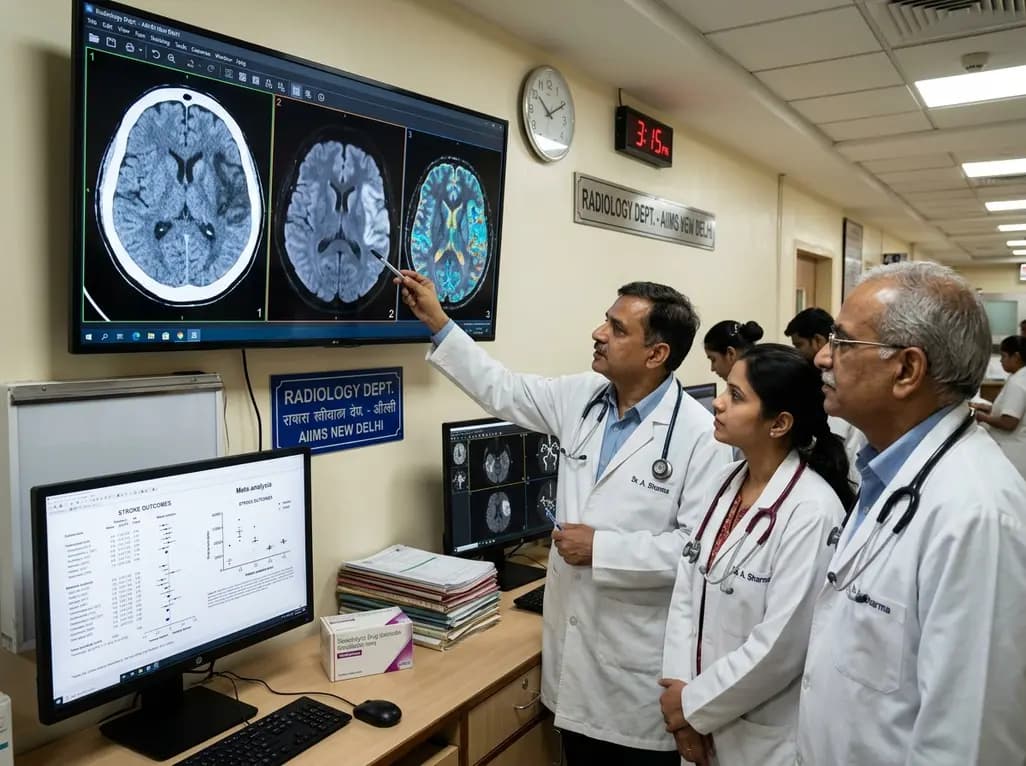
Acute ischemic stroke management is undergoing a profound paradigm shift from rigid chronological limits to tissue-based selection. For decades, emergency protocols restricted systemic reperfusion to a narrow 4.5-hour period from symptom onset. However, advanced neuroimaging now identifies salvageable penumbral brain tissue well beyond conventional boundaries. A comprehensive meta-analysis evaluates the clinical utility of extended window intravenous thrombolysis across modern clinical trials. This pivotal study synthesizes data from multiple randomized investigations to clarify functional outcomes, recanalization rates, and bleeding complications in patients presenting between 4.5 and 24 hours after last known well.
Historically, time served as a strict surrogate for tissue viability in acute stroke protocols. Clinicians strictly excluded patients presenting after 4.5 hours due to concerns over futile reperfusion and catastrophic cerebral edema. However, this rigid framework disregarded significant individual variability in cerebral collateral circulation. Many individuals sustain viable, salvageable ischemic penumbra for hours or even days after vessel occlusion.
Modern automated perfusion imaging fundamentally challenges the traditional dogma of the rigid time clock. Automated software now accurately quantifies core infarct volume and critically hypoperfused tissue at the point of care. Consequently, clinicians can swiftly distinguish patients with robust collateral flow from those with completed infarctions. The WAKE-UP and EXTEND trials first established that magnetic resonance imaging and computed tomography perfusion reliably identify viable parenchyma in unknown-onset and late-presenting strokes. Therefore, imaging-guided selection replaces chronological thresholds with physiological assessments of tissue salvageability.
This therapeutic shift offers immense clinical value, particularly in community hospitals lacking immediate endovascular capabilities. Furthermore, extending reperfusion pathways allows medical teams to salvage neurological function in patients previously deemed untreatable. By identifying persistent tissue mismatch, stroke teams can expand interventions safely across a broad therapeutic window.
The updated meta-analysis pooled data from fourteen randomized controlled trials comprising 4,944 acute ischemic stroke patients. In total, 2,492 patients received thrombolytic therapy within an extended window ranging from 4.5 to 24 hours. The investigators evaluated functional outcomes at 90 days using the modified Rankin Scale.
Notably, patients who received extended window intravenous thrombolysis achieved substantially higher odds of an excellent functional outcome, defined as a modified Rankin Scale score of 0 to 1, compared to standard medical care. The pooled analysis revealed an odds ratio of 1.43, demonstrating robust neurological recovery. Additionally, extended lytic therapy enhanced the odds of achieving good functional independence, defined as a score of 0 to 2, with an odds ratio of 1.25.
Furthermore, thrombolytic therapy dramatically boosted early arterial recanalization compared to conservative medical management alone. Patients treated with late thrombolysis experienced more than a threefold increase in successful recanalization, yielding an odds ratio of 3.28. Importantly, three-month mortality rates did not differ significantly between the thrombolysis cohort and the standard care group. Sensitivity analyses excluding patients who subsequently received endovascular thrombectomy demonstrated consistent treatment benefits. Consequently, these findings confirm that late-window thrombolytic reperfusion provides meaningful clinical efficacy across diverse patient subgroups.
Although clinical efficacy remains compelling, safety considerations represent a primary concern when administering thrombolytics in delayed timeframes. Extended ischemia can compromise microvascular integrity and disrupt the blood-brain barrier. Consequently, reperfusing damaged tissue increases the probability of hemorrhagic transformation.
The meta-analysis revealed that extended intravenous thrombolysis significantly increases the risk of symptomatic intracranial hemorrhage compared to standard therapy, with an odds ratio of 2.51. Clinicians must weigh this elevated hemorrhage rate against the substantial improvement in long-term functional recovery. Fortunately, overall three-month mortality did not escalate among treated patients, showing an odds ratio of 1.21 that failed to reach statistical significance. Therefore, the excess hemorrhagic events did not translate into increased fatal outcomes across the randomized trials.
Strict imaging selection plays an essential role in mitigating severe bleeding hazards. Specifically, screening protocols exclude individuals with large established infarct cores, severe hypodensity, or marked microvascular disruptions. Furthermore, rigorous blood pressure control during and after infusion substantially reduces hemorrhagic complications. Clinicians must maintain systolic blood pressure below 180 millimeters of mercury to safeguard vulnerable cerebral vessels. Ultimately, thorough screening and aggressive hemodynamic regulation permit safe delivery of late thrombolytic therapy.
The meta-analysis conducted a preplanned subgroup assessment to compare outcomes between tenecteplase and alteplase in late-presenting cohorts. Tenecteplase possesses distinct pharmacological characteristics, including greater fibrin specificity, longer half-life, and resistance to plasminogen activator inhibitor-1. Moreover, single-bolus tenecteplase administration provides substantial logistical convenience over alteplase infusions, especially during emergency transfers.
Both thrombolytic agents conferred comparable efficacy regarding three-month functional independence and vessel recanalization. However, tenecteplase demonstrated a notably favorable safety profile with potentially lower odds of symptomatic hemorrhage. Specifically, tenecteplase produced an odds ratio of 1.96 for symptomatic intracranial bleeding, whereas alteplase exhibited an odds ratio of 5.29. Although the formal subgroup difference test did not achieve statistical significance, this observed variation aligns with prior pharmacodynamic investigations.
Nevertheless, experts emphasize that head-to-head randomized trials must directly confirm whether tenecteplase genuinely reduces bleeding in extended windows. Recent investigations, including TIMELESS and TRACE-III, have yielded valuable insights into tenecteplase utilization for late-presenting strokes with large vessel occlusions. Meanwhile, emerging data from trials such as OPTION highlight tenecteplase efficacy in non-large vessel occlusions. Therefore, tenecteplase represents an increasingly attractive candidate for late-window thrombolysis protocols.
Implementing extended window thrombolysis requires rapid, standardized neuroimaging workflows in acute care settings. Emergency departments must integrate multimodal computed tomography or magnetic resonance imaging without introducing treatment delays. Specifically, automated perfusion software computes ischemic core volumes and mismatch ratios within minutes. These rapid automated analyses enable clinicians to identify salvageable tissue and confirm treatment candidacy immediately.
Furthermore, these findings carry profound global implications for healthcare systems with limited endovascular thrombectomy infrastructure. Mechanical thrombectomy remains the primary standard for large vessel occlusions up to 24 hours, yet many rural and community centers lack neurointerventional suites. In such environments, extended thrombolysis provides a viable therapeutic bridge or definitive reperfusion strategy for eligible patients. Moreover, patients presenting with distal or branch occlusions ineligible for mechanical retrieval can now access effective medical reperfusion.
Nevertheless, multidisciplinary teams must establish clear inter-facility transfer protocols and rigorous monitoring protocols. Post-thrombolysis care requires frequent neurological checks, intensive care bed allocation, and repeat neuroimaging upon any clinical deterioration. In addition, institutions must foster seamless collaboration between emergency medicine physicians, neurologists, and neuroradiologists. By aligning diagnostic protocols with robust physiological criteria, clinical networks can optimize reperfusion safely across extended windows.
Clinicians qualify patients using computed tomography or magnetic resonance perfusion imaging demonstrating salvageable penumbra. Eligible patients typically present with an ischemic core volume under 70 milliliters, a mismatch ratio of at least 1.8 between hypoperfused tissue and core, and an absolute mismatch volume exceeding 15 milliliters.
Tenecteplase provides similar functional efficacy to alteplase while demonstrating a trend toward lower symptomatic intracranial hemorrhage. Furthermore, tenecteplase requires only a rapid intravenous bolus rather than an hour-long continuous infusion. This bolus administration greatly simplifies acute workflows and expedites inter-hospital transfers for advanced interventions.
Extended thrombolysis can achieve early arterial recanalization before or during transport to an endovascular suite. Sensitivity analyses confirm that thrombolytic therapy improves functional recovery whether patients undergo planned mechanical thrombectomy or receive medical therapy alone. However, clinicians must carefully coordinate administration without delaying groin puncture for thrombectomy.
Disclaimer: This content is for informational and educational purposes only and does not substitute for formal clinical consultation. Healthcare professionals must evaluate individual clinical scenarios and refer to the latest local and national guidelines for clinical practice.
References

Read summarized clinical updates, watch expert medical content, and earn CME certifications right from your smartphone.
Open your smartphone camera to scan and install.





A systematic review and meta-analysis reveals that extended window intravenous thrombolysis (4.5–24 hours) guided by advanced neuroimaging significantly boosts 3-month functional independence and vessel recanalization in acute ischemic stroke, despite an increased risk of intracranial hemorrhage.
last month

A retrospective cohort study of 7,716 ICU patients from the MIMIC-IV database demonstrates that Gradient Boosting Decision Trees significantly outperform traditional SOFA scores in predicting in-hospital mortality among patients with sepsis and diabetes, with SHAP analysis providing clinical interpretability.
Today

A prenatal case highlights severe glutaric acidemia type II presenting as bilateral hyperechoic cystic kidneys at 18 weeks. Whole-exome sequencing revealed a novel homozygous ETFDH frameshift variant, demonstrating the power of rapid genetic testing in fetal renal anomalies.
Today
This article reviews the forensic and clinical complexities of acute myocarditis arising on left ventricular hypertrophy in children, highlighting early diagnostic red flags and multidisciplinary postmortem autopsy protocols.
Today

This comparative study evaluates posterior labral tears with and without glenohumeral instability, highlighting distinct demographic patterns, MRI underestimation in stable shoulders, and successful arthroscopic repair outcomes.
Yesterday

A clinical study demonstrates that early intervention with tocilizumab, either as monotherapy or bridged with corticosteroids, achieves significant proptosis reduction and resolves active inflammation in treatment-naive thyroid eye disease.
Yesterday
