.webp&w=384&q=75)

Loading, please wait...
Loading, please wait...

In many countries, lifespan currently increases faster than healthspan. Consequently, this trend leads to more years spent with late-life diseases. Therefore, clinicians urgently need reliable tools to measure biological age and predict mortality. A major study utilizing data from the Berlin Aging Study II (BASE-II) recently evaluated the epigenetic pace of aging alongside thirteen other consensus markers to determine their role in predicting all-cause mortality.
The research followed 1,083 participants aged 60 to 80 for over seven years. Specifically, researchers compared 14 biomarkers representing physiological, inflammatory, functional, and epigenetic domains. After adjusting for lifestyle and genetics, the DunedinPACE clock—which tracks the epigenetic pace of aging—emerged as the most robust predictor of death. While functional markers like hand grip strength (HGS) and standing balance also showed significance, they did not match the consistent predictive power of the molecular clock.
Interestingly, some commonly used biomarkers did not show a significant association with mortality in this specific cohort. For instance, C-reactive protein (CRP), gait speed, and blood pressure did not predict mortality after full adjustment. However, the study identified a minimal set of three markers—muscle mass, standing balance, and the epigenetic clock—that achieved high discriminative accuracy. Notably, this subset performed nearly as well as the full model containing all 14 biomarkers.
Furthermore, these results were consistent across various causes of death. Medical educators emphasize that these findings highlight the superiority of molecular-level assessments over certain traditional physical metrics. Consequently, the study suggests that integrating the epigenetic pace of aging into geriatric assessments could significantly improve personalized risk stratification. This shift may help clinicians better plan interventions to extend the healthy years of life for older patients.
Chronological age simply counts the years lived. In contrast, the epigenetic pace of aging measures the rate of biological decline using DNA methylation patterns. It estimates how fast a person’s body is deteriorating compared to the average person of the same age.
Although the molecular clock was the strongest predictor, certain functional tests remained highly relevant. Specifically, hand grip strength and standing balance showed significant associations with mortality risk. This underscores the continued importance of physical assessment in routine geriatric care.
Disclaimer: This content is for informational and educational purposes only. It does not constitute medical advice or a professional relationship. Always seek the advice of a qualified healthcare provider regarding any medical condition. Refer to the latest local and national guidelines for clinical practice.
References
Vetter VM et al. Comparing fourteen consensus biomarkers of aging: epigenetic pace of aging as the strongest predictor of mortality in BASE-II. Biomark Res. 2026 Mar 06. doi: 10.1186/s40364-026-00909-z. PMID: 41792861.
Perri G et al. An Expert Consensus Statement on Biomarkers of Aging for Use in Intervention Studies. J Gerontol A Biol Sci Med Sci. 2025;80(5):glae297. doi: 10.1093/gerona/glae297.
Belsky DW et al. DunedinPACE, a DNA methylation biomarker of the pace of aging. eLife. 2022;11:e73420. doi: 10.7554/eLife.73420.
"
Read summarized clinical updates, watch expert medical content, and earn CME certifications right from your smartphone.
Open your smartphone camera to scan and install.





A study in the Berlin Aging Study II identifies the DunedinPACE epigenetic clock as the strongest mortality predictor among 14 consensus biomarkers of aging...
7 months ago
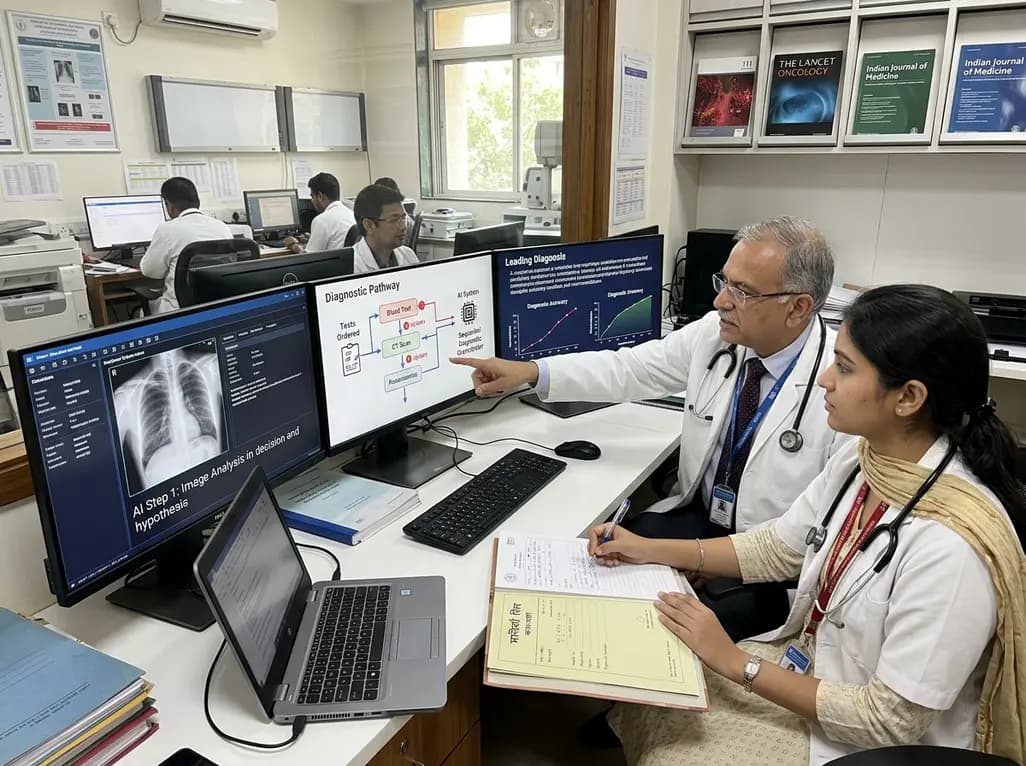
A breakthrough peer-reviewed study demonstrates that a sequential AI diagnosis system can mirror real-world clinical reasoning. By ordering stepwise tests and updating hypotheses dynamically, this multi-agent orchestrator achieved superior diagnostic accuracy while reducing investigative costs.
Today

A prenatal case highlights severe glutaric acidemia type II presenting as bilateral hyperechoic cystic kidneys at 18 weeks. Whole-exome sequencing revealed a novel homozygous ETFDH frameshift variant, demonstrating the power of rapid genetic testing in fetal renal anomalies.
Today

Review how tailored exercise programs benefit frail older patients with heart failure. Explore pathophysiological mechanisms, individualized training prescriptions, and strategies to overcome adherence barriers in clinical practice.
Yesterday

This comparative study evaluates posterior labral tears with and without glenohumeral instability, highlighting distinct demographic patterns, MRI underestimation in stable shoulders, and successful arthroscopic repair outcomes.
Yesterday

A clinical study demonstrates that early intervention with tocilizumab, either as monotherapy or bridged with corticosteroids, achieves significant proptosis reduction and resolves active inflammation in treatment-naive thyroid eye disease.
Yesterday
