

Loading, please wait...
Loading, please wait...

Cardiovascular ageing presents significant clinical challenges across global populations, primarily because endogenous nitric oxide generation declines with age. Consequently, diminished nitric oxide synthase activity accelerates arterial stiffness and endothelial dysfunction. Fortunately, recent physiological discoveries demonstrate that skeletal muscle nitrate serves as an essential endogenous reservoir. Skeletal muscle actively regulates these nitrogen oxide pools to support local perfusion and systemic vascular tone throughout human senescence.
Endothelial cells synthesize nitric oxide to preserve vascular compliance and regulate systemic blood pressure. However, advancing age triggers substantial cellular senescence, oxidative stress, and enzymatic uncoupling of endothelial nitric oxide synthase. Consequently, circulating nitric oxide levels plummet, increasing systemic peripheral resistance and cardiovascular morbidity in older demographics. To counteract this deficit, the human body engages the secondary nitrate-nitrite-nitric oxide pathway.
In this non-enzymatic alternative pathway, skeletal muscle tissue acts as a central metabolic warehouse. Skeletal myocytes store extensive quantities of inorganic nitrate that far exceed circulating plasma concentrations. Furthermore, muscle tissue accounts for roughly forty percent of total body mass. Therefore, skeletal muscle operates as a potent physiological buffer during episodes of vascular hypoperfusion or cellular hypoxia. When conventional endothelial synthesis falters, this alternative reservoir releases substrates to maintain microvascular perfusion. Ultimately, these adaptive storage dynamics offer critical insights into preventive cardiology and healthy vascular longevity.
A rigorous clinical investigation compared nineteen young healthy adults with nineteen older individuals to examine age-related anion distribution. Remarkably, researchers discovered that older adults maintained substantially higher baseline concentrations of skeletal muscle nitrate compared to young controls. Specifically, resting muscle nitrate reached nearly eighty-seven nanomoles per gram in older adults, while young individuals averaged sixty-four nanomoles per gram.
Additionally, older participants exhibited significantly greater baseline muscle nitrite concentrations than younger adults. Values averaged 1.2 nanomoles per gram in older adults compared to 0.8 nanomoles per gram in younger controls. These unexpected findings contradict earlier hypotheses that biological senescence causes widespread tissue anion depletion. Instead, skeletal muscle pools appear to expand naturally over decades of life. However, this accumulation might reflect altered metabolic turnover rather than enhanced cellular efficiency. For example, impaired downstream reduction could create a substrate backlog within myocytes. Consequently, clinicians must interpret elevated muscle stores as an intricate adaptive mechanism rather than superior metabolic performance. Furthermore, recognizing these baseline alterations helps scientists design tailored nutritional strategies for older adults.
Intracellular transport proteins govern how efficiently skeletal myocytes capture, retain, and metabolize circulating inorganic anions. Specifically, specialized membrane proteins such as sialin and chloride channel 1 regulate trans-sarcolemmal nitrate transport. Concurrently, molybdenum-containing enzymes including xanthine oxidoreductase execute the biochemical reduction of nitrate to nitrite. To evaluate cellular capacity across age groups, researchers evaluated messenger RNA expression and protein abundance in biopsied tissue samples.
Crucially, the investigation revealed that expression levels of sialin, CLC1, and xanthine oxidoreductase remain well preserved in older adults. Advancing chronological age does not inherently dismantle these essential transport and catalytic systems. Because these transport mechanisms remain operational, aging muscle retains the capacity to import and process circulating anions. However, post-translational modifications or intracellular oxidative stress might attenuate actual enzymatic reduction rates. Therefore, delivering exogenous substrate through nutritional avenues can effectively stimulate latent reductase activity. In addition, this preserved molecular infrastructure indicates that therapeutic interventions targeting the alternative nitrate pathway remain viable across advanced age. Thus, physicians can harness this intact machinery to enhance nitric oxide bioavailability.
Endothelial dysfunction represents a hallmark of cardiovascular ageing, driving hypertension, arterial stiffening, and reduced microvascular perfusion. Because endogenous nitric oxide production drops, alternative generation from skeletal muscle reservoirs provides substantial therapeutic protection. When skeletal muscle reduces stored nitrate into nitrite, this molecule enters the local microvasculature. Under conditions of low oxygen availability or physiological acidosis, deoxymyoglobin and deoxyhemoglobin rapidly convert nitrite into active nitric oxide.
Consequently, this localized release stimulates cyclic guanosine monophosphate, promoting vascular smooth muscle relaxation and microvascular vasodilation. Therefore, skeletal muscle acts like an endocrine-like organ that supports cardiovascular homeostasis during periods of physiological exertion. Furthermore, enhancing nitric oxide bioavailability improves systemic vascular compliance and mitigates cardiac workload in elderly patients. As a result, older adults maintain improved functional performance and reduced cardiovascular risk. In geriatric practice, supporting this pathway offers clinicians a non-pharmacological strategy to optimize vascular health alongside conventional cardiovascular therapeutics. Ultimately, these biological connections illustrate the profound interplay between muscular health and cardiovascular disease prevention.
Translating these physiological findings into clinical practice requires targeted nutritional strategies for geriatric patients. Dietary nitrate, found richly in leafy green vegetables and concentrated beetroot juice, provides an effective intervention to replenish tissue reservoirs. Following a single bolus ingestion of dietary nitrate, circulating plasma nitrate and nitrite levels rise markedly within three hours. Concurrently, skeletal muscle tissue absorbs these anions, augmenting baseline storage pools and sustaining subsequent nitric oxide synthesis.
Importantly, medical professionals should recommend dietary sources such as spinach, rocket, kale, and beetroot as routine components of balanced nutrition. Moreover, these whole foods supply vital antioxidants and minerals that protect vascular endothelium from oxidative injury. However, clinicians must also advise older adults against using antiseptic chlorhexidine mouthwashes. Antibacterial mouthwashes destroy symbiotic oral bacteria responsible for reducing dietary nitrate to nitrite. Consequently, routine mouthwash use abolishes the systemic vascular benefits of dietary nitrate. Furthermore, combining nitrate-rich nutrition with regular physical exercise optimizes muscular blood flow and nutrient delivery. In conclusion, clinicians can employ targeted dietary nitrate interventions to mitigate age-related vascular dysfunction and support healthy cardiovascular longevity.
Older adults exhibit higher intramuscular nitrate concentrations primarily because of complex metabolic adaptations to declining endogenous synthesis. Although conventional thinking assumed aging depletes cellular stores, researchers found older muscle retains and accumulates nitrate. This phenomenon likely stems from altered intramuscular turnover rates and reduced downstream clearance into bioactive nitric oxide. Consequently, skeletal muscle expands its baseline anion storage to buffer vascular insufficiency and sustain microvascular perfusion under ischemic conditions.
Yes, dietary nitrate supplementation significantly enhances geriatric muscle function and exercise tolerance. When older individuals consume inorganic nitrate from beetroot juice or leafy vegetables, the ingested anions replenish skeletal muscle reservoirs. These enriched stores facilitate rapid conversion to nitric oxide during muscle contraction, enhancing calcium sensitivity, blood flow, and mitochondrial energy efficiency. Consequently, older adults experience improved submaximal exercise capacity, reduced muscle fatigue, and superior functional mobility during daily activities.
Antiseptic mouthwash eliminates commensal oral bacteria residing on the dorsal surface of the tongue. These oral facultative anaerobic bacteria are indispensable because mammalian cells lack functional nitrate reductase enzymes in the mouth. Consequently, destroying this oral microbiome halts the vital reduction of salivary nitrate into nitrite. Without circulating nitrite, skeletal muscle cannot effectively replenish its internal reserves, entirely abolishing the downstream cardiovascular benefits and blood pressure reductions associated with dietary nitrate intake.
Disclaimer: This content is for informational and educational purposes only... Refer to the latest local and national guidelines for clinical practice.
References

Read summarized clinical updates, watch expert medical content, and earn CME certifications right from your smartphone.
Open your smartphone camera to scan and install.





New research reveals that older adults exhibit greater baseline skeletal muscle nitrate and nitrite concentrations alongside preserved transport proteins, offering vital insights into nitric oxide bioavailability and cardiovascular health in ageing.
Today
A qualitative study highlights the unaddressed emotional hurdles and role uncertainty faced by men during the transition to fatherhood, calling for father-inclusive perinatal care and tailored digital health support.
Today
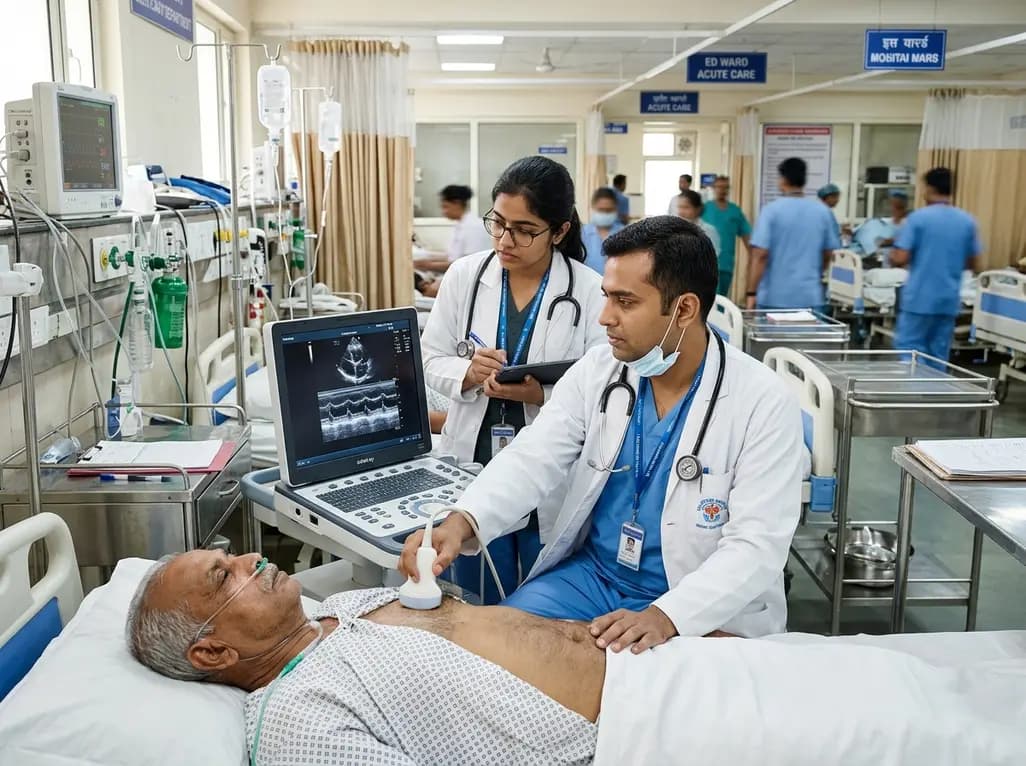
A simulation study evaluated emergency physicians performing EPSS and Teichholz methods for bedside LVEF estimation. While EPSS proved faster and more accurate for novices, hands-on training equalized skills across preserved EF, though EPSS showed significant error in severe ventricular dysfunction.
Today
A real-world cross-sectional study in Thailand reveals that a web-based bone health self-assessment tool effectively captured clinical risk profiles, prompting DXA recommendations in 37% of users—over half of whom were below standard screening ages due to non-age clinical vulnerabilities.
Today
A study of 955 patients reveals that HEMA screening misses 39% of (meth)acrylate allergies, including 88% of cases linked to diabetes devices. Dermatologists must implement exposure-tailored patch test panels to accurately diagnose cosmetic and medical adhesive contact dermatitis.
Today
