.webp&w=384&q=75)

Loading, please wait...
Loading, please wait...

Researchers recently investigated the relationship between Electroconvulsive Therapy and sleep architecture to understand how mood regulation improves. Major depressive disorder often reduces slow-wave activity (SWA) during non-rapid eye movement (NREM) sleep. Consequently, this longitudinal study used wireless EEG devices to track changes throughout the therapy course. The findings suggest a strong link between restorative sleep stages and clinical recovery.
The results showed a significant increase in the percentage of time spent in N3 sleep specifically among treatment responders. Furthermore, slow-wave activity (SWA) increased throughout the therapy course across all study participants. Notably, this rise in SWA negatively correlated with depression severity scores, indicating that higher EEG power in the 0.5-4 Hz range predicts lower symptom burden. Therefore, these physiological changes suggest that restorative sleep plays a pivotal role in the antidepressant effects of ECT.
Clinicians can use these objective findings to better understand the neuroplastic changes occurring during psychiatric interventions. Specifically, the data highlights that enhancing slow-wave activity might serve as a biomarker for successful treatment. Moreover, the use of wireless wearable devices simplifies longitudinal monitoring in a clinical setting compared to traditional polysomnography. Additionally, understanding these mechanisms helps in communicating the benefits of the therapy to patients and caregivers. However, further research is necessary to refine these markers for personalized treatment plans.
ECT specifically increases the duration of N3 sleep, which is the deepest and most restorative stage of sleep. This increase is particularly prominent in patients who respond well to the treatment course.
Research indicates that as slow-wave activity increases during a course of ECT, depression scores typically decrease. This negative correlation suggests that improved sleep microstructure is closely linked to mood recovery.
Yes, wireless devices like the Dreem headband allow for serial, at-home sleep EEG monitoring. This technology provides a feasible way to track longitudinal changes without the burden of a traditional sleep lab.
Disclaimer: This content is for informational and educational purposes only. It does not constitute medical advice or establish a doctor-patient relationship. Always seek the advice of a qualified healthcare provider for any questions regarding a medical condition. Refer to the latest local and national guidelines for clinical practice.
References
1. Kafashan MM et al. Electroconvulsive Therapy and the Longitudinal Modulation of Sleep Architecture. J ECT. 2026 Mar 27. doi: 10.1097/YCT.0000000000001265. PMID: 41893868.
2. Goder R et al. Sleep at baseline and after electroconvulsive therapy in patients with major depression. Psychiatry Res. 2016;246:441-446.
3. Farzan F et al. Electroconvulsive Therapy Modulates Resting-State EEG Oscillatory Pattern and Phase Synchronization in Nodes of the Default Mode Network. Front Psychiatry. 2019;9:753.

Read summarized clinical updates, watch expert medical content, and earn CME certifications right from your smartphone.
Open your smartphone camera to scan and install.





A new study shows that ECT increases N3 sleep and slow-wave activity, which correlates with reduced depression severity in patients....
6 months ago

Explore why official drug package inserts fail to reflect modern evidence for clozapine prescribing. Learn how legal standards of care, case law, slow titration, and vital adverse event monitoring empower clinicians to prioritize evidence-based medical practice over outdated manufacturer labeling.
Today
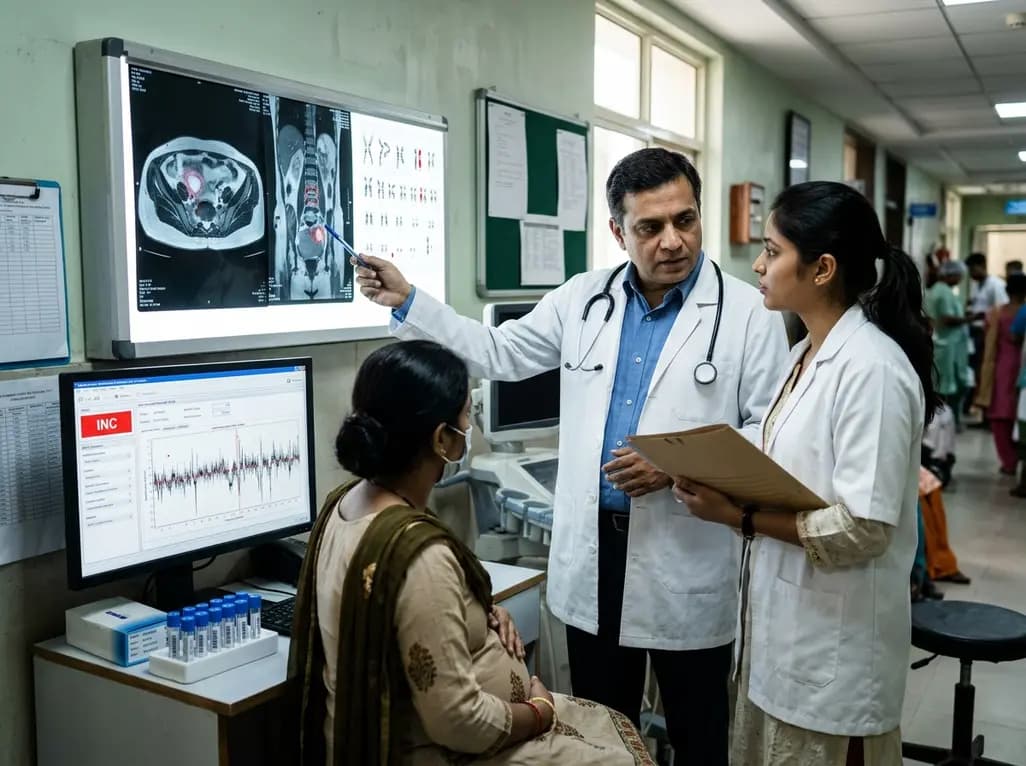
Occult maternal malignancy accounts for 3.82% of persistent unreportable NIPT results with genomic noise. Multiple chromosomal aberrations, notably on chromosome 18, warrant thorough oncological evaluation and whole-body MRI to ensure timely maternal diagnosis while preserving fetal care.
Today

This article reviews the forensic and clinical complexities of acute myocarditis arising on left ventricular hypertrophy in children, highlighting early diagnostic red flags and multidisciplinary postmortem autopsy protocols.
Today
A randomized controlled trial demonstrates that an eight-week dual-task training intervention significantly improves static and dynamic postural control over standard balance exercises in individuals with chronic ankle instability, addressing critical neurocognitive deficits during athletic and daily activities.
Today

A retrospective cohort study of 7,716 ICU patients from the MIMIC-IV database demonstrates that Gradient Boosting Decision Trees significantly outperform traditional SOFA scores in predicting in-hospital mortality among patients with sepsis and diabetes, with SHAP analysis providing clinical interpretability.
Today
