.webp&w=384&q=75)

Loading, please wait...
Loading, please wait...
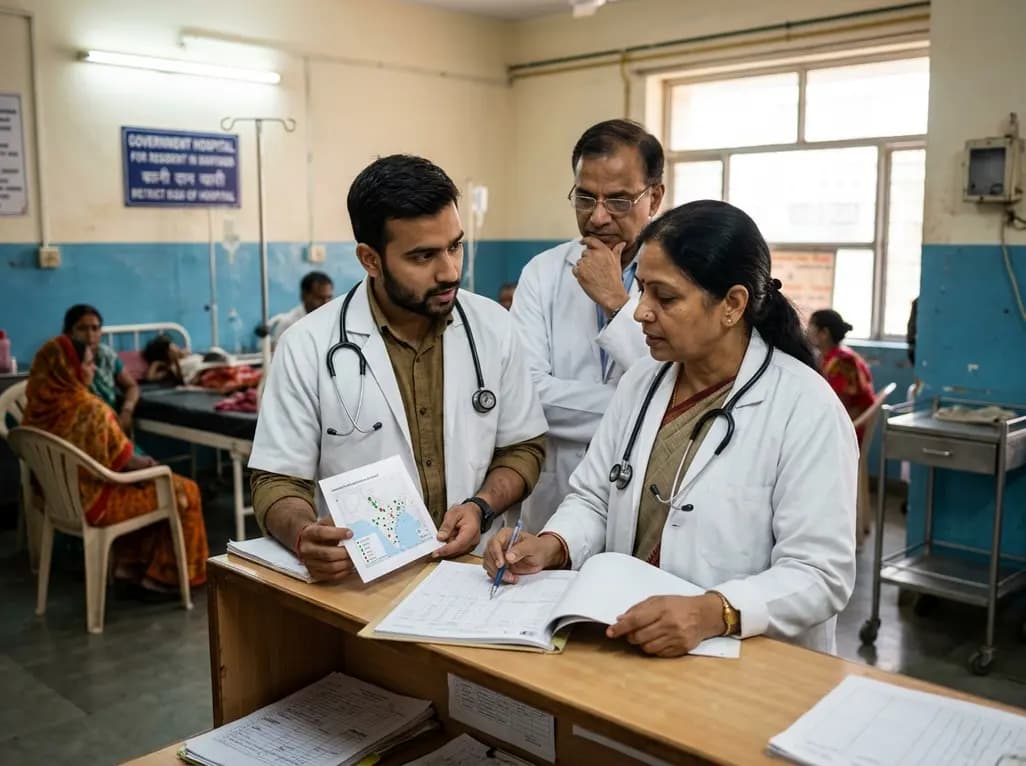
The recent Ebola outbreak developments across East and Central Africa highlight the complex reality of managing filovirus epidemics. The World Health Organization has confirmed that the Bundibugyo virus outbreak in Uganda is formally over. In contrast, health authorities in the Democratic Republic of Congo face a worsening humanitarian crisis. For medical professionals globally, including clinicians in India, these cross-border health emergencies emphasize the continuous need for rigorous viral surveillance. Healthcare providers must understand transmission patterns and maintain strict biosecurity protocols in high-volume triage settings. Rapid global travel connects distant epicenters to domestic healthcare facilities within hours.
Uganda achieved containment after the declaration of 20 total cases and two fatalities. Consequently, health authorities observed the mandatory 42-day surveillance window to confirm zero residual transmission chains. In stark contrast, the Democratic Republic of Congo continues to battle one of the most intense resurgences in regional history. Official government estimates confirm more than 5,600 cumulative cases alongside 2,700 recorded fatalities. Therefore, public health resources remain stretched across remote provinces. Although medical teams have slowed the rate of acceleration, international health officials caution that containment requires urgent interventions. Without robust financial backing and logistical stabilization, viral transmission will likely sustain across porous international borders.
The circulating pathogen in this regional event belongs to the Bundibugyo ebolavirus species. Genomic sequencing indicates that the pathogen has not demonstrated significant genetic mutations despite rapid community spread. This genomic stability provides valuable clinical reassurance regarding diagnostic reliability. Current reverse transcription polymerase chain reaction assays remain fully sensitive to the active viral strain. However, therapeutic interventions developed specifically for the Zaire ebolavirus species show limited cross-reactivity against Bundibugyo. Consequently, supportive intensive care remains the cornerstone of clinical management. Aggressive electrolyte repletion, invasive hemodynamic monitoring, and prompt treatment of co-infections determine survival outcomes in specialized isolation units.
Nosocomial amplification represents a persistent danger during any major viral hemorrhagic fever surge. Healthcare workers face significant exposure risks when managing undifferentiated febrile illnesses. Therefore, standardized personal protective equipment protocols must be enforced without compromise across all clinical encounters. Medical facilities must maintain strict contact and droplet isolation zones for suspected individuals. In addition, prompt isolation of febrile international travelers presenting with unexplained bleeding or acute malaise remains paramount. Proper donning and doffing techniques eliminate accidental self-contamination among nursing staff. Furthermore, environmental decontamination with hospital-grade sodium hypochlorite solutions ensures that viral viability on clinical surfaces is eliminated rapidly.
Early identification of filovirus infection presents notable diagnostic hurdles because initial symptoms closely mimic endemic tropical illnesses. Patients typically present with sudden onset high fever, severe myalgia, profound fatigue, and intense headache. Subsequently, gastrointestinal manifestations such as severe watery diarrhea and intractable vomiting develop rapidly. In severe cases, vascular endothelial damage causes widespread microvascular leakage and overt coagulopathy. Clinicians must distinguish these symptoms from severe malaria, dengue fever, and enteric bacteremia through early testing. Automated hematology analyzers frequently reveal marked leukopenia and significant thrombocytopenia. Therefore, physicians must obtain a detailed travel history from any patient presenting with acute febrile syndrome.
Controlling large-scale viral outbreaks requires sustained international collaboration and substantial financial resources. The WHO has reported an immediate $30 million funding shortfall for crucial logistical support in Central Africa. This financial deficit threatens personal protective equipment distribution and slows active contact tracing. For healthcare infrastructure in India, these global events serve as a critical reminder to bolster emergency preparedness. Port health organizations and tertiary emergency departments must maintain operational quarantine pathways. In addition, continuing medical education regarding viral hemorrhagic fevers ensures rapid frontline response capabilities. Regular drills and up-to-date isolation algorithms protect national health systems from sudden international contagion risks.
Q1: What are the primary transmission routes of the Bundibugyo Ebola virus?
Transmission occurs through direct contact with blood, secretions, organs, or other bodily fluids of infected persons or deceased patients. Additionally, indirect contact with contaminated surfaces, medical instruments, and clothing can spread the virus. Clinicians must maintain standard, contact, and droplet precautions whenever evaluating suspected individuals in isolation settings.
Q2: How does the Bundibugyo strain differ from the Zaire ebolavirus?
The Bundibugyo strain exhibits distinct antigenic structures and historically demonstrates lower case fatality rates compared to the Zaire species. However, monoclonal antibody treatments developed specifically for Zaire ebolavirus do not offer dependable cross-neutralization. Therefore, clinical care focuses on aggressive fluid hydration, hemodynamic support, and symptom management.
Q3: What initial protocols should Indian hospitals follow for suspected viral hemorrhagic fever?
Hospitals must immediately isolate the patient in a negative-pressure or dedicated private room with strict barrier nursing. Clinicians must notify local public health authorities and reference laboratories without delay. Diagnostic blood samples require secure, triple-layer packaging and designated biosafety handling to prevent any accidental occupational exposure.
Disclaimer: This content is for informational and educational purposes only. It does not constitute medical advice or replace professional judgment. Refer to the latest local and national guidelines for clinical practice.
References

Read summarized clinical updates, watch expert medical content, and earn CME certifications right from your smartphone.
Open your smartphone camera to scan and install.





The World Health Organization has officially declared the end of the Ebola outbreak in Uganda. Meanwhile, cases continue to escalate in the Democratic Republic of Congo, highlighting ongoing challenges in contact tracing, infection control, and surveillance across global healthcare settings.
last month

A nationwide English cohort study shows that interstitial lung diseases are no longer rare, with incidence jumping 30% and 200,000 active cases. This analysis highlights clinical implications for diagnosis, multi-disciplinary management, and global health priorities across respiratory and internal medicine.
Today
A nationwide South Korean study shows underreporting of smoking among women dropped from 57.4% to 36.4% between 2008 and 2021. However, over one-third of female smokers still conceal their habit, highlighting the critical role of cotinine verification in clinical risk assessment.
Today

PepsiCo and Monster Beverage have challenged the FSSAI ban on the energy drink label in Indian courts. While companies highlight supply disruptions, regulatory actions spotlight severe cardiovascular and metabolic risks associated with excessive caffeine, sugar, and taurine consumption, especially in adolescents.
Today

A new study evaluates the rheological stability of decellularized peripheral nerve matrix hydrogels under varied storage conditions. Findings show -80°C storage and freeze-drying preserve gelation kinetics and mechanical stiffness, offering key insights for shipping and translational clinical applications.
Today

A Bayesian multilevel meta-analysis reveals that aerobic training combined with moderate carbohydrate restriction modestly lowers HbA1c in type 2 diabetes. However, sparse data and very low certainty leave incremental benefits over exercise or diet alone unproven, highlighting the need for individualized care.
Yesterday
