

Loading, please wait...
Loading, please wait...
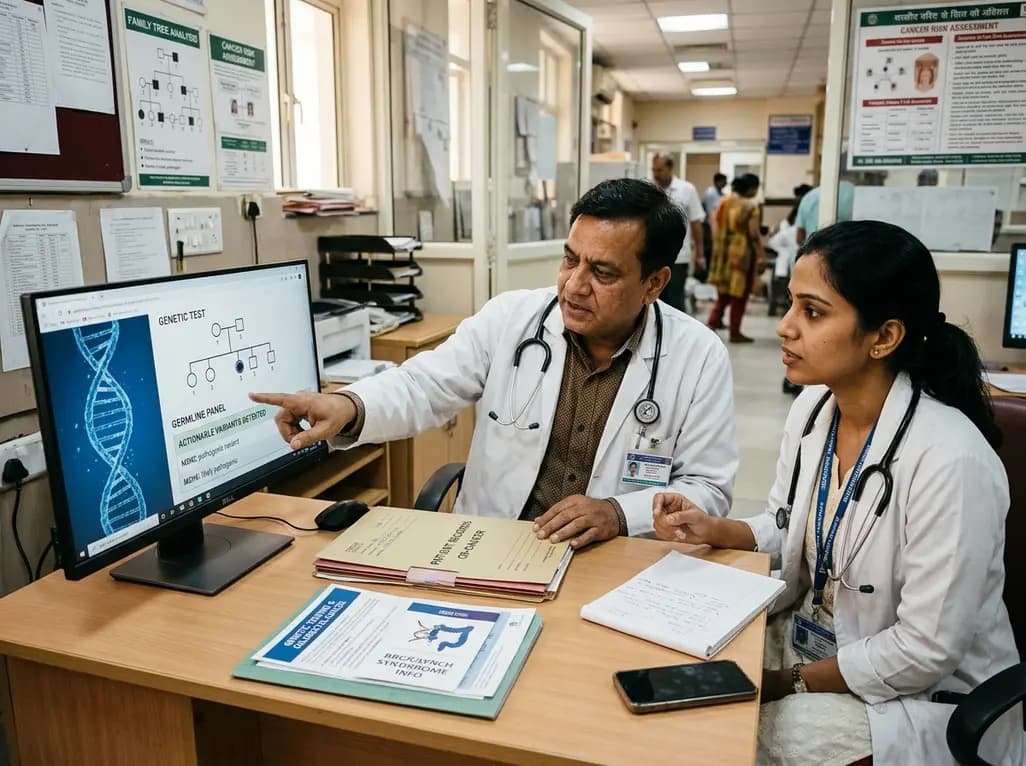
Clinicians across the globe are observing an alarming rise in early-onset colorectal cancer among younger adults. Historically, oncology teams regarded colorectal malignancies primarily as diseases of advancing age. However, recent epidemiological trends reveal that patients younger than fifty years represent a rapidly expanding demographic. Although universal screening protocols identify mismatch repair abnormalities, significant diagnostic blind spots persist in clinical pathways. Therefore, comprehensive risk stratification requires moving beyond basic tumor testing to identify underlying hereditary predispositions promptly.
Colorectal neoplasms diagnosed in individuals under fifty years present distinct histological and molecular profiles compared to late-onset cases. Furthermore, younger patients frequently present with advanced disease stages, primarily because clinicians initially misattribute symptoms such as rectal bleeding and abdominal pain to benign anorectal conditions. Consequently, delayed diagnoses remain common in this younger population. Emerging data demonstrate that hereditary cancer syndromes drive a substantial portion of these young presentations. In particular, hereditary nonpolyposis colorectal cancer and adenomatous polyposis conditions account for notable morbidity. However, a significant proportion of young patients harbor pathogenic germline mutations that lack typical familial clustering. In addition, environmental exposures, gut microbial dysbiosis, and Western dietary patterns accelerate oncogenesis in genetically susceptible hosts. Thus, modern surgical and medical oncology teams must adopt proactive diagnostic frameworks rather than reactive approaches. Clinicians can no longer depend solely on positive family history to suspect an inherited risk. Instead, early age at onset must serve as an independent red flag for genetic vulnerability.
Current institutional protocols heavily emphasize universal tumor screening through immunohistochemistry and microsatellite instability testing. These evaluations primarily identify mismatch repair deficiency, which serves as the classic hallmark of Lynch syndrome. However, recent observational studies demonstrate that over ninety percent of early-onset patients exhibit mismatch repair proficiency. In these mismatch repair proficient tumors, traditional immunohistochemistry staining reveals intact nuclear expression of MLH1, MSH2, MSH6, and PMS2 proteins. Consequently, clinicians frequently experience false reassurance when pathology reports indicate intact mismatch repair proteins. This false reassurance creates a critical blind spot in clinical practice. Recent multi-institutional evidence confirms that mismatch repair proficiency does not preclude dangerous germline alterations. Specifically, genomic sequencing reveals that over forty percent of tested young proficient patients carry clinically actionable pathogenic variants or variants of uncertain significance. In addition, these alterations often involve non-mismatch repair genes such as APC, MUTYH, BRCA1, BRCA2, and TP53. Therefore, normal immunohistochemical staining should never disqualify a young patient from undergoing comprehensive cancer genetic counseling.
Tumor tissue testing undeniably represents a major technological advance in oncology care. Nevertheless, relying entirely on immunohistochemistry creates substantial systemic vulnerabilities. While immunohistochemistry effectively identifies somatic or germline loss of mismatch repair proteins, it cannot detect non-Lynch hereditary cancer syndromes. For example, young individuals with familial adenomatous polyposis, MUTYH-associated polyposis, or Li-Fraumeni syndrome typically present with mismatch repair proficient malignancies. Consequently, an algorithm that triggers genetic counseling solely upon abnormal immunohistochemistry misses the vast majority of hereditary early-onset cases. Furthermore, safety-net university hospitals and resource-constrained settings face notable structural barriers that widen these diagnostic oversights. Although laboratory teams consistently execute tumor screening, the clinical handover from pathology to clinical genetics frequently breaks down. In addition, many institutions lack automated electronic alerts that trigger cancer genetic counseling referrals based on patient age alone. Thus, health systems must implement reflex referral models where age under fifty automatically initiates genetic counseling, irrespective of tumor immunohistochemical results.
Despite published clinical guidelines mandating germline evaluation for all young colorectal cancer patients, actual referral and attendance rates remain disappointingly low. Recent clinical studies indicate that barely two-thirds of eligible early-onset patients receive formal referrals for cancer genetic counseling. Moreover, only half of referred individuals successfully complete their genetic counseling appointments. Several systemic and patient-level barriers drive this persistent genetic counseling gap. In particular, logistical burdens, out-of-pocket genetic testing costs, and limited awareness impede patient participation. Additionally, marginalized populations and safety-net hospital patients encounter disproportionate scheduling conflicts, transportation hurdles, and language barriers. Telehealth platforms and integrated genetic counselor clinics provide promising solutions to overcome these obstacles. Furthermore, dedicated patient navigators can coordinate appointments, provide culturally sensitive pre-test education, and guide patients through insurance pre-authorization. When genetic counselors actively engage families, testing uptake increases significantly. Ultimately, closing the referral and attendance gap requires institutional commitment to structured clinical navigation pathways that support vulnerable young patients throughout their cancer journey.
Surgical oncologists occupy a pivotal vantage point in managing early-onset colorectal cancer. In early-stage malignancies, curative surgical resection often eliminates the necessity for adjuvant systemic chemotherapy. Consequently, the operating surgeon frequently serves as the sole physician overseeing the patient throughout operative care and subsequent surveillance. If surgeons fail to initiate cancer genetic counseling during the initial postoperative encounter, patients may never receive another opportunity for genetic evaluation. Therefore, surgical oncologists must embrace their responsibility as frontline genetic gatekeepers. Surgeons should routinely review familial pedigrees and order multigene germline testing panels for all patients presenting before age fifty. Furthermore, discovering a pathogenic germline mutation profoundly alters surgical decision-making. For instance, detecting a Lynch syndrome mutation may justify total abdominal colectomy with ileorectal anastomosis rather than segmental resection, mitigating high metachronous cancer risks. Thus, surgical teams cannot view genetic assessment as an optional retrospective luxury. Instead, proactive surgical referral for cancer genetic counseling protects patients, clarifies familial inheritance, and directly informs lifelong oncologic management.
Tumor immunohistochemistry primarily evaluates mismatch repair protein expression to detect potential Lynch syndrome. However, more than ninety percent of early-onset colorectal cancers demonstrate intact mismatch repair proteins. Despite this normal tumor phenotype, over forty percent of tested young patients harbor significant germline alterations in various cancer predisposition genes. Consequently, relying solely on tumor staining fails to identify hereditary syndromes, leaving young patients and their families without essential genetic risk assessments.
International oncology guidelines recommend cancer genetic counseling for all individuals diagnosed with colorectal carcinoma before fifty years of age, regardless of tumor immunohistochemistry. Additionally, clinicians should refer any patient presenting with mismatch repair deficiency, multiple primary colorectal lesions, or extensive polyposis. Patients with strong family histories of gastrointestinal or gynecological malignancies also require formal genetic evaluation. Prompt referral ensures accurate germline multi-gene panel testing and guides individualized surgical, therapeutic, and surveillance strategies.
Identifying actionable germline pathogenic variants substantially alters surgical planning. For instance, discovering a Lynch syndrome mutation prompts surgeons to consider extended subtotal colectomy rather than standard segmental resection. This aggressive approach dramatically reduces the risk of metachronous colon tumors. Furthermore, identifying specific hereditary mutations guides concurrent prophylactic interventions, such as hysterectomy and bilateral salpingo-oophorectomy in eligible post-reproductive females, while optimizing future endoscopic surveillance intervals for both the patient and at-risk blood relatives.
Disclaimer: This content is for informational and educational purposes only and should not be considered professional medical advice. Always seek the advice of a qualified healthcare provider with any questions you may have regarding a medical condition. Refer to the latest local and national guidelines for clinical practice.
References

Read summarized clinical updates, watch expert medical content, and earn CME certifications right from your smartphone.
Open your smartphone camera to scan and install.





Universal tumor screening often misses hereditary risk in early-onset colorectal cancer, as over 90% of young patients are MMR-proficient yet frequently carry actionable germline variants. Closing the genetic counseling gap is critical for oncologists and surgeons.
Today

A prospective study reveals that emotional exhaustion and cynicism are prevalent among peritoneal dialysis patients. High cynicism independently triples the risk of transfer to hemodialysis, emphasizing the urgent need for regular psychological screening and multidisciplinary support in nephrology practice.
Today

A preclinical study reveals that cinnamic acid counters D-galactose-induced premature ovarian failure in mice. By enhancing total antioxidant capacity and upregulating protective genes like Nrf2 and Foxo3a, cinnamic acid improved estrous cyclicity and follicular reserve, offering new insights into ovarian health.
Today
A study at the Abidjan Heart Institute evaluated hypertensive men with erectile dysfunction using penile pharmacologic Doppler ultrasound. Findings revealed that veno-occlusive dysfunction was the predominant vascular abnormality (55.9%), guiding tailored hemodynamic interventions.
Today

An 8-week functional restoration program provides sustained psychological benefits at six-month follow-up for workers' compensation patients. The multidisciplinary intervention significantly improved pain self-efficacy, reduced anxiety and depression, and progressively resolved chronic insomnia severity.
Today

India's food safety authority is taking aggressive action against major beverage companies for marketing high-caffeine products as energy drinks. This clinical analysis examines the cardiovascular complications, metabolic risks, and pediatric concerns behind the regulator's push for truthful beverage standards.
Today
