.webp&w=384&q=75)

Loading, please wait...
Loading, please wait...
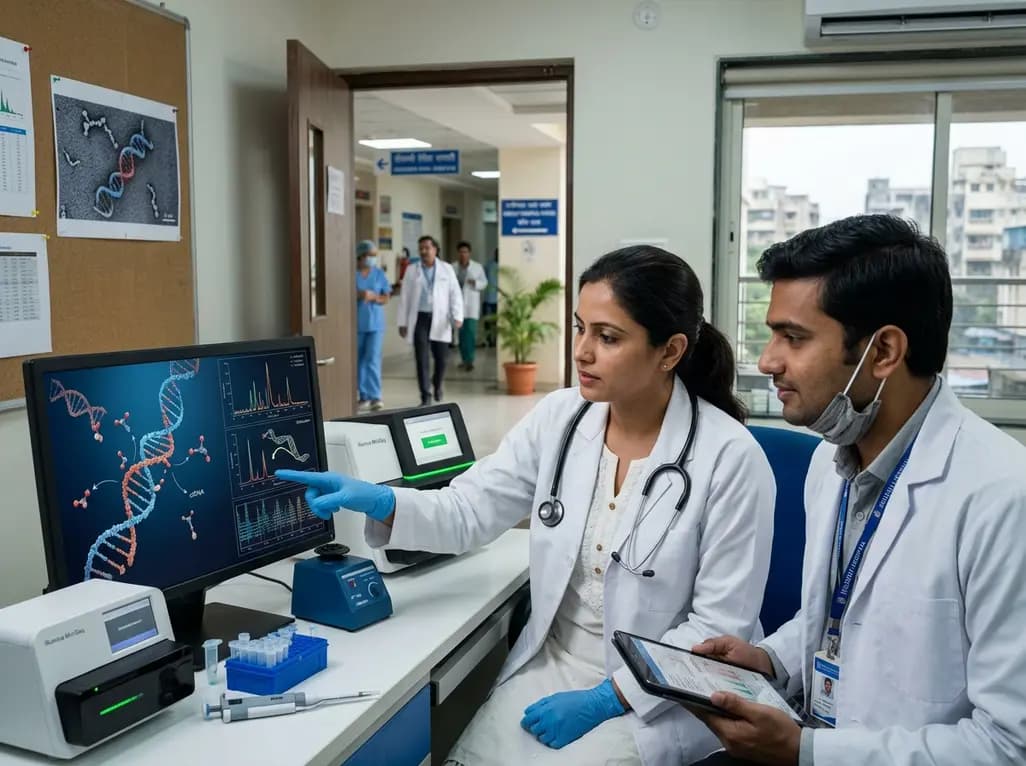
Early cancer diagnosis remains one of the most effective strategies to curb global oncological mortality. Liquid biopsy has rapidly emerged as a minimally invasive diagnostic paradigm, relying on circulating biomarkers to reflect real-time tumor dynamics. Among these biomarkers, circulating tumor DNA serves as an indispensable indicator of tumor burden, minimal residual disease, and emerging therapeutic resistance. However, traditional analytical platforms often struggle to quantify ultra-low concentrations of nucleic acids without cumbersome laboratory equipment. To address this diagnostic challenge, bioengineers have developed an innovative DNA lever nanomachine that couples catalytic hairpin assembly with mechanical torque amplification for ultra-sensitive ctDNA detection.
Circulating tumor DNA comprises fragmented nucleic acid strands that malignant cells shed into the vascular circulation. Consequently, profiling these circulating fragments provides a direct window into somatic alterations, clonal heterogeneity, and therapeutic response. Clinicians increasingly depend on these molecular signals to track therapy response and detect recurrence long before radiological evidence appears. Nevertheless, target sequences are present in trace amounts against a vast background of wild-type cell-free DNA. Conventional approaches such as digital droplet PCR and next-generation sequencing provide exceptional precision, yet they require expensive reagents and prolonged turnaround times. Therefore, researchers continuously seek robust, enzyme-free biosensing alternatives that combine cost-effectiveness with exquisite analytical sensitivity. Nanotechnology-based biosensors have stepped into this space, bridging the gap between benchtop molecular diagnostics and rapid point-of-care testing.
Catalytic hairpin assembly operates as an isothermal, enzyme-free amplification system that relies on programmed DNA strand-displacement reactions. In a resting biosensor environment, hairpin probes remain kinetically trapped in stable stem-loop conformations to prevent non-specific hybridization. When the target circulating tumor DNA strand enters the analytical mixture, it binds to the single-stranded toehold of the first hairpin. As a result, this initial hybridization unwinds the hairpin stem, exposing an encrypted single-stranded segment. This newly accessible domain rapidly hybridizes with a complementary second hairpin probe. Subsequently, this second interaction displaces the initiator target sequence, releasing it back into the solution to trigger subsequent amplification cascades. Through this cyclical recycling of the initiator, a single target molecule generates numerous duplex reaction products, driving robust fluorescence recovery.
While catalytic hairpin assembly provides substantial chemical amplification, integrating mechanical dynamics further enhances analytical responsiveness. The DNA lever nanomachine mimics a classical physical lever at the nanoscale to transduce molecular recognition events into measurable physical motion. Initially, the nanomachine exists in a tightly closed, fluorescence-quenched state where fluorophores and quenchers remain in close spatial proximity. Once the catalytic hairpin assembly cascade activates downstream signal transduction, the incoming reaction products exert mechanical force on the nanomachine assembly. Consequently, this target capture initiates a coordinated conformational shift across the structural framework. By strategically positioning the fulcrum along the DNA scaffold, investigators successfully created an effort-saving lever system. This mechanical configuration minimizes the required internal driving force by optimizing torque load values at the load terminal, thereby accelerating kinetic response rates.
Rigorous analytical characterization demonstrates that this biophysical sensing platform delivers remarkable analytical sensitivity and linear responsiveness. The DNA lever platform achieves a robust linear correlation across circulating tumor DNA concentrations extending from 1 pM to 100 nM. Furthermore, the calculated limit of detection reaches 0.776 pM, confirming its capacity to identify minute molecular quantities in biological matrices. Because the platform relies purely on isothermal nucleic acid hybridization kinetics and mechanical conformational movement, it eliminates the necessity for thermocyclers or specialized enzyme cocktails. In addition, the structural optimization of the torque load prevents premature background leakage, ensuring high signal-to-noise ratios. These analytical characteristics underscore the viability of the nanomachine for reliable biofluid analysis and translational oncology applications.
The translation of responsive DNA nanomachines into routine pathology workflows holds immense promise for personalized cancer care. Because liquid biopsies offer safe and repeatable sampling, clinicians can perform serial monitoring across dynamic treatment regimens without subjecting patients to invasive tissue biopsies. Furthermore, integrating effort-saving lever nanomachines into microfluidic cartridges could democratize decentralized point-of-care molecular diagnostics. In resource-constrained healthcare environments, low-cost and equipment-free biosensors can dramatically broaden access to early cancer detection programs. Future developmental iterations will likely focus on multi-target multiplexing, allowing simultaneous detection of diverse oncogenic driver mutations within a single patient specimen. As nanoengineering and molecular diagnostics continue to converge, these dynamic nanodevices will play a pivotal role in precision oncology.
The DNA lever nanomachine integrates enzyme-free catalytic hairpin assembly with mechanical torque amplification. By placing an effort-saving fulcrum along the DNA nanostructure, the platform minimizes the driving energy required for conformational switching. Consequently, it achieves a limit of detection down to 0.776 pM, ensuring rapid, cost-effective, and highly sensitive target quantification across a broad dynamic range without requiring expensive laboratory machinery.
Catalytic hairpin assembly relies entirely on programmed base-pairing thermodynamics and strand displacement kinetics. Metastable hairpin probes remain closed until the target nucleic acid binds to an exposed toehold region. This binding opens the stem and initiates cascade hybridization with secondary probes, displacing the original target sequence. The recycled target continually triggers new reactions, generating amplified optical signals without requiring enzymatic polymerases.
Liquid biopsy provides a minimally invasive, low-risk approach to profile tumor biomarkers directly from peripheral blood samples. Unlike invasive tissue biopsies that carry procedural risks and capture only localized snapshots, liquid biopsy enables longitudinal monitoring of treatment response, early detection of minimal residual disease, and comprehensive assessment of spatial and temporal tumor heterogeneity across multiple metastatic sites.
Disclaimer: This content is for informational and educational purposes only and does not constitute formal medical or diagnostic advice. Healthcare professionals should evaluate diagnostic modalities in conjunction with established clinical parameters. Refer to the latest local and national guidelines for clinical practice.
References
Wu SY et al. DNA Lever Nanomachine Based on CHA-Driven Conformational Transitions for the Detection of ctDNA. ACS Sens. 2026 Aug 19. doi: 10.1021/acssensors.6c02322. PMID: 42617136.
Lin L et al. A pH-stable dynamic DNA nanomachine with controllable conformational switching. Nanoscale Adv. 2026 Feb 25. doi: 10.1039/d5na01166c. PMID: 41799225.
El Aamri M et al. Recent Advances in Isothermal Amplification-Integrated Nanomaterial-Based Biosensing Platforms for Sensitive Detection of Cancer-Related Nucleic Acids. Anal Bioanal Chem. 2026; 418(14): 2115-2134.

Read summarized clinical updates, watch expert medical content, and earn CME certifications right from your smartphone.
Open your smartphone camera to scan and install.





Researchers have developed a novel DNA lever nanomachine driven by catalytic hairpin assembly for ultra-sensitive ctDNA detection. This mechanical amplification biosensor achieves sub-picomolar sensitivity, offering transformative potential for non-invasive liquid biopsy and cancer surveillance.
last month

Chronic eosinophilic pneumonia can present with atypical bronchoalveolar lavage findings and an organizing pneumonia pattern, necessitating surgical lung biopsy.
Today

Discover the crucial distinctions between mesonephric and mesonephric-like proliferations of the female genital tract. Learn the key histomorphologic, immunohistochemical, and molecular differences essential for accurate diagnosis and clinical management.
Today
Kikuchi-Fujimoto disease rarely presents with refractory shock and sinus bradycardia in children. This case report highlights life-threatening hemodynamic instability requiring intensive care, preserved cardiac contractility, and the critical diagnostic role of early excisional lymph node biopsy.
Today

A narrative review investigates whether the articularis genus muscle functions as an independent anatomical entity or blends with the vastus intermedius. We evaluate its morphology, role in retracting the suprapatellar bursa, and direct clinical significance in anterior knee pain and arthroplasty.
Today

A Bayesian multilevel meta-analysis reveals that aerobic training combined with moderate carbohydrate restriction modestly lowers HbA1c in type 2 diabetes. However, sparse data and very low certainty leave incremental benefits over exercise or diet alone unproven, highlighting the need for individualized care.
Today
