.webp&w=384&q=75)

Loading, please wait...
Loading, please wait...
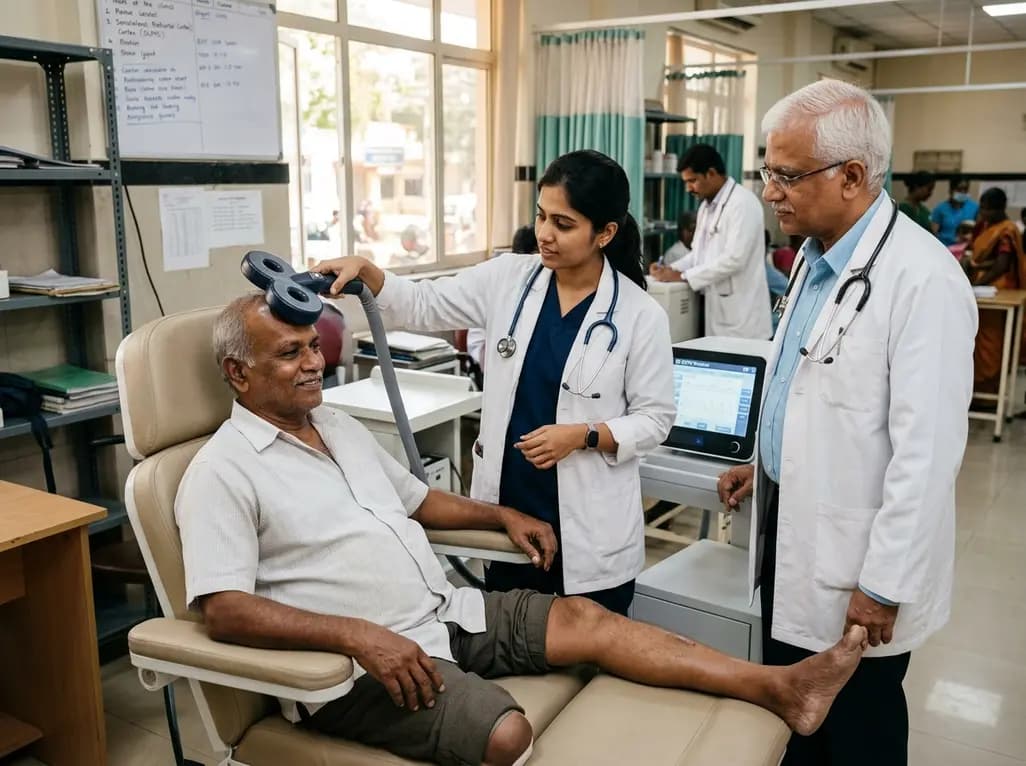
Phantom limb pain presents a debilitating neuropathic challenge for amputees worldwide, often remaining refractory to conventional pharmacological interventions. Emerging neurostimulation protocols, particularly phantom limb pain rTMS, provide clinicians with promising non-invasive modalities to restore maladaptive central circuits. When traumatic amputations sever peripheral nerves, the central nervous system undergoes maladaptive reorganizational shifts. Consequently, patients experience intense burning, throbbing, or shooting sensations in nonexistent limbs. These painful sensory aberrations frequently trigger severe psychological distress, including insomnia, anxiety, and major depression. Traditional analgesic regimens relying on opioids, anticonvulsants, and antidepressants rarely yield complete symptom control and often generate intolerable adverse effects. Therefore, interventional pain specialists and neurologists actively seek non-pharmacological alternatives that modulate underlying cortical mechanisms directly. Repetitive transcranial magnetic stimulation targeting top-down pain inhibitory networks offers a rational, mechanism-based therapeutic paradigm. Recent clinical trials underscore the capacity of targeted neuromodulation to alleviate both somatic and affective dimensions of post-amputation distress. By altering cortical excitability non-invasively, modern neurostimulation bridges the gap between basic neurobiology and bedside chronic pain rehabilitation.
Phantom limb pain affects up to eighty percent of individuals following traumatic limb loss or surgical amputation. Following peripheral nerve transection, sensory deafferentation disrupts normal ascending input into the primary somatosensory cortex and interconnected subcortical structures. Consequently, adjacent cortical representations expand into the denervated zone, creating distorted sensory mapping and hyperexcitable thalamocortical reverberations. This maladaptive plasticity generates persistent painful signals that feel entirely real to the patient. Furthermore, chronic central pain processing intimately intertwines with emotional and cognitive networks. As patients endure unrelenting phantom sensations, their nervous system develops central sensitization and defective descending pain inhibition. Consequently, patients frequently report debilitating sleep disruption, severe anxiety disorders, and treatment-resistant depressive states. These comorbidities amplify perceived pain severity, creating a self-reinforcing vicious cycle that devastates overall quality of life and vocational productivity. In resource-constrained healthcare settings, amputees often struggle with limited access to specialized multidisciplinary rehabilitation teams. Therefore, recognizing phantom limb pain as a profound brain disorder rather than a mere stump issue remains essential. Clinicians must deploy therapeutic strategies that address both cortical sensorimotor disorganization and associated psychological burdens simultaneously.
Historically, neurostimulation protocols for chronic pain targeted the primary motor cortex to facilitate descending inhibitory pathways. However, the dorsolateral prefrontal cortex (DLPFC) serves as an equally vital hub within the pain neuromatrix. The DLPFC actively orchestrates higher-order cognitive control, attention allocation, and affective appraisal of nociceptive inputs. Furthermore, it maintains dense reciprocal connections with the anterior cingulate cortex, insular cortex, and periaqueductal gray matter. When clinicians apply repetitive magnetic pulses over the DLPFC, they modulate these corticolimbic networks and enhance endogenous opioid release. Low-frequency stimulation can suppress hyperactive affective nodes, whereas high-frequency stimulation enhances frontostriatal connectivity and cognitive pain coping. Moreover, modulating prefrontal circuits directly mitigates the psychiatric comorbidities that amplify chronic neuropathic suffering. Patients undergoing DLPFC stimulation often demonstrate concurrent improvements in executive emotional regulation, mood stability, and sleep architecture. Thus, the prefrontal cortex represents an ideal therapeutic target because it simultaneously addresses sensory-discriminative and affective-motivational pain dimensions. By reorganizing disrupted functional connectivity, prefrontal neuromodulation restores top-down balance across distributed pain networks. Consequently, this non-invasive cortical approach provides comprehensive relief where peripheral or segmental interventions systematically fail.
Recent randomized controlled trials demonstrate that DLPFC-targeted rTMS provides robust, sustained analgesia in traumatic amputees suffering from chronic phantom pain. In a landmark pilot randomized trial, investigators randomized traumatic amputees into real or sham stimulation cohorts. The active treatment group received ten sessions of low-frequency repetitive transcranial magnetic stimulation applied over two consecutive weeks. Investigators positioned the electromagnetic coil over the DLPFC contralateral to the amputation site, delivering one-Hertz stimulation at ninety percent of the resting motor threshold. Meanwhile, the sham group received identical placement with a perpendicular coil orientation to prevent genuine cortical excitation. Clinicians evaluated pain severity using the Visual Analogue Scale alongside the Short-Form McGill Pain Questionnaire across multiple follow-up intervals extending to sixty days. The results demonstrated statistically and clinically significant reductions in phantom pain intensity immediately after the treatment cycle. Furthermore, these analgesic benefits persisted throughout the sixty-day observation period in the active cohort. Conversely, sham participants experienced minimal, transient changes in baseline discomfort. These compelling findings prove that focused prefrontal stimulation offers durable relief, establishing this technique as a viable adjunctive modality in neuropathic pain management.
Chronic phantom pain rarely occurs in psychological isolation, as persistent distress profoundly degrades mental health and daily function. The clinical trial evaluated these affective parameters systematically using validated psychometric instruments, including the Hamilton Anxiety Rating Scale and the Hamilton Depression Rating Scale. Additionally, researchers tracked functional recovery using the World Health Organization Quality of Life-BREF assessment tool. Notably, participants receiving active prefrontal stimulation demonstrated substantial reductions in anxiety scores and depressive symptoms compared to baseline measurements. These psychological improvements correlated closely with reductions in reported pain intensity, confirming the multidimensional efficacy of prefrontal cortical stimulation. Furthermore, patients reported meaningful enhancements across multiple quality-of-life domains, including physical health, psychological well-being, and social relationships. Because the DLPFC directly regulates mood and emotional distress, neuromodulation breaks the debilitating cycle linking chronic pain to psychological despair. Consequently, treated individuals regained personal autonomy, re-engaged in vocational activities, and reported superior sleep quality. These findings emphasize that modern neurorehabilitation must evaluate psychological outcomes alongside traditional sensory metrics.
In India, trauma from road traffic accidents, industrial mishaps, and agricultural injuries remains a leading cause of traumatic amputations. Unfortunately, many surviving amputees suffer in silence due to inadequate access to specialized pain clinics and advanced prosthetics. While pharmacological agents such as gabapentinoids, tricyclic antidepressants, and serotonin-norepinephrine reuptake inhibitors remain first-line options, their efficacy is often incomplete. Furthermore, high drug dosages trigger troublesome side effects, leading to poor patient compliance and persistent disability. Integrating non-invasive neuromodulation into tertiary medical centers and trauma rehabilitation units offers a transformative clinical pathway. Repetitive transcranial magnetic stimulation boasts an excellent safety profile, requiring no surgical implantation or systemic pharmaceutical loading. Indian clinicians can readily administer outpatient protocols over ten to fifteen daily sessions without interrupting functional physical therapy. Moreover, multidisciplinary rehabilitation programs can combine cortical stimulation with mirror therapy, virtual reality, and psychological counseling to maximize therapeutic gains. As tertiary healthcare institutions across India acquire advanced neurostimulation hardware, adopting standardized prefrontal protocols will enhance patient outcomes significantly and relieve the chronic socioeconomic burden associated with post-traumatic amputations.
Repetitive transcranial magnetic stimulation over the dorsolateral prefrontal cortex alters maladaptive brain connectivity. By stimulating prefrontal corticolimbic networks, rTMS enhances descending inhibitory pain pathways and promotes endogenous opioid release. Furthermore, this intervention reduces hyperexcitability in pain-processing circuits and modulates emotional appraisal areas. Consequently, patients experience substantial decreases in pain intensity alongside meaningful improvements in emotional coping and overall sleep quality.
Clinical protocols generally recommend ten to fifteen sessions delivered over two to three consecutive weeks. In clinical trials, applying daily low-frequency stimulation over the contralateral prefrontal cortex for ten sessions produced robust analgesic effects. Furthermore, these benefits persisted for up to sixty days after completing the stimulation protocol, making periodic maintenance sessions a feasible option for long-term neuropathic symptom control.
Repetitive transcranial magnetic stimulation is a non-invasive, highly tolerable outpatient procedure with minimal adverse effects. Patients occasionally report mild scalp discomfort, localized tingling, or transient tension headaches during active coil discharge. Serious complications such as seizures remain exceedingly rare when clinicians adhere strictly to standardized safety guidelines, exclusion criteria, and motor threshold dosing recommendations during daily stimulation sessions.
Disclaimer: This content is for informational and educational purposes only and should not be construed as formal medical advice or clinical guidelines. Healthcare professionals must exercise independent clinical judgment when diagnosing, managing, or treating individual patient conditions. Refer to the latest local and national guidelines for clinical practice.
References

Read summarized clinical updates, watch expert medical content, and earn CME certifications right from your smartphone.
Open your smartphone camera to scan and install.





A randomized controlled trial demonstrates that dorsolateral prefrontal cortex (DLPFC) targeted rTMS significantly reduces phantom limb pain while alleviating depression and anxiety in amputees, offering a safe, non-invasive neuromodulatory therapeutic option.
last month

PZL-26, a selective small-molecule inhibitor of LONP1, reveals essential roles of this mitochondrial protease in complex I biogenesis, translation, and oxidative phosphorylation. These findings provide critical mechanistic insights for developing targeted anticancer therapies against proteostasis-dependent tumors.
Today
A nationwide South Korean study shows underreporting of smoking among women dropped from 57.4% to 36.4% between 2008 and 2021. However, over one-third of female smokers still conceal their habit, highlighting the critical role of cotinine verification in clinical risk assessment.
Today

PepsiCo and Monster Beverage have challenged the FSSAI ban on the energy drink label in Indian courts. While companies highlight supply disruptions, regulatory actions spotlight severe cardiovascular and metabolic risks associated with excessive caffeine, sugar, and taurine consumption, especially in adolescents.
Today
A recent investigation analyzes whether cervical disc arthroplasty effectively restores or merely preserves physiological range of motion, providing critical biomechanical insights for treating hypomobile cervical segments.
Today

A Bayesian multilevel meta-analysis reveals that aerobic training combined with moderate carbohydrate restriction modestly lowers HbA1c in type 2 diabetes. However, sparse data and very low certainty leave incremental benefits over exercise or diet alone unproven, highlighting the need for individualized care.
Yesterday
