.webp&w=384&q=75)

Loading, please wait...
Loading, please wait...

In the modern landscape of chronic disease care, digital home spirometry management has emerged as a cornerstone for enhancing the monitoring of patients with bronchial asthma and chronic obstructive pulmonary disease (COPD). Chronic respiratory conditions place a significant burden on primary care systems globally. Consequently, there is an urgent need for tools that allow for more continuous data collection outside of the traditional clinic setting. Digital spirometers enable patients to track their lung function daily, providing primary care physicians with real-time insights into disease progression and treatment efficacy. This shift toward remote monitoring represents a paradigm change in respiratory medicine, potentially reducing the frequency of acute exacerbations and hospitalizations. However, the successful implementation of these technologies depends on a deep understanding of the factors that influence patient adherence and clinical quality. Therefore, analyzing the determinants of use is essential for refining digital health strategies in general practice.
Primary care physicians often face challenges in managing long-term respiratory health due to the intermittent nature of office visits. Digital home spirometry management bridges this gap by facilitating a proactive rather than reactive approach to care. By leveraging smartphone applications and connected devices, clinicians can detect subtle declines in lung function before the patient becomes symptomatic. This early warning system is particularly crucial for COPD patients, where delayed intervention can lead to permanent loss of lung function. Despite the promise of these technologies, their integration into daily practice is not without hurdles. Understanding the facilitators and barriers from both the patient and provider perspective is the first step toward creating a sustainable digital health ecosystem. This article explores recent findings regarding the process quality and determinants of home-based respiratory monitoring.
Identifying what motivates patients to engage with digital home spirometry management is critical for improving long-term health outcomes. Research indicates that a sense of obligation and the development of habituation are among the strongest drivers for consistent use. When patients feel that their data is being monitored by a healthcare professional, they are more likely to comply with daily measurement protocols. Furthermore, the visualization of disease progression through digital platforms provides immediate feedback, which significantly enhances a patient’s sense of self-efficacy. Seeing a graphical representation of their peak flow or FEV1 values helps patients understand the direct impact of their medications and lifestyle choices on their respiratory health. This visual evidence acts as a powerful motivational tool, transforming a clinical chore into a tangible part of their self-care routine.
Additionally, the regular contact with physicians facilitated by digital monitoring portals strengthens the patient-provider relationship. Patients often report that the ability to receive remote treatment adjustments gives them a greater sense of security. This integration into daily practice becomes smoother when the technology is perceived as a collaborative effort rather than an isolated task. For many, the ability to avoid frequent trips to the clinic while still receiving high-quality medical feedback is a major incentive. Consequently, facilitators such as ease of integration and perceived medical benefit play a pivotal role in the success of digital health interventions. By emphasizing these positive aspects, clinicians can encourage patients to take a more active role in managing their chronic conditions, leading to better adherence and overall clinical stability.
Despite the various benefits, several barriers can hinder the effective application of digital home spirometry management. From the patient perspective, a limited understanding of the disease itself can lead to a lack of motivation or incorrect usage of the device. Furthermore, physical symptoms such as dyspnea can make performing a forced expiratory maneuver daily feel overly strenuous. Technical requirements, including the need for stable internet connections and smartphone literacy, also present significant challenges, particularly for older populations who may not be as tech-savvy. If the software is clunky or the device is difficult to calibrate, patients are likely to abandon the technology quickly. Therefore, ensuring that digital tools are user-friendly and supported by robust technical assistance is vital for long-term engagement in a primary care setting.
Healthcare providers also face structural barriers that can limit the adoption of remote monitoring programs. Many general practitioners cite time-consuming procedures and the difficulty of clinical assessability as primary concerns. Reviewing high volumes of daily spirometry data requires significant administrative and clinical time, which is often not compensated in traditional fee-for-service models. Moreover, providers may worry about the reliability of home-collected data compared to tests performed under professional supervision. If the quality of the maneuvers is poor, the resulting data may be misleading, potentially leading to inappropriate treatment decisions. To overcome these barriers, systems must implement automated quality checks and provide clinicians with concise, actionable summaries of patient data. Only by addressing these provider-centric concerns can digital spirometry become a routine part of chronic respiratory management.
Understanding the predictors of adherence helps clinicians target digital home spirometry management interventions toward the patients most likely to benefit. Quantitative analysis reveals that the duration of the disease often acts as a negative predictor for the consistent use of home spirometers. Patients who have lived with asthma or COPD for many years may have established routines or may feel a sense of fatigue regarding intensive monitoring. Additionally, the perceived physical strain of the measurement process is a major deterrent. If a patient feels that taking a daily measurement is too strenuous, the likelihood of adherence drops significantly. This suggests that for more severe patients, less frequent or less demanding monitoring strategies might be more appropriate to maintain engagement without causing physical distress.
Another critical predictor is the patient’s lifestyle and mobility. Studies have shown that the inability to take measurements while away from home is a common reason for non-use. This highlights the need for truly portable and discreet digital spirometry solutions that can fit seamlessly into a patient’s active life. Furthermore, demographic factors such as age and gender play a role, with younger patients often showing more comfort with the digital interface but potentially less consistency in daily habits compared to older adults. By identifying these predictors, primary care teams can customize their education and support strategies. For instance, providing extra training to long-term patients or simplifying the measurement requirements for those with high symptom burdens can significantly improve the overall success rate of the monitoring program.
Effective digital home spirometry management must be accompanied by adherence to broader quality indicators in chronic care. Surprisingly, even within monitored study groups, rates of disease-specific training and influenza vaccination often remain lower than guideline recommendations. Approximately only one-third of patients in some studies report receiving formal education on their specific respiratory condition. This gap is concerning because digital tools are most effective when the patient possesses the underlying knowledge to interpret the data and understand the goals of treatment. Without adequate education, a digital spirometer is merely a gadget rather than a clinical tool. Therefore, primary care practices must integrate digital monitoring with robust educational programs that cover inhaler technique, trigger avoidance, and action plans for exacerbations.
Moreover, process quality parameters such as annual influenza and pneumococcal vaccinations are essential components of comprehensive respiratory care that should not be overlooked. The integration of digital portals provides an excellent opportunity for clinics to track these quality markers more effectively. For example, the same platform used for spirometry data could also send automated reminders for vaccinations or scheduled follow-up visits. Improving these process quality rates is vital for reducing the overall morbidity associated with asthma and COPD. Clinicians should use the data gathered through digital home spirometry not just for medication titration, but as a holistic view of the patient’s adherence to the entire care plan. By aligning digital health use with established clinical guidelines, providers can ensure a more standardized and effective approach to chronic disease management.
The implementation of digital home spirometry management holds immense potential for the Indian healthcare context, where the prevalence of chronic respiratory diseases is high and access to specialists can be limited. In rural and semi-urban areas, general practitioners often serve as the primary point of contact for millions of patients with asthma and COPD. Telemedicine and digital monitoring can bridge the geographical divide, allowing for expert-level management at the primary care level. However, for this to be successful in India, issues such as device affordability and multilingual support in apps must be addressed. Integrating these digital tools with the Ayushman Bharat Digital Mission (ABDM) could facilitate a more seamless flow of health data between patients, primary care clinics, and tertiary centers, ensuring continuity of care across the healthcare spectrum.
Ultimately, the transition to digital respiratory care requires a multi-faceted approach involving technology developers, healthcare providers, and policymakers. Digital home spirometry management is not just about the hardware; it is about the entire ecosystem of support, education, and clinical follow-up that surrounds it. As the technology continues to evolve, we can expect to see more integrated AI features that assist in the interpretation of spirometry curves, reducing the burden on busy general practitioners. Furthermore, focusing on patient-centered design will help overcome the barriers of strenuousness and technical complexity. By fostering a culture of digital literacy and proactive management, India can significantly improve the quality of life for its respiratory patients, setting a benchmark for digital health in resource-limited settings.
Digital home spirometry management allows patients to perform daily lung function tests, such as FEV1 and peak flow measurements, from their own homes. These devices often sync with a smartphone app that tracks trends over time. When a significant drop in lung function is detected, even before the patient feels severely breathless, the system can alert both the patient and their physician. This early detection enables timely adjustments in medication, such as increasing bronchodilator use or starting corticosteroids, which can prevent a full-blown exacerbation and the need for emergency hospitalization.
Elderly patients may face challenges related to digital literacy, such as navigating smartphone applications or troubleshooting Bluetooth connectivity issues between the spirometer and the phone. Additionally, the physical requirement of performing a forced expiratory maneuver can be difficult for patients with frailty or severe dyspnea. To support these patients, it is essential to provide simplified user interfaces, large-font displays, and hands-on training sessions in the clinic. Involving family members or caregivers in the digital home spirometry management process can also significantly improve adherence and technical success for the elderly population.
Education is the foundation of digital home spirometry management because it empowers patients to understand the 'why' behind the numbers. Without a proper understanding of their condition, patients may view daily testing as a repetitive task without clinical value. Education should include how to correctly perform the maneuver, how to interpret their daily results, and how to follow a personalized action plan based on those results. When patients understand how their lung function correlates with their symptoms and treatment, they are more likely to remain adherent and take proactive steps in their own care.
Disclaimer: This content is for informational and educational purposes only and does not constitute medical advice. It is not intended to be a substitute for professional medical advice, diagnosis, or treatment. Always seek the advice of your physician or other qualified health provider with any questions you may have regarding a medical condition. Refer to the latest local and national guidelines for clinical practice.
References
Cummerow J et al. Determinants of digital home spirometer use and quality parameters in management of patients with chronic obstructive respiratory disease and asthma in general practice: a mixed methods study. BMC Health Serv Res. 2026 Jun 30. doi: 10.1186/s12913-026-15048-2. PMID: 42374472.
Global Initiative for Chronic Obstructive Lung Disease (GOLD). Global Strategy for the Diagnosis, Management, and Prevention of Chronic Obstructive Pulmonary Disease (2024 Report). Available at: https://goldcopd.org.
NICE Guidance. Digital technologies for applying algorithms to spirometry to support asthma and COPD diagnosis in primary care and community diagnostic centres: early-use assessment. Published April 2, 2026. Available at: https://www.nice.org.uk/guidance/dg60.
Srivastava S et al. Feasibility of tele-follow-up of chronic respiratory disease patients in a resource-limited setting of northern India. Indian J Med Res. 2021;154(5):734-740.

Read summarized clinical updates, watch expert medical content, and earn CME certifications right from your smartphone.
Open your smartphone camera to scan and install.





A mixed-methods study evaluates the use of digital home spirometers in primary care for chronic respiratory disease. While these tools enhance self-efficacy and control, significant barriers like technical requirements and time constraints remain. Improving disease education and vaccination rates is vital.
3 months ago

Explore why official drug package inserts fail to reflect modern evidence for clozapine prescribing. Learn how legal standards of care, case law, slow titration, and vital adverse event monitoring empower clinicians to prioritize evidence-based medical practice over outdated manufacturer labeling.
Today
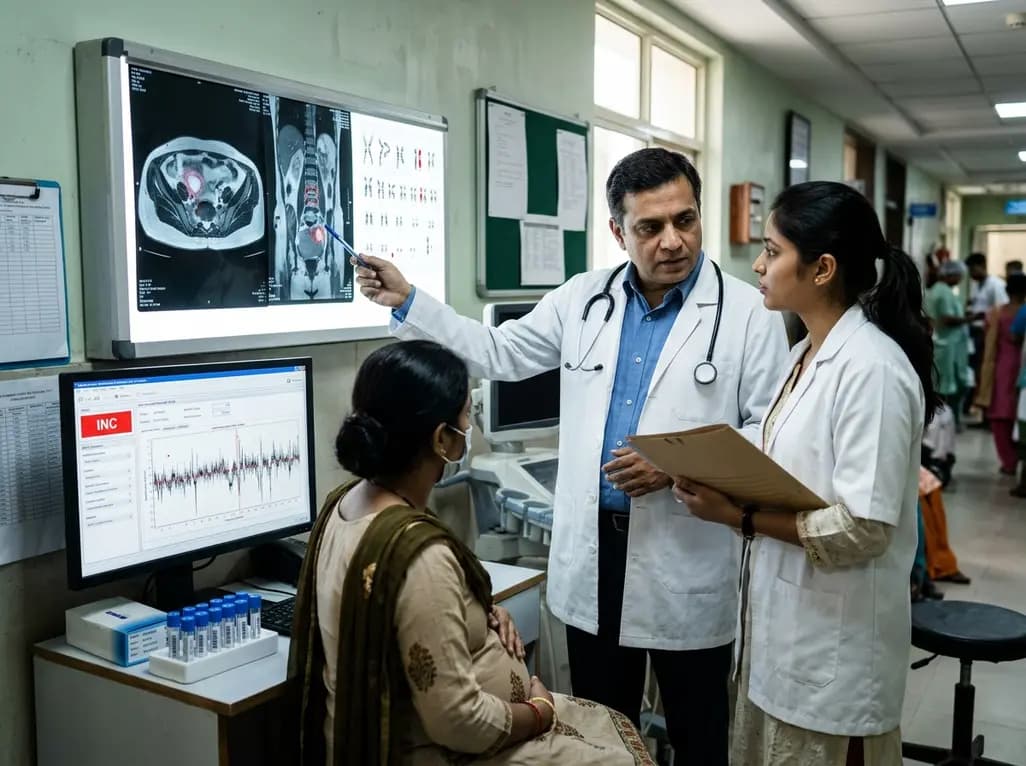
Occult maternal malignancy accounts for 3.82% of persistent unreportable NIPT results with genomic noise. Multiple chromosomal aberrations, notably on chromosome 18, warrant thorough oncological evaluation and whole-body MRI to ensure timely maternal diagnosis while preserving fetal care.
Today

This article reviews the forensic and clinical complexities of acute myocarditis arising on left ventricular hypertrophy in children, highlighting early diagnostic red flags and multidisciplinary postmortem autopsy protocols.
Today
A randomized controlled trial demonstrates that an eight-week dual-task training intervention significantly improves static and dynamic postural control over standard balance exercises in individuals with chronic ankle instability, addressing critical neurocognitive deficits during athletic and daily activities.
Today

A retrospective cohort study of 7,716 ICU patients from the MIMIC-IV database demonstrates that Gradient Boosting Decision Trees significantly outperform traditional SOFA scores in predicting in-hospital mortality among patients with sepsis and diabetes, with SHAP analysis providing clinical interpretability.
Today
