

Loading, please wait...
Loading, please wait...
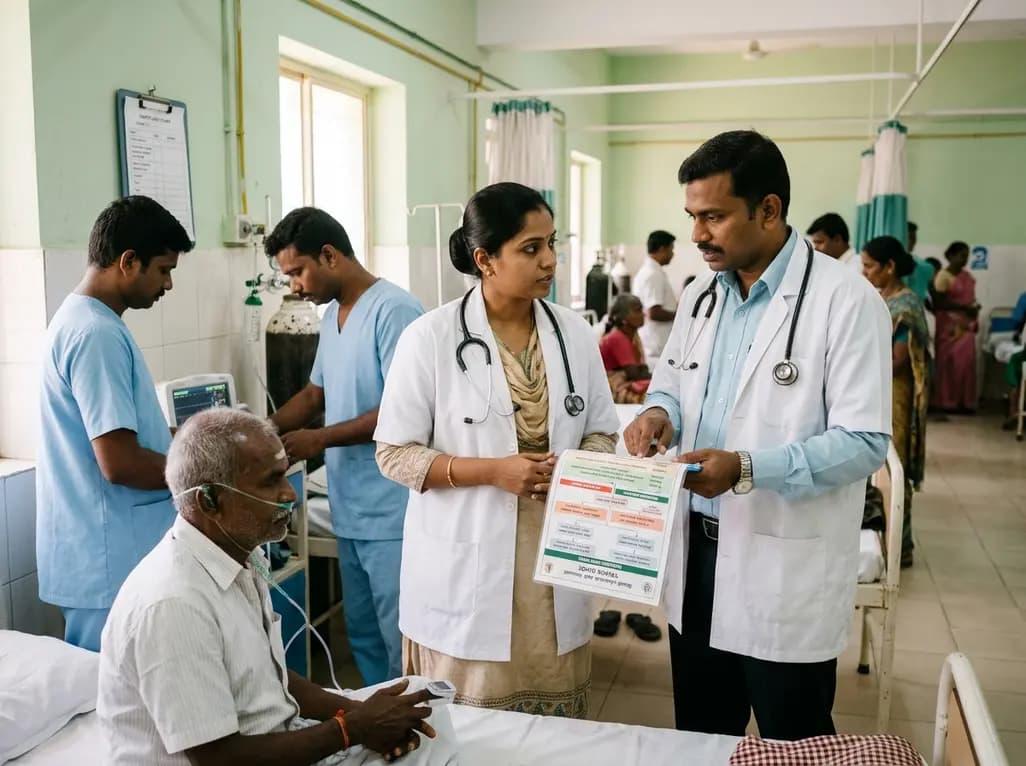
Tuberculosis remains a critical clinical challenge across India, causing substantial early mortality among vulnerable individuals. To counter this burden, public health leaders developed an evidence-based approach known as differentiated TB care. Recent data from Tamil Nadu highlights how prioritizing severe cases at diagnosis transforms patient survival. Specifically, the state implemented the Tamil Nadu Kasanoi Erappila Thittam to eliminate preventable deaths across public facilities. Consequently, health authorities achieved a dramatic drop in mortality among newly diagnosed patients. This initiative demonstrates how structured triaging saves lives in high-burden settings.
Launched in April 2022, the Tamil Nadu Kasanoi Erappila Thittam established India's first statewide differentiated TB care programme. The comprehensive initiative covered all adult patients aged 15 years and older diagnosed with drug-sensitive tuberculosis. Tamil Nadu diagnoses roughly 60,000 adults with drug-sensitive disease annually across public healthcare facilities. Historically, early mortality occurred because severely ill patients received standard outpatient treatment rather than immediate clinical stabilization. Therefore, the program redesigned the care cascade to identify critical individuals on day one. Clinicians and primary health teams immediately direct high-risk patients toward specialized inpatient treatment. Furthermore, the Indian Council of Medical Research National Institute of Epidemiology collaborated with the State TB Cell to construct an evaluation framework. This structure tracks input indicators, referral completion, inpatient care quality, and longitudinal survival rates. Consequently, health authorities created an accountable system that bridges outpatient discovery and hospital-based management. By streamlining this pathway, providers prevented critical treatment delays that often lead to early deaths. Overall, the program demonstrates how organized triaging protects vulnerable patients during initial antimicrobial therapy.
Effective triaging requires swift clinical decisions that frontline medical personnel can perform without specialized diagnostic technology. Accordingly, the initiative evaluates each newly diagnosed adult using five straightforward bedside indicators. Clinicians examine body mass index, bilateral pedal oedema, resting respiratory rate, peripheral oxygen saturation, and the ability to stand unassisted. Each of these parameters directly reflects physiological reserve and acute cardiorespiratory compromise. For instance, extreme wasting with a very low body mass index indicates critical metabolic exhaustion. Similarly, bilateral pedal oedema points toward severe hypoalbuminemia or advanced systemic malnutrition. Elevated respiratory rates and low oxygen saturation flag immediate pulmonary insufficiency. In addition, an inability to stand unassisted reliably identifies severe neuromuscular weakness and extreme frailty. Previously, ICMR-NIE developed an algorithmic mortality prediction tool using these identical five physical parameters. Healthcare workers can quickly assess these vital signs in primary health centres and rural dispensaries. As a result, staff triage high-risk individuals immediately without awaiting advanced laboratory or imaging panels. Consequently, clinicians can implement targeted supportive therapy within hours of initial presentation.
Translating a screening protocol into measurable mortality reduction required sustained operational persistence across districts. The researchers observed that minimizing leakage along the referral cascade demanded nearly two years of continuous field reinforcement. However, once medical centres refined referral workflows and inpatient standards, clinical outcomes improved markedly. Between July 2024 and December 2025, statewide cohorts experienced sustained reductions in overall tuberculosis mortality. Specifically, the baseline death rate fell from 6.3 percent to 3.9 percent among patients diagnosed in late 2024. This change represented a remarkable 38 percent decrease in mortality. Even more impressive, cohorts diagnosed between July and September 2025 recorded a 56 percent mortality drop, reaching 2.8 percent. Statistical analyses, including interrupted time series modeling, confirmed these improvements after adjusting for potential confounding variables and secular trends. Furthermore, the intervention reduced both early deaths occurring within two months and overall deaths evaluated at one year. Consequently, these data provide robust real-world evidence that prompt hospitalization halts rapid clinical deterioration in high-risk patients. Clinicians can conclude that routine triaging delivers substantial therapeutic value when backed by dependable hospital admission pathways.
Despite achieving remarkable inpatient success, the statewide initiative identified significant operational bottlenecks during subsequent patient monitoring. Notably, systematic clinical tracking at the two-month mark remained below 35 percent across all observed quarters. Health workers encountered severe logistical obstacles when attempting to monitor recovering patients after hospital discharge. This limitation emerged despite Tamil Nadu possessing one of the most robust public health networks in India. Therefore, program managers must recognize the distinct operational boundaries of routine outpatient follow-up. Community health staff frequently juggle heavy immunization duties, outbreak responses, and chronic disease surveillance programs. Consequently, mandating repeated post-discharge clinical evaluations placed an unmanageable burden on field staff. Clinicians must realize that acute hospital stabilization serves as the primary driver of mortality prevention. In contrast, extensive follow-up protocols often fail without dedicated transitional care coordinators. Health planners should avoid establishing unrealistic reporting mandates that strain grassroots healthcare personnel. Instead, public health systems must focus available manpower on initial triage accuracy and acute inpatient quality. Addressing these structural constraints ensures that care cascades remain sustainable without burning out public health workers.
The evaluation published in BMJ Global Health provides three indispensable lessons for clinicians and health policymakers. First, differentiated care initiatives require sustained implementation over multiple years before producing substantial population-level survival improvements. Healthcare leaders should not expect instant statistical transformations immediately following program launch. Second, risk stratification must rely strictly on simple bedside clinical markers rather than sophisticated laboratory diagnostics. Frontline doctors can rapidly evaluate nutrition, vital signs, and physical frailty in resource-limited peripheral facilities. Hence, this operational simplicity prevents diagnostic delays and ensures immediate referral for inpatient stabilization. Third, health systems must design public health protocols around realistic field capabilities rather than theoretical ideals. For example, demanding mandatory post-discharge clinical assessments across vast rural populations may prove unfeasible and counterproductive. Instead, high-burden Indian states should replicate this pragmatic triage model to optimize bed utilization and clinical workflows. Ultimately, the Tamil Nadu model demonstrates that clinical triaging, paired with dependable inpatient care, systematically prevents premature tuberculosis mortality. Adopting these evidence-based strategies will advance national efforts to eliminate preventable respiratory infections.
Q1: What is the primary objective of differentiated TB care under the TNKET initiative?
The primary objective is to eliminate preventable tuberculosis deaths by identifying severely ill patients at the time of diagnosis. Frontline healthcare workers screen patients using five simple bedside clinical indicators to detect severe undernutrition, respiratory insufficiency, and functional debilitation. Patients identified as high-risk receive prompt referral and prioritized inpatient hospital admission, ensuring timely clinical stabilization before severe complications cause early mortality.
Q2: Which clinical parameters are used to triage patients under this program?
Clinicians assess five straightforward parameters at diagnosis: body mass index, bilateral pedal oedema, respiratory rate, oxygen saturation, and the ability to stand unassisted. These non-invasive clinical markers evaluate metabolic reserve, severe wasting, pulmonary compromise, and physical frailty. Frontline workers can measure these vital parameters quickly in primary care settings without requiring specialized imaging or sophisticated laboratory testing.
Q3: Why did post-discharge follow-up rates remain low despite program success?
Post-discharge tracking at two months remained below 35 percent due to logistical constraints within routine public health operations. Grassroots health workers manage multiple national health priorities, making scheduled field tracking challenging to sustain at scale. Researchers concluded that while acute inpatient stabilization successfully drives mortality reduction, mandatory repeated follow-up assessments may be unfeasible in resource-constrained public health settings.
Disclaimer: This content is for informational and educational purposes only. It does not constitute medical advice or replace professional judgment. Refer to the latest local and national guidelines for clinical practice.
References

Read summarized clinical updates, watch expert medical content, and earn CME certifications right from your smartphone.
Open your smartphone camera to scan and install.





Tamil Nadu Kasanoi Erappila Thittam (TNKET) achieved up to a 56% drop in tuberculosis mortality by triaging adult patients with five bedside parameters at diagnosis. Published in BMJ Global Health, the ICMR-NIE evaluation demonstrates how acute inpatient admission prevents early deaths across public health systems.
Today

Assam reduced maternal sepsis deaths from 21% to 8% through rigorous infection prevention protocols and digital monitoring. Explore the clinical strategies, sterilization quality checks, early recognition pathways, and antimicrobial stewardship lessons essential for obstetric teams across India.
Today

A real-world cohort study of 6,537 patients from the FOUNTAIN platform demonstrates that initiating finerenone significantly reduces albuminuria by 40.7% with minimal eGFR decline and manageable hyperkalemia risk, confirming its practical effectiveness and safety in diabetic kidney disease.
Today

Adding a 12-week tele-supervised resistance band exercise program to intra-articular hyaluronic acid injections significantly improves physical function, chair stands, and mobility in knee osteoarthritis, despite showing no additive reduction in baseline pain scores.
Today
A secondary analysis of the OMDOT-1 trial highlights how tirzepatide and semaglutide uniquely reshape gut microbial diversity and metabolic pathways in type 2 diabetes, providing new insights into incretin-mediated metabolic regulation.
Today
