

Loading, please wait...
Loading, please wait...

Treatment-resistant schizophrenia presents a persistent therapeutic challenge for psychiatrists and neurosurgeons worldwide. Approximately 20% to 30% of individuals diagnosed with schizophrenia do not achieve symptom resolution despite adequate trials of multiple second-generation antipsychotic agents. Consequently, clinicians turn to clozapine as the gold standard pharmacological intervention for refractory disease. Unfortunately, a substantial cohort exhibits an inadequate response even to clozapine, culminating in clozapine-resistant schizophrenia. Individuals with this condition face severe functional disability, prolonged hospitalization, and significant cognitive and affective impairment. Because further pharmacological escalation rarely yields meaningful recovery, functional neurosurgery has emerged as an investigational alternative. Specifically, deep brain stimulation delivers adjustable electrical pulses directly to dysfunctional neural circuits. By modulating pathological cortico-striato-limbic loops, neuromodulation seeks to alleviate refractory psychotic pathology. A landmark systematic review prospectively registered in PROSPERO has synthesized clinical outcomes and stereotactic technical considerations across global studies. Although still experimental, deep brain stimulation represents an evolving paradigm for intractable psychiatric illness.
Neuroimaging and translational neurobiology indicate that schizophrenia arises from distributed circuit dysfunction rather than a single focal lesion. Therefore, stereotactic neurosurgeons have explored several distinct anatomical nodes within the cortico-striato-limbic network. The prospective systematic review analyzed seven clinical investigations encompassing 21 patients. Among these interventions, the nucleus accumbens served as the primary target in 11 patients. Surgeons selected the nucleus accumbens because it acts as a critical limbic-motor interface that regulates dopaminergic gating, reward valuation, and salience attribution. In addition, the subgenual cingulate cortex and subgenual anterior cingulate cortex were targeted in four and three patients, respectively. These prefrontal regions regulate affective integration and emotional processing, which frequently malfunction in severe schizophrenia. Other explored targets include the lateral habenula in two cases and the substantia nigra pars reticulata in one patient. Because each target influences distinct subcomponents of the broader cortico-striato-thalamo-cortical circuit, target selection remains a foundational decision during pre-surgical planning.
Assessing therapeutic efficacy requires rigorous psychometric evaluation using standardized instruments such as the Positive and Negative Syndrome Scale. Across the synthesized study population, investigators documented a preliminary therapeutic signal, particularly among patients receiving stimulation of the nucleus accumbens. However, observed clinical improvements varied considerably between individuals. Reported reductions in total Positive and Negative Syndrome Scale scores ranged from 11% to 85.7%. This wide variance highlights significant inter-individual heterogeneity in baseline neuroanatomy, underlying circuit pathology, and chronicity. Several patients experienced substantial relief from treatment-refractory auditory hallucinations and persecutory delusions. Furthermore, certain cohorts exhibited modest gains in negative symptoms and overall psychosocial functioning. Nevertheless, other participants derived only marginal clinical benefit from chronic stimulation. Because all included investigations relied on open-label designs lacking sham-controlled crossover phases, placebo effects and observer bias cannot be ruled out. Consequently, clinicians must interpret these promising yet preliminary findings with prudent therapeutic caution.
Achieving optimal neurosurgical outcomes requires meticulous stereotactic trajectory planning and precise lead positioning. In the systematic review, all surgical procedures utilized conventional cylindrical quadripolar or octapolar leads connected to implantable pulse generators. Furthermore, every analyzed case employed continuous open-loop stimulation protocols. Clinicians adjusted voltage, frequency, and pulse width empirically according to postoperative symptom responses and emergent adverse effects. However, current clinical literature exhibits substantial technical heterogeneity regarding stereotactic localization methods and target verification. While some surgical teams relied exclusively on frame-based stereotaxy with structural magnetic resonance imaging, others incorporated microelectrode recordings to confirm physiological borders. Importantly, none of the earlier cohorts utilized directional steering leads or advanced volumetric lead reconstruction software. Modern directional leads permit horizontal current shaping, which minimizes unintended spread into adjacent internal capsule fibers. Therefore, future protocols must standardize neuroimaging acquisition, trajectory modeling, and stereotactic coordinate reporting to ensure reproducible clinical outcomes across global neurosurgical centers.
Invasive neuromodulation entails recognized surgical and hardware-related risks that require careful disclosure during ethical informed consent. In the analyzed review of 21 patients, surgical complications occurred in 3 individuals, representing an overall complication rate of 14.2%. Specifically, reported adverse events included hardware infection and intracranial hemorrhage. Intracranial hemorrhage remains the most feared technical complication in stereotactic surgery, although its incidence mirrors rates seen in movement disorder surgery. Furthermore, hardware infection necessitated surgical debridement or complete device explantation in affected individuals. In addition to hardware complications, electrical stimulation can occasionally induce transient psychiatric symptoms, such as acute hypomania, heightened anxiety, or insomnia. These stimulation-induced side effects resolved promptly following non-invasive parameter reprogramming. Because patients with severe schizophrenia may exhibit impaired cognitive insight, multidisciplinary teams must ensure robust postoperative wound surveillance. Close collaboration between psychiatrists, neurosurgeons, and dedicated caregivers is critical to identify early infectious signs and safeguard patient well-being.
Although initial clinical signals appear promising, deep brain stimulation remains strictly an investigational modality for refractory psychiatric disorders. Small sample sizes, lack of standardized control groups, and surgical heterogeneity currently limit broad clinical adoption. To overcome these limitations, future research initiatives must implement rigorous double-blind, randomized, sham-controlled trial designs. Moreover, investigators should leverage patient-specific tractography and normative connectome mapping to personalize anatomical targeting. By analyzing structural and functional connectivity profiles, surgical teams can optimize electric field distributions within symptom-specific white matter bundles. Additionally, developing closed-loop adaptive neuromodulation systems represents a transformative clinical frontier. Such advanced devices record local field potentials or cortical electrophysiological biomarkers to deliver stimulation only during impending symptom exacerbations. Finally, prospective multicenter registries with standardized reporting guidelines will be essential to establish durable long-term safety, cognitive stability, and ethical legitimacy for this emergent neurosurgical intervention.
Deep brain stimulation delivers adjustable electrical impulses directly into dysfunctional neural circuits, specifically cortico-striato-limbic loops. By altering abnormal neural signaling, this intervention aims to restore functional network balance and alleviate persistent positive, negative, and affective symptoms in individuals who fail to respond to standard antipsychotic medications and clozapine.
The nucleus accumbens represents the most frequently investigated and promising anatomical target in current literature. Because the nucleus accumbens acts as a vital limbic-motor interface regulating dopamine transmission and salience processing, its modulation has produced substantial reductions in refractory psychotic symptoms among carefully selected patients.
Surgical risks include device-related infections, wound erosion, hardware malfunction, and intracranial hemorrhage, occurring in approximately 14% of reviewed cases. Additionally, non-optimal electrical stimulation can induce reversible side effects, including transient anxiety, agitation, or sleep disturbances, which clinicians generally manage by reprogramming pulse parameters.
Disclaimer: This content is for informational and educational purposes only. It should not be used as a substitute for professional medical advice, diagnosis, or treatment. Always seek the advice of your physician or other qualified healthcare provider with any questions you may have regarding a medical condition. Refer to the latest local and national guidelines for clinical practice.
References
Armando AR et al. Deep brain stimulation for clozapine-resistant schizophrenia: a systematic review of target-specific outcomes and stereotactic technical considerations. Neurosurg Rev. 2026 May 02. doi: 10.1007/s10143-026-04296-9. PMID: 42067731.
Corripio I, Roldan A, Sarró S, et al. Deep brain stimulation in treatment resistant schizophrenia: a randomized pilot trial. Schizophr Res. 2020;222:316-324.
Saadon JR, Wang C, Razzaq B, et al. Deep brain stimulation for treatment-resistant schizophrenia: a systematic review. J Schizophr Res. 2022;8(1):1043.

Read summarized clinical updates, watch expert medical content, and earn CME certifications right from your smartphone.
Open your smartphone camera to scan and install.





A systematic review evaluates deep brain stimulation for clozapine-resistant schizophrenia across 21 patients, analyzing clinical efficacy, stereotactic targets like the nucleus accumbens, hardware parameters, and neurosurgical complications.
Today

The Food Safety and Standards Authority of India has issued an urgent advisory against food business operators violating mandatory labelling standards for nutraceuticals and botanicals. Regulators prohibited therapeutic claims while mandating clear advisory warnings to prevent patient toxicity and medical misuse.
Today

Biotechnology researchers in India are developing an automated liquid biopsy platform to detect cervical malignancy from blood samples. Supported by the MAHA MedTech Mission, this initiative applies nanopore sequencing and piRNA biomarker detection to eliminate invasive speculum exams and expand rural screening.
Today

A clinical study evaluated Ring Fit Adventure in adults with chronic conditions, revealing that exergaming achieves moderate-to-vigorous exercise intensity while maintaining hemodynamic stability, high enjoyment, and zero adverse events.
Today

A retrospective cohort study reveals that selecting the touched vertebra as the lowest instrumented vertebra in thoracic adolescent idiopathic scoliosis yields a 20.8% distal add-on rate, driven by remnant motion segments and axial rotational discrepancies.
Today
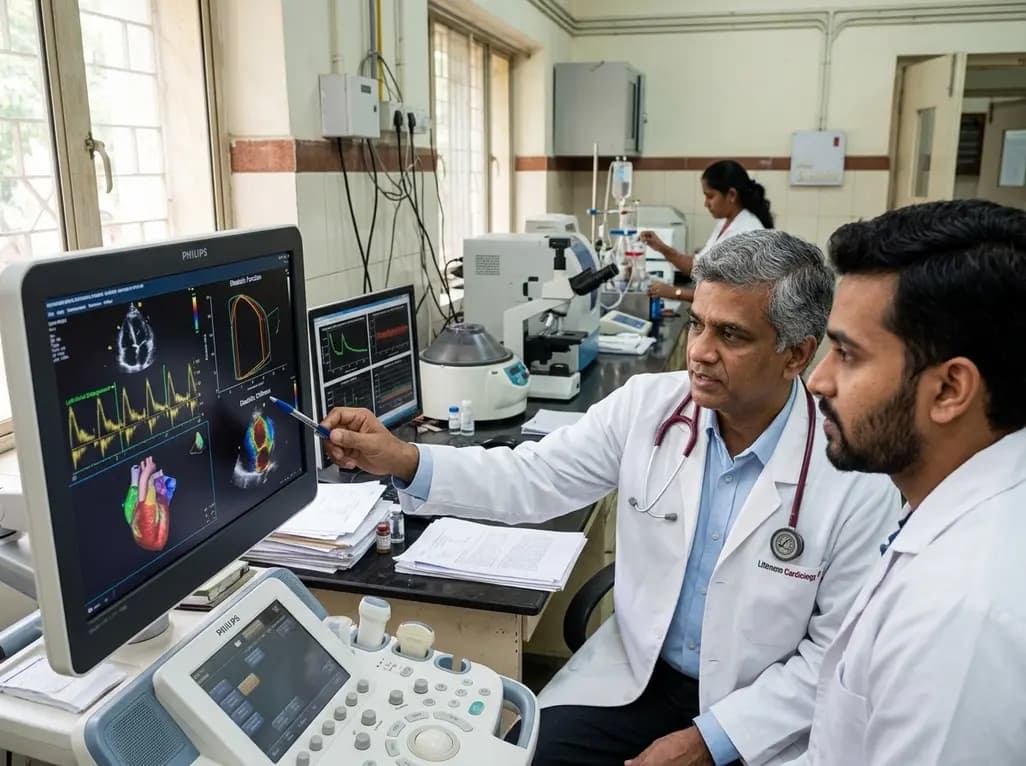
A study evaluates a cardiometabolic HFpEF model combining metabolic stress with chronic mineralocorticoid excess. The findings reveal profound diastolic stiffness, endothelial dysfunction, and pulmonary hypertension, illuminating key pathophysiological mechanisms for targeted cardiopulmonary therapies.
Today
