.webp&w=384&q=75)

Loading, please wait...
Loading, please wait...
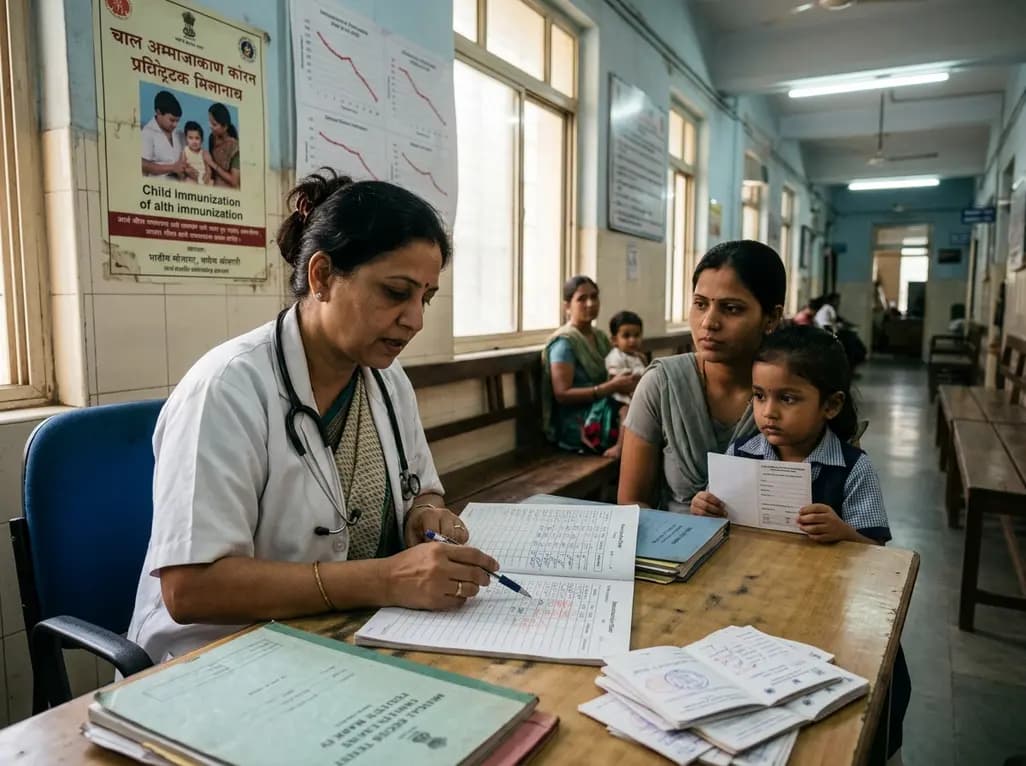
Maintaining high school vaccination rates remains a cornerstone of global disease prevention and community health. However, recent surveillance data reveals an alarming downward trend in pediatric immunization coverage alongside an unprecedented rise in nonmedical exemptions. Public health authorities report that coverage for key childhood antigens has dropped beneath critical herd immunity thresholds. Consequently, clusters of susceptible children are accumulating in academic and community environments. For clinicians and pediatric healthcare providers worldwide, understanding these shifts is essential to anticipate disease resurgence, counter vaccine hesitancy, and safeguard vulnerable pediatric populations against preventable mortality.
Recent epidemiological reports demonstrate that national school vaccination rates among kindergarteners have experienced a multiyear decline. Specifically, coverage for the two-dose measles, mumps, and rubella series has dropped to 92.4 percent. This marks a concerning retreat from the historical 95 percent benchmark established before recent global disruptions. Similar declines affect coverage for poliovirus, diphtheria, tetanus, acellular pertussis, and varicella formulations. Meanwhile, hepatitis B birth-dose coverage has remained relatively stable, but delayed schedules threaten downstream protection.
Simultaneously, the proportion of students entering kindergarten with documented vaccine exemptions has escalated to a historic high of 4.2 percent. This translates to an estimated 155,000 children entering educational settings without mandatory disease protection. Exemption rates increased across 41 geographic jurisdictions, highlighting a broad cultural and operational challenge rather than isolated regional pockets. Importantly, medical exemptions remained constant at approximately 0.2 percent over the past decade. Therefore, this dramatic surge stems almost exclusively from philosophical and religious objections rather than genuine clinical contraindications.
Herd immunity functions by establishing a high density of immune individuals within a shared environment. This barrier prevents pathogenic transmission and shields individuals who cannot achieve immunization due to primary immunodeficiencies or oncologic therapies. For highly transmissible viral pathogens such as measles, the basic reproduction number necessitates a strict 95 percent community vaccination threshold. When local coverage falls below this critical level, secondary attack rates escalate rapidly upon viral introduction.
Furthermore, unvaccinated children are rarely distributed evenly across general populations. Instead, nonmedical exemptions aggregate in distinct geographic clusters, private schools, and localized community networks. Consequently, localized coverage in specific educational institutions frequently falls well below 85 percent. These localized pockets act as disease amplifiers, enabling rapid pathogen propagation during an exposure event. As a result, educational institutions transform from protected spaces into incubators for widespread outbreaks. This dynamic explains why measles transmissions now exhibit explosive localized clusters despite national averages remaining above 90 percent.
Multiple intersecting factors contribute to the ongoing erosion of childhood immunization metrics. Primarily, widespread misinformation across digital platforms has undermined public trust in regulatory bodies and established scientific consensus. Non-evidence-based claims advocating for fragmented or delayed vaccination schedules have gained substantial traction among hesitant caregivers. In addition, mixed messaging from prominent public figures and administrative instability have heightened parental confusion regarding standard immunization schedules.
Consequently, many parents perceive routine immunizations as optional lifestyle choices rather than vital preventive medicine. This skepticism is exacerbated by administrative barriers that make obtaining nonmedical exemptions remarkably straightforward in specific jurisdictions. In regions with permissive opt-out procedures, exemption rates have climbed as high as 17.5 percent. Conversely, states with strict mandate enforcement maintain exemption rates below 0.5 percent. Therefore, public policy and administrative design play decisive roles in shaping parental compliance and community disease vulnerability.
The clinical repercussions of falling immunization coverage are already manifest across acute pediatric care settings. Measles represents the most immediate threat, with reported clinical cases reaching levels unseen in decades. The pathogen causes acute respiratory distress, severe keratoconjunctivitis, and profound transient immunosuppression. Furthermore, severe complications such as acute encephalitis, secondary bacterial pneumonia, and subacute sclerosing panencephalitis present devastating clinical outcomes for pediatric patients.
In addition to measles, waning coverage exposes communities to the re-emergence of pertussis and varicella. Pertussis causes severe paroxysmal coughing spasms, apnea, and pulmonary hypertension in young infants who have not completed their primary series. Similarly, varicella infections carry risks of secondary invasive streptococcal superinfections, cerebellar ataxia, and hemorrhagic complications. Clinicians must therefore maintain heightened clinical suspicion when evaluating febrile pediatric illnesses presenting with atypical rashes or persistent respiratory symptoms.
Healthcare providers remain the most trusted source of health guidance for hesitant caregivers. Clinicians should adopt a presumptive rather than participatory communication approach during routine wellness visits. For instance, stating that a child is due for specific routine vaccines reinforces vaccination as the standard standard of care. If parents express hesitation, practitioners should utilize motivational interviewing techniques to explore underlying concerns without immediate confrontation.
Moreover, physicians must clearly articulate the rigorous safety profiles and robust immunological benefits of combination vaccines. Countering misinformation requires validating parental protective instincts while presenting unambiguous scientific evidence regarding the dangers of natural infection. Clinical teams must also eliminate structural barriers within the practice environment. Implementing standing orders, offering flexible walk-in immunization hours, and utilizing electronic reminder systems significantly improve series completion rates. Through empathetic and persistent engagement, clinicians can effectively guide hesitant families toward evidence-based protection.
While current data highlights specific national vulnerabilities, the challenge of vaccine hesitancy is inherently global. Countries worldwide face complex operational hurdles, including supply chain disruptions, administrative burdens, and coordinated anti-vaccine sentiment across digital platforms. In resource-limited and densely populated regions, any degradation in immunization coverage can precipitate catastrophic disease outbreaks due to high population contact rates.
Consequently, healthcare systems globally must fortify routine immunization monitoring frameworks and public health communication infrastructure. Regulatory authorities and professional societies must maintain clear, unified, and evidence-based guidance. Cross-border sharing of epidemiological surveillance enables early outbreak identification and rapid containment strategies. Ultimately, sustaining universal pediatric vaccine access and high coverage remains an imperative public health mandate that transcends regional boundaries.
Q1: Why is a 95 percent vaccination rate considered the critical benchmark for herd immunity?
A 95 percent coverage threshold is essential for highly contagious pathogens like measles, which has a basic reproduction number of 12 to 18. This coverage level ensures that an infected person rarely encounters a susceptible contact. Consequently, chains of viral transmission are rapidly broken, effectively protecting immunocompromised individuals who cannot receive routine live vaccines.
Q2: What is the clinical difference between medical and nonmedical vaccine exemptions?
Medical exemptions are granted for legitimate clinical contraindications, such as severe anaphylaxis to vaccine ingredients or profound primary immunodeficiency. These rates remain stable at roughly 0.2 percent. In contrast, nonmedical exemptions arise from philosophical, personal, or religious beliefs. The recent surge in total exemptions is driven almost entirely by nonmedical opt-outs rather than true clinical contraindications.
Q3: How should clinicians respond to parental requests for spaced-out vaccine schedules?
Clinicians should explain that standard schedules are rigorously tested for safety, tolerability, and optimal immune response. Spacing out vaccines unnecessarily leaves children susceptible to preventable diseases for extended periods without reducing adverse events. Providers should listen empathetically, address specific misconceptions, and strongly recommend adherence to established evidence-based pediatric vaccination guidelines.
Disclaimer: This content is for informational and educational purposes only. It does not constitute medical advice or replace professional judgment. Refer to the latest local and national guidelines for clinical practice.
References

Read summarized clinical updates, watch expert medical content, and earn CME certifications right from your smartphone.
Open your smartphone camera to scan and install.





Kindergarten vaccination coverage has dropped significantly across multiple regions, accompanied by an unprecedented surge in nonmedical exemptions. This comprehensive clinical analysis explores the causes of declining immunization, the erosion of herd immunity thresholds, and physician strategies to rebuild trust.
last month

A nationwide English cohort study shows that interstitial lung diseases are no longer rare, with incidence jumping 30% and 200,000 active cases. This analysis highlights clinical implications for diagnosis, multi-disciplinary management, and global health priorities across respiratory and internal medicine.
Today

A nationwide South Korean study shows underreporting of smoking among women dropped from 57.4% to 36.4% between 2008 and 2021. However, over one-third of female smokers still conceal their habit, highlighting the critical role of cotinine verification in clinical risk assessment.
Today

PepsiCo and Monster Beverage have challenged the FSSAI ban on the energy drink label in Indian courts. While companies highlight supply disruptions, regulatory actions spotlight severe cardiovascular and metabolic risks associated with excessive caffeine, sugar, and taurine consumption, especially in adolescents.
Today

A new study evaluates the rheological stability of decellularized peripheral nerve matrix hydrogels under varied storage conditions. Findings show -80°C storage and freeze-drying preserve gelation kinetics and mechanical stiffness, offering key insights for shipping and translational clinical applications.
Today

A qualitative meta-synthesis highlights the complex interplay between gender dysphoria, minority stress, and eating disorders in transgender and gender-diverse individuals. Clinicians must recognize these distinct drivers to offer supportive, gender-affirming, and interdisciplinary eating disorder care.
Today
