.webp&w=384&q=75)

Loading, please wait...
Loading, please wait...
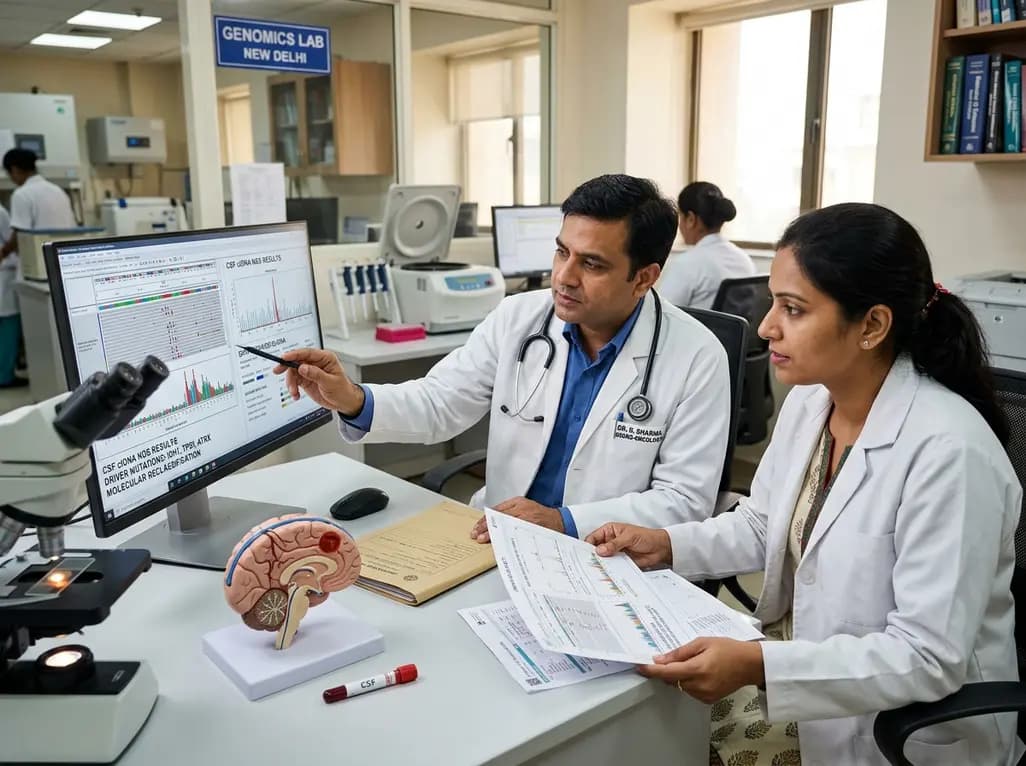
Diffuse gliomas present persistent diagnostic and therapeutic challenges for neuro-oncologists and neurosurgeons. Historically, definitive histopathological and molecular characterization has demanded invasive stereotactic brain biopsies or open craniotomies. However, advanced CSF ctDNA analysis is rapidly emerging as a transformative liquid biopsy strategy that provides comprehensive genomic profiling. By capturing tumor-derived circulating cell-free DNA directly from cerebrospinal fluid, clinicians can overcome anatomical risks and spatial sampling limitations inherent in traditional tissue acquisition.
Modern neuro-oncology relies heavily on molecular diagnostics to direct clinical care. Following recent World Health Organization classification updates, accurate tumor diagnosis requires identifying specific genomic markers, including IDH mutations, TERT promoter changes, and histone alterations. Unfortunately, obtaining adequate surgical tissue remains hazardous for patients with deep-seated, eloquent, or brainstem tumors. In addition, serial tissue biopsies to track tumor evolution impose unacceptable neurological morbidity.
Consequently, liquid biopsy approaches have attracted intense scientific focus. While peripheral blood ctDNA analysis performs well in systemic malignancies, it consistently falters in primary central nervous system neoplasms. The blood-brain barrier severely restricts the egress of tumor-derived fragments into the systemic circulation, yielding plasma detection rates below twenty percent. In contrast, cerebrospinal fluid directly bathes the intracranial parenchyma and ventricular compartments. Therefore, cerebrospinal fluid harbors significantly higher concentrations of intact tumor-derived DNA fragments. As a result, liquid biopsy utilizing spinal fluid provides a sensitive window into glioma biology, creating valuable opportunities for noninvasive longitudinal monitoring and therapeutic adaptation.
A pivotal multicenter clinical investigation by Arjuna and colleagues evaluated the diagnostic yield of cerebrospinal fluid liquid biopsy across forty-three patients with diffuse gliomas. The investigators extracted cell-free DNA from cerebrospinal fluid samples ranging between 0.4 and 5.0 milliliters. Subsequently, they profiled the extracted material using an extensive next-generation sequencing panel interrogating six hundred cancer-associated genes. This rigorous approach enabled simultaneous evaluation of single nucleotide variants, copy number alterations, structural frameshifts, and oncogenic fusions.
Importantly, total cell-free DNA concentrations demonstrated substantial physiological variability, spanning from 0.09 to 60 nanograms per microliter. Despite these variable yields, the sequencing assay successfully identified pathogenic mutations in sixty percent of all patient samples. Among positive cases, single nucleotide variants appeared in forty-four percent of patients, whereas copy number alterations emerged in twenty-five percent. Furthermore, structural frameshifts occurred in nearly nineteen percent of cohorts, and gene fusions accounted for over two percent. Notably, eighty-eight percent of mutation-negative samples had suboptimal initial DNA input below thirty nanograms. This observation clearly demonstrates that analytical sensitivity depends directly on pre-analytical sample volume and input adequacy.
The clinical impact of cerebrospinal fluid genomic profiling extends far beyond mere detection. Crucially, the assay identified hallmark driver mutations across distinct glioma subtypes. The sequencing detected IDH1 mutations in fifty percent of IDH-mutant gliomas, alongside TERT promoter mutations and EGFR amplifications across representative glioblastoma cases. In pediatric high-grade gliomas, the platform demonstrated exceptional diagnostic accuracy by identifying pathognomonic H3-3A alterations in every evaluated pediatric subject.
Remarkably, these genetic findings directly altered patient care. By integrating CSF genomic markers with neuroimaging and clinical parameters, investigators successfully reclassified three patients according to updated World Health Organization diagnostic criteria. For instance, detecting decisive molecular signatures converted ambiguous radiological findings into definitive integrated diagnoses. This reclassification prevented unnecessary secondary invasive surgical procedures and guided targeted therapeutic regimens. Moreover, researchers observed a statistically significant correlation between ctDNA detection rates and distinct radiological imaging features, such as contrast enhancement and proximity to ventricular spaces. Tumors abutting cerebrospinal fluid pathways shed greater amounts of tumor DNA, helping clinicians anticipate diagnostic liquid biopsy yields.
Although these clinical findings demonstrate immense promise, routine clinical implementation demands meticulous attention to technical nuances. Cell-free DNA in spinal fluid exhibits rapid clearance kinetics and heightened susceptibility to enzymatic degradation. Therefore, clinicians must establish standardized collection protocols to preserve sample integrity. Immediate centrifugation prevents cellular lysis of contaminating white blood cells, which could otherwise release excess background wild-type genomic DNA and dilute the fractional abundance of mutant alleles.
Furthermore, assay performance hinges upon securing sufficient DNA input quantities. Because eighty-eight percent of false-negative cases in the clinical cohort stemmed from low input amounts, laboratory teams must optimize extraction chemistry and library preparation workflows. Utilizing ultra-deep sequencing, customized hybrid-capture panels, and unique molecular identifiers can dramatically enhance variant detection limits, even when starting material falls below standard thresholds. Additionally, clinicians should consider anatomical proximity when choosing collection routes. Lumbar puncture provides a safe, minimally invasive route in outpatient settings. However, ventricular access or cisternal aspiration during indicated neurosurgical procedures may maximize DNA recovery for basal lesions.
The role of cerebrospinal fluid genomics is rapidly transitioning from experimental research into established clinical management algorithms. Recent revisions to international neuro-oncology guidelines, including updated recommendations from the National Comprehensive Cancer Network, endorse cerebrospinal fluid molecular profiling for patients with inoperable high-grade gliomas. When stereotactic biopsy poses prohibitive functional risks, liquid biopsy provides an essential diagnostic alternative to secure tissue-free molecular confirmation.
Similarly, for oncologists practicing across tertiary centers, this technology addresses frequent real-world dilemmas. For example, clinicians frequently encounter complex patients who present with deep thalamic or pontine lesions where stereotactic biopsy threatens motor or vegetative functions. In such delicate scenarios, performing a lumbar puncture for comprehensive molecular profiling offers critical diagnostic clarity without exposing patients to catastrophic neurological injury. Furthermore, liquid biopsy facilitates dynamic longitudinal surveillance. While serial tissue sampling is clinically impractical, repeating minimally invasive fluid taps enables practitioners to differentiate true tumor progression from radiation necrosis. Consequently, clinicians can detect therapeutic resistance mechanisms early and modify regimens proactively.
Looking toward the near future, the diagnostic power of cerebrospinal fluid will expand far beyond targeted genomic sequencing. Multi-omic liquid biopsy platforms are already combining cell-free DNA sequencing with cell-free RNA profiling, DNA methylation signatures, and extracellular vesicle proteomic profiling. Comprehensive epigenomic classification is especially vital for pediatric brain tumors and rare adult gliomas, where DNA methylation patterns define precise biological entities that sequence panels alone cannot resolve.
Simultaneously, the continuous miniaturization of sequencing assays and drop in sequencing costs will broaden accessibility across diverse healthcare environments. Clinicians will soon utilize bedside liquid biopsy assays to track minimal residual disease following surgical resection and radiotherapy. Such ultra-sensitive monitoring will alert oncology teams to subclinical molecular relapses months before overt radiographic recurrence appears on magnetic resonance imaging. In addition, identifying emergent secondary resistance mutations will empower clinicians to switch to effective second-line targeted agents proactively. Ultimately, liquid biopsy stands to dismantle conventional diagnostic barriers, transforming diffuse glioma care into a dynamic, personalized paradigm.
Cerebrospinal fluid provides substantially superior sensitivity compared to blood plasma because the blood-brain barrier severely impedes the egress of intracranial tumor DNA into the systemic bloodstream. Consequently, blood-based ctDNA detection rates rarely exceed twenty percent in glioma patients, whereas cerebrospinal fluid yields rich concentrations of tumor-derived DNA for reliable molecular profiling.
Patients with inoperable, brainstem, or surgically high-risk diffuse midline gliomas benefit tremendously when invasive tissue biopsy carries prohibitive neurological hazards. Additionally, individuals with ambiguous neuroimaging, post-treatment pseudoprogression, or suspected molecular recurrence gain crucial diagnostic clarity through minimally invasive spinal fluid testing without undergoing repeated open craniotomies or stereotactic procedures.
The primary driver of false-negative sequencing results is suboptimal cell-free DNA input, often occurring when harvested fluid volumes fall below adequate analytical thresholds. Furthermore, tumors located distant from ventricular pathways shed fewer circulating fragments into the cerebrospinal fluid, while pre-analytical delays during centrifugation can dilute tumor mutant fractions with normal host leukocyte DNA.
Disclaimer: This content is for informational and educational purposes only and should not be considered medical advice. Always consult a qualified healthcare professional for diagnosis and treatment decisions. Refer to the latest local and national guidelines for clinical practice.
References

Read summarized clinical updates, watch expert medical content, and earn CME certifications right from your smartphone.
Open your smartphone camera to scan and install.





A landmark study shows that cerebrospinal fluid ctDNA analysis using next-generation sequencing identifies key driver mutations and guides molecular reclassification in diffuse glioma patients, offering a safer alternative when surgical biopsies are unfeasible.
last month

Novel diimide and hydrazone scaffolds, particularly compound #C4, synergistically reactivate latent HIV-1 when combined with JQ1 or PKC activators. Demonstrating donor-matched proviral transcription ex vivo and non-canonical signaling, these findings advance shock and kill strategies toward reservoir eradication.
Today

A cross-sectional study reveals that maternal RSV vaccination coverage reached only 43.7% in Argentina, with maternal vaccine knowledge being the sole independent predictor of uptake. Clinicians play a crucial role in eliminating informational and structural barriers to optimize infant health.
Today

Review how tailored exercise programs benefit frail older patients with heart failure. Explore pathophysiological mechanisms, individualized training prescriptions, and strategies to overcome adherence barriers in clinical practice.
Yesterday

This comparative study evaluates posterior labral tears with and without glenohumeral instability, highlighting distinct demographic patterns, MRI underestimation in stable shoulders, and successful arthroscopic repair outcomes.
Yesterday

A clinical study demonstrates that early intervention with tocilizumab, either as monotherapy or bridged with corticosteroids, achieves significant proptosis reduction and resolves active inflammation in treatment-naive thyroid eye disease.
Yesterday
