.webp&w=384&q=75)

Loading, please wait...
Loading, please wait...

Managing recurrent aggressive meningiomas remains a significant challenge for neurosurgeons and oncologists. Traditional surgery often fails to prevent future recurrence, especially in higher-grade tumors. However, recent five-year results from a prospective phase 2 trial suggest a breakthrough using Cs-131 collagen tile brachytherapy. This method combines maximal safe resection with the immediate placement of biocompatible radiation implants.
The study analyzed twenty-nine cases of recurrent meningiomas, mostly classified as WHO grade 2. Researchers compared the efficacy of resection plus Cs-131 collagen tile brachytherapy (R+CTBT) against the patients' previous same-site treatments. Consequently, the data revealed a dramatic improvement in local control rates. At 48 months, the local control rate was 73% for the R+CTBT group, compared to only 21% with prior treatments. By 60 months, the control rate remained significantly higher at 48% versus 17%.
Moreover, the hazard ratio of 0.145 underscores the clinical significance of this intervention. This localized radiation approach targets the operative bed immediately after tumor removal. Since the tiles are modular and biocompatible, they fit the surgical cavity precisely. This immediate delivery of radiation likely helps eliminate residual microscopic disease that surgery alone might miss.
Patient safety is a critical consideration when introducing intracranial radiation. In this trial, the treatment was generally well-tolerated. Symptomatic radiation necrosis occurred in only 7.4% of cases, and medical therapy successfully managed these instances. Additionally, wound-related complications like dehiscence or infection occurred in about 13.7% of patients. Therefore, the modular implant system provides a favorable balance between aggressive tumor control and manageable adverse effects.
The findings provide strong evidence that integrating permanent intracranial brachytherapy into the surgical plan offers superior durability. For patients with recurrent aggressive meningiomas, this approach may significantly delay or prevent further local progression. Clinicians should evaluate this modality as a viable salvage or adjunctive option in complex neuro-oncology cases.
Surgeons place modular collagen tiles containing Cesium-131 directly into the surgical bed after tumor resection. These tiles deliver a precise, high dose of radiation to the immediate surrounding tissue to kill remaining tumor cells.
While external radiation remains common, brachytherapy allows for highly localized treatment, which can reduce radiation to healthy brain tissue. The study showed acceptable rates of radiation necrosis and wound complications.
The trial reported a 60-month local control rate of 48% for recurrent aggressive meningiomas, which is nearly triple the success rate of previous treatment methods used in the same patient group.
Disclaimer: This content is for informational and educational purposes only and does not constitute medical advice. Always seek the advice of a physician or other qualified health provider with any questions regarding a medical condition. Refer to the latest local and national guidelines for clinical practice.
References
Lee KE et al. Resection and permanent intracranial brachytherapy using modular, biocompatible cesium-131 implants for recurrent aggressive meningiomas: 5-year results from a prospective phase 2 trial. J Neurosurg. 2026 Apr 24. doi: 10.3171/2025.12.JNS25868. PMID: 42030558.

Read summarized clinical updates, watch expert medical content, and earn CME certifications right from your smartphone.
Open your smartphone camera to scan and install.





A phase 2 trial demonstrates that combining resection with Cs-131 collagen tile brachytherapy significantly enhances local control for aggressive meningioma...
5 months ago

Explore why official drug package inserts fail to reflect modern evidence for clozapine prescribing. Learn how legal standards of care, case law, slow titration, and vital adverse event monitoring empower clinicians to prioritize evidence-based medical practice over outdated manufacturer labeling.
Today
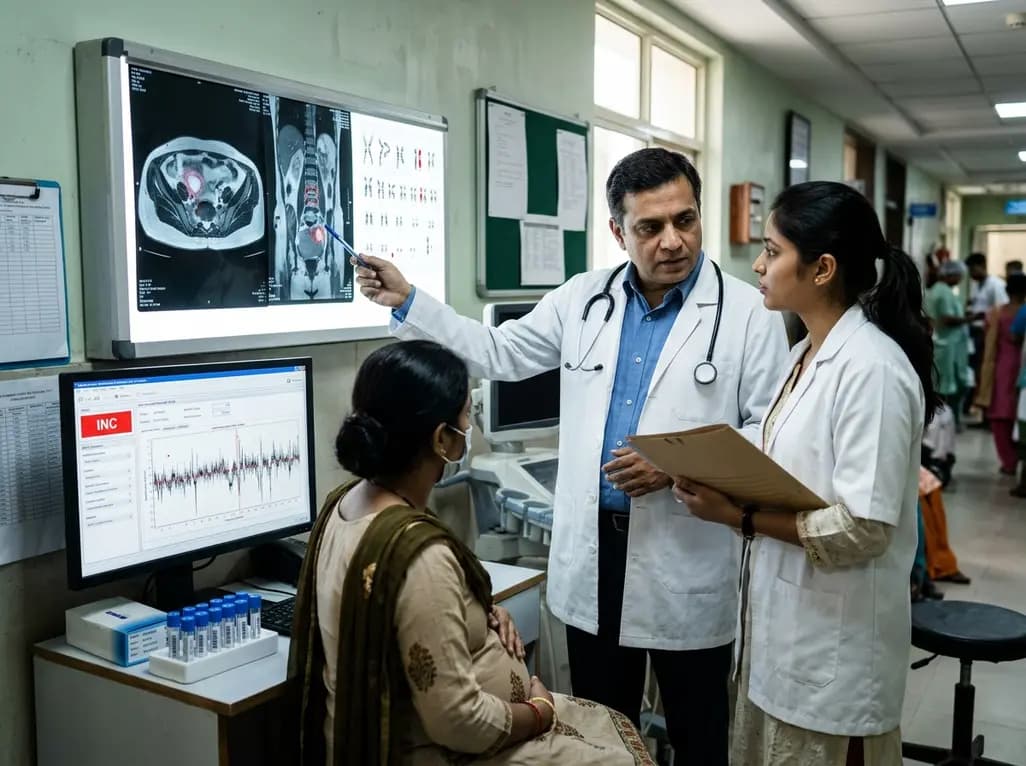
Occult maternal malignancy accounts for 3.82% of persistent unreportable NIPT results with genomic noise. Multiple chromosomal aberrations, notably on chromosome 18, warrant thorough oncological evaluation and whole-body MRI to ensure timely maternal diagnosis while preserving fetal care.
Today

This article reviews the forensic and clinical complexities of acute myocarditis arising on left ventricular hypertrophy in children, highlighting early diagnostic red flags and multidisciplinary postmortem autopsy protocols.
Today
A randomized controlled trial demonstrates that an eight-week dual-task training intervention significantly improves static and dynamic postural control over standard balance exercises in individuals with chronic ankle instability, addressing critical neurocognitive deficits during athletic and daily activities.
Today

A retrospective cohort study of 7,716 ICU patients from the MIMIC-IV database demonstrates that Gradient Boosting Decision Trees significantly outperform traditional SOFA scores in predicting in-hospital mortality among patients with sepsis and diabetes, with SHAP analysis providing clinical interpretability.
Today
