

Loading, please wait...
Loading, please wait...

Generalized anxiety disorder frequently co-occurs with substance and behavioral addictions, complicating clinical trajectories and reducing treatment responsiveness. Historically, clinicians viewed these conditions as discrete comorbid disorders requiring separate, parallel management strategies. However, contemporary psychiatric research indicates that shared emotional vulnerabilities link persistent anxiety with compulsive habits. Specifically, investigators have identified coping motives in addiction as an essential mechanism bridging chronic affective distress and problematic behaviors. Patients regularly initiate alcohol consumption or behavioral routines to suppress intolerable autonomic arousal and uncontrollable worry. Consequently, recognizing these underlying psychological drivers offers clinicians valuable opportunities for early risk identification and targeted transdiagnostic care.
Generalized anxiety disorder involves chronic worry, muscle tension, and autonomic hyperactivity that disrupt occupational and interpersonal functioning. In outpatient clinical practice, affected individuals frequently report heightened sensitivity to ambiguity and physiological hyperarousal. Therefore, these patients actively search for rapid methods to alleviate painful internal sensations. When individuals lack adaptive distress tolerance skills, external compulsive behaviors often fulfill that functional need.
Substances and repetitive behaviors temporarily soothe distress by modulating neurobiological reward pathways and inhibitory circuits. However, this transient relief reinforces an escalating cycle of chemical or behavioral dependency. Physicians across psychiatry and family medicine observe substantial comorbidity between generalized anxiety, hazardous drinking, and compulsive gambling. Furthermore, patients with dual diagnoses experience higher rates of relapse and greater functional disability. By adopting a transdiagnostic approach, healthcare providers can target core emotion dysregulation rather than merely treating isolated symptom clusters.
Motivational theories of addiction emphasize that individuals initiate and sustain habits for distinct psychological reasons. Enhancement motives involve seeking euphoria or excitement, whereas coping motives stem from an urgent desire to reduce emotional pain. In this context, coping motives in addiction serve as a pivotal bridge linking chronic generalized anxiety to behavioral escalation. Patients struggling with continuous apprehension turn to alcohol or gambling to blunt affective discomfort.
Recent empirical data confirm that coping motives significantly mediate the positive association between generalized anxiety severity and problematic drinking. Moreover, researchers identified an identical mediating pattern for pathological gambling. Anxiety generates a relentless demand for emotional relief, which channels behavioral choices toward immediate negative reinforcement. Unfortunately, utilizing external substances or activities to suppress autonomic symptoms perpetuates long-term vulnerability. Consequently, individuals become trapped in a self-reinforcing loop where escalating anxiety demands increasingly frequent compulsive engagement.
Experiential avoidance describes a patient's unwillingness to remain in contact with distressing thoughts, bodily sensations, and emotions. Individuals exhibiting pronounced experiential avoidance exert substantial effort to suppress or avoid private psychological discomfort. When severe generalized anxiety coincides with rigid avoidance strategies, the impulse to seek external chemical or behavioral relief becomes pronounced.
Recent studies demonstrate that experiential avoidance moderates the pathway connecting generalized anxiety, coping motives, and addictive outcomes. Specifically, the indirect effect of anxiety on alcohol and gambling misuse through coping motives strengthens markedly at elevated levels of experiential avoidance. Patients who cannot tolerate negative emotions exhibit an intensified reliance on avoidant coping mechanisms. In contrast, individuals demonstrating psychological acceptance experience a protective buffer against rapid symptom escalation. Therefore, measuring experiential avoidance helps clinicians identify anxious patients who face the greatest risk of transitioning into compulsive addictive disorders.
Interestingly, recent empirical evaluations reveal noticeable variations across different addictive behaviors when evaluating emotional coping pathways. While coping motives strongly explain anxiety-related alcohol misuse and gambling, identical moderated mediation models do not reach statistical significance for cannabis use or video gaming. This divergence highlights essential diagnostic nuances across distinct substance classes and behavioral modalities.
Cannabis consumption often involves complex recreational, social, and sleep-related motivations that operate independently of anxiety reduction. Similarly, video gaming frequently fulfills needs for social connection, cognitive stimulation, and interactive mastery rather than simple emotional avoidance. Thus, clinicians should not assume that generalized anxiety interacts identically with every substance or compulsive activity. Instead, practitioners must conduct comprehensive functional analyses to uncover the specific motives driving each patient's behavioral habits. Recognizing these distinctions enables clinicians to formulate nuanced diagnostic formulations and avoid generic therapeutic assumptions.
These research insights provide actionable strategies for medical professionals managing complex comorbid presentations in primary care and psychiatric settings. First, physicians managing generalized anxiety disorder must routinely screen for covert alcohol use and gambling habits. Early detection allows timely intervention before severe behavioral dependence develops. Second, clinicians should explore patient-specific motives by determining whether substances serve primarily to numb autonomic arousal.
Furthermore, incorporating third-wave behavioral therapies can fundamentally improve outcomes for vulnerable individuals. Interventions such as Acceptance and Commitment Therapy directly reduce experiential avoidance by fostering psychological flexibility and emotional willingness. Rather than battling internal anxiety symptoms, patients learn to accept distressing sensations without turning to maladaptive habits. Additionally, Cognitive Behavioral Therapy helps patients dismantle negative reinforcement cycles and build constructive, problem-focused coping tools. Combining evidence-based psychotherapy with appropriate psychopharmacology delivers a balanced framework that effectively addresses both anxiety and secondary addictive behaviors.
Coping motives in addiction represent the internal drive to use substances or engage in behaviors to escape, numb, or regulate negative affective states. Rather than seeking pleasure, individuals adopt these compulsive habits as functional mechanisms to alleviate severe distress, autonomic anxiety symptoms, and intrusive worry patterns.
Experiential avoidance intensifies addictive behaviors by making individuals unwilling to tolerate distressing internal thoughts, emotions, and physical sensations. Consequently, anxious individuals turn to immediate external distractors such as alcohol and gambling. This behavioral avoidance temporarily alleviates emotional turmoil, thereby reinforcing maladaptive negative reinforcement loops that accelerate dependency.
Acceptance and Commitment Therapy provides excellent efficacy by cultivating psychological flexibility, mindfulness, and willingness to tolerate difficult emotions without destructive behavioral reactions. Additionally, Cognitive Behavioral Therapy helps patients modify cognitive distortions, identify avoidance triggers, and build sustainable problem-focused coping mechanisms to manage chronic generalized anxiety safely.
Disclaimer: This content is for informational and educational purposes only and does not constitute medical advice. Clinicians should use their independent clinical judgment. Refer to the latest local and national guidelines for clinical practice.
References

Read summarized clinical updates, watch expert medical content, and earn CME certifications right from your smartphone.
Open your smartphone camera to scan and install.





A cross-sectional study reveals that coping motives mediate the link between generalized anxiety disorder and problematic alcohol use and gambling, amplified by experiential avoidance. These insights highlight the need for transdiagnostic psychological interventions targeting emotional avoidance.
Today

The Food Safety and Standards Authority of India has issued an urgent advisory against food business operators violating mandatory labelling standards for nutraceuticals and botanicals. Regulators prohibited therapeutic claims while mandating clear advisory warnings to prevent patient toxicity and medical misuse.
Today

Biotechnology researchers in India are developing an automated liquid biopsy platform to detect cervical malignancy from blood samples. Supported by the MAHA MedTech Mission, this initiative applies nanopore sequencing and piRNA biomarker detection to eliminate invasive speculum exams and expand rural screening.
Today

A clinical study evaluated Ring Fit Adventure in adults with chronic conditions, revealing that exergaming achieves moderate-to-vigorous exercise intensity while maintaining hemodynamic stability, high enjoyment, and zero adverse events.
Today

A retrospective cohort study reveals that selecting the touched vertebra as the lowest instrumented vertebra in thoracic adolescent idiopathic scoliosis yields a 20.8% distal add-on rate, driven by remnant motion segments and axial rotational discrepancies.
Today
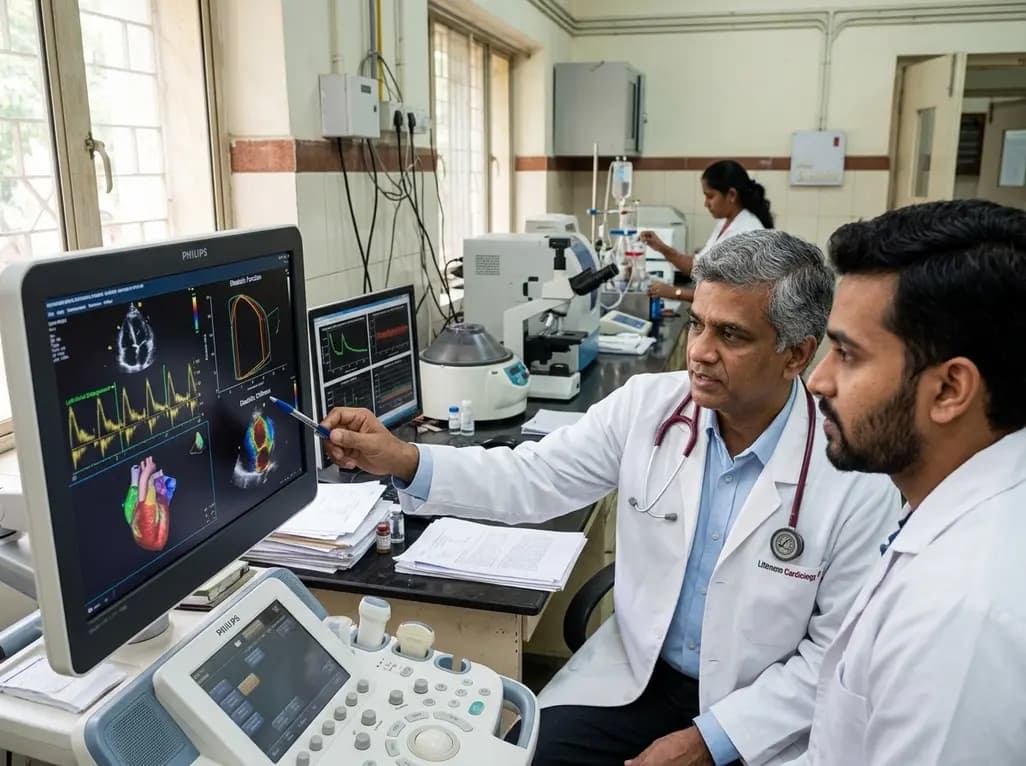
A study evaluates a cardiometabolic HFpEF model combining metabolic stress with chronic mineralocorticoid excess. The findings reveal profound diastolic stiffness, endothelial dysfunction, and pulmonary hypertension, illuminating key pathophysiological mechanisms for targeted cardiopulmonary therapies.
Today
