

Loading, please wait...
Loading, please wait...

Cancer diagnoses impose an overwhelming psychological burden across the care continuum. Patients frequently encounter existential anxiety, acute distress, and depressive episodes while navigating complex oncological therapies. Unfortunately, specialized psycho-oncology professionals remain scarce globally, creating substantial barriers to timely psychosocial interventions. Consequently, digital health innovators increasingly develop automated chatbots to bridge this critical care divide. The integration of conversational AI in psycho-oncology represents a promising paradigm shift designed to deliver accessible emotional and informational assistance. A landmark scoping review comprehensively mapped recent literature, evaluating twenty-four reports across twenty-three unique projects. The investigators examined how automated agents deliver supportive care to patients with cancer and survivors. Their analysis reveals rapid technological expansion alongside fragmented clinical implementation. While software developers celebrate the scalable potential of artificial intelligence, clinicians must examine whether these conversational tools truly address complex psychological morbidity. Furthermore, healthcare teams must assess whether existing platforms deliver genuine therapeutic efficacy or merely offer superficial conversational novelty. Understanding the intersection between conversational interfaces and oncology care pathways is essential for modern practitioners as these technologies transition into real-world clinics.
The technical infrastructure underlying oncology conversational agents has evolved significantly over the past decade. Early conversational systems relied primarily on rigid, rule-based decision trees and constrained natural language processing algorithms. In contrast, modern platforms increasingly utilize advanced large language models and sophisticated generative artificial intelligence. The recent scoping review revealed that generative architectures already power nearly forty percent of evaluated psycho-oncology initiatives. These generative systems excel at producing empathetic, context-aware dialogues that simulate nuanced human interactions. Therefore, patients often report high initial engagement and natural conversational rapport when interacting with these interfaces. However, generative language models also introduce notable clinical vulnerabilities that demand rigorous vigilance. Generative algorithms can fabricate plausible medical misinformation, display conversational drift, and misinterpret nuanced emotional cues during acute distress. In addition, proprietary models frequently operate as opaque black boxes, preventing oncology teams from verifying internal clinical reasoning. As health networks consider deploying automated communication channels, multidisciplinary teams must critically appraise the foundational computing architectures underpinning each patient-facing tool to prevent patient harm.
A critical divergence exists between basic informational guidance and formal psychological therapy within conversational digital platforms. The scoping review highlighted that every evaluated project delivered basic cancer education or logistical information. Furthermore, eighty-seven percent of initiatives provided symptom management or self-care tracking support. These functional capabilities help patients monitor chemotherapy toxicities, schedule appointments, and comprehend dense diagnostic reports. Nevertheless, structured behavioral and psychological interventions appeared in only twenty-two percent of reviewed projects. Clinicians recognize that coping with malignant disease requires evidence-based psychological modalities, including cognitive behavioral therapy and mindfulness-based stress reduction. Unfortunately, very few conversational platforms embed these formalized therapeutic methodologies into their algorithmic workflows. In addition, merely one-quarter of the analyzed studies grounded their conversational workflows in explicit psychological or behavioral theories. Consequently, many tools function primarily as conversational search engines rather than true digital therapeutics. To transform supportive cancer care, software architectures must progress beyond generic reassurance. Oncologists and clinical psychologists must collaboratively guide system design, ensuring digital agents deliver validated coping mechanisms rather than unstandardized conversational banter.
The assessment methodologies currently dominating conversational health technologies reveal significant scientific shortcomings. The scoping review revealed a striking asymmetry between usability metrics and rigorous clinical outcomes. Approximately seventy-one percent of reports evaluated user acceptability, and over fifty-four percent examined user engagement patterns. Participants generally praised system responsiveness, digital accessibility, and interactive design elements. In sharp contrast, only thirty-three percent of published reports evaluated objective psychosocial clinical endpoints. Even more concerning, fewer than seventeen percent formally assessed safety profiles or tracked adverse events. Consequently, the contemporary literature demonstrates that patients enjoy chatting with automated interfaces, but it fails to prove clinical efficacy. High usability scores cannot compensate for an absence of demonstrated reductions in clinical anxiety, depression, or cancer-related distress. Furthermore, subjective satisfaction surveys fail to capture subtle psychological harm or delayed presentation of psychiatric emergencies. Clinical oncology demands rigorous evidence-based validation through prospective, randomized controlled trials. Before integrating digital chatbots into routine supportive workflows, healthcare institutions must demand validated endpoints showing measurable symptom relief.
The safety and ethical governance surrounding conversational tools in oncology remains highly fragmented across current implementations. Robust clinical safety requires immediate escalation protocols whenever patients express profound emotional despair or suicidal ideation. Alarmingly, the scoping review discovered that only one-third of evaluated projects implemented explicit crisis escalation or professional referral mechanisms. Moreover, merely twelve percent of patient-facing platforms explicitly disclosed their synthetic identity to users. Transparent disclosure represents a fundamental bioethical imperative, as vulnerable cancer patients must understand they are conversing with software. Human or expert oversight appeared in only sixty-two percent of reports, leaving significant governance gaps in unsupervised deployments. These international findings carry urgent implications for Indian oncology practice, where cancer centers face severe shortages of psycho-oncologists. Unregulated direct-to-consumer mental health chatbots present serious hazards regarding cultural nuances, vernacular language translation accuracy, and clinical safety. Consequently, Indian hospitals must approach these commercial technologies with strict caution. Oncology departments should view conversational platforms solely as secondary supportive tools operating under qualified human clinician supervision, backed by validated escalation protocols.
Conversational AI agents primarily provide psychoeducation, logistical tracking, and basic symptom self-management guidance for individuals navigating cancer treatment. These systems deliver accessible information regarding medication schedules, anticipated treatment side effects, and practical coping mechanisms. Additionally, conversational agents offer continuous conversational availability, helping reduce loneliness and mild distress between clinic appointments. However, current evidence confirms that most platforms deliver basic education rather than structured psychotherapy, requiring ongoing clinical oversight by human oncology professionals.
Cancer patients frequently experience severe emotional decompensation, overwhelming anxiety, and acute suicidal ideation during active therapy. Autonomous digital agents lack clinical intuition and cannot intervene effectively during life-threatening psychological crises. Therefore, robust crisis escalation protocols must immediately detect red-flag linguistic triggers and seamlessly transfer vulnerable patients to licensed mental health professionals or emergency hotlines. Without functional crisis referral pathways, conversational platforms risk delaying essential life-saving psychiatric care and creating severe liability for institutions.
Indian healthcare institutions must mandate strict data privacy protections and transparent artificial intelligence identity disclosures before deploying patient-facing chatbots. Furthermore, hospitals should require rigorous clinical validation studies demonstrating safety and efficacy across diverse regional languages and socio-economic demographics. Systems must incorporate explicit boundaries of clinical competency, continuous human clinician oversight, and real-time medical record integration. Ultimately, healthcare leaders must ensure digital tools complement professional oncology teams rather than functioning as unmonitored medical substitutes.
Disclaimer: This content is for informational and educational purposes only. It does not constitute professional medical advice, diagnosis, or treatment. Always consult a qualified healthcare provider for specific clinical decisions. Refer to the latest local and national guidelines for clinical practice.
References
1. Shen Z et al. Mapping Technologies, Support Functions, Evaluation Outcomes, and Safety Governance Related to Conversational AI Agents for Psychological Support of Patients With Cancer: Scoping Review. J Med Internet Res. 2026 Oct 19. doi: 10.2196/105599. PMID: 42896174.
2. He Y, Yang L, Qian C, Li T, Su Z, Zhang Q, et al. Conversational agent interventions for mental health problems: systematic review and meta-analysis of randomized controlled trials. J Med Internet Res. 2023;25:e43862. doi: 10.2196/43862.
3. Meadi MR, Sillekens T, Metselaar S, van Balkom A, Bernstein J, Batelaan N. Exploring the Ethical Challenges of Conversational AI in Mental Health Care: Scoping Review. JMIR Ment Health. 2025;12:e59021. doi: 10.2196/59021.

Read summarized clinical updates, watch expert medical content, and earn CME certifications right from your smartphone.
Open your smartphone camera to scan and install.





A scoping review maps conversational AI in psycho-oncology, revealing that while education and engagement are widely delivered, evidence-based psychological interventions, clinical outcome evaluations, and safety governance remain critically fragmented across cancer care.
Today

The Food Safety and Standards Authority of India has issued an urgent advisory against food business operators violating mandatory labelling standards for nutraceuticals and botanicals. Regulators prohibited therapeutic claims while mandating clear advisory warnings to prevent patient toxicity and medical misuse.
Today

Biotechnology researchers in India are developing an automated liquid biopsy platform to detect cervical malignancy from blood samples. Supported by the MAHA MedTech Mission, this initiative applies nanopore sequencing and piRNA biomarker detection to eliminate invasive speculum exams and expand rural screening.
Today
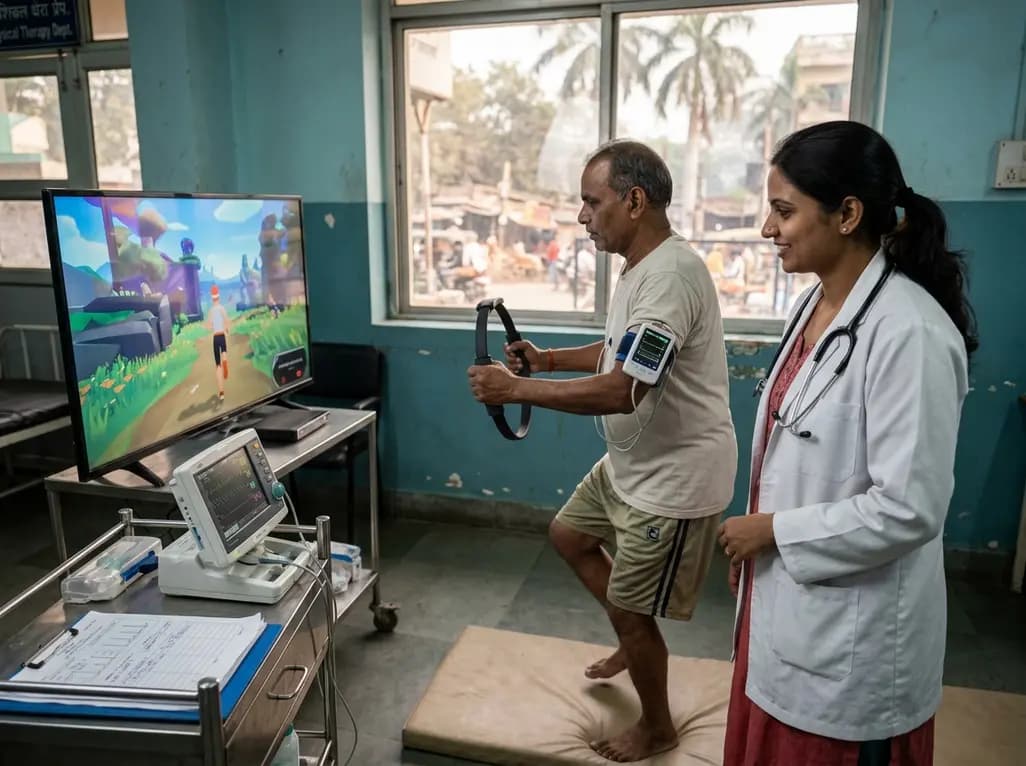
A clinical study evaluated Ring Fit Adventure in adults with chronic conditions, revealing that exergaming achieves moderate-to-vigorous exercise intensity while maintaining hemodynamic stability, high enjoyment, and zero adverse events.
Today

A retrospective cohort study reveals that selecting the touched vertebra as the lowest instrumented vertebra in thoracic adolescent idiopathic scoliosis yields a 20.8% distal add-on rate, driven by remnant motion segments and axial rotational discrepancies.
Today

A study evaluates a cardiometabolic HFpEF model combining metabolic stress with chronic mineralocorticoid excess. The findings reveal profound diastolic stiffness, endothelial dysfunction, and pulmonary hypertension, illuminating key pathophysiological mechanisms for targeted cardiopulmonary therapies.
Today
