.webp&w=384&q=75)

Loading, please wait...
Loading, please wait...
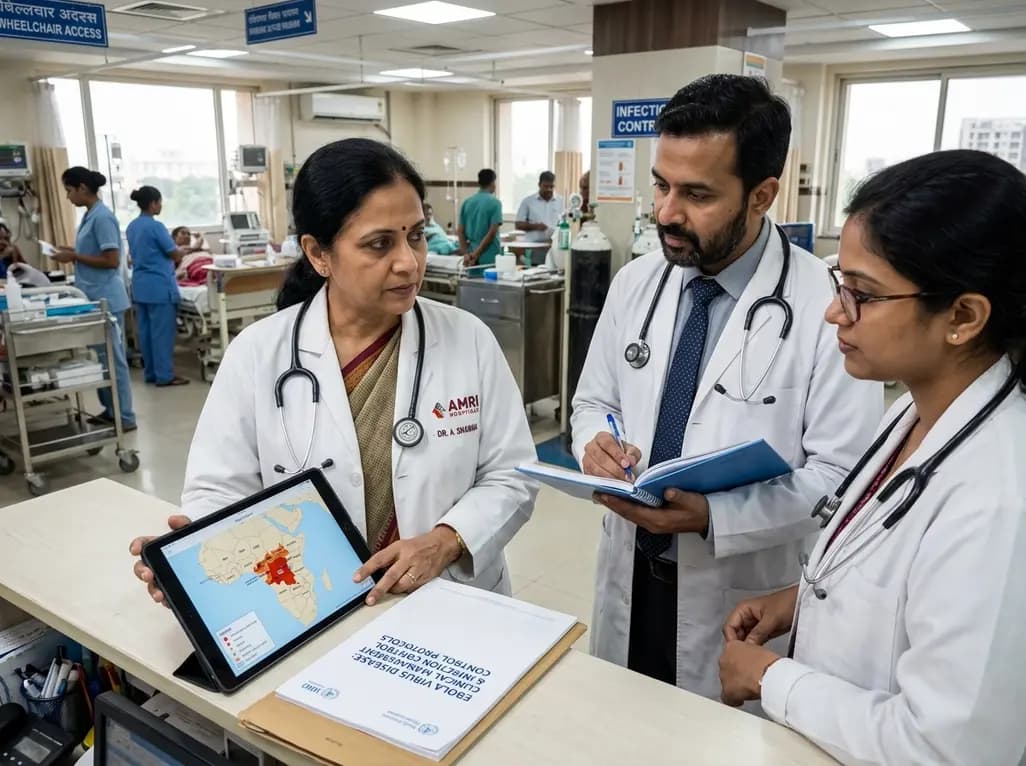
The ongoing Congo Ebola outbreak represents one of the most pressing infectious disease emergencies in recent global health history. As the epidemic expands across multiple health zones, the World Health Organization (WHO) has highlighted both grave challenges and practical pathways forward. International health authorities emphasize that rapid mobilization of field teams, strengthened epidemiological surveillance, and robust financial resources remain crucial to curb transmission. For clinicians, emergency physicians, and public health practitioners worldwide, understanding the dynamics of this viral hemorrhagic fever is essential for maintaining heightened clinical suspicion, refining infection control practices, and preparing health systems for potential travel-associated presentations.
Recent epidemiological assessments indicate that the current crisis has evolved into the country's worst episode among seventeen documented historical occurrences. Consequently, transmission has now reached six distinct provinces, creating immense logistical hurdles for local emergency workers. Surveillance data reveals that the pathogen responsible for this resurgence is the rare Bundibugyo species of the orthoebolavirus genus. Unlike the Zaire strain, this particular species has historically received fewer clinical trials for targeted medical countermeasures. Therefore, healthcare responders must rely heavily on standard supportive critical care and public health containment measures.
Furthermore, field data indicates that between 70% and 80% of newly identified infections currently lack documented epidemiological links to known index cases. This significant gap demonstrates that unmonitored community transmission persists in several remote areas. Health agencies underscore that identifying every transmission chain is imperative to interrupt community spread. Accordingly, international organizations are working alongside local health ministries to deploy additional epidemiologists, scale up community event-based monitoring, and establish rapid response field laboratories across affected territories.
Managing the epidemic in eastern Democratic Republic of the Congo involves navigating persistent operational hurdles. First, ongoing armed conflict and civil insecurity frequently interrupt contact tracing operations and endanger frontline healthcare personnel. As a result, medical teams often experience delayed access to remote villages where isolated clusters first emerge. Second, local community distrust and widespread misinformation frequently hinder timely notification of symptomatic individuals, which in turn leads to severe diagnostic delays.
Additionally, critical resource gaps continue to constrain frontline operations. The global health response currently faces significant funding deficits, having secured only a fraction of the necessary multi-million-dollar emergency budget. Without adequate financial backing, procuring high-grade personal protective equipment, deploying diagnostic reagents, and maintaining continuous supply chains remain exceptionally difficult. Nevertheless, humanitarian partners have recently expanded treatment capacity by establishing hundreds of additional isolation beds to accommodate new admissions and reduce nosocomial exposure risks.
Clinicians must maintain sharp diagnostic acumen when evaluating patients presenting with unexplained acute febrile illnesses and recent travel history. Typically, Bundibugyo virus disease manifests after an incubation period ranging from two to twenty-one days. Early symptoms remain largely non-specific, frequently mimicking common tropical conditions such as severe falciparum malaria, typhoid fever, and arboviral infections. Initial clinical features commonly include high fever, profound fatigue, diffuse myalgia, arthralgia, and persistent headache.
As the disease progresses into its gastrointestinal phase, patients typically develop severe watery diarrhea, intractable vomiting, and abdominal pain. Consequently, rapid hypovolemia, electrolyte disturbances, and metabolic acidosis can develop swiftly. Although overt hemorrhagic manifestations do not occur in every individual, mucosal bleeding, petechiae, and gastrointestinal hemorrhage signify advanced disease. Therefore, molecular confirmation via real-time reverse transcription-polymerase chain reaction (RT-PCR) remains the gold standard for definitive diagnosis in specialized containment facilities.
Because no licensed therapeutic monoclonal antibodies or antiviral agents currently exist for the Bundibugyo species, clinical management relies entirely on optimized supportive care. Evidence from recent outbreaks demonstrates that systematic critical care significantly lowers case fatality ratios. Thus, aggressive and carefully monitored fluid resuscitation serves as the cornerstone of supportive intervention to counteract massive gastrointestinal losses.
Furthermore, medical teams must prioritize frequent electrolyte monitoring to correct hypokalemia, hypomagnesemia, and hypocalcemia promptly. Clinicians should also administer empirical broad-spectrum antimicrobials when secondary bacterial infections or enteric translocation is suspected. In addition, providing balanced nutritional support, effective antiemetics, and cautious analgesia improves patient comfort and physiological stability. Dedicated isolation units equipped with point-of-care biochemistry analyzers allow critical care teams to deliver tailored interventions safely while minimizing needle-stick injuries.
Preventing nosocomial transmission requires uncompromising adherence to standard, contact, and droplet infection prevention and control (IPC) protocols. Because the virus transmits through direct contact with infectious blood, body fluids, and contaminated fomites, healthcare facilities must enforce strict personal protective equipment protocols. Responders must undergo rigorous training in supervised donning and doffing procedures to prevent accidental self-contamination.
On a broader scale, hospitals worldwide should establish designated screening algorithms at entry points to identify potentially exposed international travelers rapidly. Primary care and emergency staff must promptly isolate any suspected patient in a negative-pressure or single-occupancy room with dedicated sanitary facilities. In addition, public health authorities emphasize the importance of safe and dignified burial practices, community engagement, and cross-border surveillance to prevent regional spillover into neighboring territories.
Q1: Why is the Bundibugyo species of Ebola particularly challenging to manage during this outbreak?
The Bundibugyo species presents substantial clinical challenges because existing approved vaccines and monoclonal antibody treatments, such as Ervebo and mAb114, specifically target the Zaire species. Consequently, healthcare providers must manage Bundibugyo infections without strain-specific antiviral countermeasures. Clinical management relies entirely on aggressive supportive critical care, early fluid resuscitation, electrolyte correction, and stringent infection prevention measures to reduce mortality and prevent nosocomial transmission.
Q2: What initial symptoms should alert clinicians to suspect viral hemorrhagic fever in returning travelers?
Clinicians should maintain high suspicion when a patient presents with sudden high fever, severe fatigue, headache, and myalgia within twenty-one days of visiting an endemic region. Early non-specific signs rapidly evolve into severe gastrointestinal symptoms, including watery diarrhea, persistent vomiting, and abdominal pain. Diagnostic triage requires immediate isolation, prompt travel history documentation, and notification of public health authorities before conducting confirmatory molecular testing.
Q3: How does optimized supportive care improve survival rates in patients with Ebola disease?
Optimized supportive care significantly reduces mortality by mitigating the life-threatening physiological disruptions caused by massive fluid loss and vascular dysfunction. Early, individualized intravenous or oral rehydration restores intravascular volume, preventing shock and acute kidney injury. In addition, rapid correction of severe electrolyte derangements, glycemic control, targeted organ support, and treatment of secondary bacterial infections stabilize vital organs while the patient's immune system clears the virus.
Disclaimer: This content is for informational and educational purposes only. It does not constitute medical advice or replace professional judgment. Refer to the latest local and national guidelines for clinical practice.
References

Read summarized clinical updates, watch expert medical content, and earn CME certifications right from your smartphone.
Open your smartphone camera to scan and install.





The World Health Organization indicates that the deadly Congo Ebola outbreak could be curbed within three months if international funding and medical resources arrive swiftly. Clinicians worldwide must remain informed on transmission patterns, early triage, and infection control protocols for viral hemorrhagic fevers.
last month

Abdominal aortic aneurysm rupture remains a catastrophic vascular emergency. Groundbreaking research reveals that USP53 accelerates aneurysm progression by reprogramming smooth muscle cell metabolism toward aerobic glycolysis, highlighting a promising target beyond conventional diameter-based surveillance.
Today

A pharmacometric and machine learning study reveals that specific vaginal bacteria alter cervical antiretroviral exposure, highlighting the need for precision HIV PrEP strategies.
Today
A nationwide Swedish cohort study shows oral glucocorticoid exposure over 1-2 years strongly predicts overall organ damage in SLE, while cardiovascular risk reflects cumulative doses across 3 years. These findings reinforce early steroid minimization and cautious long-term maintenance.
Today
A scoping review highlights neural mobilization as a promising adjunct in managing cervicogenic headache. Integrating neurodynamics into multimodal physical therapy improves pain, range of motion, and posture, though standardized protocols and larger clinical trials are still needed.
Today
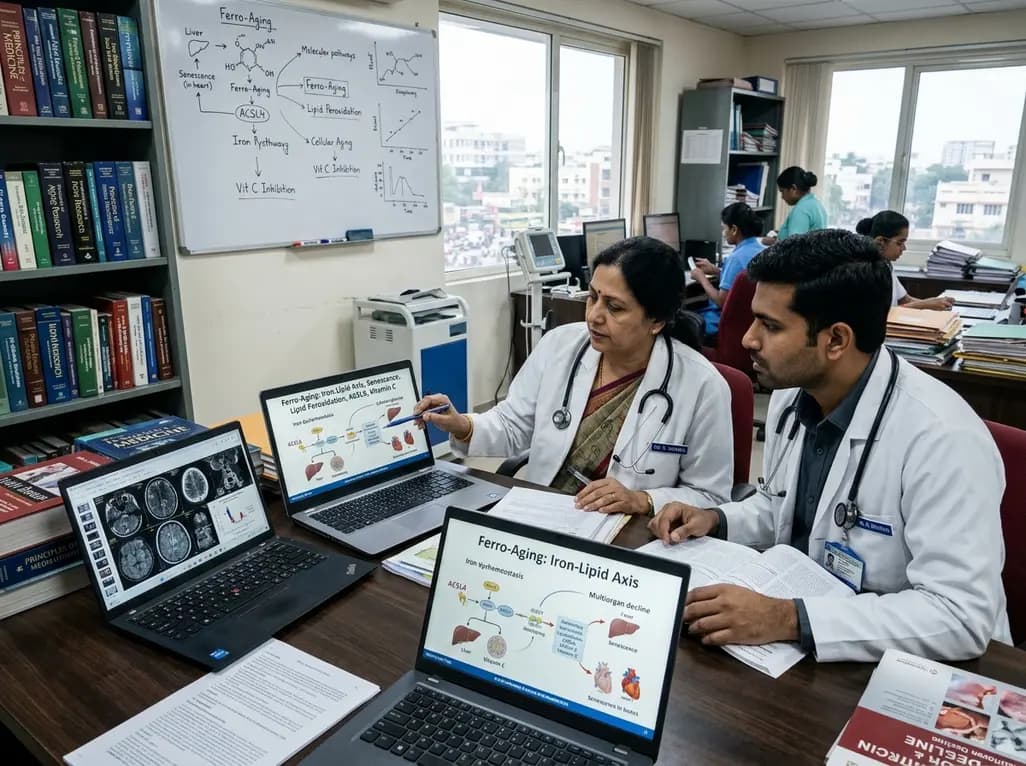
Recent research defines ferro-aging as a conserved iron-lipid axis driving organ decline across primates. Age-related iron dyshomeostasis stimulates ACSL4-mediated lipid peroxidation, promoting cellular senescence. Notably, vitamin C directly inhibits ACSL4, suppressing phospholipid oxidation and multi-organ decay.
Today
