

Loading, please wait...
Loading, please wait...
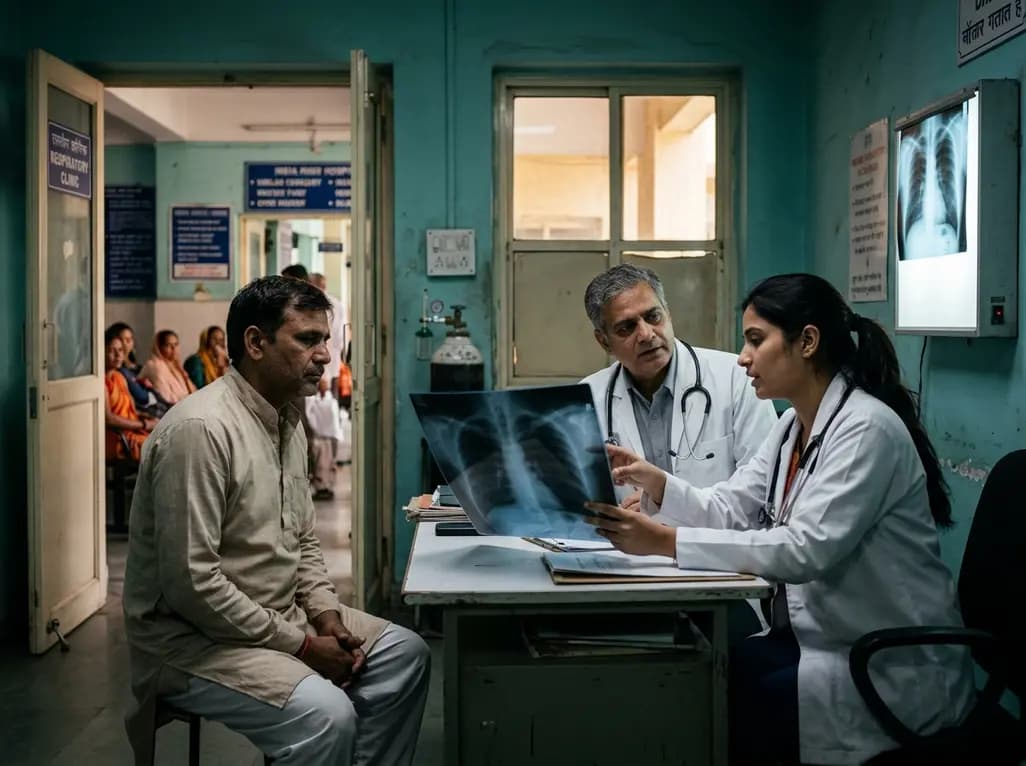
Tuberculosis remains a critical global health priority, especially across resource-constrained regions. Although international guidelines emphasize bacteriological confirmation, empirical treatment remains widespread. Consequently, clinically diagnosed TB represents a substantial proportion of overall notifications in both public and private health sectors. Recent qualitative evidence highlights the clinical rationale and health system pressures that influence these diagnostic pathways. Far from demonstrating non-compliance, empirical diagnosis frequently serves as an indispensable adaptation to systemic constraints.
Global tuberculosis guidelines define a clinically diagnosed case as active tuberculosis diagnosed without microbiological confirmation. In many high-burden nations, these empirical cases account for over half of public notifications and most private sector treatments. This high prevalence persists despite major investments in molecular diagnostic platforms like GeneXpert and Truenat.
Therefore, examining the underlying factors behind this clinical reality is vital for improving national control programs. Qualitative findings demonstrate that providers do not disregard diagnostic standards carelessly. Instead, clinicians balance the desire for microbiological certainty against the urgent need for timely therapeutic intervention. When molecular diagnostics are unavailable or severely delayed, withholding treatment threatens patient health. As a result, practitioners view clinical diagnosis as a compassionate, life-saving decision. Addressing these underlying operational gaps will help align routine clinical workflows with evidence-based standards.
Physicians employ sequential probabilistic logic when evaluating individuals presenting with chronic respiratory symptoms. Clinicians typically begin by evaluating classic signs, including persistent cough, low-grade fever, unexplained weight loss, and nocturnal sweating. Furthermore, providers analyze relevant epidemiologic exposure, such as contact with known infected individuals or underlying immunosuppression.
Subsequently, clinicians rely on chest radiography to corroborate their clinical suspicions. Radiologists and physicians identify characteristic abnormalities, such as apical infiltrates, cavitation, and non-resolving consolidations. In addition, practitioners frequently prescribe an empiric course of non-fluoroquinolone broad-spectrum antibiotics to exclude routine bacterial infections. If clinical symptoms persist after antimicrobial treatment, the pre-test probability of active tuberculosis rises significantly. Thus, clinical decision-making relies on structured deductive reasoning rather than arbitrary guesswork. This structured diagnostic progression provides doctors with confidence when microbiological confirmation proves unattainable.
Severe health system limitations often prevent clinicians from following ideal diagnostic guidelines. Healthcare facilities routinely experience recurrent stock-outs of molecular cartridges, equipment breakdowns, and protracted reporting intervals. In rural and peripheral clinics, transport networks must move sputum samples across long distances to centralized testing facilities. Consequently, turnaround times extend from days into several weeks, leaving symptomatic patients without definitive guidance.
Under these difficult conditions, microbiological verification becomes conditional rather than standard practice. Physicians cannot leave severely ill individuals untreated while waiting indefinitely for laboratory reports. Therefore, clinicians initiate empirical therapy to relieve suffering and prevent community transmission. Moreover, weak referral networks between private providers and public diagnostic centers discourage specimen referrals. When sending a patient for public testing causes diagnostic delays or loss to follow-up, private practitioners understandably initiate immediate treatment. Resolving these logistical barriers is crucial for facilitating guideline-adherent management.
In addition to institutional challenges, personal circumstances significantly influence diagnostic choices. Many symptomatic individuals find it exceedingly difficult to expectorate adequate sputum samples. In particular, elderly patients, dehydrated individuals, and individuals with dry coughs frequently struggle to provide valid diagnostic specimens. Although tertiary medical centers utilize sputum induction or bronchoscopy, primary healthcare centers rarely possess the necessary infrastructure.
Furthermore, economic hardship and social stigma compound diagnostic complexity. Many patients cannot afford travel expenses or wage losses associated with multiple hospital visits. If clinicians demand repeat visits for specimen submission and results, vulnerable patients frequently abandon medical evaluation altogether. To protect patients from defaulting, doctors initiate empirical treatment immediately. Thus, clinical diagnosis functions as an essential safety net for underprivileged populations. By eliminating diagnostic delays, providers ensure that vulnerable patients receive essential treatment before their condition deteriorates.
Field studies outline three distinct diagnostic trajectories that lead to empirical treatment. In the first pathway, physicians order rapid molecular testing, but laboratory stock-outs or machine malfunctions force an immediate transition to clinical judgment. In the second pathway, patients successfully produce sputum, but molecular tests return negative results despite suspicious radiographs and convincing symptoms. Because molecular testing can yield false negatives in paucibacillary infection, doctors rely on clinical evaluation to initiate therapy.
In the third pathway, providers bypass sputum testing entirely due to resource constraints, diagnosing active disease based solely on symptoms and radiographic changes. This pathway occurs frequently in busy private clinics lacking direct laboratory access. However, clinics that maintain on-site testing facilities, patient navigators, and rapid reporting systems achieve significantly higher rates of bacteriological confirmation. Furthermore, efficient inter-facility collaboration helps private practitioners submit samples to public laboratories smoothly. Strengthening these operational pathways remains vital for elevating diagnostic accuracy.
Bridging the divide between official guidelines and routine practice requires proactive, systemic health sector reforms. Program managers must recognize that clinical diagnosis usually represents a reasonable response to institutional bottlenecks rather than clinical negligence. Therefore, national elimination initiatives must prioritize dependable supply chains for molecular diagnostic cartridges and equipment maintenance. In addition, health programs should deploy portable point-of-care molecular technologies directly into community health facilities to minimize turnaround delays.
Similarly, expanding public-private mix programs is vital for high-burden countries like India and the Philippines. Private practitioners handle millions of presumptive cases and require frictionless access to state-subsidized molecular diagnostic networks. Implementing digital specimen-tracking platforms and sample courier services encourages private clinicians to pursue microbiological confirmation routinely. Furthermore, continuous professional development programs must provide regular clinical updates regarding radiographic interpretation and diagnostic algorithms. By addressing systemic bottlenecks and reinforcing clinician training, health systems can systematically improve diagnostic quality while ensuring prompt patient care.
International health guidelines define clinically diagnosed tuberculosis as an active disease episode diagnosed by a clinician without bacteriological confirmation. The clinician bases this decision on abnormal chest radiographs, suggestive histopathology, or strong clinical symptoms alongside epidemiologic risk factors. When a healthcare provider decides to prescribe a full therapeutic course of anti-tubercular medication based on these findings, the health system officially registers the case under this specific clinical category.
Clinicians frequently initiate empirical therapy because health systems face diagnostic equipment downtime, cartridge stock-outs, and prolonged laboratory turnaround times. Additionally, many patients experience difficulty expectorating quality sputum or face severe financial barriers that prevent multiple clinic visits. In such acute circumstances, doctors prioritize patient safety and rapid disease control over procedural delays. Empirical initiation prevents irreversible clinical deterioration and reduces ongoing bacterial transmission in the community when laboratory access is compromised.
Health systems can reduce reliance on empirical diagnosis by establishing reliable supply chains for molecular diagnostic cartridges and deploying point-of-care testing platforms closer to patients. Furthermore, public health authorities must foster robust public-private mix partnerships with streamlined digital sample transport systems. Providing dedicated sputum induction booths, patient navigation support, and ongoing medical education helps healthcare professionals obtain bacteriological proof efficiently while maintaining high diagnostic accuracy and clinical standards across diverse healthcare settings.
Disclaimer: This content is for informational and educational purposes only and should not be considered medical advice. Healthcare professionals should rely on their clinical judgment and verify information with relevant medical literature and guidelines. Refer to the latest local and national guidelines for clinical practice.
References
Bayot AJF et al. Clinically diagnosed TB: a qualitative study of provider decision-making in the Philippines. Public Health Action. 2026 Nov undefined. doi: 10.5588/pha.26.0058. PMID: 43075535.
World Health Organization. WHO consolidated guidelines on tuberculosis: Module 3: diagnosis. Geneva: World Health Organization; 2025.
Central TB Division, Ministry of Health and Family Welfare, Government of India. National Tuberculosis Elimination Program (NTEP): Diagnostic and Treatment Guidelines. New Delhi: MoHFW; 2024.

Read summarized clinical updates, watch expert medical content, and earn CME certifications right from your smartphone.
Open your smartphone camera to scan and install.





This article examines provider decision-making in clinically diagnosed TB across high-burden settings. It highlights how diagnostic shortages, equipment downtime, and patient barriers necessitate pragmatic clinical decisions, underscoring the urgent need to strengthen supply chains and public-private collaboration.
Today

Isolated fallopian tube torsion is an elusive gynecological emergency mimicking acute appendicitis in young females. Early laparoscopy and routine pelvic inspection prevent unnecessary salpingectomy and preserve future fertility.
Today

A nationwide Swedish register study of 46,479 VTE patients found no significant increase in major or fatal bleeding with concomitant DOAC and SSRI therapy compared to DOACs alone, though all-cause mortality was modestly elevated, offering reassuring safety data for clinicians managing both conditions.
Today

The Patellar Drawbridge Sign describes a distinctive sagittal rocking of the patella on lateral radiographs, alerting clinicians to isolated vastus intermedius rupture despite a preserved straight-leg raise. Recognizing this marker guides accurate ultrasound diagnosis and successful conservative rehabilitation.
Today
A recent investigation assesses the impact of succinate supplements on metabolic health, energy intake, and muscle remodeling in mice fed high-fat or ketogenic diets. Although succinate briefly blunts hyperphagia, it fails to improve long-term glycemic control or alter skeletal muscle hypertrophy.
Today
